The third generation long earned its reputation as a sensible alternative to pricier sedans like the Passat or Camry — roomy, dependable, blessed with a cavernous trunk and that unmistakable Czech practicality. The fourth generation of 2023–2024, however, is more than a simple update. It grew noticeably larger, moved to the refined MQB Evo platform, and took a meaningful step forward in hybridization. In a market where fuel costs still matter and many drivers regularly cover long distances, this evolution directly addresses the needs of those who want to travel far and comfortably without constant fuel stops.
What Changed Compared to the Previous Generation
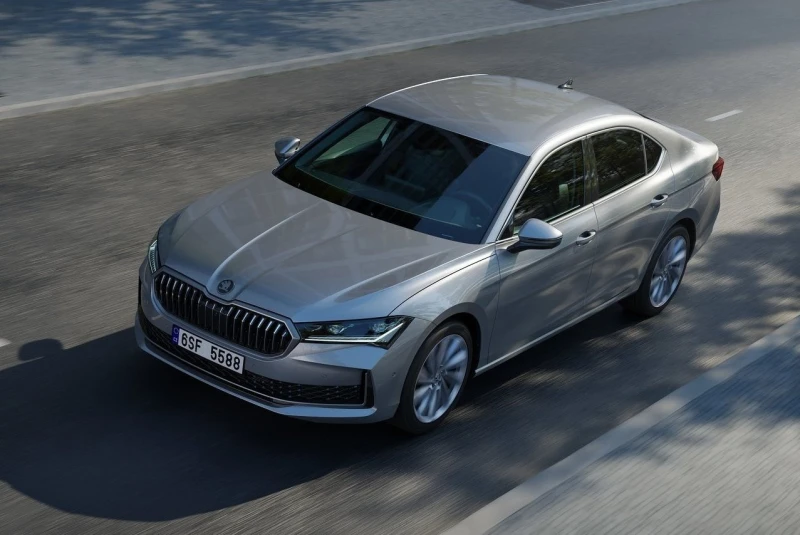
The prior Superb was already among the most spacious cars in the D-segment. Wheelbase remains essentially unchanged at 2,841 mm (111.9 in), yet overall length of the liftback increased by 43 mm (1.7 in) to 4,912 mm (193.4 in), while the Combi grew by 40 mm. Height rose 5–12 mm depending on body style. Modest on paper, these changes — paired with a lower drag coefficient of 0.23 — deliver tangible improvements in high-speed stability and ride comfort on long highway runs.
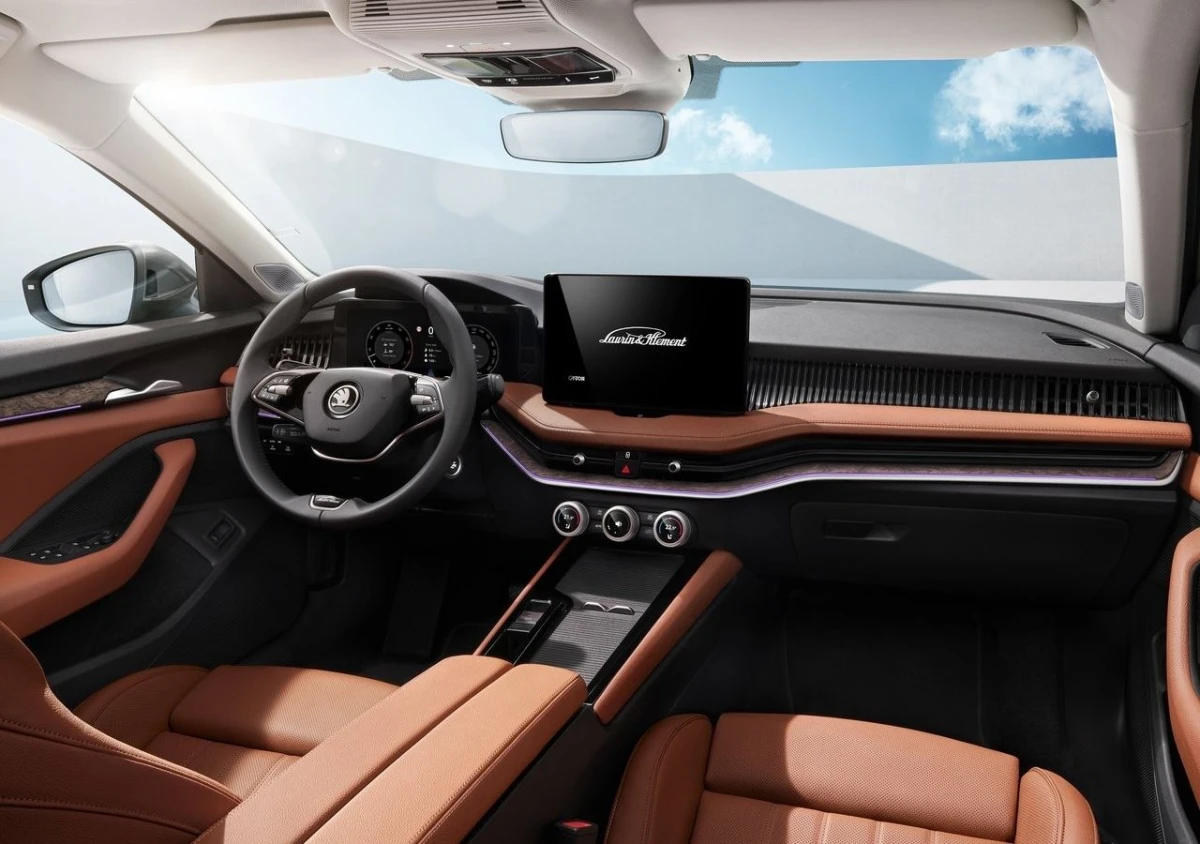
The MQB Evo platform delivers more than marketing claims. Suspension tuning is firmer in key areas, and optional adaptive DCC Plus dampers with dual valves per unit reduce body roll without sacrificing the signature Skoda compliance over imperfect pavement. The cabin moves closer to the Passat B9 experience: a 13-inch central touchscreen, fully digital gauge cluster, and a row of physical buttons beneath — Skoda smartly resisted the full touch-screen minimalism trend. Thoughtful details abound, with up to 28 clever features including door-pocket umbrellas, an ice scraper with built-in tread-depth gauge, and fold-flat tables for rear passengers.
The biggest leap, though, comes in the powertrain department. The earlier PHEV iV felt like a limited-run experiment with its 13 kWh battery and roughly 31–37 miles of electric range. The new version is an entirely different proposition.
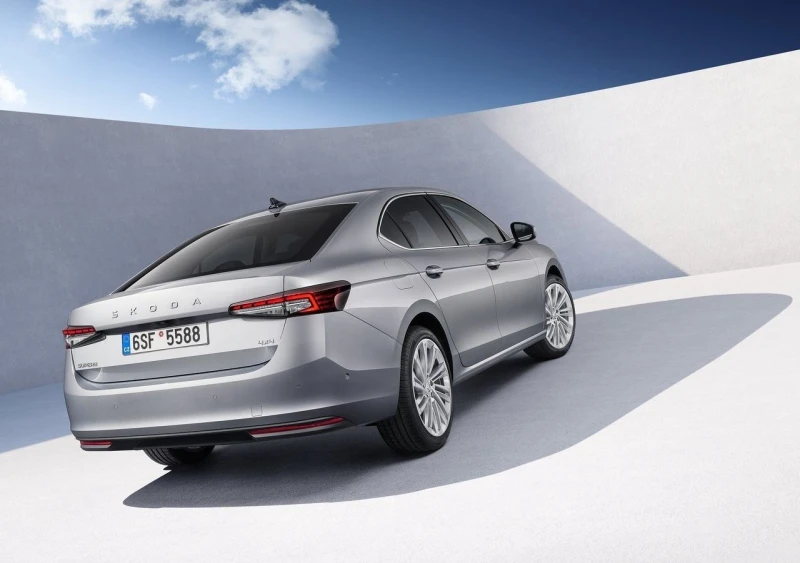
PHEV iV: A Hybrid That Actually Changes How You Drive
At the heart of the updated iV sits a 1.5-liter TSI gasoline engine (150 hp) working with an electric motor integrated into the 6-speed DSG dual-clutch transmission. Combined output reaches 204 hp and 350 Nm (258 lb-ft). The real story is the larger 25.7 kWh battery pack (about 19.7 kWh usable). WLTP official range exceeds 62 miles of pure electric driving; real-world testing by European journalists typically yields 50–75 miles depending on weather, load, and driving style. For owners with home or workplace charging, this turns most daily commutes and errands into electric-only trips.
DC fast charging at up to 50 kW brings the battery from 10 to 80 percent in roughly 25–26 minutes. An 11 kW home wallbox replenishes it in about two and a half hours. With a charged battery, combined consumption drops to 1.4–1.5 L/100 km — exceptional efficiency in MPGe terms. Once depleted, consumption settles at 5.3–5.6 L/100 km, or approximately 42–44 MPG. For reference, the previous-generation 2.0 TSI could easily surpass 9–10 L/100 km (23–26 MPG) in city driving.
Availability note for US buyers: Skoda does not operate official dealerships in the United States. While gasoline and diesel versions (2.0 TSI 190/265 hp and 2.0 TDI 150/193 hp) are common discussion points in Europe, the PHEV iV has found strong demand there, particularly in Combi wagon form. Stateside interest is rising among specialist importers, fleet managers seeking efficient powertrains, and private buyers who value the combination of space and lower running costs. As more organizations explore plug-in hybrids to manage expenses and environmental goals, the Superb iV arrives at a relevant moment.
Pricing, Trims, and Availability
Estimates for parallel-imported European-spec Superb IV models in the US market start around $48,500 for a base Selection trim equipped with the 2.0 TSI 190 hp and front-wheel drive. Moving to all-wheel drive, the 193-hp diesel, or the 265-hp gasoline engine in L&K or Sportline specifications typically lands in the $57,000–$65,000 bracket.
Standard equipment on base models includes tri-zone automatic climate control, a 10-inch touchscreen (upgrading to 13 inches higher up the range) with navigation, matrix LED headlights on Sportline, adaptive cruise control, the full Travel Assist driver-aid suite, plus heated front and rear seats and steering wheel. Laurin & Klement versions add ventilated and massaging leather upholstery, a 14-speaker Canton sound system, head-up display, and a 360-degree camera system.
The Combi wagon body remains the most versatile choice: 690 liters (24.4 cu ft) of cargo space behind the rear seats versus 645 liters (22.8 cu ft) for the liftback, expanding to nearly 2,000 liters (70.6 cu ft) with seats folded. In Europe the PHEV iV is offered primarily as a Combi; stateside examples are rarer but attract attention from buyers who need maximum practicality for family or business use.
Stacked against familiar US rivals such as the Toyota Camry Hybrid and Kia K5, the Superb offers class-leading rear legroom and cargo volume. The Camry Hybrid can feel slightly more engaging in certain conditions, though its higher trims often carry steeper pricing. The Passat shares much of the same platform DNA, yet Skoda traditionally equips its cars with more everyday practical solutions while maintaining competitive pricing.
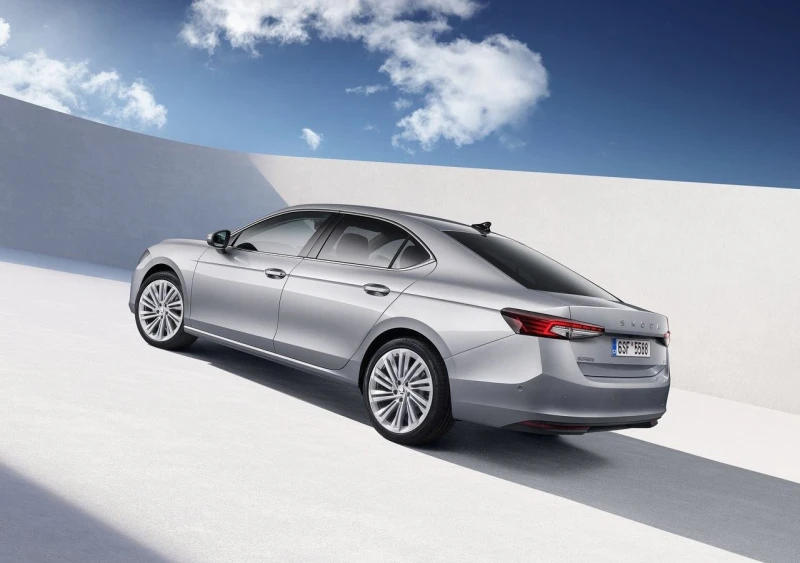
Why It Makes Sense for Buyers in 2026
The Superb IV is not a car that chases driving thrills. Its mission is to let you cover 300 miles or more behind the wheel and still feel fresh at the end. The suspension absorbs road imperfections with composure, cabin noise is well suppressed, and the seats — with extendable cushions and massage function — help prevent fatigue on long hauls. Rear-seat space is exceptional: legroom allows crossing your legs comfortably, and headroom stays generous even for taller passengers.
Families will appreciate the LATCH/ISOFIX child-seat anchors, rear window shades, multiple 12-volt outlets, and USB-C ports front and rear. Business users get a dignified, understated presence without paying the traditional German luxury premium. The PHEV variant especially suits drivers who can charge at home or work: daily miles become nearly free on electricity, with the gasoline engine reserved for longer trips.
Practical considerations remain. All-wheel drive is limited to higher-output versions, while the PHEV stays front-drive only. The DSG transmission rewards regular servicing, and although European-market cars typically carry a 4-year/90,000 km warranty, coverage on imported US examples varies by supplier. Parts and service knowledge for these VW Group vehicles is widely available through independent specialists across the country.
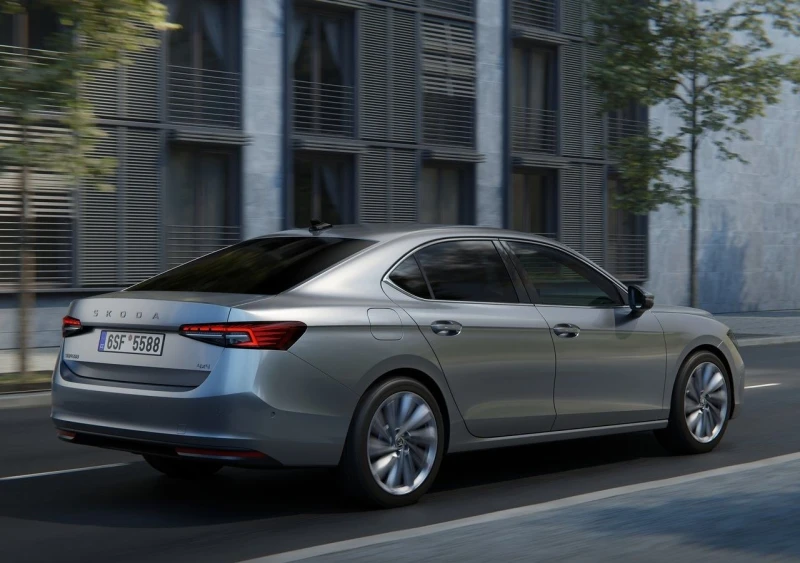
Final Verdict: Smart Evolution, Right on Target
The fourth-generation Skoda Superb did not attempt revolution. It delivered a precise, logical development of a formula that already worked well. The extended MQB Evo platform, a meaningfully upgraded PHEV iV with real electric range, and countless small thoughtful details have made the car even more capable. In American conditions — where efficiency, interior space, and relaxed long-distance manners matter — the Superb IV stands as one of the most balanced and sensible choices in its segment.
If you want a large, comfortable, and attainable vehicle that will still feel relevant in a few years, this is one to consider seriously — particularly if your routine includes regular highway miles and a desire to incorporate some electric driving. The Superb IV demonstrates that a well-executed “simply good car” can be genuinely contemporary and useful.
Estimated Market Prices in the United States (June 2026):
| Trim | Engine | Drivetrain | Est. Price from (USD) |
| Selection | 2.0 TSI 190 hp | FWD | ~$48,500 |
| Selection / Sportline | 2.0 TDI 193 hp | AWD | ~$57,000 |
| L&K / Sportline | 2.0 TSI 265 hp | AWD | ~$62,000 |
| PHEV iV Combi (import/specialist supply) | 1.5 TSI + electric motor 204 hp | FWD | ~$55,000+ |
Prices are approximate estimates for European-spec vehicles brought into the US through specialist importers and can fluctuate with exchange rates, transportation costs, compliance modifications, condition, and market demand. The Skoda Superb is not officially imported or sold by Volkswagen Group of America. Buyers should work with reputable import specialists, confirm all federal and state importation requirements, and verify emissions, safety, and titling compliance before purchase.