And this is perhaps the most accurate description of the model: the new Superb has become a car where the main changes happen not to the body, but behind the doors. To understand exactly how it differs from its predecessor and why it continues to appeal to buyers looking for space, comfort, and thoughtful equipment, the best place to start is inside the cabin.
Cabin Architecture: Fewer Screens, More Logic
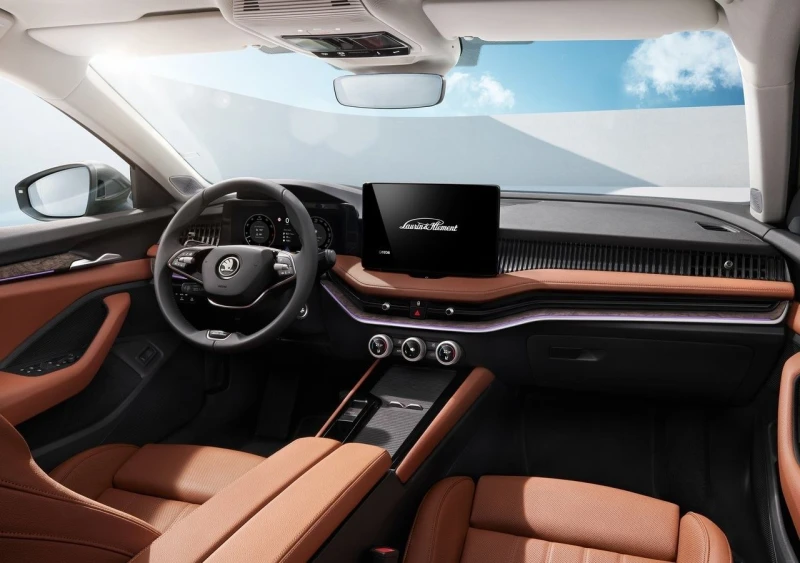
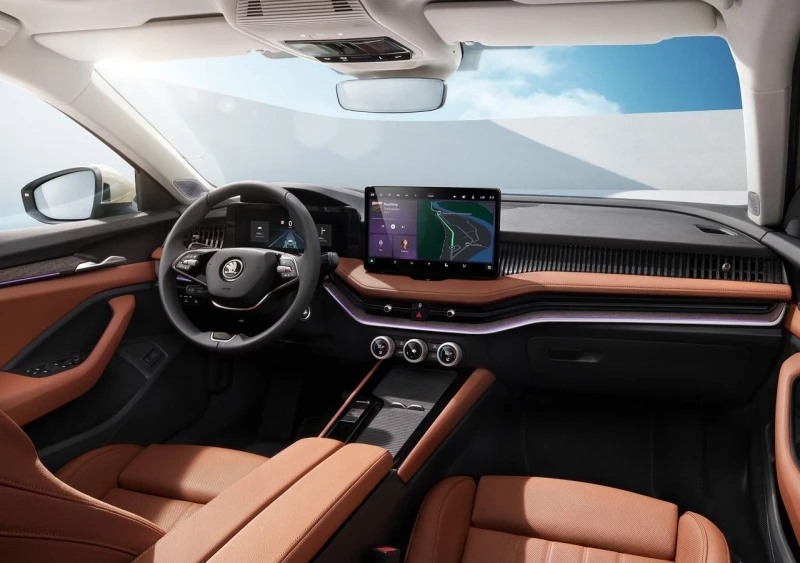
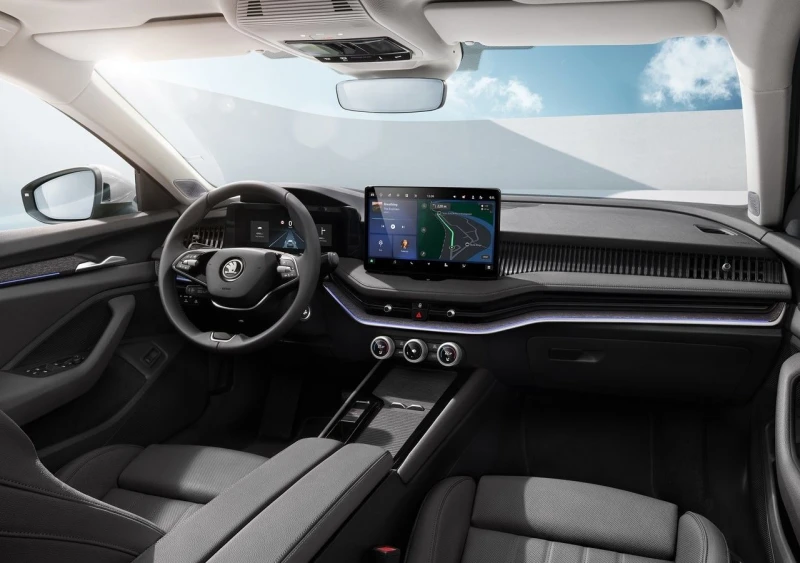
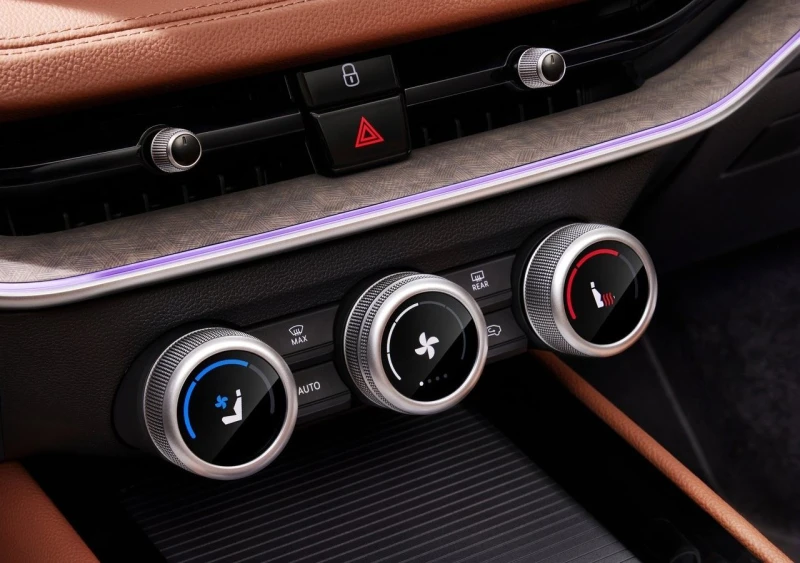
The manufacturer took a step in this generation that remains rare in the industry — returning certain functions from the touchscreen back to physical controls. Below the central display sit three circular Smart Dials, each with its own small integrated screen. These can be configured for temperature, airflow, volume, drive modes, or map zoom. It may appear controversial at first, but in daily driving it genuinely reduces screen taps — something the previous generation's overloaded infotainment system often lacked.
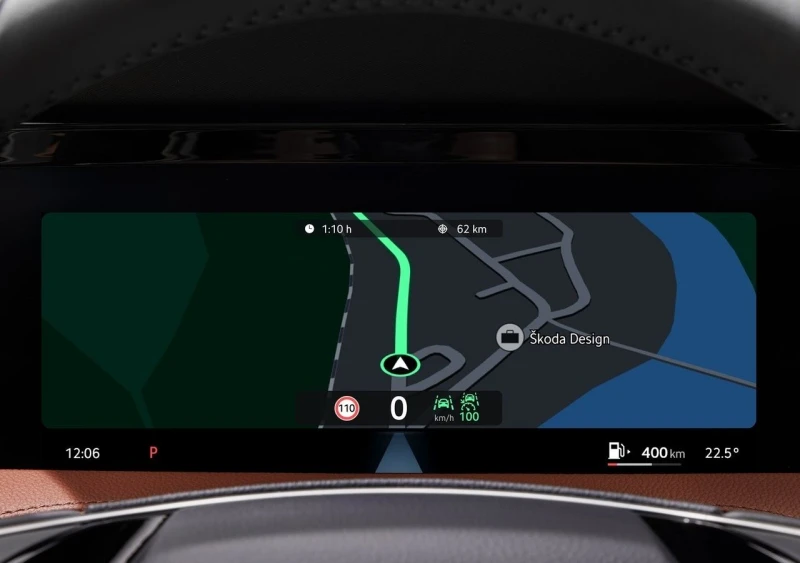
The central screen is a 13-inch unit mounted horizontally and angled slightly toward the driver. The 10-inch Virtual Cockpit digital instrument cluster is standard from the base trims onward, while a head-up display is available as an option and appears most often on Laurin & Klement models or cars equipped with the Plus package. The dashboard architecture has shifted to a more horizontal layout, with emphasis on wide decorative inlays spanning the full width and ambient lighting that, on higher trims, extends across the doors and flows onto the instrument panel.
Materials and Perceived Quality
This is arguably where the Superb made its biggest advance — while also introducing a few compromises. The upper dashboard, door cards at elbow height, center armrest, and part of the center tunnel are finished in soft-touch plastic or stitched composite materials. Below that, conventional hard plastics appear, which is normal for the class, though the tactile experience is broadly comparable to the related Passat B9.
Skoda emphasized sustainable materials in the Superb IV: portions of the upholstery use recycled wool, with options in artificial suede Suedia and Recytitan fabric made partly from recycled PET. These materials look refined and hold their shape well in practice, but their long-term durability under typical US ownership conditions is still difficult to judge — the cars are still relatively new. The Cognac or brown leather in Laurin & Klement models looks rich, yet lighter shades show dirt readily, especially along the seat bolsters.
Ergonomics and Driving Position
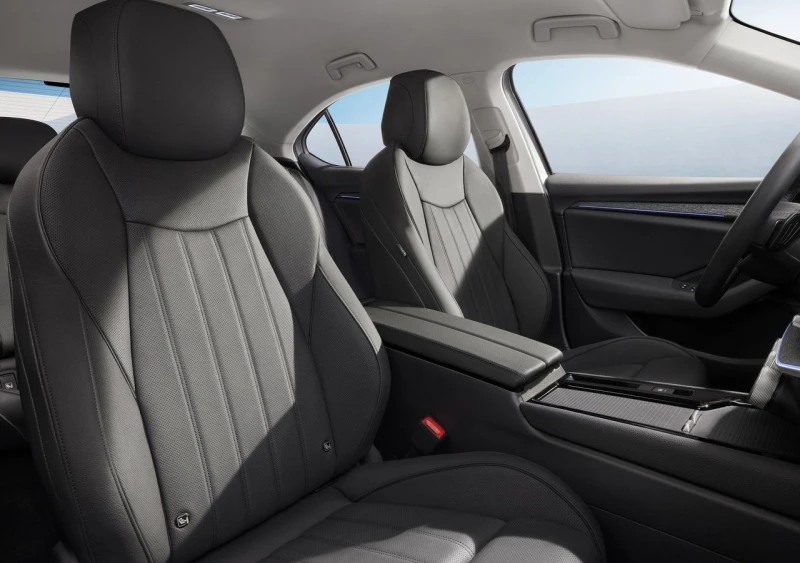
Front seats have long been a Superb strength, and Skoda stayed true to form here. The seat profile is slightly firmer than before, which pays dividends on long highway drives — your back stays fresher than in many crossovers of similar size. On models with the ergoMatic package, the driver's seat adds massage, ventilation, memory settings, and multi-directional lumbar adjustment. It is arguably the best front seat currently available in the business-sedan class.
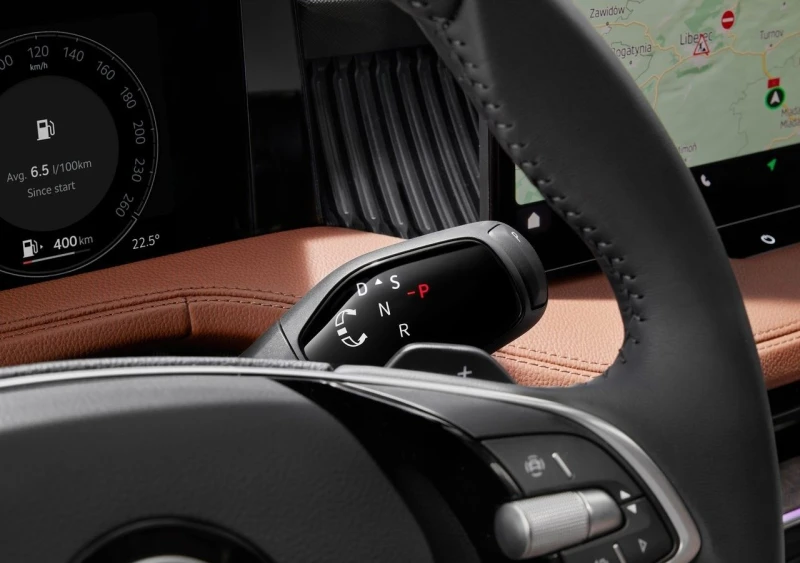
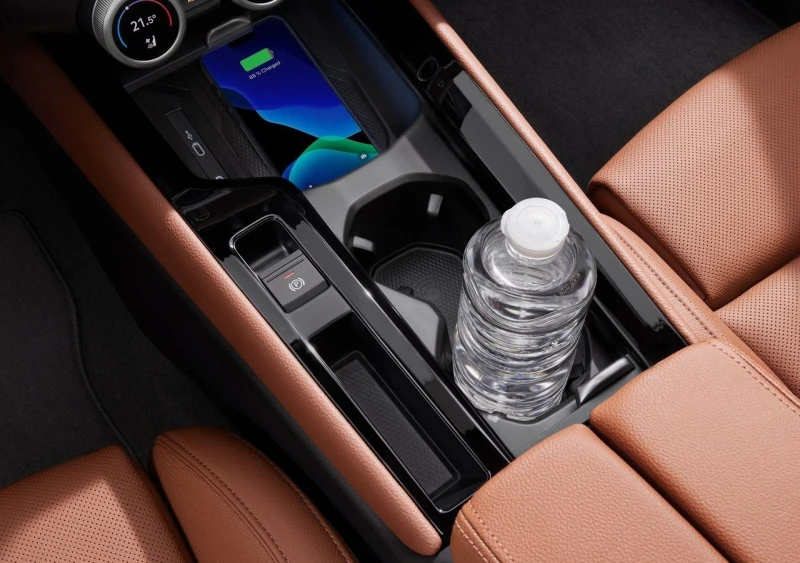
The driving position is well executed. The steering column offers a wide range of adjustment, the armrest sits at a natural height, and the gear selector is now a compact unit mounted on the steering column to the right. This frees the center console for a wireless charging pad with active cooling — a small but welcome detail in summer, when a phone running CarPlay can overheat within about twenty minutes. Forward visibility and side mirrors are excellent. The rear pillar on the hatchback is thicker than ideal, occasionally requiring an extra glance into the blind-spot mirror during highway lane changes.
Second Row and Family Space
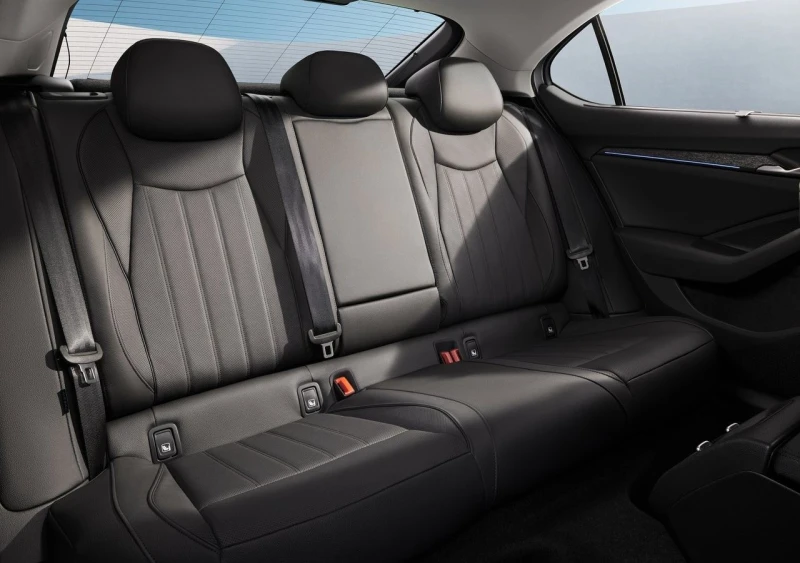
The Superb IV's wheelbase grew by just 8 mm (0.3 inches) to 2,841 mm (111.9 inches), yet the interior packaging keeps the second row among the roomiest in its class. A 6-foot-1-inch passenger seated behind a driver of similar height still has roughly 6 inches of knee room to the front seatback. That is more typical of a short-wheelbase luxury sedan than a conventional D-segment car. On certain trims the rear seatbacks now offer recline adjustment — previously a feature reserved for more expensive models.
The rear door cards feature dedicated touch controls for the three-zone climate system, and the center armrest hides a fold-out tablet holder — a signature Skoda detail that proves genuinely useful when children are along for the ride. Rear seat heating for the outboard positions is now more widely available, even appearing on Selection models.
Trim Levels Offered for US Buyers
Dealers offer the Superb IV in several clearly defined trims, and the lineup has been simplified compared with the previous generation. In practice, the configurations most commonly encountered are Essence (entry-level, often favored by fleets), Selection (the volume private-sale choice), and Laurin & Klement (the flagship).
The equipment steps between them generally follow this pattern:
| Trim Level | Key Additions Over Previous Level |
| Essence | Dual-zone automatic climate control, fabric upholstery, 10-inch Virtual Cockpit, core driver-assistance systems (Front Assist, Lane Assist, cruise control) |
| Selection | Three-zone climate control, LED Matrix headlights, upgraded upholstery with leather or premium fabric inserts, adaptive cruise control with Travel Assist, heated rear seats and steering wheel |
| Sportline | Sport seats with pronounced side bolstering, Suedia and artificial-leather trim, black interior accents, progressive-ratio steering |
| Laurin & Klement | Cognac or Black leather upholstery, front-seat massage and ventilation, head-up display, Canton premium audio system, extended ambient lighting with wider color range, power rear sun blinds |
The typical price spread between a well-equipped Selection and a Laurin & Klement runs about $8,000–$10,000. At the same time, many desirable options — Canton audio, head-up display, and the full Travel Assist 3.0 suite — can be added to the Selection through the Plus and Comfort packages. As a result, most buyers seeking strong value stop at a loaded Selection and save roughly $5,000–$7,000 versus the flagship while still getting nearly everything they need.
Combi Wagon Versatility
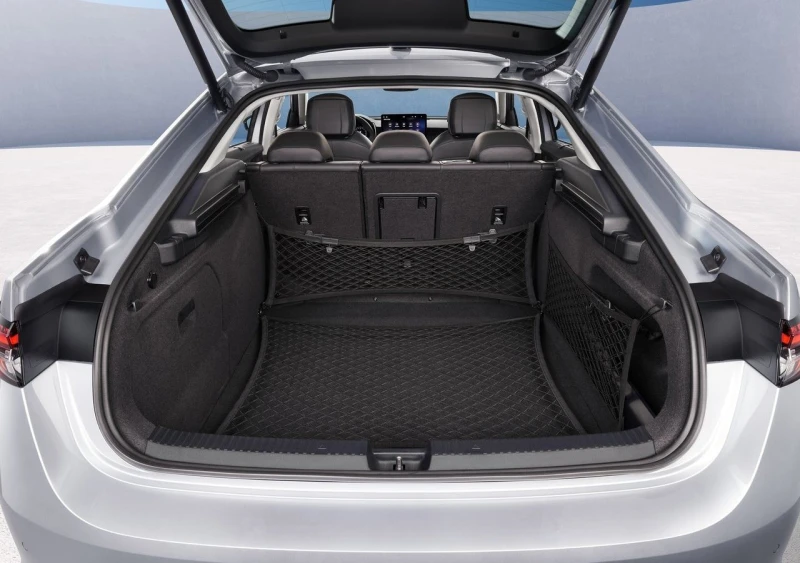
The Superb Combi wagon accounts for a substantial share of sales — roughly 35–40% in markets where both body styles are offered. Cargo capacity measures approximately 24.4 cubic feet behind the rear seats and expands to about 67.8 cubic feet with the second row folded. The liftback version provides roughly 22.8 cubic feet / 63.4 cubic feet respectively. While the hatchback covers most daily needs, the foot-activated power tailgate can be temperamental in snowy or slushy conditions when the sensor area becomes obstructed.
Plug-in Hybrid Specifics
The Superb iV PHEV is part of the official range, though demand remains moderate, influenced by the still-developing public charging infrastructure across many US regions. Inside, differences versus non-hybrid models are subtle: a battery-charge indicator appears in the Virtual Cockpit, a dedicated multimedia tab manages charging schedules and modes, and the charging cable stored beneath the trunk floor occupies space in the underfloor compartment, trimming cargo volume by roughly 1.2–1.4 cubic feet. In all other respects the interior remains unchanged, with the hybrid powertrain integrated cleanly and without visual compromises.
Real-World Ownership: Early Impressions
The generation is still too new for definitive long-term reliability conclusions, but the first couple of winters and years of service have already provided useful feedback. Leather elements on the steering wheel and gear selector are holding up well so far, with none of the premature wear seen on certain rivals. The Suedia trim has drawn no complaints yet, though the material is particular about cleaning — greasy stains are difficult to remove, and many owners schedule professional interior detailing every six months.
Noise insulation has improved noticeably. At 70 mph the cabin stays quiet enough for easy conversation, something the previous generation often struggled to achieve on winter tires. Acoustic glass on higher trims contributes to the calm. One recurring note from early-build cars (2023 through early 2024) concerns occasional creaks near the windshield header after the first harsh winter; the manufacturer has since introduced production fixes, but buyers considering used examples should verify the issue has been addressed.
Touch-sensitive elements remain a mixed bag. Despite the welcome return of physical dials, mirror adjustment and certain lighting functions are still capacitive and can be awkward to operate while wearing gloves in cold weather. The window switches follow the familiar two-button layout for four windows and require an extra toggle to control the rear glass — a carryover from Volkswagen that continues to draw owner criticism.
Where the Superb IV Stands Today
On the current US market the Superb IV occupies an interesting position: it has moved noticeably closer to the premium segment in material quality and equipment sophistication while remaining realistically priced for the business-class category. Estimated market prices for the US begin in the low-to-mid $40,000s for base models. Popular Selection examples equipped with desirable packages typically fall in the $48,000–$52,000 range, while fully optioned Laurin & Klement models can reach the low-to-mid $60,000s.
Within this price window the Superb has few direct competitors that match its combination of interior roominess and comprehensive equipment.
The fourth-generation cabin feels contemporary, thanks to the large horizontal infotainment display, the return of intuitive physical controls, and well-executed ambient lighting. Areas that already feel dated relative to the newest luxury models include infotainment animation fluidity — improved but still trailing BMW and Mercedes in places — and the design of the rear climate-control panel for the third zone, which can appear somewhat basic for the money.
A balanced recommendation today is a Selection fitted with the Comfort Plus package and the optional head-up display. This configuration delivers virtually everything most drivers need for long trips and everyday use without paying extra for the more image-oriented elements of the Laurin & Klement. The top trim makes sense primarily when Cognac leather, seat massage, and maximum personalization are genuine priorities — yet under real-world US roads and usage patterns it often functions more as a statement piece than a purely rational choice.