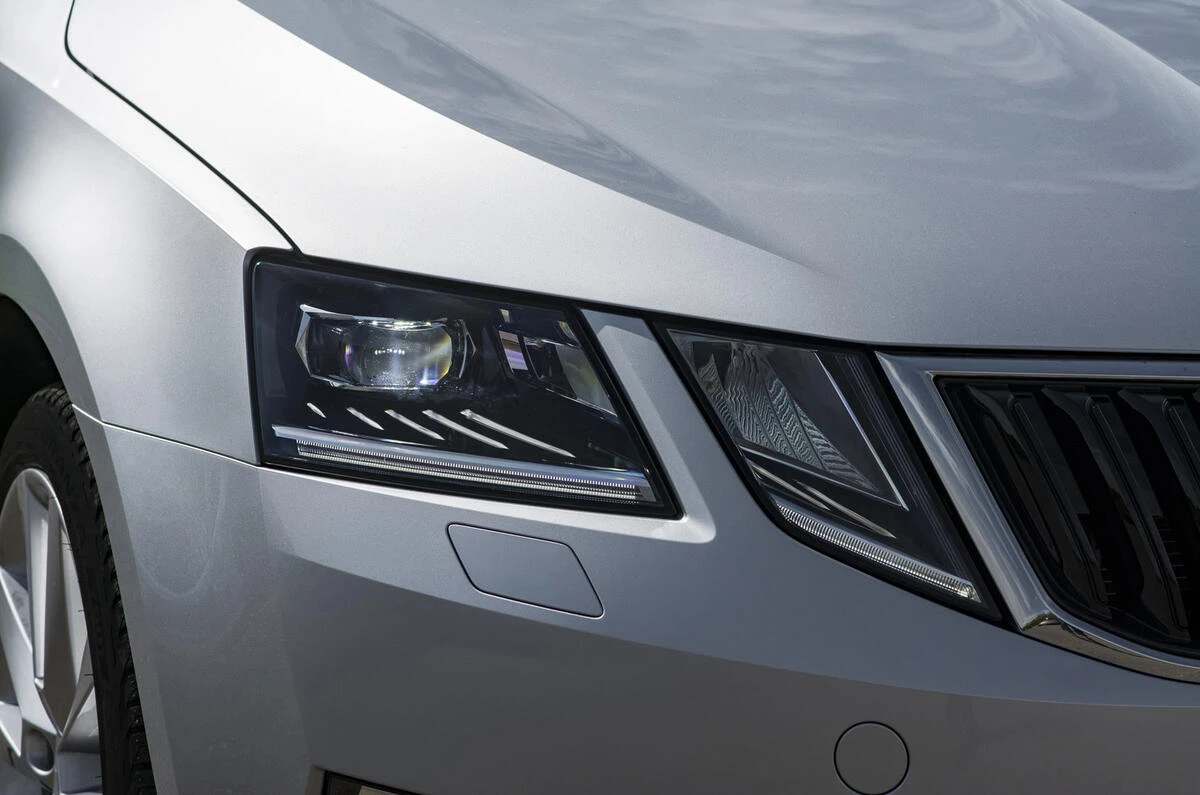
The second-generation Skoda Octavia 2004–2013, known as Mk2 (A5, Typ 1Z), rides on the Volkswagen PQ35 platform and delivers an excellent mix of comfort, fuel efficiency, and driving refinement. In this guide we dive deep into the Skoda Octavia 2004–2013 engines, their pairings with different transmissions, overall dimensions, and year-by-year changes. Special attention is given to real-world use on American roads and with U.S. fuel quality in mind. For exterior, interior, trim levels and common issues please refer to other articles in the series.
The Skoda Octavia II launched in 2004 and remained in production until 2013, including the significant 2008–2009 facelift. In Europe more than 2.5 million units were sold; today well-kept examples remain sought-after on the used market. The engine lineup is impressively broad: everything from simple naturally-aspirated gasoline units to high-output turbo-diesels. Let’s get into the details.
Engines & Transmissions
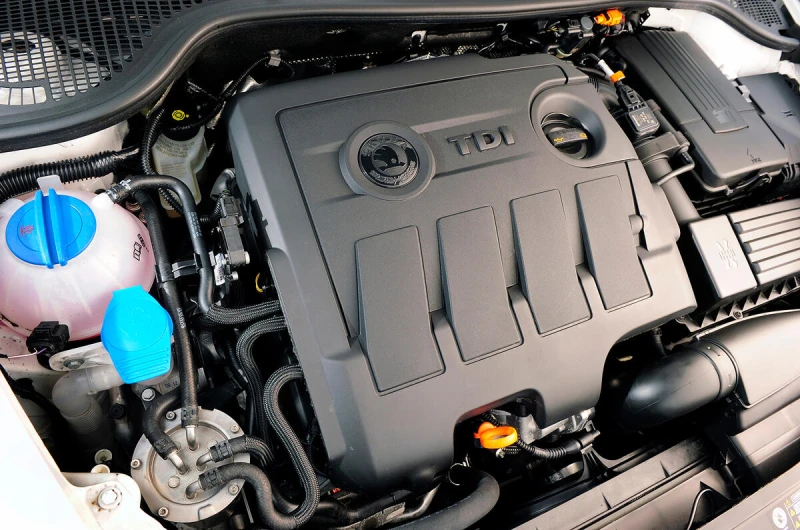
The Skoda Octavia engine range in the Mk2 generation covers naturally-aspirated and turbo petrol MPI/FSI/TSI engines plus PD and Common-Rail TDI diesels. Power outputs span 75 hp to 200 hp in the RS version. Most cars are front-wheel drive; the Haldex-based 4×4 system appears in roughly 15–20% of vehicles, especially those fitted with stronger diesels.
Transmission choices include 5- and 6-speed manual gearboxes (MQ200/MQ250), 4- and 6-speed Tiptronic automatics (01J/09G), and — starting from 2008 — the wet-clutch 6-speed DSG (DQ250). Real-world combined fuel economy figures reported by owners:
- 1.6 MPI (102 hp) petrol: 24–29 mpg
- 2.0 FSI (150 hp) petrol: 22–26 mpg
- 1.9 TDI PD (105 hp) diesel: 38–45 mpg
- 2.0 TDI CR (140 hp) diesel: 36–42 mpg
| Engine (type, displacement) | Power, hp | Transmission | Drivetrain | Combined MPG (real-world) |
|---|---|---|---|---|
| Petrol, 1.4 MPI | 75/80 | 5-speed manual | FWD | 28–34 |
| Petrol, 1.6 MPI | 102 | 5-speed manual / 4-speed auto / 6-speed auto | FWD | 24–29 |
| Petrol, 1.8 TSI (from 2008) | 152/160 | 6-speed manual / DSG-6 | FWD | 24–28 |
| Petrol, 2.0 FSI | 150 | 6-speed manual / 6-speed auto | FWD | 22–26 |
| Petrol, 2.0 TFSI (RS) | 200 | 6-speed manual | FWD | 21–25 |
| Diesel, 1.9 TDI PD | 105 | 5-speed manual / DSG-6 | FWD / 4×4 | 38–45 |
| Diesel, 2.0 TDI PD (until 2008) | 140/170 | 6-speed manual / DSG-6 | FWD / 4×4 | 36–42 |
| Diesel, 2.0 TDI CR (from 2008) | 140 | 6-speed manual / DSG-6 | FWD / 4×4 | 38–44 |
The table reflects the full 2004–2013 range including facelift models. In the used market roughly 70% of surviving examples pair a manual gearbox with the 1.9 TDI; post-2009 DSG units are noticeably more reliable.
Dimensions & Weight
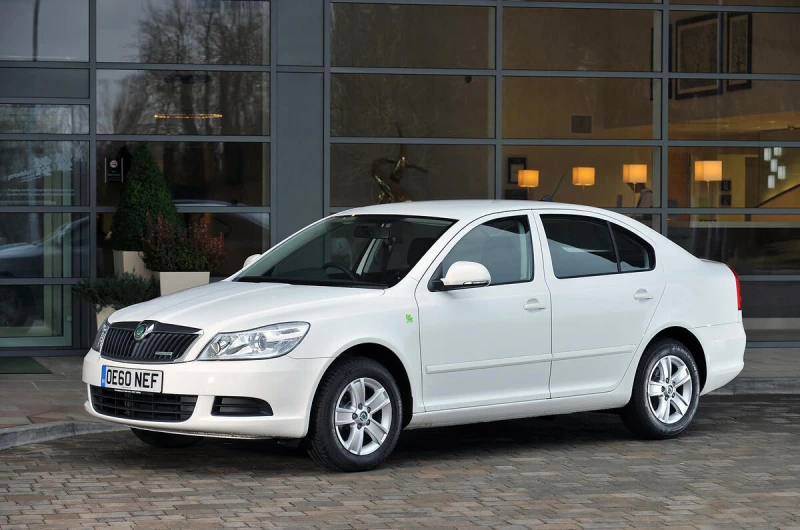
The Skoda Octavia II liftback/wagon belongs to the compact (D-segment) class with a strong emphasis on practicality: overall length ≈ 4.57 m (180 inches), ground clearance 5.5–6.1 inches (very usable on imperfect roads). Curb weight ranges from ≈2,750 lb (FWD petrol) to ≈3,420 lb (4×4 diesel). Trunk capacity: 560/1,350 liters (19.8/47.7 cu ft) for the liftback, 580/1,620 liters (20.5/57.2 cu ft) for the Combi wagon. Fuel tank – 14.5 gallons. Front-wheel drive is standard; 4×4 is a desirable option for winter or occasional light off-road use.
| Specification | Liftback | Combi Wagon |
|---|---|---|
| Length, in | 180.0 | 180.7 |
| Width, in | 70.2 | 70.2 |
| Height, in | 57.6 | 57.8 |
| Wheelbase, in | 101.5 | 101.5 |
| Ground clearance, in | 5.5–6.1 | 5.5–6.1 |
| Curb weight, lb | 2,750–3,200 | 2,870–3,420 |
| Gross weight, lb | 4,080–4,410 | 4,190–4,520 |
| Trunk volume, cu ft (min/max) | 19.8/47.7 | 20.5/57.2 |
| Drivetrain | FWD / 4×4 | FWD / 4×4 |
| Transmission types | 5/6-spd manual, 4/6-spd auto, DSG-6 | 5/6-spd manual, 4/6-spd auto, DSG-6 |
Figures are for standard models; the RS version sits ≈0.6 in lower and weighs roughly 110 lb more. The Combi wagon accounts for a significant share of used examples thanks to its huge cargo area.
Year-by-Year Changes & 2008–2009 Facelift
The major facelift arrived for the 2009 model year (introduced late 2008). Pre-facelift cars (2004–2008) mostly feature the 1.6 MPI, 1.9 TDI PD and 4-speed automatic. From 2008–2009 onward the lineup gained more efficient turbo engines: 1.4 TSI (122 hp), 1.8 TSI (160 hp), and the smoother 2.0 TDI Common Rail. The wet-clutch DSG-6 (DQ250) became widely available, interior noise reduction improved noticeably, and body rigidity was increased. Later cars (2010–2013) also offered the 1.2 TSI, refined DSG software to reduce overheating, and wider availability of 4×4.
Post-facelift models (2009+) are generally preferred on the used market thanks to cleaner emissions (Euro 4/5), slightly better economy, quieter TDI CR engines, and more reliable DSG units.
Key Buying Tips & Real-World Ownership in the United States
Owning a Skoda Octavia II in the U.S. is realistic mainly via gray-market imports or enthusiast communities — reliability is generally strong but several points require attention. The 1.6 MPI petrol is virtually bulletproof (400,000+ miles potential), tolerant of lower-octane fuel, and easily converted to LPG if desired. The 2.0 FSI offers good performance but suffers from carbon buildup and oil consumption after ≈90,000–100,000 miles. The 1.9 TDI PD is legendary for longevity (500,000+ miles not uncommon), though pump-injectors are expensive to replace (≈$800–$1,200 for the set) and can be sensitive to poor diesel quality — budget for periodic EGR and turbo maintenance. The later 2.0 TDI CR is quieter and more refined but the DPF can clog in predominantly short-trip driving.
Transmissions: manuals are very durable; Tiptronic automatics last a long time with fluid changes every 40,000 miles; post-2009 DSG-6 is far more dependable (clutches typically last 90,000–120,000 miles). Haldex AWD requires fluid & filter service every 40,000 miles.
Parts are reasonably available thanks to VW Group compatibility (OEM and aftermarket). Real fuel consumption is usually 1–2 mpg higher than factory figures when using regular 87-octane; premium 91–93 octane is strongly recommended for all TSI engines. When shopping, always check compression, inspect injectors with a borescope, test DSG for jerky shifts, and examine underbody rust protection. Annual maintenance costs on higher-mileage examples usually fall between $400–$900.
Conclusion: Best Used Buy in Today’s Market
On the current U.S. used market (typical asking prices $6,000–$12,000 depending on condition and mileage) the sweet spot is a 1.9 TDI PD 105 hp + 5-speed manual + FWD, ideally a 2008+ facelift example. Why? Excellent fuel economy (≈40 mpg real-world highway), bulletproof longevity, strong resale value, and affordable upkeep. For simplicity and LPG compatibility the 1.6 MPI with manual is the best petrol choice. Avoid very early DSG-equipped cars and pre-2008 2.0 PD diesels unless maintenance history is impeccable. For families or long-distance drivers the combination of huge trunk, solid build quality, and frugal running costs makes the Octavia II one of the smartest used compact-car buys available.
The Skoda Octavia II remains a thoroughly proven, high-mileage-capable European classic that still makes excellent sense in 2025–2026.