The model, conceived as fully electric, ultimately received alternative powertrains and unexpectedly found itself at the center of discussions about the possible return of the classic eight-cylinder engine. This material explains why talks about V8 are becoming more substantive and which specific engine might appear under the hood of the Charger.
From Electric Vehicle to a Variety of Versions
Initially, the Dodge Charger was planned exclusively in an electric version. This approach was intended to emphasize the Stellantis group's focus on electrification, but even during development, it became clear that demand for such a vehicle would be limited. As a result, the decision was made to add a version with a six-cylinder engine, which allowed for audience expansion and partial risk reduction.
The strategy proved justified. The Charger with the six-cylinder engine quickly attracted market attention and received high ratings, including the title of "North American Car of the Year." Against this backdrop, interest in the electric version noticeably declined, and it effectively became a niche offering.
Discussions on the Return of V8
Following changes in Stellantis leadership, the topic of returning eight-cylinder engines became relevant again. Experience with other models showed that such engines remain in demand, especially in the USA. For the Charger, the question is not so much about the fundamental possibility of installing a V8, but about selecting a specific unit.
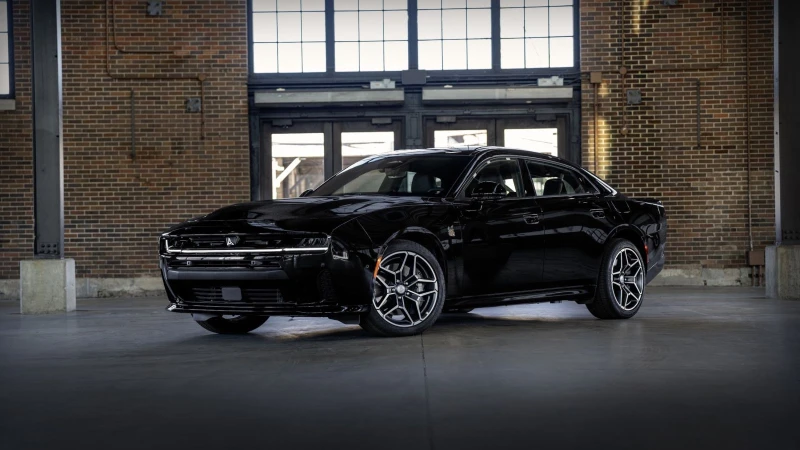
The head of Stellantis' American division, Tim Kuniskis, indicated that classic naturally aspirated V8s with 5.7 or 6.4 liters displacement are not suitable in this case. The new Charger features significant mass: the electric version weighs about 2,650 kg, and the six-cylinder variant — approximately 2,185 kg. With these figures, less powerful eight-cylinder engines would not provide competitive dynamic performance.
Why Only Hellcat
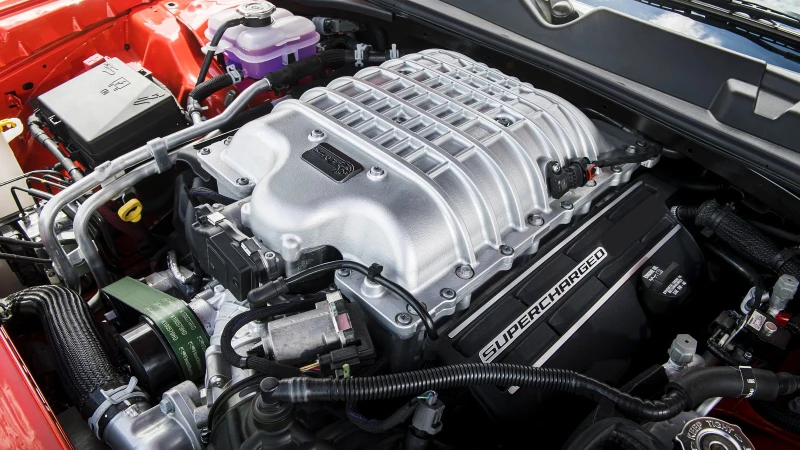
According to Kuniskis, the logical option remains installing an engine at the Hellcat level. This refers to a supercharged V8 capable of developing over 700 hp, and in some versions — over 1,000 hp. Only such an engine would allow the Charger to meet fan expectations and compete with the most powerful versions of the Ford Mustang.
However, an economic factor arises here. A Charger with a Hellcat engine would inevitably fall into a price segment above $100,000. This means limited sales volume, as such versions are purchased by few. On the other hand, such a vehicle could serve as a flagship and attract additional interest to more accessible modifications.
Balance of Power and Demand
In this context, the three-liter turbocharged six-cylinder engine gains particular importance. Depending on the version, it develops 426 or 558 hp, surpassing the output of base naturally aspirated V8s from previous years. This engine has already proven its popularity in other group models and remains key for volume sales.
Conclusion
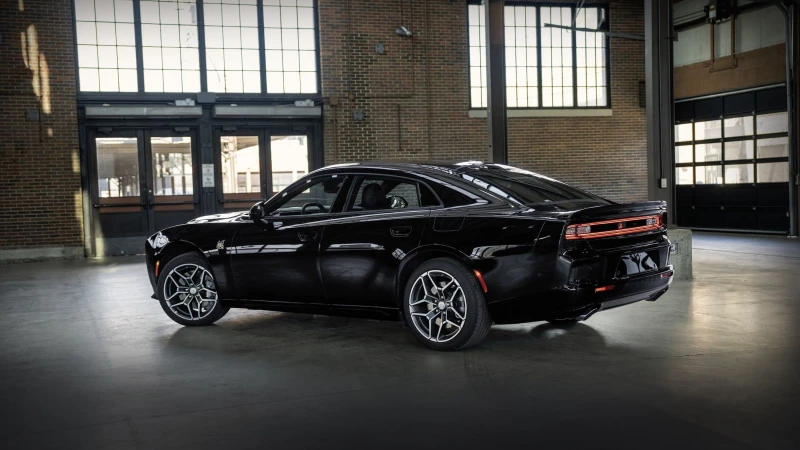
The Dodge Charger finds itself at the intersection of two eras — electrification and the preservation of traditional American powertrains. Technically, a return to V8 is possible, but in reality, it can only involve a powerful and expensive engine at the Hellcat level. The decision will depend on the role the company assigns to such a Charger — a niche symbol or a full-fledged part of the model lineup.