


A sharp drop in sales and subsequent management decisions indicate a deep review of previous orientations. This material explains how the company arrived at the current situation and what steps it is taking in response to the changed conditions.
China as a Pillar of Global Sales
In the early 2020s, China held the first place among Porsche's sales markets. In 2020–2022, the company annually delivered over 90,000 vehicles there, significantly outperforming the US and Germany. High demand from affluent audiences allowed the brand to confidently increase volumes and view the region as the foundation for further growth.
However, after 2022, the dynamics changed sharply. Sales began to decline, and by the end of last year, the delivery volume dropped to approximately 41,900 vehicles. Thus, over a few years, the market lost more than half of its previous volume, posing a serious challenge to the company's entire strategy.
Focus on Electric Vehicles and Its Consequences
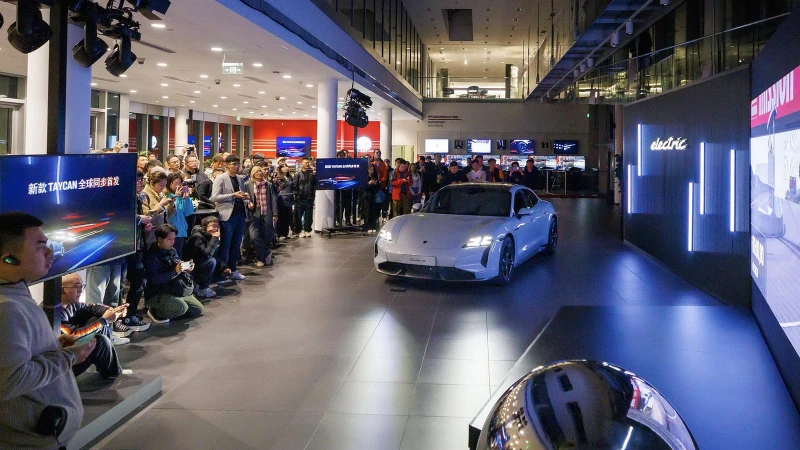
A key factor in the decline was Porsche's orientation toward electric vehicles (EVs), which were planned as the main driver of sales in China. The calculation was based on the expectation that the premium audience would quickly adopt electric models. In practice, expectations were not met: affluent customers did not show sustained interest, and the mass segment preferred more affordable alternatives from local manufacturers.
As a result, sales of electric models continued to decline, intensifying the overall drop. This forced the company to revise plans and refocus on internal combustion engine (ICE) vehicles, for which demand in the region remains more stable.
Reduction of Dealer Network
Amid falling demand, Porsche decided to significantly reduce its dealer network in China. By the end of 2026, the number of dealerships should decrease to about 80, whereas at the end of 2024, there were around 150. The reduction is proceeding at a rapid pace and aims to cut costs and stabilize financial performance.
New Focus on Local Specifics
Funds freed up through network optimization are planned to be directed toward developing local research and development. The goal is to better account for Chinese customer preferences and adapt products to real market expectations, rather than predefined global scenarios.
Conclusion
The situation in China has become an indicator for Porsche of how risky a one-sided bet on certain technologies can be without considering regional demand. The reduction in presence and review of product strategy reflect an attempt to stabilize positions and build a more flexible approach to the world's largest automotive market.