


The discussion concerns the reduction in power of certain engines, while on other markets the same models will retain their previous specifications. This article explains the reasons for these differences, which engines are primarily affected, and how the new requirements will impact the actual properties of the vehicles.
The New Euro 7 Standard and Its Features
From November 2026, the Euro 7 environmental standard will come into effect in European Union countries. Unlike previous versions, it does not tighten the emission limits themselves but significantly expands the range of conditions under which the engine must comply with them. Testing now covers higher speeds, operation at extremely low and high temperatures, as well as use at significant altitudes above sea level.
In addition, measurement tolerances have been reduced. As a result, manufacturers have had to refine powertrains, even if such modes are rarely encountered in real-world operation. One of the simplest ways to meet the requirements has been to limit engine output.
Example with BMW's Eight-Cylinder Engine
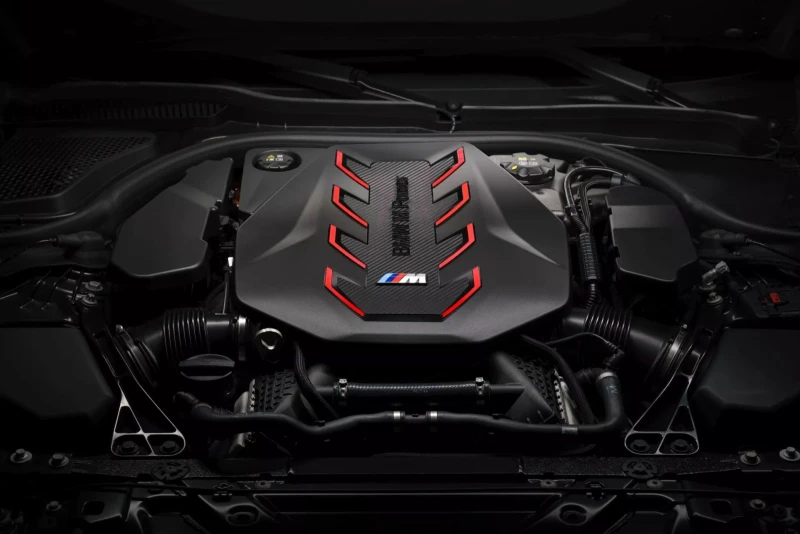
One of the first confirmed examples is the 4.4-liter V8 used in several BMW sports models. In the European specification, its power will be reduced from 585 to 544 hp, or about 10 percent. Formally, this appears as a significant loss, but in hybrid versions, the total power output of the powertrain remains the same due to the electric motor.
Thus, the overall output remains at 727 hp for the M5 and 748 hp for the XM. From the perspective of official specifications, there is almost no difference, but it is fundamentally important that the electric component cannot provide maximum power for an extended period. After the battery discharges, the vehicle is effectively left with a less powerful gasoline engine while retaining the high mass of the hybrid system.
Different Versions for Different Markets
The key point is that such restrictions apply exclusively to Europe. In the US and other markets, the same eight-cylinder engine retains its original 585 hp, and the electric motor specifications remain unchanged. BMW is essentially introducing two different technical specifications for the same vehicle, based on regional legislative requirements.
As the Euro 7 implementation date approaches, similar changes may affect other models of the brand. BMW is not an exception: under the new rules, certain versions of sports cars from other manufacturers have already been affected or are leaving the European market.
Conclusion
The reduction in BMW engine power in Europe is a direct consequence of the Euro 7 standard's features, rather than a technical necessity. For buyers, this means differences in specifications for identical models depending on the region. As new requirements are implemented, such discrepancies may become standard practice for the entire European market.