The decision follows the U.S. Commerce Department’s Bureau of Industry and Security declining to grant the company the authorization needed to continue selling vehicles in the country. The restriction is tied to new requirements governing connected vehicles and the origin of their software and hardware.
New Rules Taking Effect in the U.S.
U.S. authorities are tightening oversight of vehicles that continuously exchange data through built-in internet services. The rules cover not only infotainment systems, but also navigation, telematics, remote controls, cameras, and electronic control units involved in vehicle operation.
The new regulations restrict the sale of vehicles using Chinese software and will later extend to certain Chinese hardware components. U.S. officials cite national security concerns, noting that connected vehicles can collect large amounts of data about their owners, travel routes, and surrounding infrastructure. Such systems could also theoretically be vulnerable to outside interference.
The software restrictions take effect beginning with the 2027 model year, while hardware requirements will be introduced later. These regulations were developed under the previous U.S. administration, but they are now beginning to directly affect the plans of individual automakers.
Why Polestar Is Affected
Polestar is part of China’s Geely group. The brand’s vehicles use software solutions and electronic components linked to Chinese suppliers. As a result, the company needed separate authorization to continue selling vehicles in the U.S., but it was unable to obtain it.
Polestar’s situation differs from that of Volvo, which is also controlled by Geely. The Swedish brand secured the authorization required for the U.S. market. This indicates that automakers must adapt their software architecture, supply chains, and electronic systems to the new requirements if they want to maintain a presence in the United States.
U.S. Production Does Not Resolve the Issue
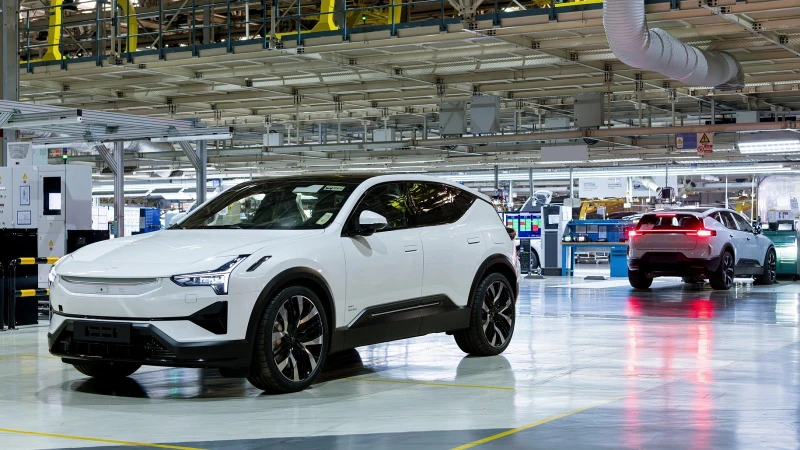
Polestar had been counting on the U.S. market and has produced the Polestar 3 crossover in South Carolina since 2024. Local assembly helps avoid some logistical complications and reduces dependence on imported finished vehicles. However, the production location does not override requirements concerning the software and critical electronic components used in the vehicle.
The company plans to sell its remaining inventory of Polestar 3 and Polestar 4 vehicles, after which new Polestar models will no longer be available to U.S. buyers. Production of the Polestar 3 in the United States could continue because vehicles assembled there are also exported to other markets, including Europe.
What the Decision Means for Polestar
Leaving the U.S. market will present an additional challenge for Polestar. The company operates exclusively in the electric vehicle segment, where U.S. demand is significantly influenced by prices, charging infrastructure availability, and government incentive programs. Polestar sold 13,126 vehicles worldwide in the first quarter of 2026, so losing one of its potentially major markets will limit its growth opportunities.
The situation demonstrates that the origin of digital systems is becoming as important to the auto industry as engine design, assembly location, or tariffs. Automakers using Chinese software platforms and electronic components will either need to adapt their vehicles to U.S. regulations or focus on other regions.
Conclusion
Polestar intends to leave the U.S. new-vehicle market beginning with the 2027 model year because of requirements governing Chinese software in connected vehicles. Local production of the Polestar 3 does not eliminate the issue because the restrictions primarily concern the vehicle’s digital and electronic systems. The brand’s future strategy will depend on its willingness to change suppliers and adapt its technology for individual markets.