



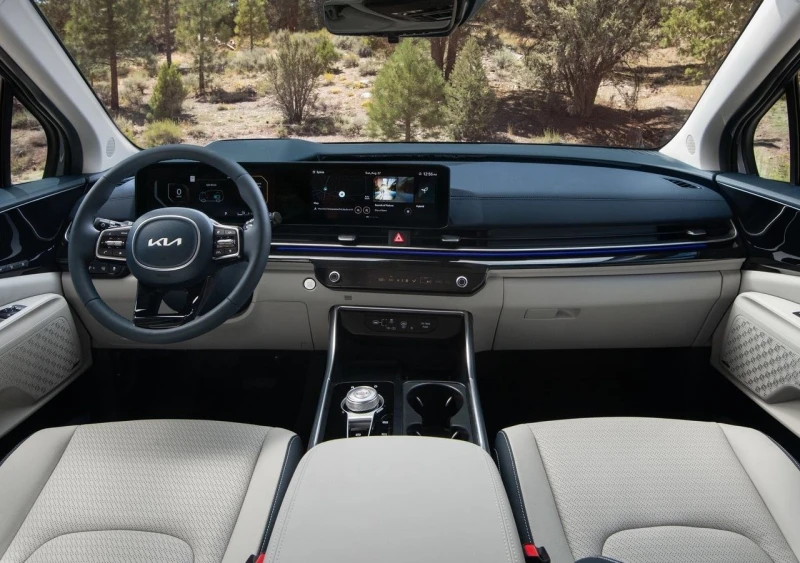
In the United States, the fourth-generation Kia Carnival arrived for the 2022 model year as the replacement for the Sedona. Unlike gray-market versions sold elsewhere, U.S. buyers receive a factory-backed lineup tailored to American families, with sliding rear doors, seven- or eight-passenger seating and equipment that varies significantly by trim and model year. The cabin is not a minimalist showpiece; it is a practical, technology-focused space designed for commuting, school runs and long interstate trips.
Dashboard layout and first impressions
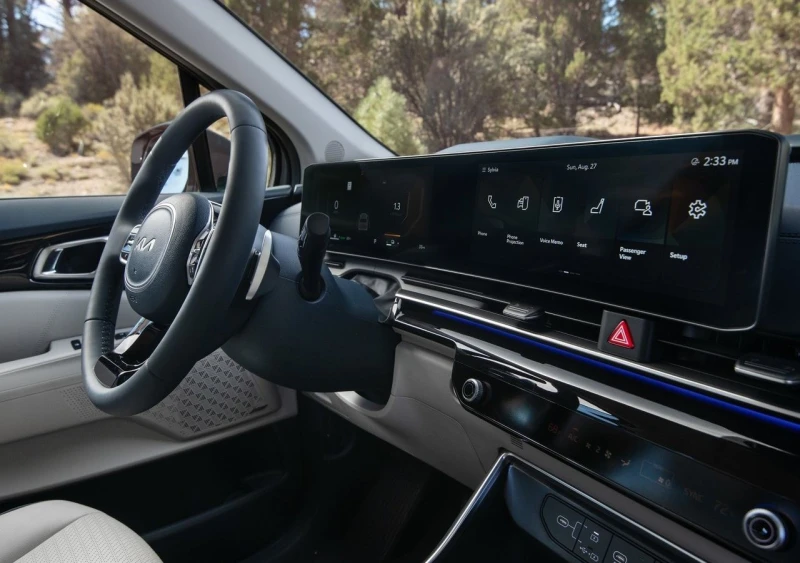
The dashboard design depends on model year and trim. Early 2022–2024 Carnivals used an 8-inch touchscreen in lower specifications, while upper trims could pair a 12.3-inch infotainment display with a 12.3-inch digital instrument cluster under a single glass panel. The 2025 model-year refresh introduced a cleaner, more horizontal fascia. A 12.3-inch center display became the visual anchor, while a full 12.3-inch digital cluster remained available on higher trims; lower versions used a smaller TFT instrument display within the same wide panel.
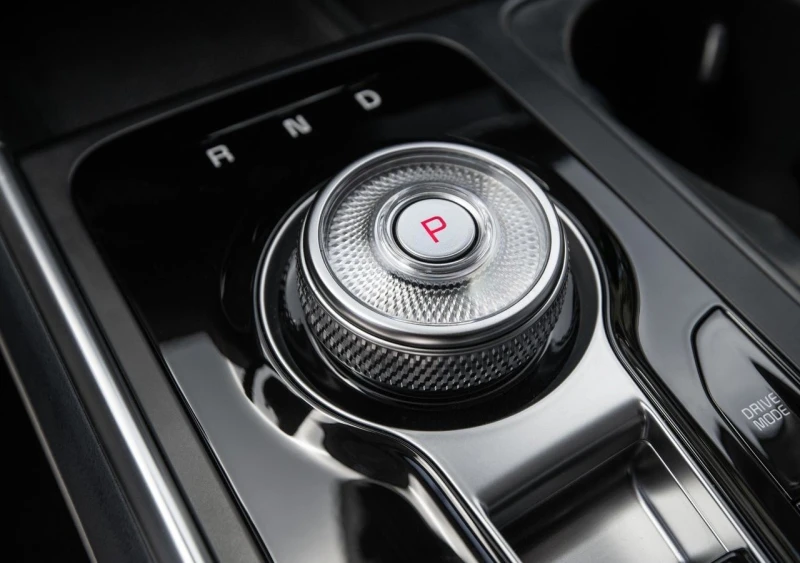
The controls are arranged around a broad center console with large cupholders and useful storage. The raised driving position, expansive windshield and large side mirrors provide the commanding view expected from a modern minivan. Seat comfort and adjustment vary by trim: entry versions are straightforward, while higher specifications add power adjustment, lumbar support, heating and ventilation. Buyers should compare the exact model year and window sticker rather than assuming every Carnival has the dual-screen setup shown in promotional photos.
Cabin materials and everyday durability
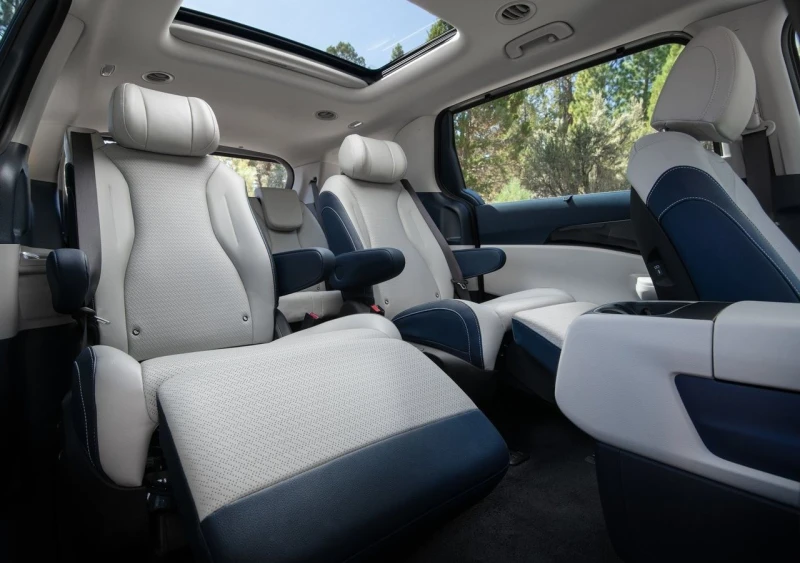
U.S.-market Carnivals use cloth in the most basic versions, SynTex or other artificial-leather upholstery through much of the lineup, and genuine leather on selected top trims. Soft-touch material covers the most visible areas of the dashboard and door panels, while harder plastic is used lower in the cabin where shoes, bags and child seats are more likely to make contact. Depending on specification, decorative trim ranges from understated patterned inserts to glossy surfaces and ambient lighting.
The material mix suits family use, but condition matters on a pre-owned vehicle. Lower door panels and seatback trim can collect scuffs, glossy console surfaces show fingerprints, and light-colored upholstery requires regular cleaning. On examples fitted with power second-row seats, dual sunroofs or rear-seat entertainment, every mechanism and screen should be tested before purchase. There is no substitute for inspecting the individual vehicle, particularly one that has spent years carrying children, pets or bulky cargo.
Second- and third-row space
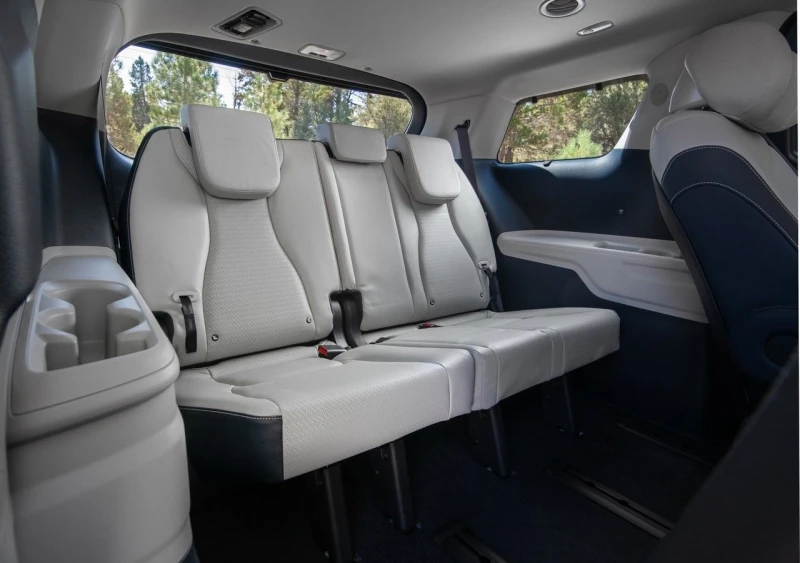
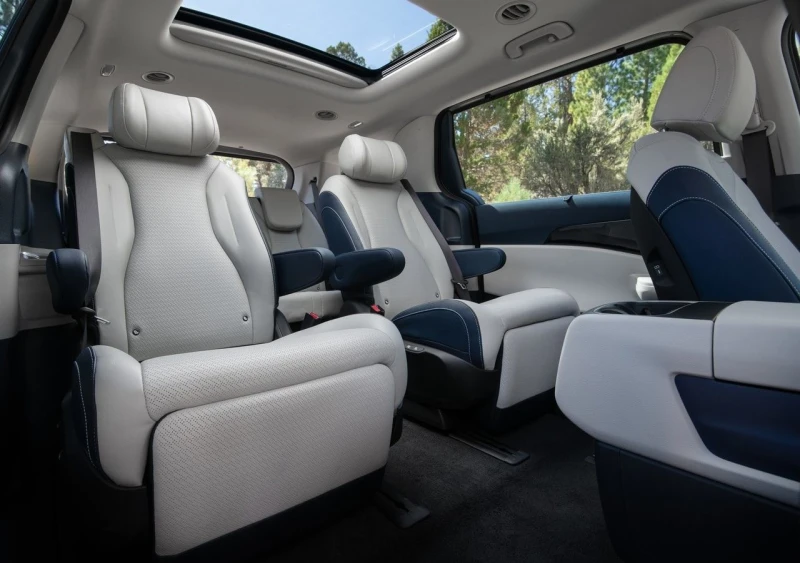
Passenger space is the Carnival's defining strength. Eight-passenger versions use Kia's Slide-Flex second row, including a movable center seat that can slide forward for easier access from the front passenger seat or be repositioned to change the aisle layout. Most Slide-Flex second-row seats can be removed when maximum cargo room is required. Seven-passenger SX Prestige models may be equipped with power VIP Lounge Seats featuring heating, ventilation, reclining backrests and leg extensions, but these seats prioritize comfort and are not removable.
The third row is a genuine passenger bench rather than an emergency-only solution. It folds into the deep rear cargo well when not needed, creating a broad load floor. Access is easiest with an open center aisle or the standard sliding-seat arrangement, while bulky child seats can complicate the path rearward. Cupholders, storage pockets and charging points are distributed across all three rows, making the cabin practical for road trips, sports equipment, strollers and weekly shopping.
Equipment in U.S.-market trims
Current gasoline models are offered in LX, LXS, EX, SX and SX Prestige trims, while the Carnival Hybrid is sold in LXS, EX, SX and SX Prestige form. Equipment has changed over the generation, so used listings on Autotrader, CarGurus and Cars.com should be checked against the original window sticker. Tri-zone climate control is a core feature on newer U.S. models, while larger displays, a surround-view monitor, a digital rearview mirror, a head-up display, Bose audio and dual-screen rear entertainment are concentrated in upper trims or option packages.
Apple CarPlay and Android Auto are available throughout the generation, although screen size and connection details vary by model year. Front-seat heating becomes common above the entry trim, while front ventilation and the most advanced camera systems are typically reserved for SX and SX Prestige versions. The hybrid, introduced in the United States for the 2025 model year, uses the same basic cabin architecture but adds power-flow, efficiency and regenerative-braking information to its digital displays.
The 2025 refresh and current relevance
The major U.S. update arrived for the 2025 model year, not in 2023. It brought a redesigned dashboard, a more cohesive panoramic display layout, revised steering-wheel styling and expanded digital features. Available equipment included a full-color 11-inch head-up display and a camera-based Full Display Mirror, while USB-C charging points and household-style power outlets helped make the cabin more useful for passengers carrying multiple devices.
The refresh also marked the U.S. debut of the Carnival Hybrid alongside the continuing 3.5-liter V6 model. The basic seating concept and generous interior dimensions did not change, so the difference between a 2022–2024 vehicle and a 2025-or-newer Carnival is felt mainly in the dashboard design, interface technology and availability of newer convenience features. For the 2027 model year, selected EX and SX versions also gained an available second-row captain's-chair configuration, providing another option between the eight-seat Slide-Flex layout and the more specialized VIP Lounge package.

Practical considerations for U.S. use
Tri-zone climate control with rear controls is especially useful in a vehicle this large, whether the Carnival is dealing with summer heat in the South or freezing winter mornings in the Midwest. The high seating position and wide glass area help in traffic, while available surround-view and blind-spot camera systems make parking easier. Road noise and ride comfort can vary with tire choice, wheel size and pavement quality, so a test drive on familiar roads is more informative than a short loop around a dealership.
Routine cabin care is simple: vacuum the seat tracks, keep the sliding-door channels clear and clean ventilation grilles regularly. On a used Carnival, check the power sliding doors, liftgate, seat-folding hardware, USB ports and climate controls in every row. VIP Lounge Seats should complete their full range of motion without hesitation, and any rear entertainment screens should be tested with the intended devices before purchase.
Visibility is generally a strong point, but the vehicle's length and wide rear quarters still make camera assistance valuable in crowded parking lots. Families using child seats should also test their preferred installation before buying, because the ideal second-row configuration depends on whether third-row access or maximum seating capacity is the higher priority.
The exterior design and U.S.-market powertrain specifications of the fourth-generation Kia Carnival are covered in other articles in this series.
Which interior configuration makes the most sense today?
For many families, an EX or SX with the eight-passenger Slide-Flex layout offers the best balance of seating capacity, removable second-row seats and useful technology. An SX Prestige with VIP Lounge Seats is better suited to buyers who place second-row comfort above maximum cargo flexibility. The available captain's-chair setup on selected 2027 EX and SX models provides a useful middle ground for shoppers who want easier third-row access without moving all the way to the VIP package.
The KA4 cabin remains competitive because its strengths are structural: adult-friendly space, a fold-away third row, sliding doors and a wide range of seating layouts. Trim level changes the upholstery, screens, cameras and comfort equipment more than it changes the underlying practicality, so the most sensible choice is the version whose second-row arrangement matches the family's daily routine.