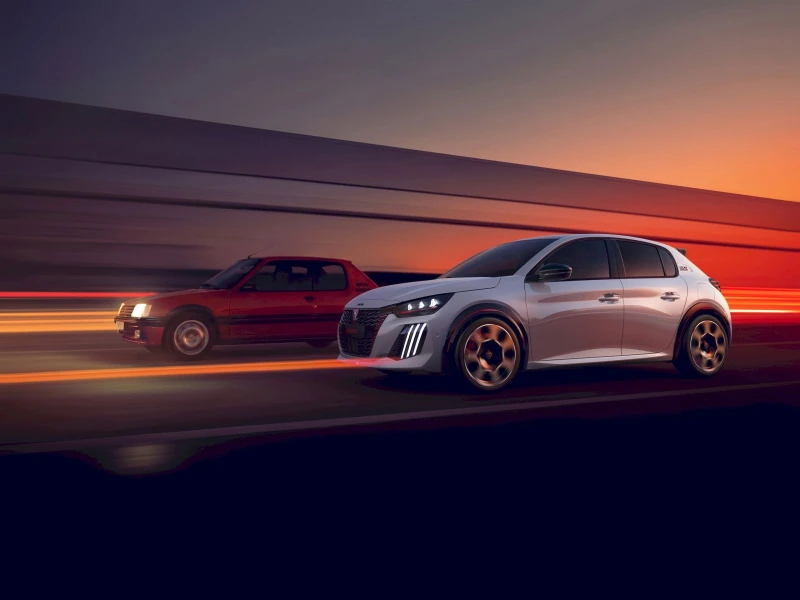
The new 208 e-GTi version is set to become a modern continuation of a tradition once shaped by the brand's lightweight, quick, and involving hatchbacks. However, the vehicle's format has changed: instead of a gasoline engine, the newcomer will receive an all-electric powertrain. This makes the model significant for the market but at the same time raises questions about whether it can live up to the expectations of buyers of classic hot hatches.
What Has Changed in the Hot Hatch Segment
Until recently, compact performance hatchbacks were built according to a familiar scheme: a compact body, a powerful gasoline engine, firm suspension, a manual or quick-shifting automatic transmission, and a distinctive character. Such cars were valued not only for acceleration but also for sound, engine response, chassis dynamics, and the feeling of driver involvement.
With the transition to electrification, this formula is evolving. The electric motor provides quick starts and high torque from the very first meters, but the power delivery itself becomes different. Some of the mechanical sensations fade, and range during active driving can decrease significantly faster than during a standard urban commute.
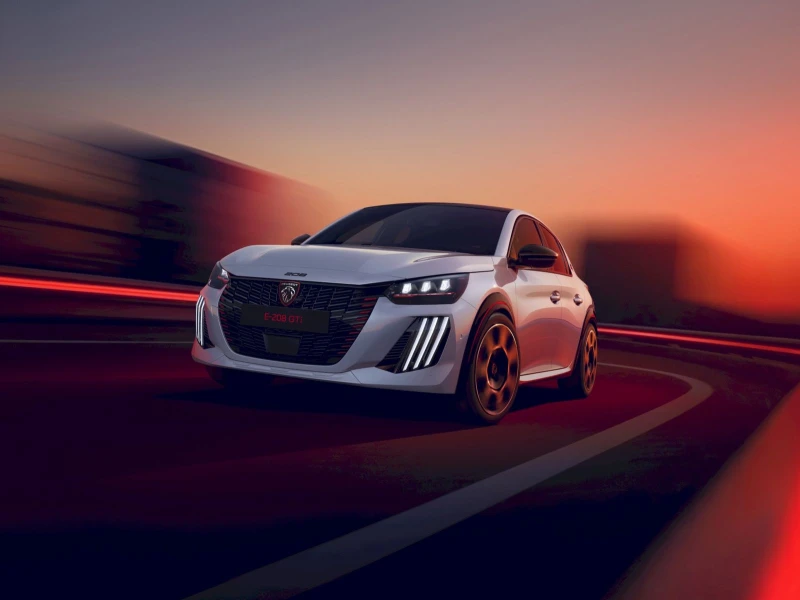
What the Peugeot 208 e-GTi Will Be Like
The Peugeot 208 e-GTi will be the brand's first performance-oriented model in several years. The last comparable car in the European lineup was the 308 GTi, which exited the market in 2021 and utilized a traditional internal combustion engine. The new model will follow a different route and adopt an electric powertrain.
According to preliminary information, Peugeot is utilizing a technical platform similar to that of the Abarth 600e. An electric motor producing around 280 hp is anticipated, a substantial output for a compact hatchback. Owing to its smaller size and likely reduced mass compared to the related Italian crossover, acceleration to 100 km/h is expected to take approximately 5.7 seconds.
Battery and Driving Range
The anticipated usable battery capacity stands at around 51 kWh. The claimed driving range may reach approximately 375 km, though this figure corresponds to moderate operating conditions. For a performance version, a more relevant consideration is how long the vehicle can sustain its pace during spirited driving on winding roads.
High-output compact electric vehicles share a notable trait: energy consumption increases sharply during rapid driving. Consequently, real-world range in dynamic conditions may prove noticeably lower than the official rating. This aspect is particularly relevant for a hot hatch, as these vehicles are acquired not solely for relaxed city driving.
Charging as a Limitation
Another key factor is the speed of energy replenishment. The expected maximum charging power is around 100 kW. Even under favorable conditions, a charge from 20 to 80% will require roughly 30 minutes. While acceptable for a standard electric vehicle, such intervals alter the usage pattern for a machine geared toward active driving.
A gasoline-powered hot hatch can be refueled quickly after an intense drive and resume its route. The electric model demands more deliberate planning, especially when the driver anticipates not just a brief outing but multiple dynamic segments in sequence.
Connection to GTi Heritage
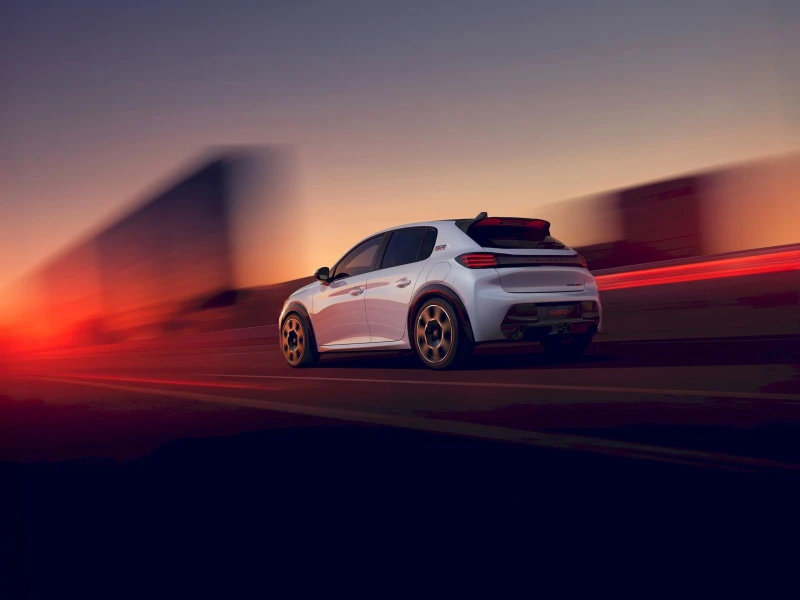
Peugeot is clearly leveraging associations with the legendary 205 GTi. Visually, the new model may appear striking and consistent with the brand's contemporary design language, yet for buyers of such vehicles the badge alone is not sufficient. Historically, GTi denoted lightness, a lively character, and a direct connection between the driver, the engine, and the road.
The electric 208 e-GTi can deliver rapid acceleration and advanced technology, but its reception will hinge on chassis calibration, overall mass, brake performance, and the capacity to preserve stability during spirited driving. Absent these attributes, power by itself cannot replicate the classic hot hatch experience.
Summary
The Peugeot 208 e-GTi will represent a notable addition to the European market and a significant milestone in the evolution of the brand's performance models. The vehicle promises substantial power, rapid acceleration, and the recognizable GTi identity, yet the electric platform introduces constraints regarding range, charging, and the nature of the driving sensations. Consequently, the model may attract buyers seeking a quick compact electric vehicle, while its alignment with the expectations of traditional hot hatch aficionados will depend on its actual on-road dynamics.