Not a niche import or a fleet special — the Rogue III is a mainstream crossover that found its audience quickly. Families and daily commuters looking for a spacious, comfortable, and reasonably priced SUV saw in it exactly what the previous T32 generation lacked: a genuinely modern take on practicality, without unnecessary complexity or inflated pricing.
Now in 2026, the Rogue Mk3 remains highly relevant, particularly in its refreshed post-2023 facelift form. If earlier Rogues were associated primarily with generous dimensions and a CVT, the third generation — the T33 — added a proper new platform, sharper handling, and a technology package that makes it compelling even against freshly launched competitors.
From T32 to T33: What Really Changed and Why It Matters
The previous Rogue generation (2013–2020) built a loyal following thanks to its straightforward engineering and affordable running costs. But it had well-known weaknesses: a semi-independent rear suspension that felt harsh on rough roads, noticeable cabin noise at highway speeds, and a CVT that could overheat under aggressive driving. The third generation rides on the modular CMF-C/D platform — shared with the global X-Trail — but tuned specifically for North American conditions and expectations.
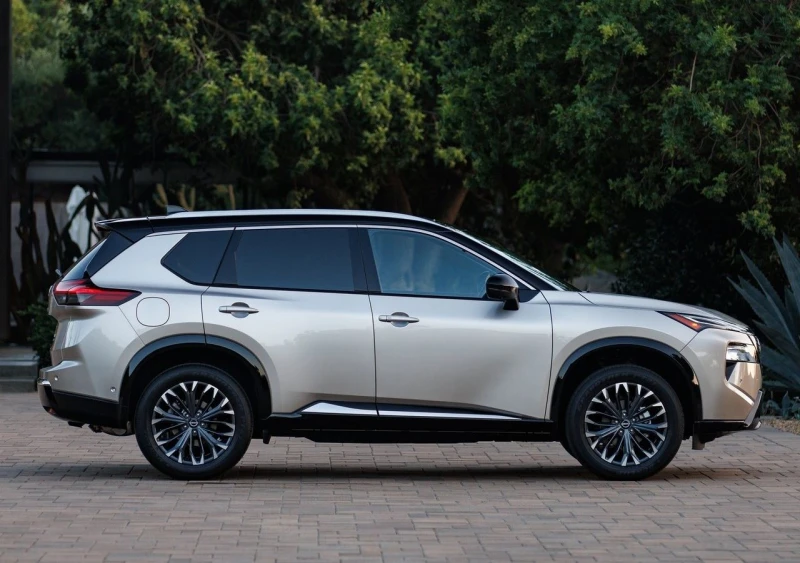
The headline change is a fully independent rear suspension. The difference is immediately noticeable on cracked pavement or potholed city streets: the ride is significantly smoother, and road impacts are far better absorbed before reaching the cabin. The body is fractionally shorter at 183 inches overall, but the wheelbase holds at 106.5 inches. The result is a car that feels no smaller inside while being more manageable in city traffic.
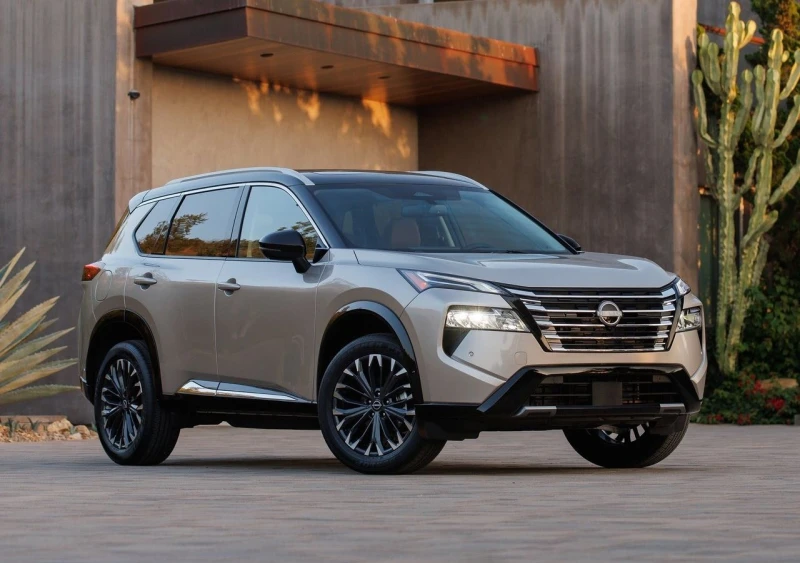
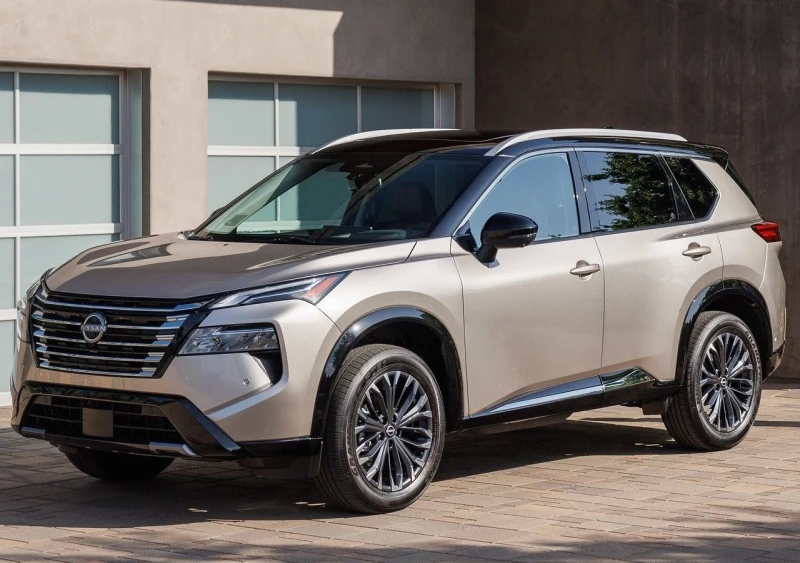
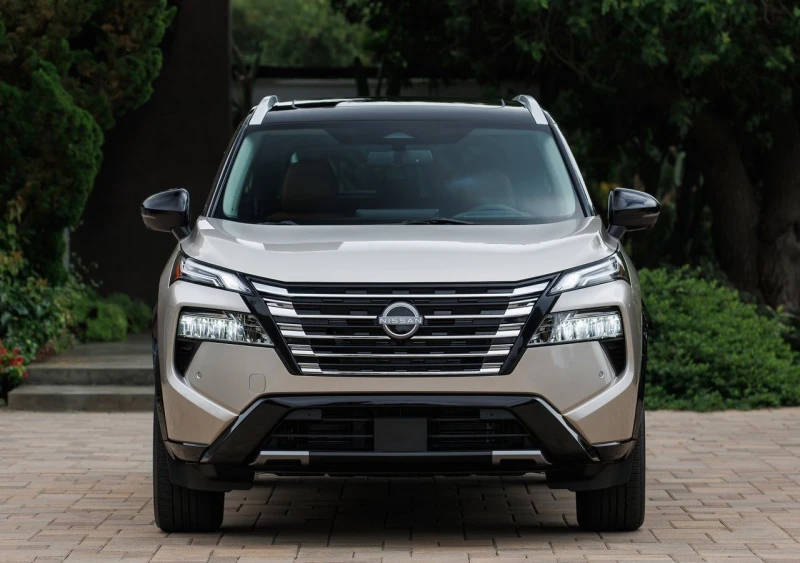
The exterior design took an equally large step forward. The awkward bulk of the T32 is gone; the Rogue now reads as genuinely contemporary, thanks to a V-motion grille, slim LED headlights, and a more athletic overall silhouette. In a market where buyers compare it directly to the Toyota RAV4 and Honda CR-V, looking the part matters — and the T33 finally does.
Powertrain: Two Engine Choices and a Much-Improved CVT
In the US-spec configuration that makes up the bulk of the market, the primary engine remains the proven 2.5-liter naturally aspirated four-cylinder producing 181 horsepower and 181 lb-ft of torque. It carries over from the previous generation but received roughly 80% new components. Paired with it is Nissan's Xtronic CVT, which has been meaningfully revised — dual oil pumps and updated shift logic give it a more natural, stepped feel under acceleration.
From the 2023–2024 model years onward, select trims offer the 1.5-liter turbocharged three-cylinder VC-Turbo engine producing 201 horsepower and 225 lb-ft of torque, with Nissan's variable compression ratio technology. This unit feels noticeably livelier off the line and returns better fuel economy in mixed driving. If you want more responsiveness without jumping to a larger class of SUV, the turbo Rogue is worth seeking out.
Drivetrain options are front-wheel drive as standard, or Intelligent AWD with an electronically controlled rear coupling. For those in the Midwest, Mountain West, or Northeast dealing with genuine winters, AWD is a logical add — though it does bump the price. Real-world fuel economy: around 27–28 mpg combined for the 2.5-liter and approximately 29–30 mpg for the turbo variant in typical mixed-use driving.
Interior and Features: From Comfortable to Near-Premium
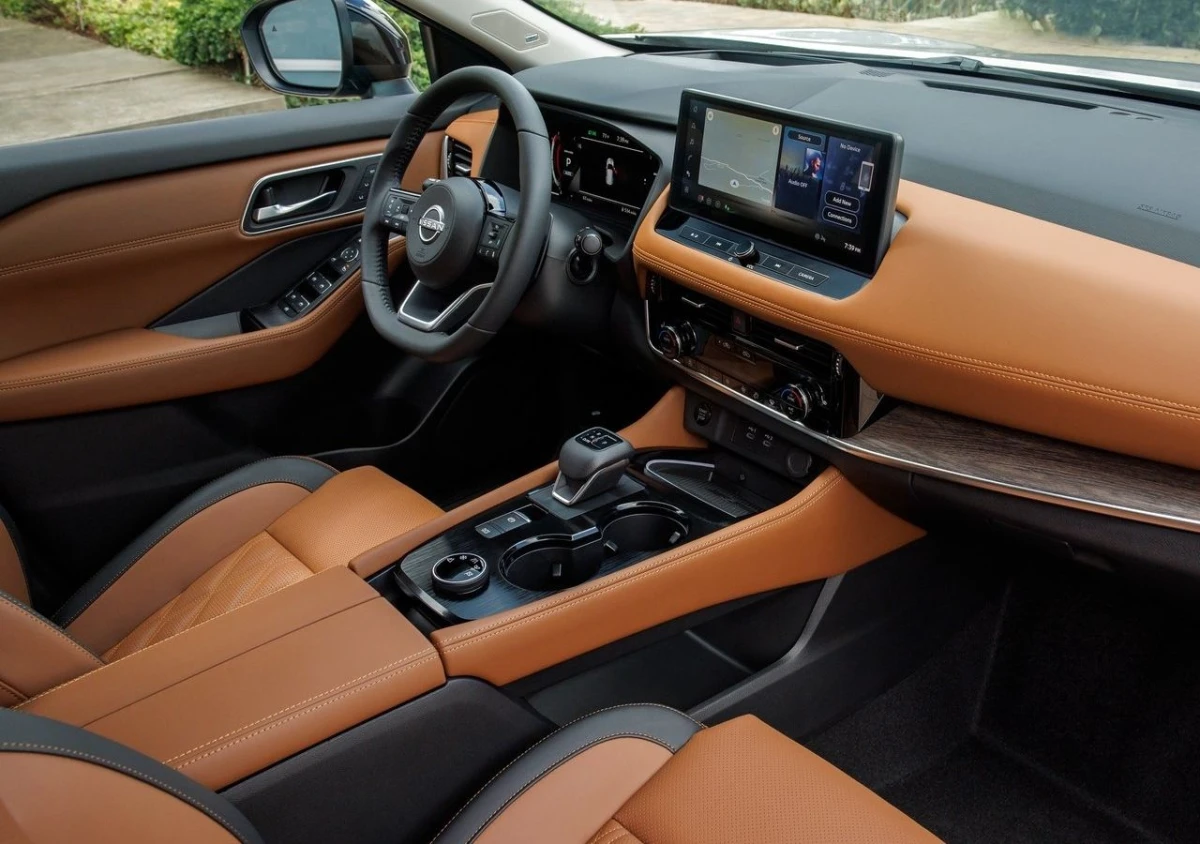
The T33's interior is a genuine departure from the utilitarian feel of the T32. The center console has been fully redesigned, with a rotary gear selector replacing the traditional shifter, while top trims offer a 12.3-inch digital instrument cluster and either a 9-inch or — post-facelift — a 12.3-inch infotainment screen with wireless Apple CarPlay and Android Auto.
Rear passenger space is one of the Rogue's strongest cards: three adults fit comfortably without compromise. The second row gets USB charging ports and dedicated air vents. Cargo capacity stands at 36.5 cubic feet behind the rear seats and expands to 74.1 cubic feet with the seatbacks folded — among the best figures in the compact crossover segment and genuinely useful for road trips or IKEA runs.
Safety tech is comprehensive: the Safety Shield 360 suite — including automatic emergency braking, blind-spot warning, rear cross-traffic alert, and adaptive cruise control — is available from the SV trim upward. Higher trims add ProPilot Assist, Nissan's hands-on highway driving assistance system that handles steering, braking, and throttle on the freeway.
Trim Levels and Pricing in the US Market
The Rogue is sold new through Nissan's nationwide dealer network, with four primary trim levels: S, SV, SL, and Platinum.
The SV — the volume seller — includes 17-inch alloy wheels, dual-zone automatic climate control, heated front seats, a reversing camera, and the Safety Shield 360 package. The SL adds leather upholstery, a panoramic moonroof, a hands-free power liftgate, and an upgraded infotainment setup. The Platinum brings a Bose premium audio system, 19-inch wheels, and the full technology package.
Estimated market pricing for the US as of 2026: used 2021–2022 examples with 40,000–80,000 miles typically range from approximately $22,000–$30,000 depending on trim and AWD configuration. Newer 2024–2025 models or low-mileage examples can run $33,000–$40,000 at dealerships or through certified pre-owned programs. New MSRP for current model-year Rogues starts around $29,000 for a base S and climbs to approximately $40,000+ for a fully optioned Platinum AWD. Estimated market price for the United States — always verify current dealer pricing, as incentives and regional availability vary.
By comparison, a similarly equipped Toyota RAV4 or Honda CR-V of equivalent age typically runs $3,000–$6,000 more in the used market. That gap is a significant part of why the Rogue continues to post strong sales numbers — the value proposition is real.
How It Compares to Key Rivals: Where the Rogue Wins and Where It Doesn't
The main competition in the US compact crossover segment comes from the Toyota RAV4, Honda CR-V, Hyundai Tucson, and Kia Sportage. The Rogue III distinguishes itself with a spacious cabin and a notably smooth ride. Against the fourth-gen RAV4, it's the more comfortable highway companion and quieter at cruise. The CR-V has a firmer ride but is widely regarded as the longer-term reliability benchmark in the segment.
The Hyundai Tucson and Kia Sportage look more visually dramatic and offer strong hybrid variants, but their rear seat packaging feels slightly tighter on longer drives, and their dealer service costs can run higher. The Rogue also holds a meaningful advantage in cargo capacity.
The honest downsides: the CVT still rewards smooth driving — fluid changes every 30,000–40,000 miles are advisable, not optional. Some owners note that the 2.5-liter feels a bit breathless during highway passing maneuvers. For relaxed family driving, though, it's more than adequate.
Does the Rogue III Make Sense as a Purchase Today?
Who is this car for? Anyone who needs a reliable, spacious crossover for the next five to seven years without overpaying for a badge. It works equally well as a daily driver in Los Angeles traffic, a road-trip companion on I-70 through the Rockies, or a light-duty hauler for weekend errands. Parts availability is solid thanks to significant component sharing with the global X-Trail, and Nissan's dealer and independent service network is extensive.
Key things to check when buying used: always run the VIN through a history report (auction damage is common on US market examples), have the CVT and AWD coupling inspected by a qualified technician, and prioritize 2022+ SV or SL trims — these tend to have the most complete feature sets at a reasonable price point.
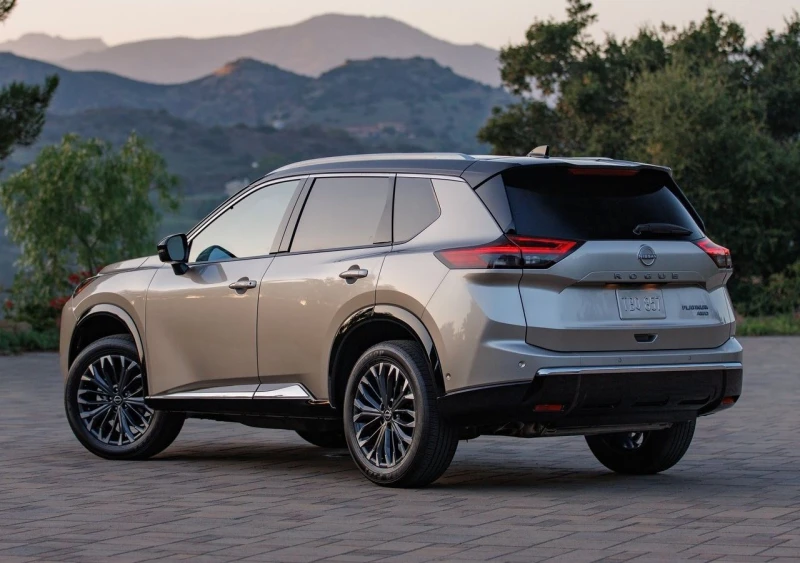
In the end, the third-generation Rogue is a genuine evolution that made daily life with the car noticeably better. It doesn't try to be the most technologically flashy or the quickest crossover in its class — it simply nails the balance of price, comfort, and practicality better than most. That's not an accident. It's a deliberate product, and buyers across the country have recognized it.
If you're shopping for a family crossover that won't feel dated after a year and won't demand a large maintenance budget, the Nissan Rogue III (T33) belongs on your short list. Take a closer look — the numbers make a strong case on their own.