


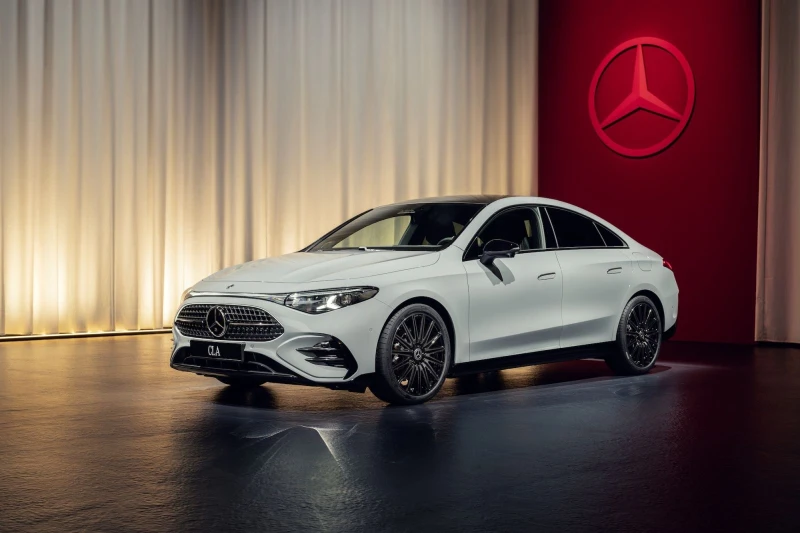
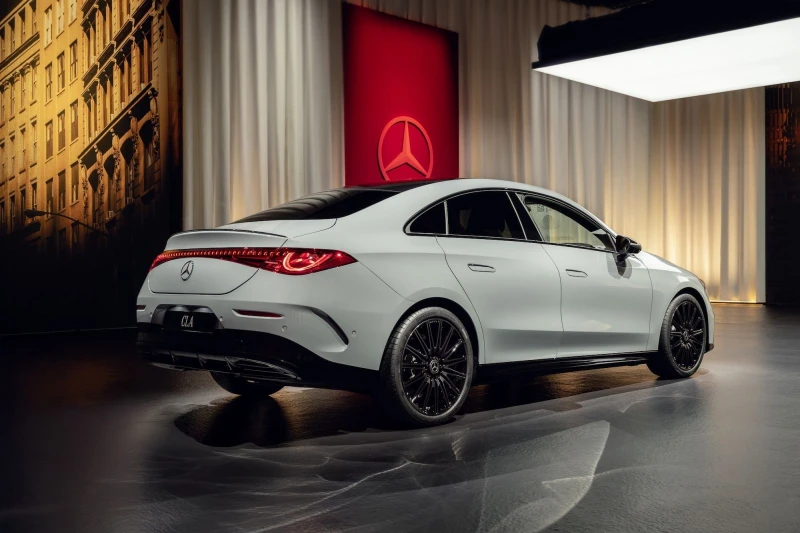
Following the departure of the A and B classes, the CLA remains the most accessible entry into this club. Initially, in Stuttgart, there were serious plans to make it exclusively electric, but reality proved more prosaic: there would simply be nothing to sell. Therefore, the CLA was hastily returned to an internal combustion engine — and that's where the questions begin.
An Engine That Is Not Entirely Mercedes
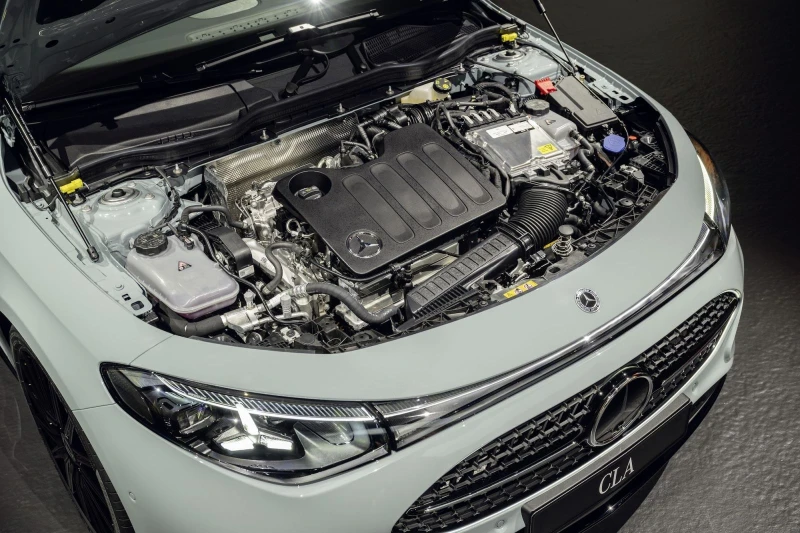
Under the hood of the gasoline CLA is now a 1.5-liter turbo engine with mild hybrid assistance. The electric motor adds about 30 hp, but no magic happens. In the CLA 180, 200, and 220 versions, we're talking about 136, 163, and 190 hp respectively. Acceleration to 100 km/h for the base version is around 8.8 seconds. Adequate? Yes. Impressive for a Mercedes? Not particularly.
The most delicate aspect is the engine's origin. It is produced by Horse Powertrain, where key shares belong to Renault and Chinese Geely. Manufacturing is in China, and in Germany, the engines only receive final assembly and the M252 index. Formally, everything meets Mercedes standards, but the sense of a 'foreign heart' persists.
Prices That Make You Double-Check the List
The CLA 180 starts at around 28,000 euros. The CLA 200 and all-wheel-drive versions easily reach 31,000–32,000 euros, while the top CLA 220 4Matic approaches 33,000 euros. It's hard not to recall the previous generation: for less money, you got a two-liter German engine and much more spirited dynamics.
For Comparison — A Slightly Awkward Moment
The same Horse Powertrain engines are found in the Dacia Duster or Bigster. They even have a larger displacement — 1.8 liters, albeit with lower output. However, the weight is lower, and prices start from around 16,000–18,000 euros. On paper, acceleration to 100 km/h differs by just a few tenths of a second. The situation is, to put it mildly, ironic.
Overall Impression
This Mercedes CLA does not evoke excitement like a new gadget or a sports coupe. Rather, it's like expensive household appliances: necessary, but with minimal emotion. It exists because it must exist. Paradoxically, the gasoline version today appears the most sensible in the lineup, while the electric variant remains a purely theoretical choice for most.
Mercedes took a step back to avoid stopping altogether. Pragmatic — yes. Inspiring — unfortunately, not very.