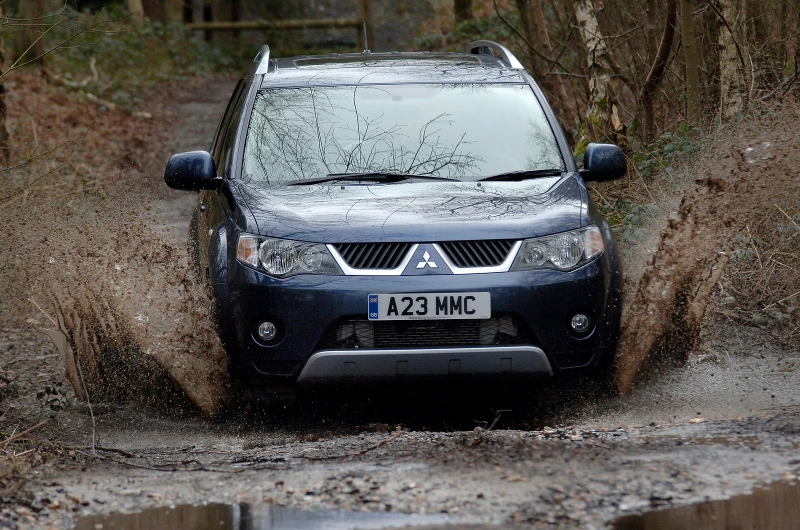
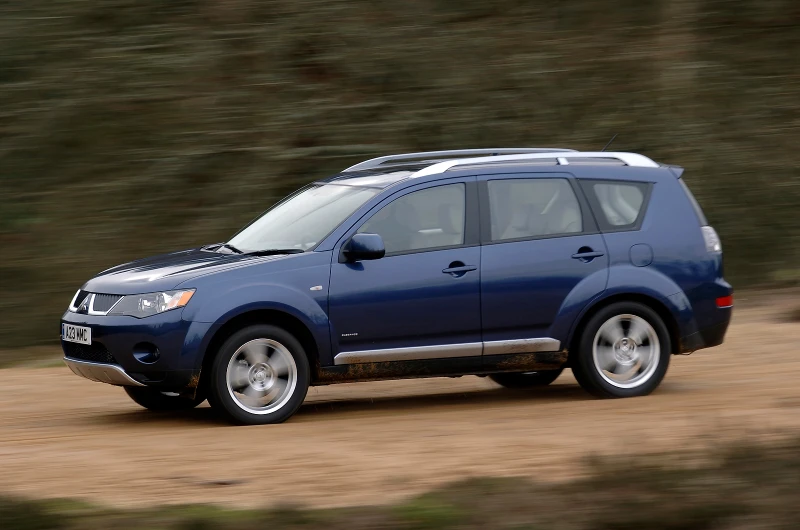
The model first appeared in 2005 on the Japanese market as the Outlander, with official sales in the United States and Europe beginning in 2007. Production ran until 2012, featuring a significant facelift in 2009–2010 that brought an aggressive "Jet Fighter" front fascia with the signature trapezoidal grille.
Built on Mitsubishi's global GS (Global Small) platform — developed in collaboration with partners including DaimlerChrysler — the vehicle offered significantly better body rigidity, sharper handling and more interior room than its predecessor. Key highlights include larger dimensions (length around 182.7 inches), optional seven-seat layout, electronically controlled all-wheel drive and the new 4B1-series gasoline engines with MIVEC variable valve timing. In the U.S., the model was simply called Outlander but recognized for its substantial size increase over the first generation. The 2007–2012 Outlander quickly gained a strong following thanks to its durability, versatility and excellent value proposition.
What’s New Compared to the Previous Generation
Compared to the first-generation model (2001–2008, known as Airtrek in Japan), the second-generation Outlander underwent a complete transformation. The original was based on the Lancer platform, smaller and more road-oriented.
Key improvements:
- Platform & Body: The new GS platform made the vehicle larger (wheelbase increased to 105.1 inches), stiffer and safer. Cabin space grew dramatically, with an optional third-row seat for seven passengers.
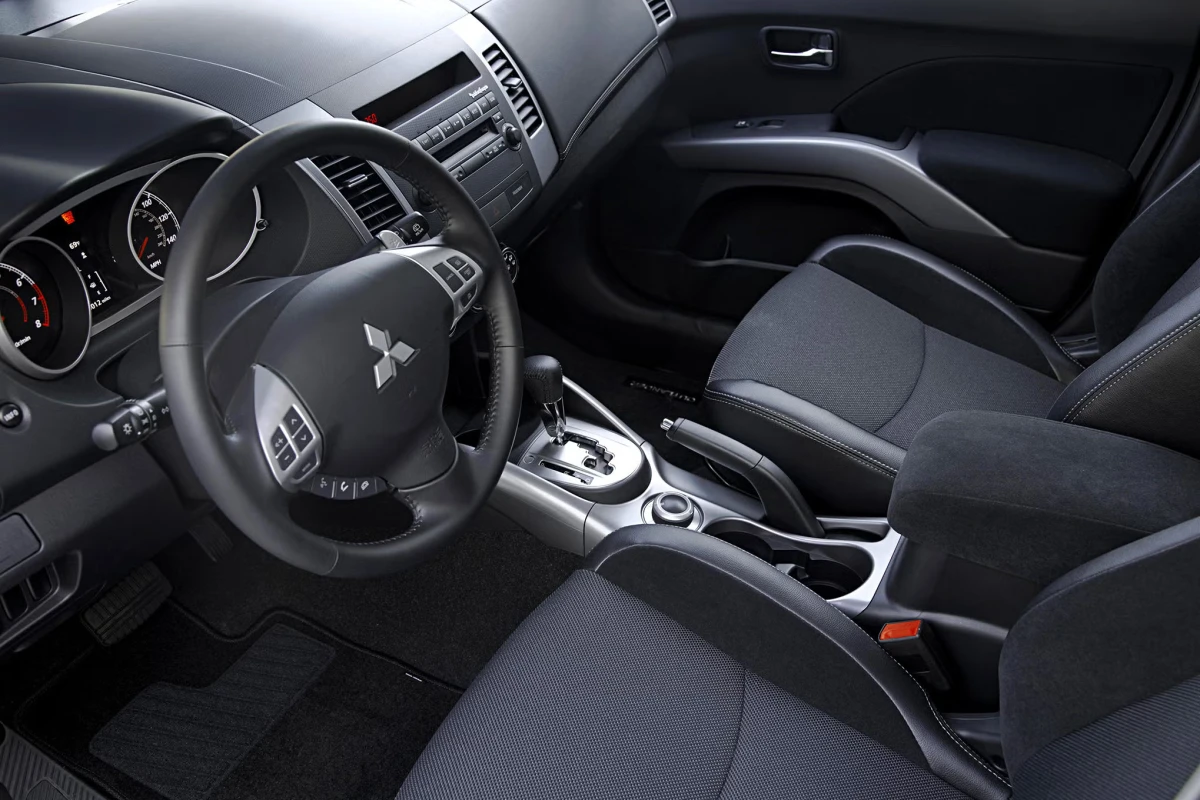
- Design: Modern, flowing lines and a more dynamic appearance; post-2010 facelift introduced the bold "Jet Fighter" grille. Interior quality improved with better ergonomics and higher-grade materials.
- Engines & Technology: New gasoline engines — 2.0L (147 hp), 2.4L (170 hp) and 3.0L V6 (220–230 hp) — all featuring MIVEC. In some markets a 2.0–2.2 DI-D diesel from PSA/VW was offered. Transmissions included manual, conventional automatic or CVT.
- Comfort: Better sound insulation, softer suspension tuning, adjustable rear seats and significantly larger cargo capacity (up to 60 cubic feet in the five-seat configuration).
- Safety: Up to seven airbags, ABS, EBD, available electronic stability control and strong Euro NCAP/NHTSA ratings (4–5 stars depending on trim and year).
Overall, the second generation evolved from a compact crossover into a truly versatile family SUV with greater comfort and capability.
U.S. Used Market
Even in 2026, the Mitsubishi Outlander II remains a popular choice in the American used crossover market. Its reputation for reliability, affordable parts and solid all-weather performance keeps it in demand among families and outdoor enthusiasts.
Current listings on major sites show hundreds of 2007–2012 Outlanders available nationwide. Most examples come from domestic use, with mileage typically ranging from 150,000–250,000 miles, though lower-mileage and well-maintained examples still exist.
Approximate market price range in the United States (early 2026, based on current listings):
- Pre-facelift (2007–2009): $3,000 – $6,500
- Facelift (2010–2012): $5,000 – $9,500
- Top trims with 3.0 V6 and full equipment: up to $8,000–$11,000
The most sought-after versions feature the 2.4L engine, automatic transmission (conventional or CVT), AWD and higher trim levels with leather, sunroof and premium audio. Diesel versions are virtually nonexistent in the U.S. market.
| Model Year | Average Price Range, USD | Approximate Number of Listings |
|---|---|---|
| 2007–2009 (pre-facelift) | $3,000 – $6,500 | 100–150 |
| 2010–2012 (facelift) | $5,000 – $9,500 | 120–180 |
| Top 3.0 V6 trims | $7,000 – $11,000 | 30–50 |
Common Trims & Equipment on the U.S. Market
In the United States, the Outlander II was sold in several trims tailored to American preferences. Typical versions included:
- ES (base): Air conditioning, power windows/locks, ABS, front airbags, cloth interior, steel wheels. Usually 2.4L engine, often FWD.
- LS / SE: Alloy wheels, cruise control, keyless entry, side airbags, available AWD, fog lights.
- XLS / GT: Leather upholstery, heated seats, premium Rockford Fosgate audio, sunroof, xenon headlights, rearview camera, navigation (optional).
- Top V6 models: 3.0L V6, six-speed automatic, full-time AWD, third-row seating, premium features throughout.
On the used market, mid- and higher-level trims (SE/XLS/GT) with the 2.4L or 3.0L and AWD are most common and desirable.
Final Verdict
The Mitsubishi Outlander II (2007–2012) remains a strong contender in the used crossover segment for buyers seeking a reliable, spacious and practical vehicle at a reasonable price. It’s an excellent family hauler with generous cabin space, optional third-row seating, a large cargo area and a convenient fold-down tailgate. On the road it delivers comfortable ride quality and composed handling, while the AWD system and 8.5-inch ground clearance make it capable enough for light off-road use and inclement weather.
Reasons to consider one: proven long-term durability (engines frequently exceed 300,000 miles), low-cost maintenance, good resale retention for its class. Drawbacks include potential oil consumption on higher-mileage 2.4L engines, relatively thin paint and the need for careful CVT maintenance.
When shopping, be sure to inspect:
- Transmission condition (warm test drive is essential).
- Body alignment and accident history (many imports from salvage or multi-vehicle states).
- Suspension components and AWD system operation.
- Engine for oil consumption and catalytic converter health.
If your budget allows, target a 2010+ facelift model with the 2.4L engine — it offers the best balance of modern styling, features and reliability. The second-generation Outlander continues to be a smart, practical choice for American roads and families.