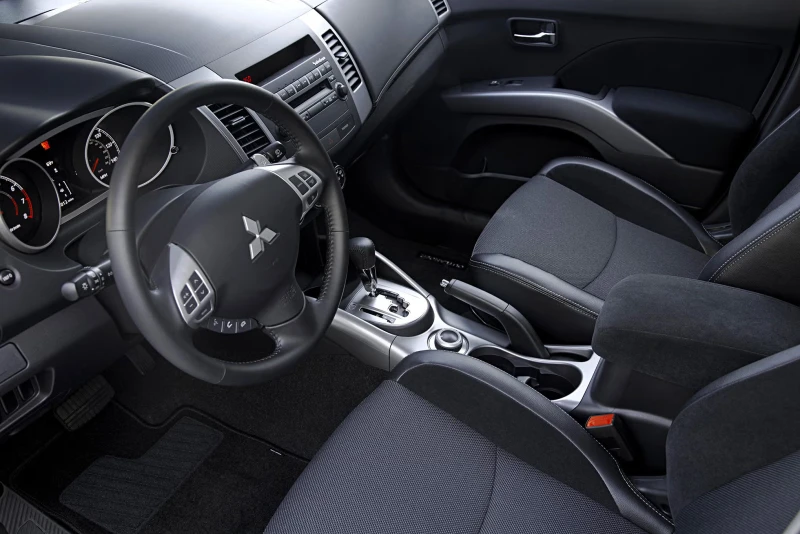
The cabin of the 2007–2012 Mitsubishi Outlander is executed in a clean, no-nonsense style dominated by hard-wearing plastics on the dashboard and door panels. The materials aren’t luxury-grade, but they feel solid — the plastic is tactile and, when properly maintained, stays rattle-free over the years.
The center stack is straightforward: pre-facelift models feature a classic layout with analog climate controls, a CD head unit, and clearly marked buttons. The instrument cluster offers crisp white backlighting, large easy-to-read gauges, and excellent legibility. Multi-function steering wheels (audio and cruise control) come standard on mid- and higher-level trims.
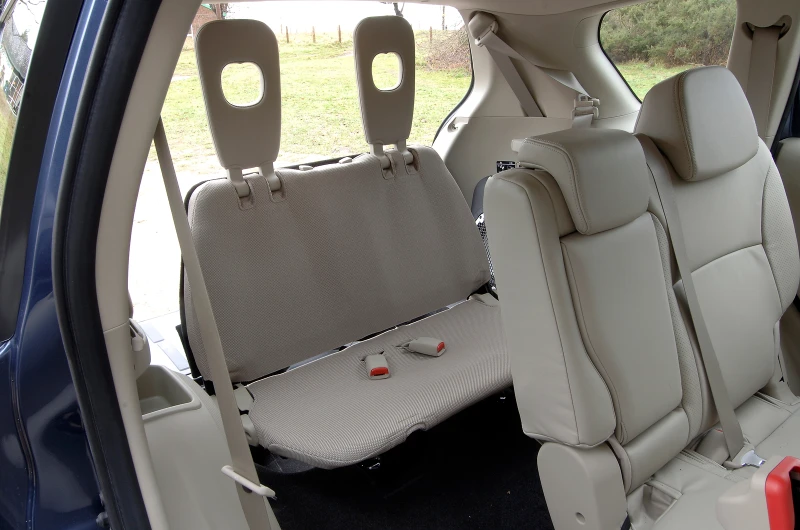
Driver positioning is comfortable: the front seats provide decent side bolstering, while height adjustment for the seat and telescopic steering help drivers of nearly any size find an ideal driving position. Rear-seat space is generous thanks to the 105.1-inch (2670 mm) wheelbase — plenty of legroom and headroom for adults. The optional third-row seat (7-passenger layout) is best reserved for children or very short trips.
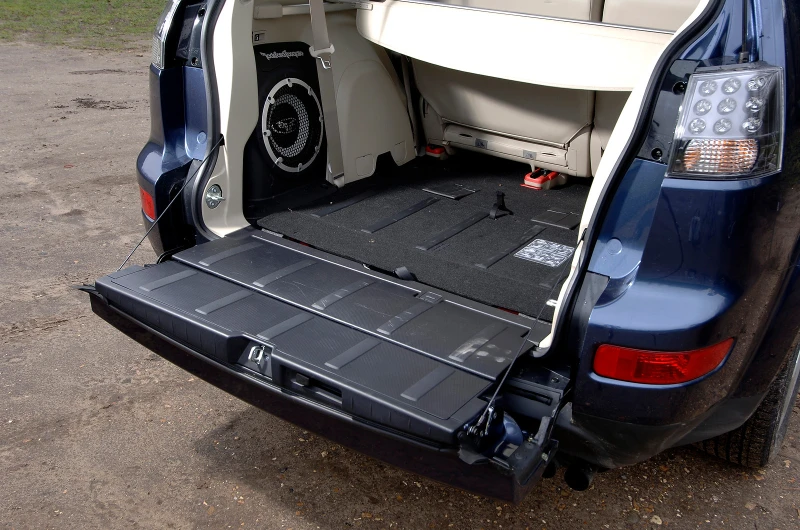
Cargo space is one of the Outlander’s strongest points: 541 liters (19.1 cu ft) behind the second row in the 5-seat version, expanding to 1,691 liters (59.7 cu ft) with the rear seats folded. The dual-level cargo floor includes underfloor storage compartments, and the signature tailgate “flip-down” section makes loading heavy items or sitting on the edge much easier. Excellent practicality for family life, road trips, or weekend adventures.
Trim Levels on the US Market
In the United States, the Mitsubishi Outlander II was offered in several trim levels tailored to American buyers. Common designations included ES (base), SE, XLS, and the top-tier GT (with the 3.0 V6).
- Base (ES): Cloth upholstery, manual air conditioning, power windows, basic audio system with CD player, steel wheels, front airbags. Frequently front-wheel drive with the 2.4-liter engine.
- Mid-level (SE): Automatic climate control, cruise control, 16–18-inch alloy wheels, rain-sensing wipers, fog lights, side airbags and curtain airbags, MP3-capable audio, heated front seats.
- Premium (XLS): Leather upholstery (or leatherette/leather combo), power driver’s seat, premium Rockford Fosgate audio system (9 speakers + subwoofer), available sunroof, xenon headlights, rearview camera.
- Top-tier (GT with 3.0 V6): Full leather, Rockford Fosgate sound, available navigation with color display, full power accessories, optional 7-passenger seating.
On the current US used market, the SE and XLS trims with leather and the Rockford Fosgate system remain the most sought-after for their strong balance of comfort, features, and value.
Interior Updates by Year
The most significant cabin improvements arrived with the 2010 facelift (2009–2010 model-year transition). While the overall design stayed similar, several meaningful upgrades were introduced:
- Revised center console with brighter silver accents and better button placement.
- Available color multi-information display in higher trims.
- Softer-touch dashboard plastics and fresh upholstery choices (darker and lighter leather tones).
- Enhanced sound insulation — additional mats in doors and floor reduced cabin noise by roughly 3–5 dB.
- Softer instrument lighting and added chrome trim accents.
Post-facelift models (2010–2012) command higher resale values in the US: the cabin feels noticeably fresher, road and wind noise are better controlled, and interior materials hold up longer.
Common Interior Drawbacks
In 2025, typical interior issues found in used 2007–2012 Outlanders include:
- Hard plastics scratch relatively easily, especially on door cards and center console.
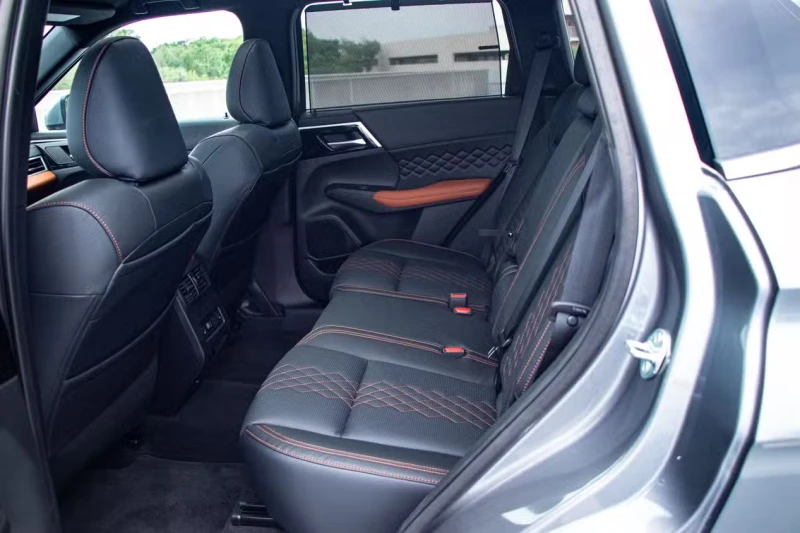
- Leather (particularly lighter colors) shows cracking and wear after 90,000–125,000 miles; cloth tends to be more durable.
- Steering wheel and shift knob leather peels or becomes shiny.
- Sound insulation is average: tire and wind noise become noticeable above 60–65 mph (pre-facelift models are louder).
- Third-row seating is cramped with a high load floor in 7-seat versions.
- Rear visibility is limited by thick pillars — the rearview camera (when equipped) is very helpful.
- Plastic rattles can appear in extreme heat or cold due to wide temperature swings common across much of the US.
- Factory infotainment is dated: no standard Bluetooth in base models, small screen resolution.
Many owners address these with aftermarket upgrades: extra sound deadening, seat covers, modern Android-based head units, etc.
Final Verdict
In 2025 the 2007–2012 Outlander interior feels dated by today’s standards — no giant touchscreens, minimal soft-touch surfaces, and no premium flair. Yet it remains impressively practical, durable, and spacious: still one of the better family-oriented cabins in the used midsize crossover segment.
The sweet spot for most American buyers is a post-2010 SE or XLS model: leather or high-quality cloth, dual-zone climate, heated seats, solid audio, and often a sunroof — usually available for a modest premium (roughly $1,000–$2,000 more than a bare-bones example). Base models feel sparse, while V6 GT versions carry higher maintenance costs.
When shopping, pay special attention to:
- Condition of leather/cloth (cracks, excessive wear).
- Absence of persistent rattles or musty odors.
- Proper operation of climate control and audio (Rockford Fosgate is a major bonus).
- Preservation of dashboard plastics and steering wheel — clear signs of careful ownership.
- Third-row mechanism (if equipped) — test folding and unfolding.
Even today the Mitsubishi Outlander II cabin continues to impress with its no-nonsense functionality — one of the most genuinely family-friendly interiors of its era on the American used market.