One of these approaches combines alternative fuel with a device that captures carbon dioxide directly from exhaust gases. The Japanese automaker has already tested the system under racing conditions at Fuji Speedway.
How the Technology Works
The project is based on fuel produced using microalgae from the Nannochloropsis genus. The algae are cultivated in coastal areas of Japan, where they absorb carbon dioxide from the atmosphere as they grow. Oil is then extracted from the biomass and processed for use as a component of alternative motor fuel.
According to calculations by Mazda and its partners, this fuel could significantly reduce CO2 emissions compared with conventional gasoline. The remaining algae material could also be reused, including in the production of animal feed additives. The project therefore considers not only the vehicle itself, but the entire cycle of producing and subsequently using the raw material.
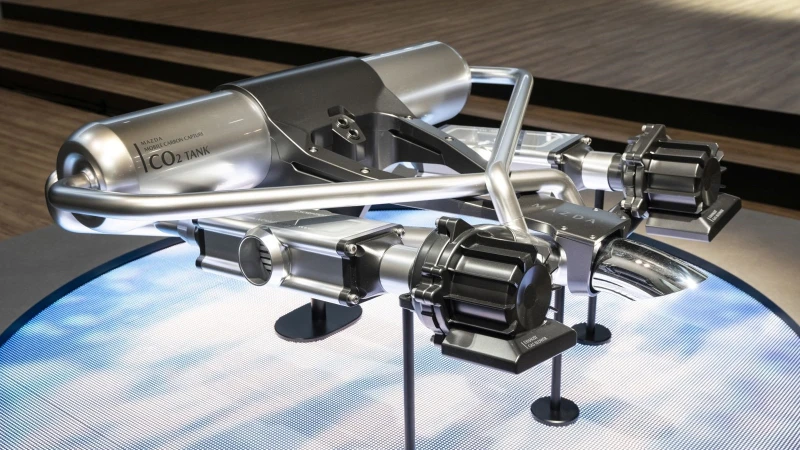
The second part of the system is installed in the vehicle's exhaust line. A dedicated module captures a portion of the carbon dioxide and other particles contained in the exhaust, collecting them in a separate container. The accumulated material must be removed periodically during servicing. It could later be used in industrial applications, including as a raw material for certain types of plastic.
Testing on the Racetrack
Mazda conducted its first trials in November 2025 during a four-hour Super Taikyu race. The vehicle completed 120 laps and finished fifth in its class. At that stage, the system could extract CO2 but did not yet have a fully developed storage tank for the captured material.
An updated version appeared during the 24-hour race at Fuji Speedway. The vehicle ran on HVO, or hydrotreated vegetable oil, which is used as a lower-carbon alternative to conventional diesel fuel. During the endurance race, the system collected approximately 804 grams of carbon dioxide. Mazda viewed the result as confirmation that the device could operate not only under laboratory conditions, but also during prolonged periods of high load.
Estimated Impact on Production Vehicles
The company cites the example of the compact Mazda2, which emits approximately 100 grams of CO2 per kilometer when running on conventional gasoline. Alternative fuel could reduce that figure by around 90%, while the capture system could additionally retain approximately 20% of the carbon dioxide remaining in the exhaust. In theory, this could produce a net balance of about minus 10 grams of CO2 per kilometer.
However, the current design is not yet ready for mass-market use. The system weighs approximately 50 kilograms, meaning engineers will need to reduce its weight, size, and cost while also developing a practical process for servicing the unit and recycling the collected material.
Conclusion
Mazda's project demonstrates one possible path for the development of internal combustion engines as environmental requirements become more stringent. Combining bio-based fuel with a CO2 capture system could reduce emissions without abandoning a conventional powertrain. The technology remains at the testing stage, but the racing trial confirmed that it can function under sustained, demanding conditions.