


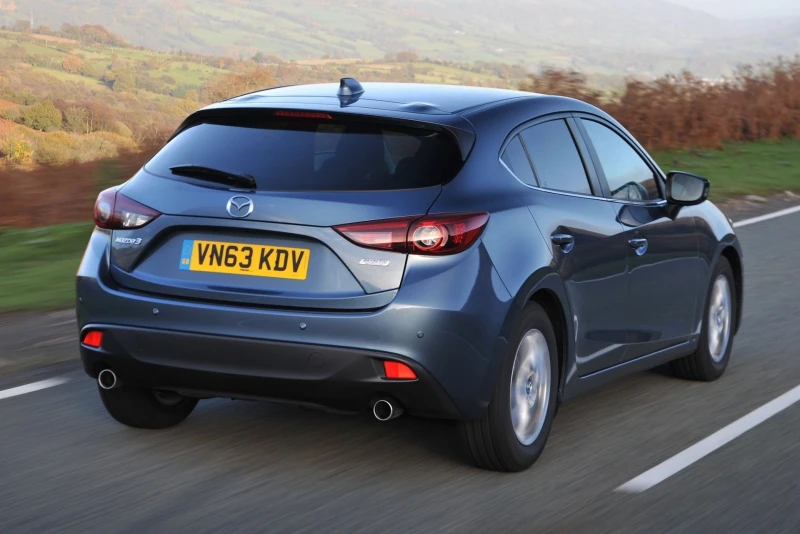
This generation is now complete. It marks the first fully independent Mazda 3 platform after the end of technical cooperation with Ford and stands as one of the cornerstone models embodying Skyactiv technologies and the Kodo "Soul of Motion" design philosophy.
The global premiere of the hatchback took place in June 2013 in Australia, while the sedan debuted in July at the New York Auto Show. The European introduction followed in fall 2013 at the Frankfurt Motor Show. In the United States, official sales began in late 2013 through early 2014. The model rides on Mazda's proprietary Skyactiv platform with significantly increased body rigidity (roughly 30% stiffer than the previous BK/BL generation). Within Mazda's lineup, it occupies the compact C-segment in two body styles: five-door hatchback and four-door sedan.
Key highlights of this generation include the expressive flowing exterior design in the Kodo style, an all-new Skyactiv-G gasoline and Skyactiv-D diesel engine lineup, six-speed Skyactiv-MT manual and Skyactiv-Drive automatic transmissions, improved aerodynamics (Cd 0.26 for the sedan, 0.275 for the hatchback), and noticeably better noise and vibration insulation compared to its predecessor.
What’s New Compared to the Previous Generation
Compared to the second-generation Mazda 3 (BK/BL, 2003–2013), the third generation received an all-new Skyactiv platform that became the foundation for most subsequent Mazda models. Body rigidity increased by about 30%, the center of gravity was lowered, and weight distribution was brought close to the ideal 50:50.
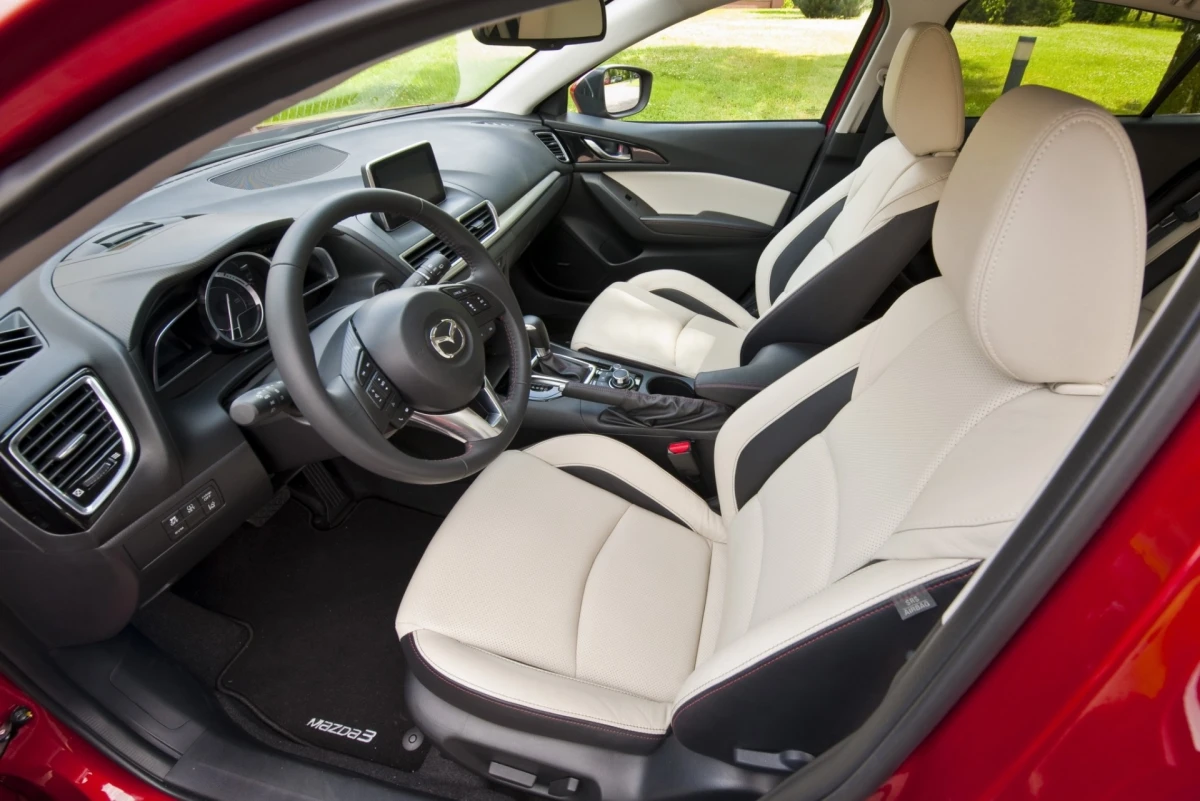
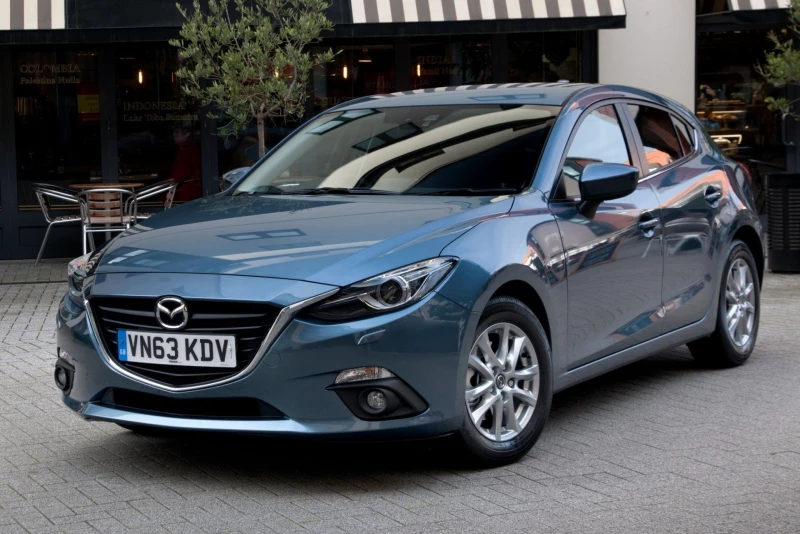
The exterior design was completely redesigned: from sharp lines and signature front fender "wings" to the distinctive grille and slim headlights. The interior became significantly higher quality with soft-touch materials, improved ergonomics, and a near-elimination of hard plastics on most surfaces.
The technical package is fully in-house: Skyactiv-G engines with high compression ratios (14:1 for the 2.0 and 13:0 for the 1.5), exhaust gas recirculation, direct injection, plus Skyactiv-D diesels with low compression (14.8:1) and two-stage turbocharging (on the 2.2). The automatic is the six-speed torque-converter Skyactiv-Drive, replacing the older PowerShift on some second-gen markets.
Safety levels rose dramatically: six airbags, stability control, and hill-start assist became standard. Higher trims added adaptive cruise control, blind-spot monitoring, forward collision prevention, and driver attention alert.
Current Generation Status
Mazda 3 BM/BN production ended in 2019 (early 2019 in some regions). The final facelift occurred in 2016–2017 (market-dependent). Post-facelift changes included wider availability of LED headlights, updated taillights and grille, new body colors, an upgraded infotainment screen (8.8-inch in top trims from 2017), and further wheel-arch noise insulation improvements.
On the US used market, post-2017 facelift models from 2017–2019 with the 2.0 Skyactiv-G (155–186 hp variants) paired with the Skyactiv-Drive automatic are considered the most desirable and liquid. The 2.2 Skyactiv-D diesel is rare in the US and typically more expensive to maintain. Hatchbacks are traditionally more popular than sedans in the American market.
US Market
On the US used market (as of late 2025 – early 2026), the Mazda 3 BM/BN remains one of the most common Japanese compacts in its class. Active listings typically range from 4,000–7,000 units depending on season.
New vehicles of this generation are no longer available. Fresh imports from other regions appear regularly, especially facelifted 2017–2019 examples.
Approximate market price range in the United States (depending on year, mileage, condition, trim, and engine):
- 2014–2016 models — $8,000–$13,000
- 2017–2019 models (facelift) — $12,000–$18,000
Most sought-after: 2.0 Skyactiv-G variants around 155–186 hp with automatic, Touring / Grand Touring / Premium trims, hatchbacks in popular colors like Soul Red Crystal, Machine Gray, or Sonic Silver. Approximate market prices for the United States.
Main Versions and Trims on the US Market
Common trims frequently encountered:
- i Sport / Touring (base/mid) — air conditioning, audio system with 4–6 speakers, heated front seats, multifunction steering wheel, six airbags, ESP, cloth upholstery.
- Touring / Grand Touring (mid/high) — dual-zone climate control, rearview camera, light and rain sensors, cruise control, 16-inch alloy wheels, 7-inch infotainment screen.
- Grand Touring / Premium (top) — leather (or leatherette) upholstery, heated steering wheel and rear seats, LED headlights, head-up display, Bose audio (9 speakers), adaptive cruise, i-Activsense suite (blind-spot monitoring, RCTA, SBS, LAS, etc.), 18-inch wheels.
For the US market, most examples feature gasoline 2.0-liter engines (Skyactiv-G), with the 1.5 rarely seen and 2.2 diesel almost nonexistent. All-wheel drive (i-Activ AWD) was officially offered only on select markets (including the US for later years) and remains uncommon on this generation.
Conclusions and Relevance Today
The Mazda 3 BM/BN remains a compelling choice on the used market in 2025–2026. It attracts buyers with balanced handling, high-quality interior, reliable Skyactiv engines, and relatively low ownership costs compared to German rivals.
The sweet spot is usually facelifted 2017–2019 models with the 2.0 engine (around 186 hp) and automatic — they offer the best mix of performance, comfort, and dependability. The manual is also reliable but less common and slightly harder to resell.
When shopping for a used third-generation Mazda 3, pay close attention to:
- documented service history (especially oil changes every 7,500–10,000 miles);
- paint condition (factory coating is relatively thin);
- operation of the Skyactiv-Drive automatic (smooth shifts, no harshness);
- no signs of major accidents (reinforced side sills and frame rails);
- proper function of i-Activsense systems (many sensors and cameras fail quickly after damage).
For anyone seeking an engaging-to-drive, well-built compact under ~$18,000, the third-generation Mazda 3 remains one of the strongest options on the US used market in its class.