


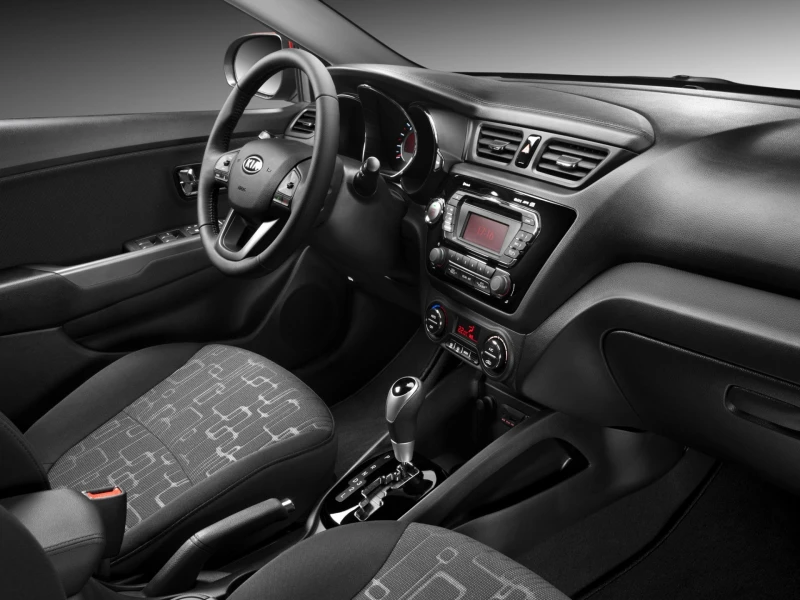
The interior of the Kia Rio III reflects Kia’s approach to the budget segment at the time, prioritizing practicality and cost-effective materials. This review covers the key aspects of the cabin, trim levels available in the US market, year-to-year changes, common issues, and its relevance as a used car in 2026.
Overall Cabin Overview
The interior design is straightforward and functional, built for everyday reliability rather than luxury. Hard plastics dominate the dashboard and door panels, while base models feature cloth upholstery. Higher trims add soft-touch surfaces on the dash or faux-leather accents. Build quality is acceptable for the class – plastics resist scratches reasonably well but can develop rattles over time, and stitching is generally even.
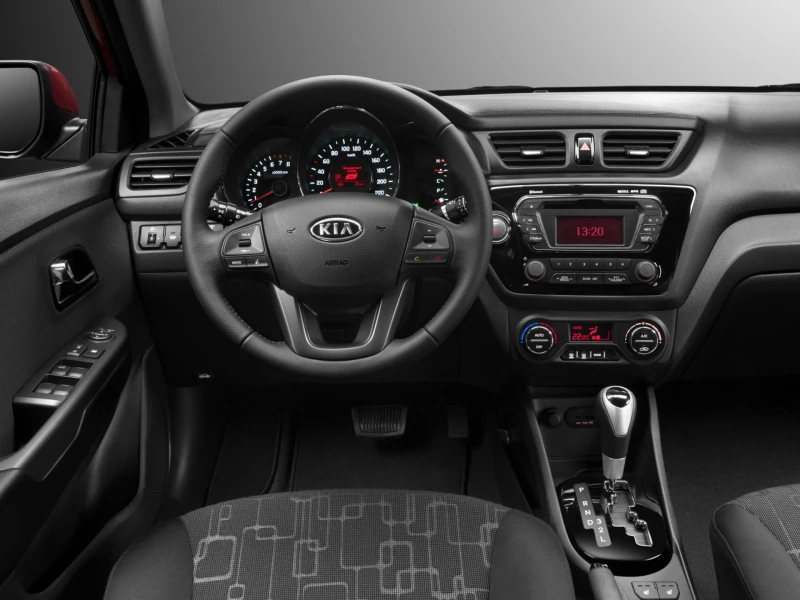
The instrument cluster is clean and analog with clear backlighting. The center stack houses climate controls and the audio system. The 2015 facelift introduced more modern digital touches. Driver ergonomics are solid: the steering wheel adjusts for height (and reach in many versions), front seats offer basic bolstering, and pedal placement suits urban driving. Most owners find it comfortable up to about 5'11"–6'0", though taller drivers may want more seat travel.
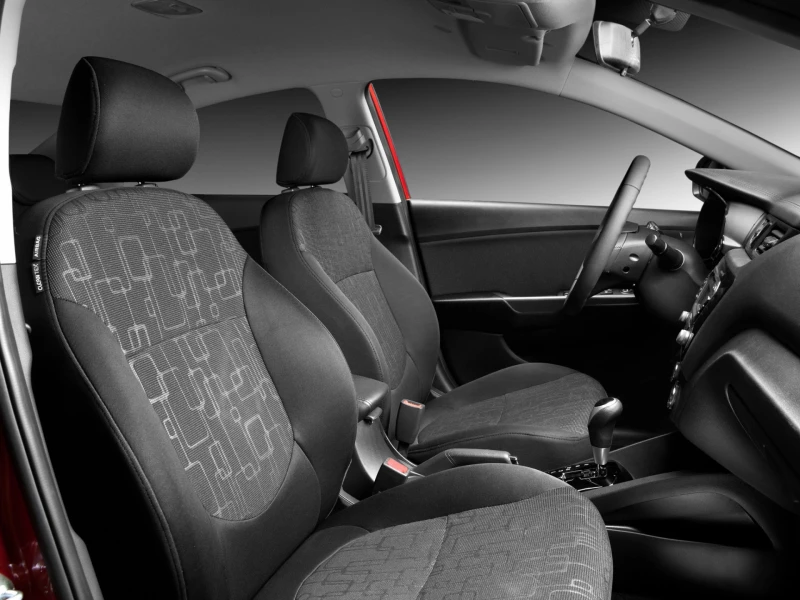
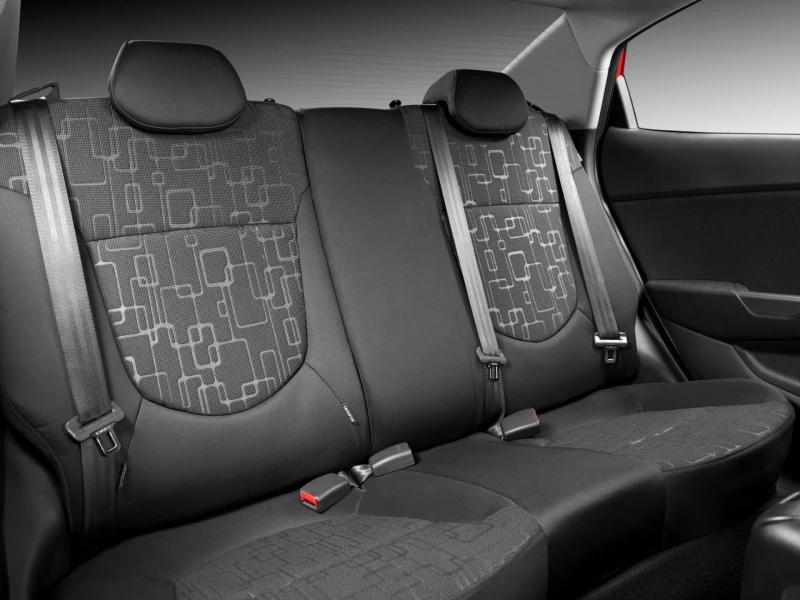
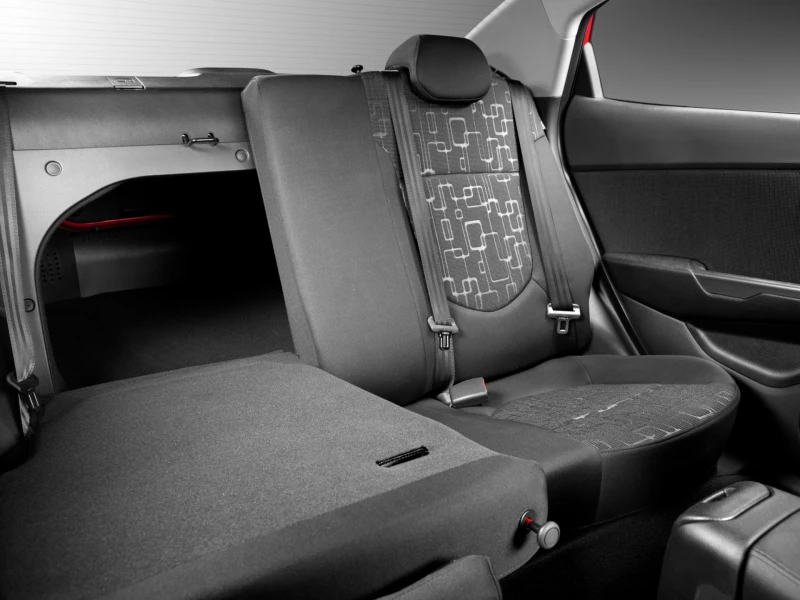
Front-seat passengers enjoy decent legroom and headroom. Rear seating is realistically suited for two adults – the 101.1-inch wheelbase provides acceptable knee space, but the high center tunnel makes three-across tight. Headroom is good except in models with the optional sunroof. Trunk space ranges from 13.7 cu ft (hatchback) to about 13.7–60.9 cu ft with seats folded (hatch) or a fixed ~13.7 cu ft trunk in the sedan. Practical touches include door pockets, cupholders, and split-folding 60/40 rear seats. Comfort features like a rear armrest were often missing on base models. Overall, the cabin works well for a small urban family or couple.
Trim Levels in the US Market
In the United States, the Kia Rio III was sold in several trim levels, typically named LX, EX, and SX (with some variation by year). These trims were tailored to American preferences and emissions/safety standards.
The base LX usually came with cloth seats, manual seat adjustments, air conditioning, a basic audio system with four speakers, steering-wheel audio controls, ABS, and front airbags. Climate control was manual, and driver aids were minimal.
The mid-level EX added automatic climate control, heated front seats (in many regions), power windows/locks/mirrors, cruise control, alloy wheels, and upgraded cloth or partial leatherette upholstery. Some versions included stability control.
Higher trims (EX or SX) often featured a touchscreen audio system (later 7-inch units), rearview camera, keyless entry, push-button start, and additional airbags. Top versions sometimes included LED accents, 16-inch alloys, and occasional blind-spot monitoring on loaded examples.
US-market cars generally came with front-wheel drive only, strong emphasis on cold-weather packages (heated seats/mirrors), and compliance with federal safety and emissions rules. On the used market today, mid- and upper trims imported or originally sold in the US are most common.
Interior Changes Over the Years & 2015 Facelift
From 2011 to 2014, early models featured a simple analog gauge cluster, basic steering wheel, and relatively basic sound insulation. Interiors were mostly black or gray with hard plastics throughout.
The 2015 facelift brought noticeable improvements: updated instrument graphics, a redesigned multifunction steering wheel, softer dash materials in key areas, additional sound-deadening material in doors and floor, and an available larger 7-inch touchscreen with navigation on upper trims. New seat fabric colors (including beige options) appeared, and overall perceived quality improved modestly.
Later 2016–2017 models saw minor equipment tweaks but no major redesign. On the used market, post-facelift (2015–2017) versions are generally preferred for quieter cabins, better electronics, and improved material durability.
Common Interior Issues & Owner Feedback
Being a budget model, the Rio III has several well-known interior wear points. Cloth seats can pill or fade after 60,000–90,000 miles; plastics scratch easily, and faux leather (when equipped) may crack in hot or cold climates. Steering-wheel buttons, door handles, and trim badges often show wear first.
Rattles and squeaks become noticeable after 90,000+ miles, especially over rough roads – sound insulation is average, so highway wind and tire noise are apparent. Rear-seat comfort is limited for three adults, and rear visibility is compromised by thick pillars (especially in hatchbacks).
Other reported issues include dust-collecting surfaces, touchscreen glare, and occasional heating-element failures in heated seats. In regions with harsh winters or salted roads, underbody corrosion and electrical gremlins can indirectly affect cabin electronics. Many used examples now have 120,000–180,000 miles, so checking for worn upholstery, functioning infotainment, and rattles during a test drive is essential.
Conclusions & Relevance in 2026
By 2026 standards, the Kia Rio III interior feels dated – simple design and materials don’t match current expectations – but it remains practical and durable for budget buyers. Its biggest strengths are low purchase prices and widely available parts (shared with Hyundai models).
Approximate market prices for well-maintained 2015–2017 examples in the US today typically range from $6,000 to $10,000 depending on mileage, condition, and trim. Mid- and upper trims from the facelift years (EX/SX, 2015–2017) offer the best balance of equipment, comfort, and resale value.
When shopping used, inspect the cabin closely: check seat wear, test all electronics and climate functions, listen for rattles on a test drive, and verify service history. A thorough pre-purchase inspection is highly recommended.