The cabin of this model embodies Mazda's driver-centric philosophy, featuring high-quality materials and thoughtful ergonomics. This article explores the key aspects of the Mazda 3 III interior, including an overall cabin overview, typical US-market trim levels, year-by-year updates, common issues, and its relevance in 2026. Search-friendly terms like Mazda 3 III interior, Mazda 3 2013–2019 cabin, and Mazda 3 interior will help you find similar content.
Overall Cabin Overview
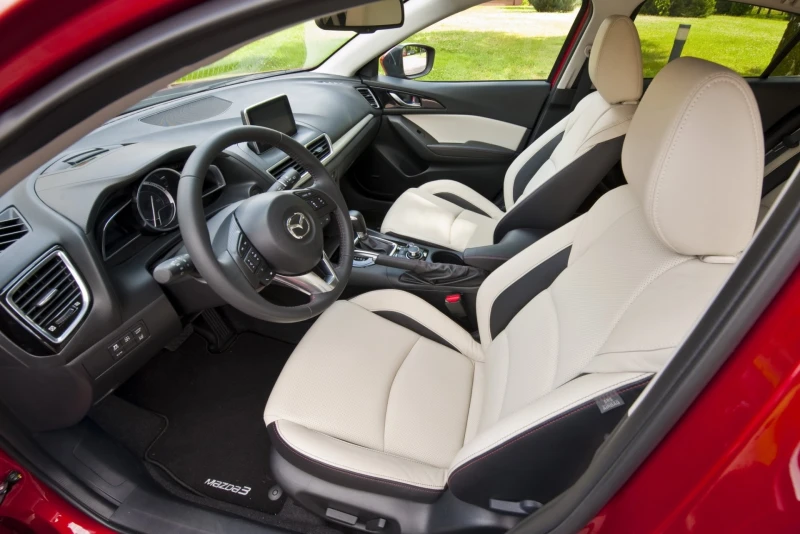
The interior of the Mazda 3 III generation features a minimalist, driver-oriented design. Trim materials include soft-touch plastics on the dashboard and door panels, cloth or leather upholstery depending on the trim level, and accents in aluminum-look or piano black finish. Build quality feels above average for the compact class: the plastics resist scratches well, and stitching is even and precise. However, lower sections in base models use harder plastics, which can feel a bit cost-conscious.
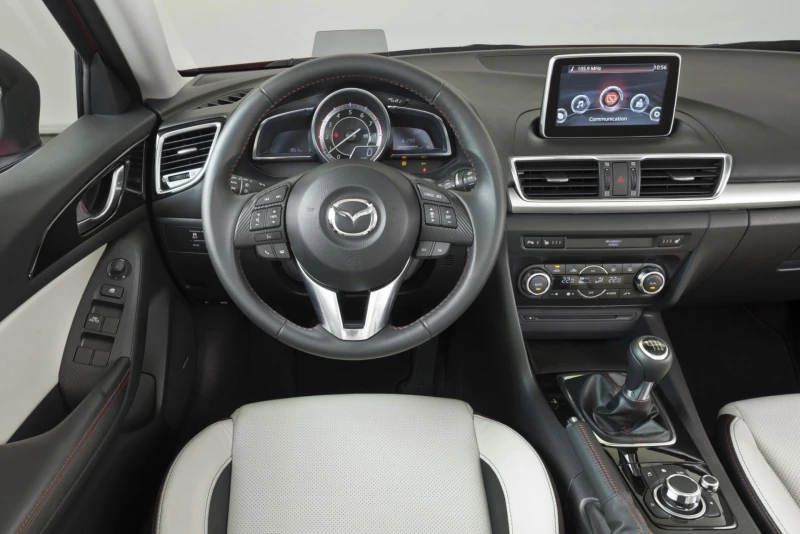
The instrument panel design is clean: analog gauges (pre-facelift) or a combination cluster with digital elements after the update. The center console has a 7-inch infotainment screen that sits atop the dash, along with a physical climate control panel. The driver's position is well thought out: the steering wheel adjusts for reach and rake, the seats offer strong side bolstering, and the pedals are positioned comfortably for long drives. Owners often report feeling at ease even at heights of 6'1"–6'5", with minimal fatigue after 200–250 miles.
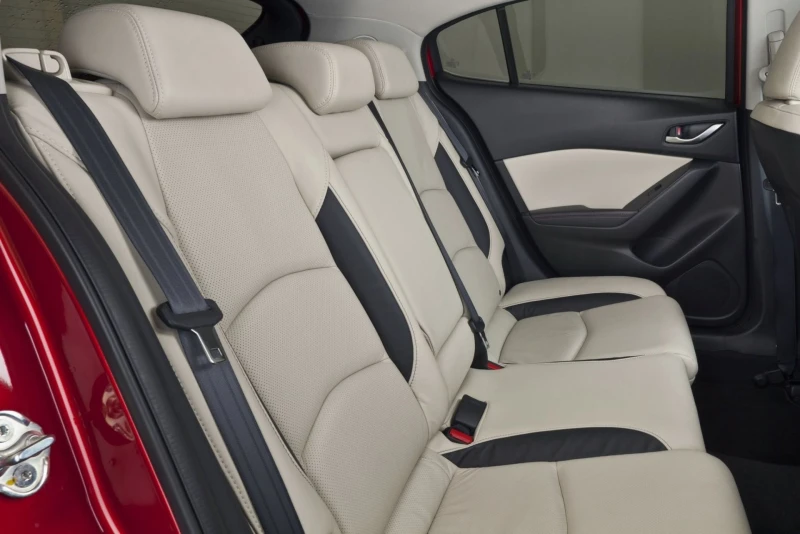
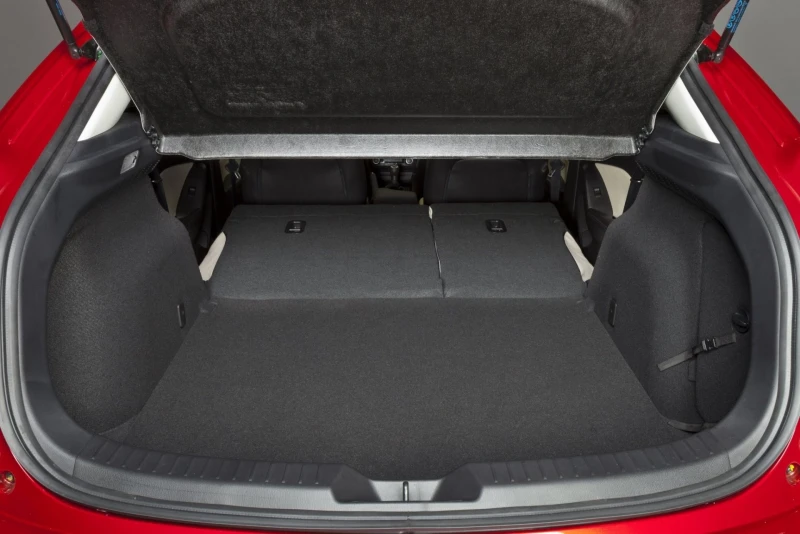
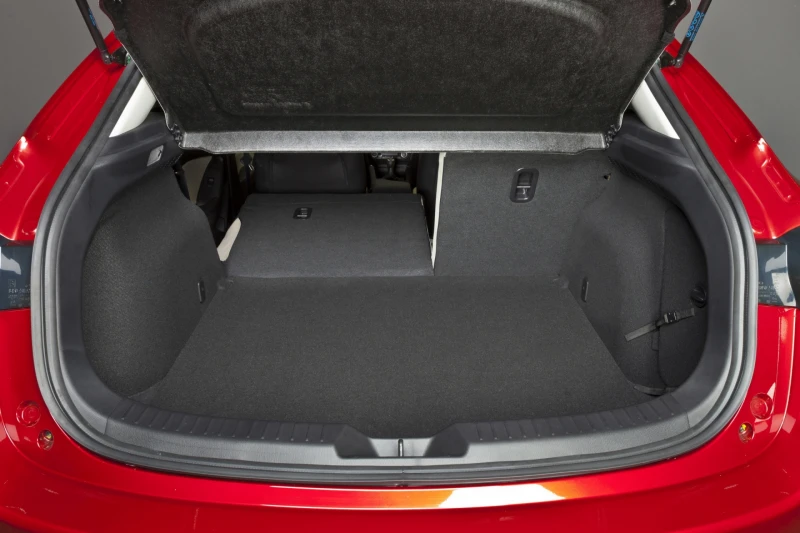
Front passenger space is generous, with ample legroom and headroom. The rear seat is best suited for two adults: knee room is adequate, but a third passenger will feel cramped due to the prominent center tunnel. Headroom in the hatchback is slightly less than in the sedan because of the roofline. Trunk capacity is 20.1–12.4 cu ft (hatchback/sedan), expanding to 47.1 cu ft in the hatch with the 60:40 split-folding rear seats. Practicality is average for the segment: door pockets, cupholders, and small storage bins are present, but no rear armrest in base trims reduces long-trip comfort. Overall, the Mazda 3 2013–2019 cabin works well for daily commuting and small families with 1–2 children.
Trim Levels on the US Market
In the United States, the Mazda 3 III generation was offered in several trim levels tailored to American preferences. Common versions found on the used market today include base (Sport/i Sport), mid-level (Touring/i Touring), and premium (Grand Touring). Powertrains typically featured 2.0L or 2.5L Skyactiv-G engines with front-wheel drive; AWD was introduced later in the generation but is less common on early models.
The base trim (Sport) includes cloth upholstery, manual seat adjustments, single-zone air conditioning, a basic audio system with 4–6 speakers, a multifunction steering wheel, and standard safety features (stability control, six airbags). The infotainment is a simple 7-inch display without built-in navigation.
Mid-level trims (Touring) add dual-zone automatic climate control, heated front seats, rearview camera, rain-sensing wipers, cruise control, and 16-inch alloy wheels. Upholstery may include a combination of cloth and leatherette.
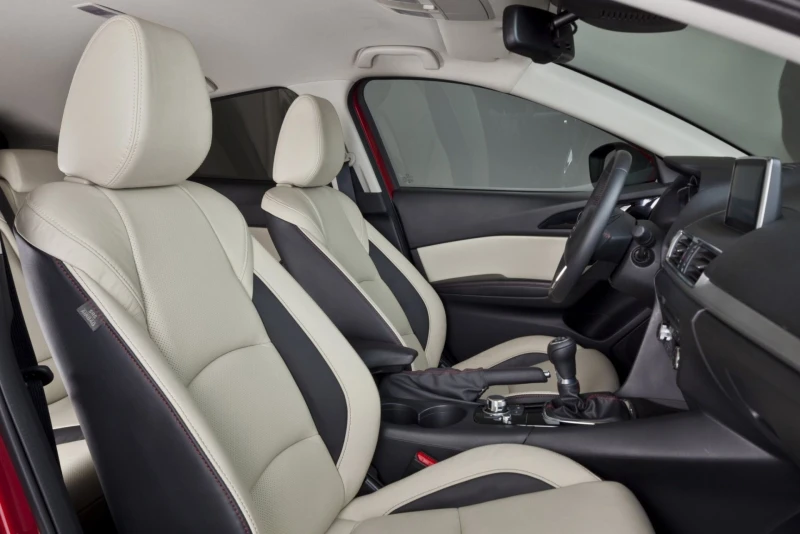
Higher trims (Grand Touring) feature leather upholstery, heated steering wheel, heated rear seats (later models), LED headlights, head-up display, Bose 9-speaker audio system, adaptive cruise control, and the full i-Activsense suite (blind-spot monitoring, rear cross-traffic alert, forward collision warning/mitigation). A power moonroof was available but less common on base and mid trims. The top Grand Touring models often included 18-inch wheels and the most advanced driver aids.
US-market cars typically came with features suited to local conditions: good heating systems, larger cupholders, and compliance with stricter safety and emissions standards. On the used market, mid- and upper-level trims from 2017–2019 are the most sought-after due to better equipment and refinement.
Interior Changes by Year & 2016–2017 Facelift
From 2013 to 2019, the Mazda 3 III interior saw gradual improvements, with the most significant updates arriving in the 2016–2017 facelift (transition from BM to BN). Early models (2013–2015) featured analog gauges, a simpler steering wheel design, and average sound insulation. Materials were good but lacked some of the later premium touches; interior color options were mostly black or gray.
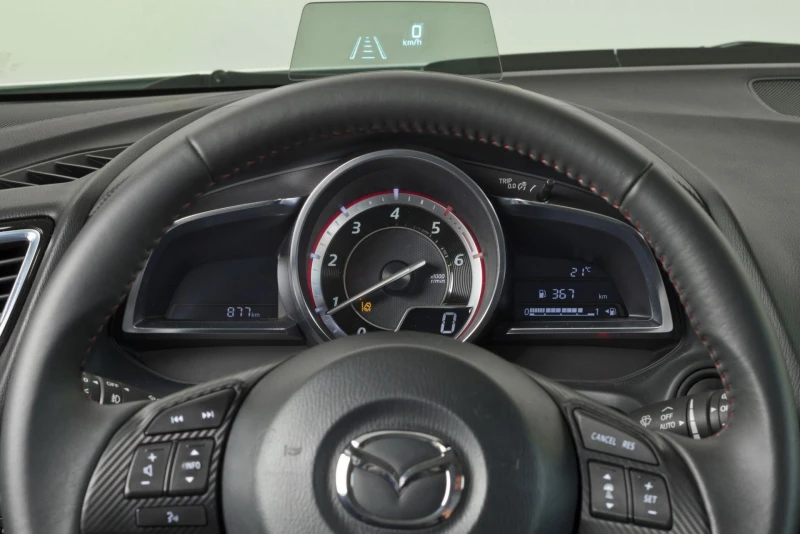
The 2016–2017 facelift introduced a redesigned multifunction steering wheel, updated gauge cluster graphics, and an available full-color head-up display. Noise insulation was noticeably improved (extra materials in wheel wells and doors), and new upholstery colors appeared (including beige and red tones). Infotainment received upgrades: top trims gained an 8.8-inch screen with sharper graphics. Minor refinements continued into 2018–2019, mainly to software and optional features.
On the used market, post-facelift models (2017–2019) are generally preferred: quieter cabins, better electronics, and less wear on materials. Pre-facelift cars (2013–2016) are more affordable but come with simpler instrumentation and slightly less refinement.
Common Interior Issues & Owner Feedback
The Mazda 3 III generation has a few known interior wear items. Seat fabric can show wear after 60,000–90,000 miles, while leather may crack in very hot or cold climates without proper care. Common failures include plastic gears in power mirrors, door check straps that wear out, and steering wheel badges that can crack in accidents.
Interior noises: after 90,000+ miles, some sedans develop rear creaks from body flex; sound deadening is decent but highway conversation at 65 mph requires raised voices. Rear seat comfort: tight for three adults, high center tunnel. Visibility: small side mirrors mounted awkwardly; hatchback rear visibility suffers from the thick pillars.
Maintenance notes: interior plastics and trim scratch relatively easily, infotainment can occasionally glitch (may need a software update), and Bose speakers sometimes distort at high volumes. In regions with extreme weather, heated elements and electronics can fail earlier. On the used market, many examples have 90,000–150,000 miles, where these issues start to appear.
Conclusions & Relevance in 2026
In 2026, the Mazda 3 III interior still feels reasonably modern: the clean design and solid materials have aged well, though the infotainment and gauge cluster look dated next to current models. It remains a strong choice in the used compact segment, offering an excellent balance of comfort, ergonomics, and driving engagement.
The best value on the US used market tends to be mid- to upper-level post-facelift examples (Touring/Grand Touring, 2017–2019): quieter, better equipped, and still holding strong resale value (approximate market price $11,000–$17,000 depending on condition and mileage). Base models are fine for city use but miss many comfort and tech features.
When shopping for a used Mazda 3, inspect the cabin closely: check seats for excessive wear, test all infotainment functions, listen for creaks on a test drive, and look for signs of hard use (odors, scratches). A pre-purchase inspection focusing on electronics and any prior accident damage that may have affected interior alignment is highly recommended.