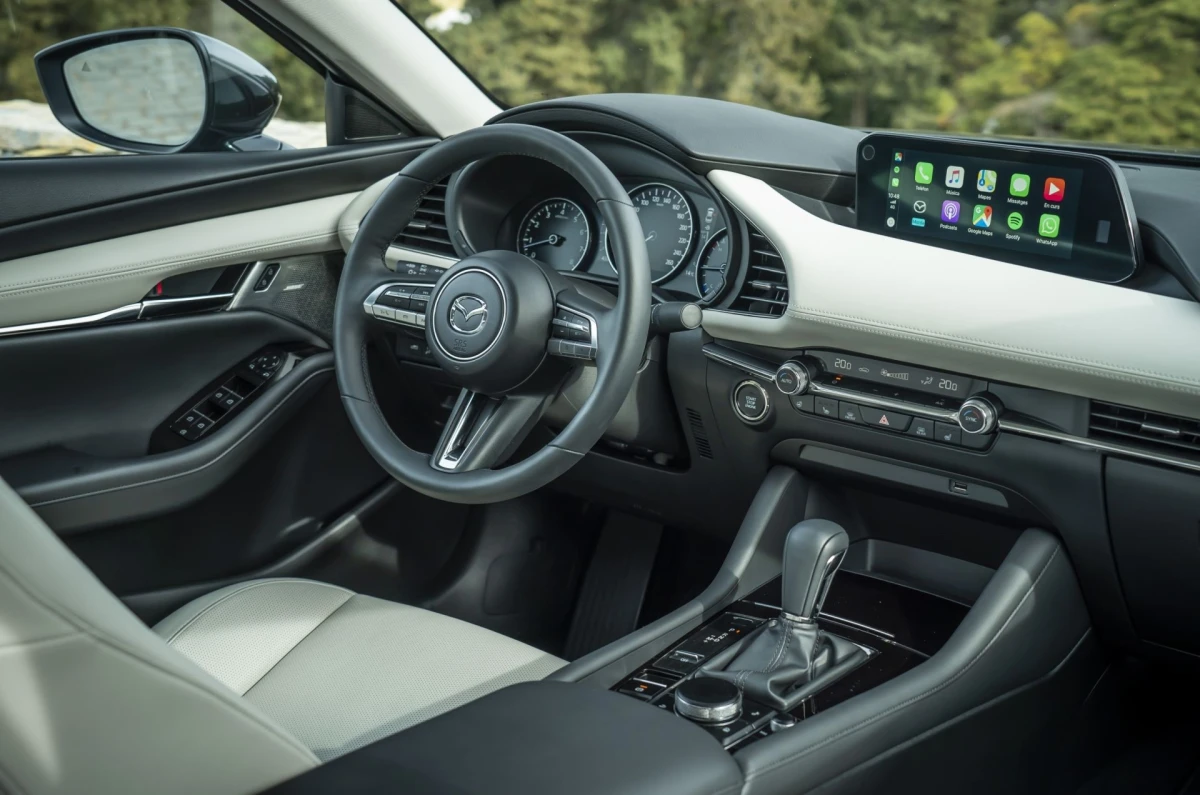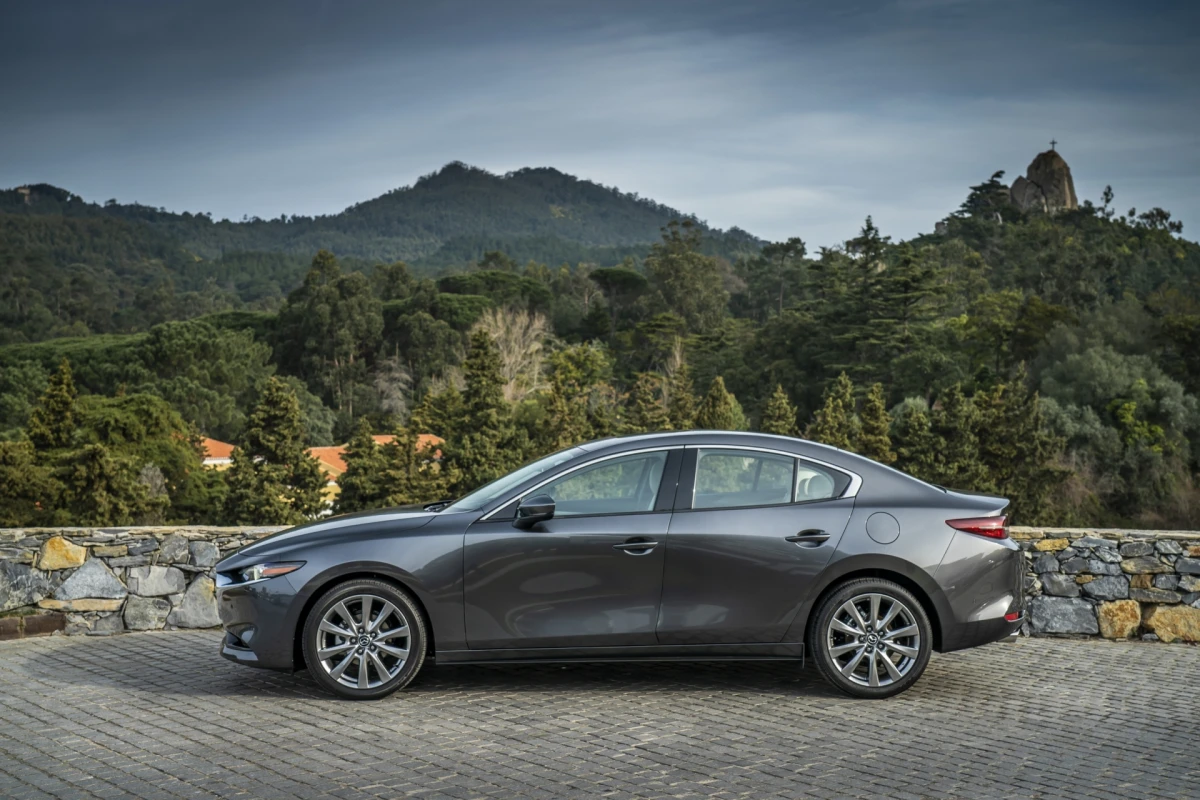



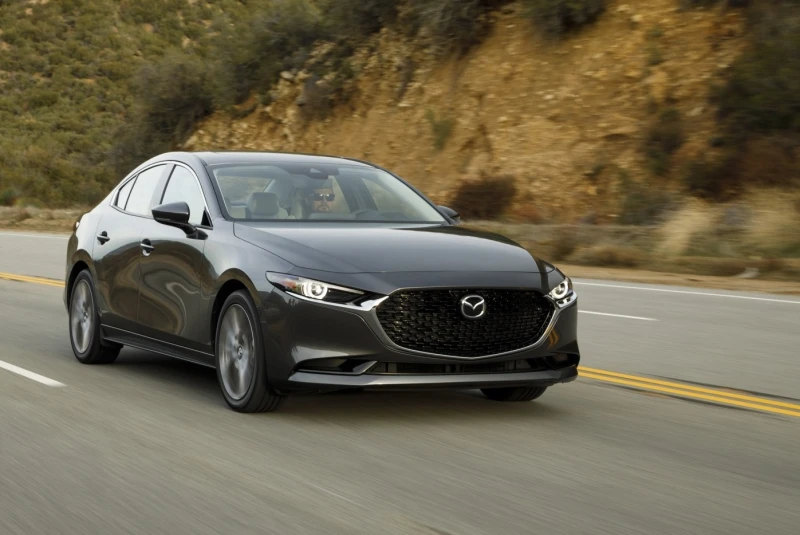
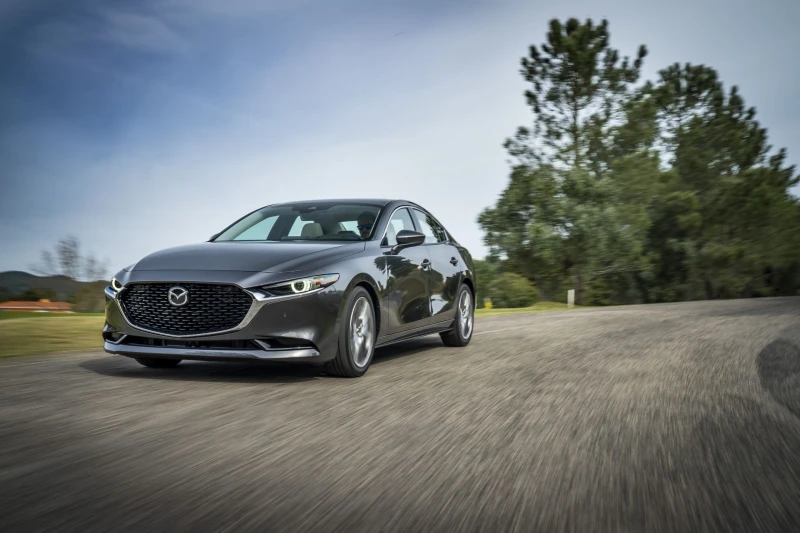
The fourth-generation Mazda 3 (BP index) remains the current model as of 2026. Production started in 2019 and continues today. The global debut took place in November 2018 at the Los Angeles Auto Show, with U.S. sales beginning in early 2019. In the United States, the model has been widely available through official Mazda dealers since launch, with strong ongoing demand for both new and recent used examples.
The car rides on the second-generation Skyactiv-Vehicle Architecture platform. Compared to the previous generation (BM/BN), torsional rigidity has increased by about 30%, multi-link rear suspension is standard across nearly all variants, noise and vibration isolation is significantly improved, and mass distribution along with the center of gravity have been optimized. All of this contributes to sharper handling and greater overall refinement.
In the global lineup, the Mazda 3 continues to be a key player in the compact car segment, competing against the Toyota Corolla, Honda Civic, Volkswagen Golf, Hyundai Elantra, Kia Forte, and Subaru Impreza. The fourth generation brought the most dramatic redesign in the model's history: Kodo-inspired exterior with a "floating" roofline, minimalist interior, and a strong focus on premium tactile materials.
What's New Compared to the Previous Generation
Compared to the third generation (BM/BN, 2013–2019), the changes were extensive:
- Design: All-new exterior and interior. The body is longer, lower, and wider, with a drag coefficient reduced to 0.26–0.28 depending on the version. The cabin adopts the premium style of recent Mazda models (CX-30, CX-5, Mazda6), featuring a vertical center console layout and an 8.8-inch infotainment screen.
- Platform: Switch to second-generation Skyactiv-Vehicle Architecture with a higher proportion of high-strength steels and improved passive safety.
- Suspension & Handling: Multi-link rear suspension became standard (previously limited to top trims), plus G-Vectoring Control Plus for smoother trajectory changes via torque vectoring.
- Engines: Dropped the 1.5 and 2.0 naturally aspirated units in favor of Skyactiv-X (2.0L compression-ignition) and updated Skyactiv-G 2.0/2.5 lines. Skyactiv-D diesels remain available in some markets but have a much smaller share.
- Safety & Tech: Expanded i-Activsense suite, including adaptive cruise with Stop & Go, blind-spot monitoring, traffic sign recognition, and automatic emergency braking in city and highway scenarios.
- Comfort: Substantially better sound insulation, higher-quality materials, optional Bose audio, leather upholstery, heated steering wheel and rear seats (market-dependent).
Current Generation Status
As of 2026, the Mazda 3 BP remains fresh without a major redesign. A mild facelift arrived in 2021, updating the grille, rear lights, adding new body colors, refining the infotainment (with wired and wireless Android Auto/Apple CarPlay in later models), and improving some driver aids.
Current production focuses mainly on gasoline variants:
- 2.5 Skyactiv-G (up to ~191 hp, depending on tuning and market)
- 2.5 Skyactiv-G Turbo (up to ~250 hp, primarily for North America)
- 2.0 Skyactiv-X (supercharged, ~180–186 hp, more common in Europe and select regions)
Diesel 1.8 Skyactiv-D models have largely disappeared from new U.S. inventory. i-Activ AWD is widely offered across the U.S. lineup, unlike many other markets where front-wheel drive dominates.
Main trims for 2025–2026 include: 2.5 S, Select Sport, Preferred, Carbon Edition, Premium, and Turbo variants (Premium Plus, etc.). In the U.S., well-equipped models with the turbo engine and AWD are especially popular.
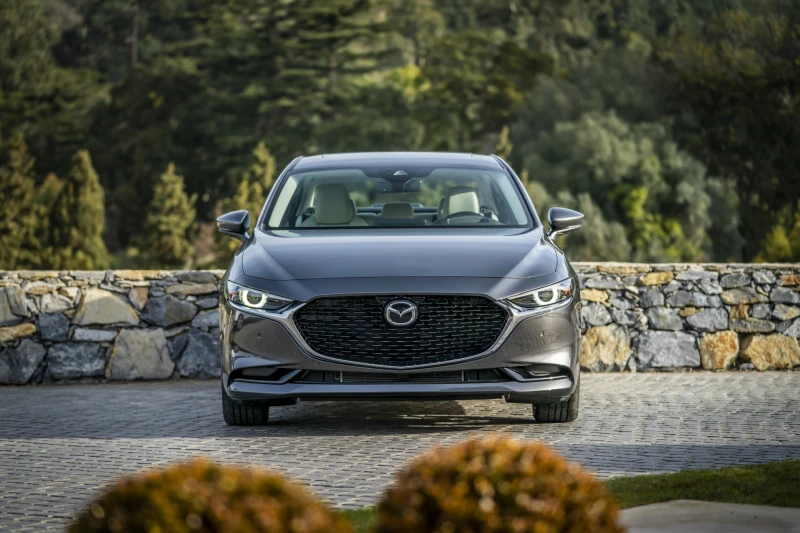
U.S. Market
In the used market, the Mazda 3 BP is one of the standout compact cars among relatively recent models. As of early 2026, listings typically show several thousand 2019–2025 examples available nationwide, including low-mileage units and recent trade-ins.
New vehicles continue to be delivered through Mazda's official U.S. network. Fresh 2024–2025 models appear regularly at dealerships and in the certified pre-owned channel.
Approximate price range (February 2026, U.S. market):
| Year / Mileage | USD | Note |
|---|---|---|
| 2019–2020, 50,000–95,000 mi | $14,000 – $18,500 | mostly 2.5 naturally aspirated |
| 2021–2023, 20,000–50,000 mi | $18,000 – $24,000 | mid-level trims |
| 2024–2025, under 20,000 mi | $22,000 – $32,000+ | recent models, often 2.5 Turbo AWD |
Main Versions and Trims in the U.S. Market
Most common configurations:
- Base / 2.5 S, Select Sport: cloth seats, 8.8" screen, manual or auto climate, basic safety suite, 16" wheels, LED headlights.
- Mid-level / Preferred, Carbon Edition: leatherette or leather, heated steering wheel and front seats, dual-zone climate, rearview camera, parking sensors, 18" wheels, Bose available as option.
- Top / Premium, Turbo, Premium Plus: full leather, head-up display, adaptive cruise, signature LED lighting, 2.5 Turbo engine, 360° cameras, premium audio.
Suspension is always fully independent with multi-link rear; tuning leans toward sporty yet comfortable with excellent steering feel.
Conclusions and Generation Relevance
The Mazda 3 (4th Gen BP) remains one of the most engaging choices in the compact segment for drivers who want striking design, sharp handling, and a premium-feeling interior. It appeals to enthusiasts who value driving dynamics, prefer to avoid German luxury premiums, and seek a modern car without high maintenance costs.
New or low-mileage examples with the 2.5 Turbo and AWD often deliver the best mix of performance, features, and value. Used 2021–2023 models strike an excellent balance of price, condition, and modernity for most buyers.
The BP generation stays highly relevant thanks to no direct successor yet, ongoing software updates, and Mazda's consistent brand philosophy. When shopping, check service history, suspension condition (especially after rough roads), Skyactiv-X reliability (if considering imports), and accident-free records for any imported vehicles.