


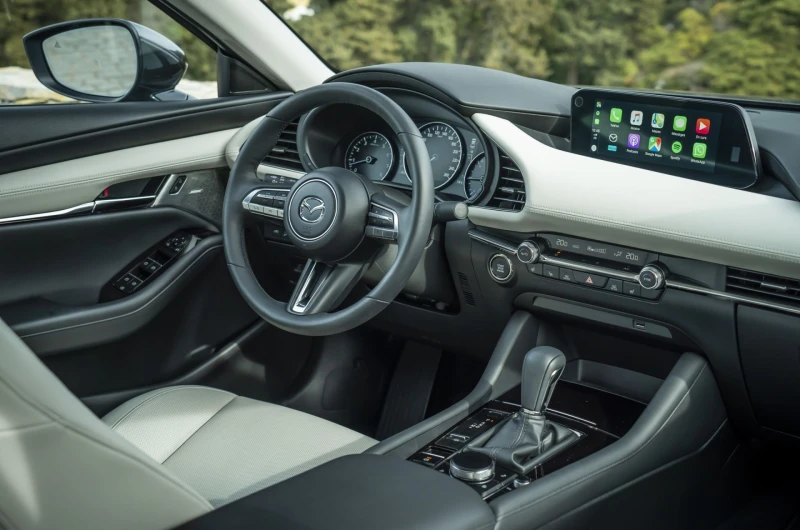
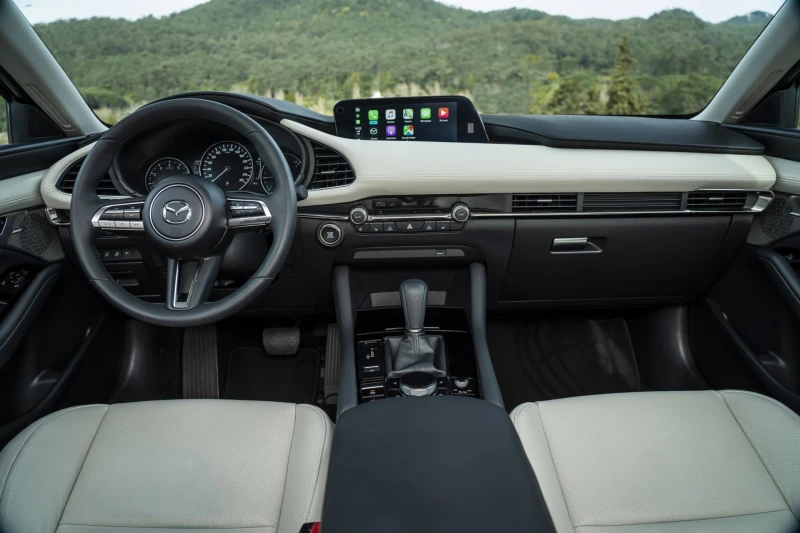
The Mazda 3 fourth-gen interior follows the brand’s “Less is more” philosophy with clean, minimalist design. The dashboard emphasizes strong horizontal lines that make the cabin feel wider than it is. Soft-touch plastics cover the dash and door panels, while seats come in cloth or leather depending on trim. Higher trims add aluminum accents or piano black trim. Build quality remains impressive — tight gaps and no creaks on well-maintained examples give a near-premium feel in the compact segment.
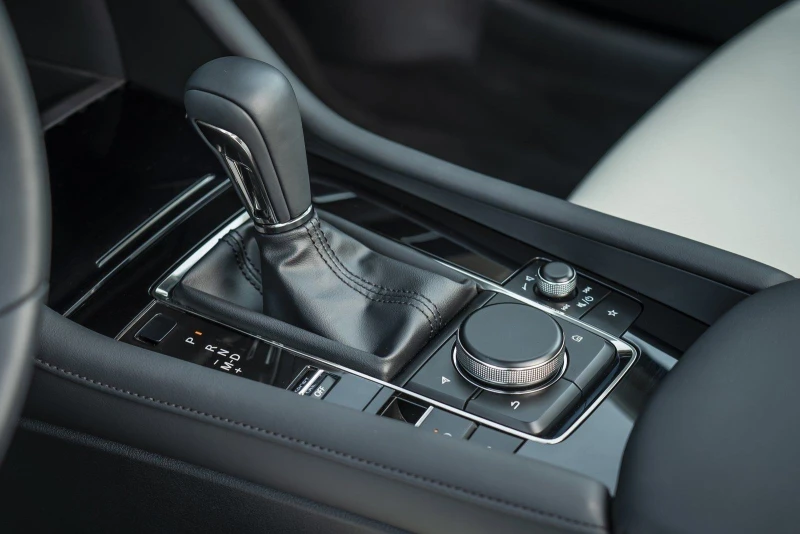
The instrument cluster blends analog gauges with a central digital display, and the driver-oriented center console places the 8.8-inch infotainment screen high for easy viewing. Ergonomics shine: the steering wheel offers generous telescopic adjustment (up to ~2.8 inches), the driver’s seat has cushion tilt, and the shifter sits close at hand. The low, supportive seating position delivers that classic “connected to the road” Mazda feeling.
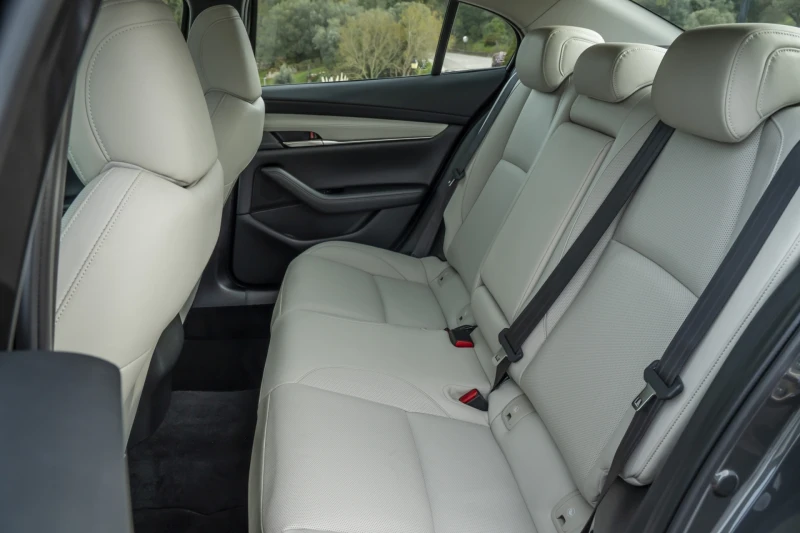
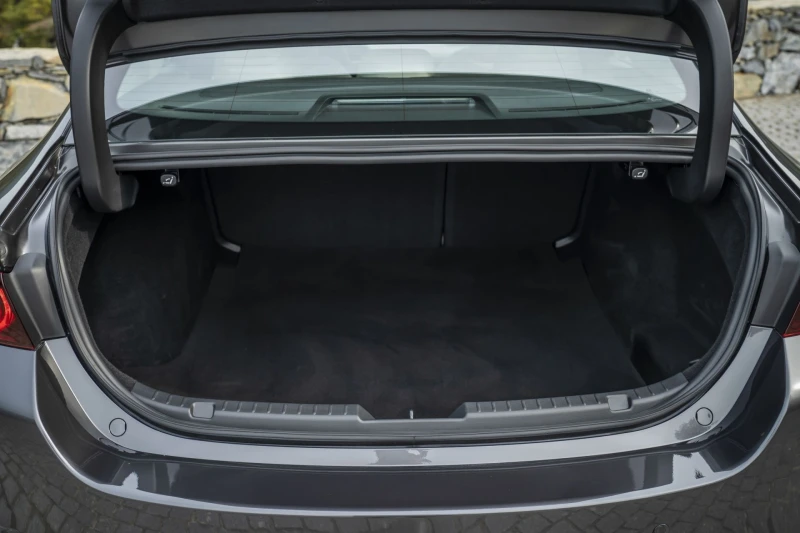
Front-seat passengers enjoy generous legroom and headroom — even taller adults over 6'1" fit comfortably. The rear seat is tighter: the 107.3-inch wheelbase provides acceptable knee room, but the sloping roofline (especially on the hatchback) limits headroom. The cabin works best for four adults; the center-rear position is best for short trips or kids. Trunk space stands at 13.2 cu ft in the sedan and 20.1 cu ft in the hatch (up to 47.1 cu ft with seats folded 60/40). Practicality is decent — the opening is a bit narrow, but many versions include a spare tire well. Overall, the Mazda 3 cabin suits daily commuting and light hauling with solid versatility.
Trims & Features Available in the US Market
In the United States, the Mazda 3 (BP) is sold through official dealerships with a full lineup. Popular trims include base 2.5 S, mid-level Preferred/Select, upscale Premium, and top-tier Turbo models with AWD and more power.
Entry-level versions typically feature cloth upholstery, manual or automatic climate control, 16-inch wheels, LED headlights, the 8.8-inch infotainment screen with wired Apple CarPlay/Android Auto (wireless added in later years), and standard safety tech like blind-spot monitoring and automatic emergency braking. Many US examples include heated front seats even on lower trims.
Mid-grade trims add dual-zone climate control, heated front seats, rearview camera, rear parking sensors, 18-inch wheels, and available Bose audio. Upholstery upgrades to leatherette or leather/cloth combos. Driver aids often include adaptive cruise control and traffic sign recognition.
Higher trims bring leather seating, head-up display, adaptive LED headlights, available moonroof, and extras like 360° cameras. Top Turbo versions (especially AWD) feature the 2.5L turbo engine, ventilated front seats, premium leather, and full suite of assists. American buyers often seek well-equipped Preferred or Premium trims for the best value, or Turbo models for extra performance.
| Trim Level | Upholstery | Infotainment | Key Driver Aids | US Market Notes |
|---|---|---|---|---|
| Base (2.5 S) | Cloth | 8.8" screen | Standard suite | Heated seats common |
| Mid (Preferred/Select) | Leatherette | Bose option | Adaptive Cruise | Heated steering wheel |
| Premium | Leather | Head-up display | 360° cameras | Moonroof available |
| Turbo | Premium leather | Full package | All assists | AWD popular |
Interior Changes Over the Years & Updates
Since its 2019 debut, the BP-generation Mazda 3 has seen steady improvements. The 2021 refresh brought crisper gauge graphics, wireless Apple CarPlay/Android Auto on later models, softer-touch materials in more places, and noticeably better noise insulation thanks to added sound-deadening in the wheel wells and doors.
By 2023–2025, Mazda introduced fresh interior color options (including red or white leather), refined console cupholders, and an upgraded head-up display showing navigation cues. As of 2026 the cabin still feels modern — minimalist layout, vertical console elements, and high-quality surfaces hold up well. Some elements, like the lack of touchscreen control (rotary dial only), can feel dated next to rivals with giant touchscreens, but many drivers appreciate the clean, button-driven interface.
Common Questions & Cabin Drawbacks
Noise insulation is average: above 65–70 mph you’ll hear some tire and wind noise, especially on rough American highways. After 60,000–70,000 miles, steering wheel and seat bolster wear can appear, and cold weather sometimes makes plastics creak. Rear-seat space remains a weak point — tight for tall passengers in both legroom and headroom.
Rear visibility is limited by thick C-pillars (hatchback especially), though cameras help. Leather requires regular care to avoid cracking, and small crevices collect dust easily. In regions with extreme weather — hot summers in the South or salted roads up North — the cabin demands frequent cleaning. On the used market, look for examples without heavy wear from long commutes.
Final Thoughts & Interior Relevance in 2026
As of 2026 the Mazda 3 interior still punches above its class with upscale materials, thoughtful ergonomics, and timeless design. It avoids feeling dated quickly, even as competitors chase bigger screens. For the full experience, aim for Preferred or higher trims with heated seats and Bose audio.
Well-equipped recent imports or low-mileage US-spec Turbo models justify a premium thanks to performance and comfort. On the used market, 2021–2023 examples with under 50,000 miles offer the best balance. When shopping, inspect for worn surfaces, squeaks, infotainment glitches, and any signs of water damage or heavy use — especially in states with harsh winters or long highway drives. Approximate market price range for well-maintained 2019–2024 examples in the US: $15,000–$28,000 depending on trim, mileage, and condition.