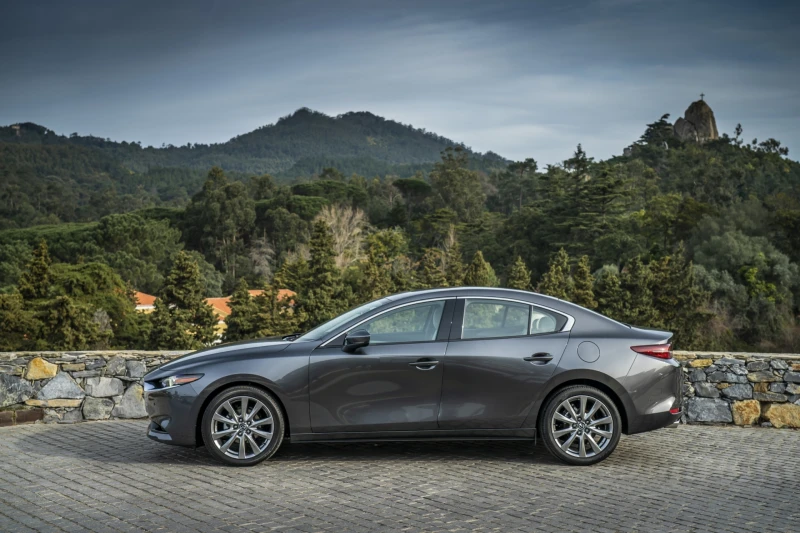
Mazda 3 fourth-generation drawbacks frequently come up in owner reviews, with emphasis on aspects that affect daily driving. Fuel economy stands out: for the common 2.5 Skyactiv-G (186 hp, widely available in the US), real-world city driving typically sees 22–26 mpg, while aggressive driving or heavy traffic can push it to 18–22 mpg. On the highway, figures often land in the 32–38 mpg range depending on speed, load, and conditions — though real results on American roads with frequent stop-and-go can exceed EPA estimates less favorably.
Infotainment and navigation features include an 8.8-inch display controlled via a rotary knob — great for staying focused while driving, but the lack of touchscreen in early models frustrates some users. Android Auto and Apple CarPlay are supported, but pre-2021 versions are wired only, with wireless added later. Navigation relies on smartphone mirroring in base trims, requiring a solid data connection rather than built-in offline maps.
Noise insulation improved noticeably over the previous generation but remains average for the class: above 65–70 mph, tire and wind noise become noticeable, especially on rough concrete or with the optional 18-inch wheels. Owners often mention this as a common gripe. Interior materials feel upscale — soft-touch plastics, quality cloth or available leather — though steering wheel and seat bolsters can show wear after 60,000–70,000 miles.
Maintenance access can be tight due to the compact engine bay layout, making jobs like cabin filter replacement more involved. Parts prices sit above average for the segment: genuine body panels like a bumper or headlight often run $500–$1,200, while quality aftermarket options (Taiwan/Korea) cost roughly half. Skyactiv-X variants (less common in the US) demand high-quality fuel to prevent carbon buildup issues.
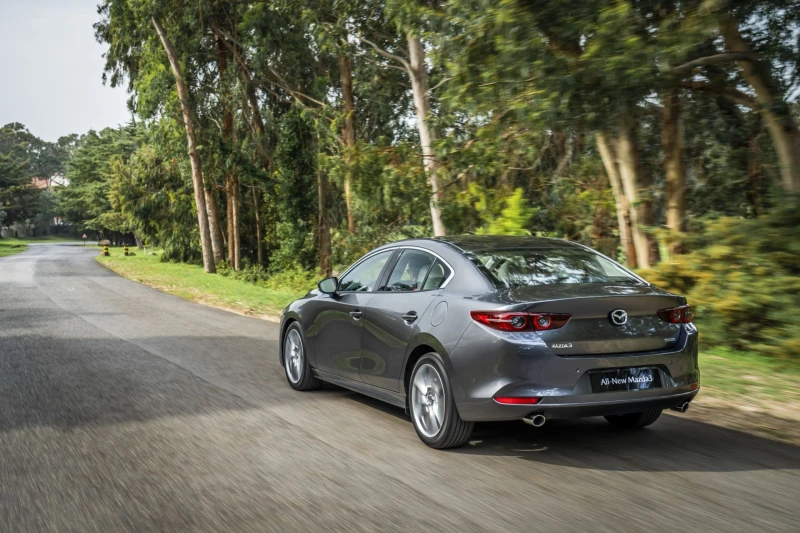
Model Years and Versions — Key Areas to Inspect
Early 2019–2020 Mazda 3 models had occasional reports of Skyactiv-Drive automatic transmission glitches, airbag/seatbelt warning light faults, and some electronic brake-assist calibration quirks. These were not widespread and many were addressed under warranty.
Post-2021 updates brought meaningful improvements: wireless smartphone integration, refined noise insulation via extra damping materials, and better-tuned driver aids (i-Activsense suite). From 2023 onward, mild-hybrid tech in e-Skyactiv G variants shaved about 1–2 mpg off real-world consumption in mixed driving. Rust concerns (wheel arches, rocker panels) appear mostly on early examples exposed to road salt in northern states, though Mazda improved anti-corrosion measures after 2021. US-market 2.5 Turbo versions with AWD need careful monitoring of the turbocharger past 60,000–70,000 miles.
Used Market in the United States
In the US, used Mazda 3 models come mostly from domestic sales (no major import waves like in some markets). Body condition varies significantly by region: rust is a concern in the Rust Belt and northern states where road salt is heavily used — wheel arches, rockers, and lower doors often show bubbling or perforation after several winters. Humid coastal areas or regions with salted roads amplify the issue, so underbody inspection and checking hidden cavities is critical.
Service history is very important: skipped maintenance can lead to carbon buildup in direct-injection engines or minor oil consumption in higher-mileage 2.5-liter units. Verify originality via VIN — many cars have had collision repairs. Odometer rollback happens occasionally; typical mileage for 2019–2021 models sits around 50,000–100,000 miles, so third-party history reports and diagnostic scans are strongly recommended.
Typical asking prices on the current US used market: front-wheel-drive 2.5 Skyactiv-G models range from $15,000–$22,000 depending on year, mileage, and condition; AWD 2.5 Turbo variants often sit in the $22,000–$30,000+ range.
| Model Year | Common Issues | Approximate Market Price Range (USD) |
|---|---|---|
| 2019–2020 | Rust potential, early transmission quirks | $14,000–$19,000 |
| 2021–2023 | Interior wear, minor electronics | $18,000–$25,000 |
| 2024–present | Fewer reported complaints | $22,000–$32,000+ |
What Can Be Fixed and Budget for Solid Condition
Many fourth-gen Mazda 3 drawbacks are correctable. Upgrading sound deadening (extra materials on wheel wells and doors) can drop cabin noise by 10–20 dB. Infotainment can be refreshed via software updates or aftermarket head units supporting wireless protocols. Worn interior trim (seats, steering wheel) can be reupholstered or replaced with quality aftermarket parts.
Suspension refresh — shocks, bushings after 60,000–70,000 miles — dramatically improves ride quality on uneven American roads. Rust prevention involves professional undercoating and cavity wax treatment. Follow Mazda’s oil change interval of 7,500–10,000 miles and monitor the timing chain in Skyactiv-G engines.
When buying used, budget 10–20% of the vehicle price for post-purchase improvements and repairs — roughly $2,000–$5,000 for diagnostics, preventive maintenance, and addressing typical wear items.
Final Thoughts and Buying Advice
The Mazda 3 (fourth generation) remains a compelling choice in the compact segment, especially if you value sharp styling, engaging handling, and premium-feeling cabin. Post-2021 examples with updated software and better insulation are the safest bets. In the US market, the 2.5 Skyactiv-G (FWD or AWD) strikes the best balance of performance and efficiency for most drivers; the Turbo adds extra punch for enthusiasts.
When shopping new or used, prioritize thorough inspection for rust (especially in salt-belt regions), full service records, verified mileage, and proper function of all electronic systems. A lift inspection, scan tool check, and extended test drive reveal hidden issues. For more on specs, features, and interior details, check out other articles in the series.