Despite the active expansion of its electric model lineup, the company has faced reduced demand for both traditional vehicles and electric vehicles. These data allow for an assessment of the brand's current position and an understanding of the changes occurring in the premium car market.
Global Sales Volume Decline
For the year, Mercedes-Benz sold approximately 1.8 million passenger cars, which is about 180,000 fewer compared to the previous period. In relative terms, the decline amounted to about 9.2%. Financial indicators, including total revenue and profit, also decreased.
Among the factors influencing the result, the company notes increased competition and changes in international trade. However, changes in development strategy related to the accelerated introduction of electric models also played a significant role.
Electric Vehicle Sales Dynamics
Particular attention is drawn to the situation with electric vehicles. Despite the expansion of the model range, their sales have declined. Over the year, about 168,000 electric vehicles were sold, which was lower than the figures for the previous two years. This became the lowest result in the last three years.
Such developments indicate that increasing the number of models does not always lead to corresponding demand growth. Electric vehicles remain an important direction for development, but their adoption occurs gradually and depends on many factors, including cost, infrastructure, and buyer preferences.
Changes in Company Strategy
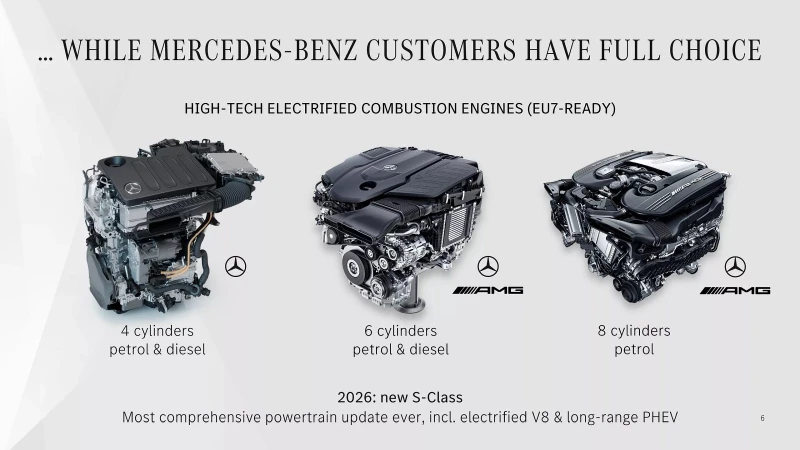
Mercedes-Benz continues to adapt to changing market conditions. The company plans to introduce new models, including both electric and traditional versions with internal combustion engines and hybrid systems. This will expand choices for various buyer categories.
In the near term, several new vehicles are planned for release, and in subsequent years, the model lineup will be further updated. The main goal is to enhance product appeal and ensure sustainable brand development.
Factors Influencing Demand
The situation in the automotive market is determined by a combination of several factors:
- increased competition from other manufacturers;
- changes in consumer preferences;
- transition to new technologies;
- economic conditions and vehicle costs;
- development of infrastructure for electric transport.
All these factors influence buyer decisions and determine sales dynamics in various segments.
Conclusions
The decline in Mercedes-Benz sales reflects complex processes occurring in the automotive industry. Despite active development in the electric direction, demand for such models is growing gradually. The company continues to update its model lineup and adapt its strategy, aiming to meet current market conditions and buyer needs.