


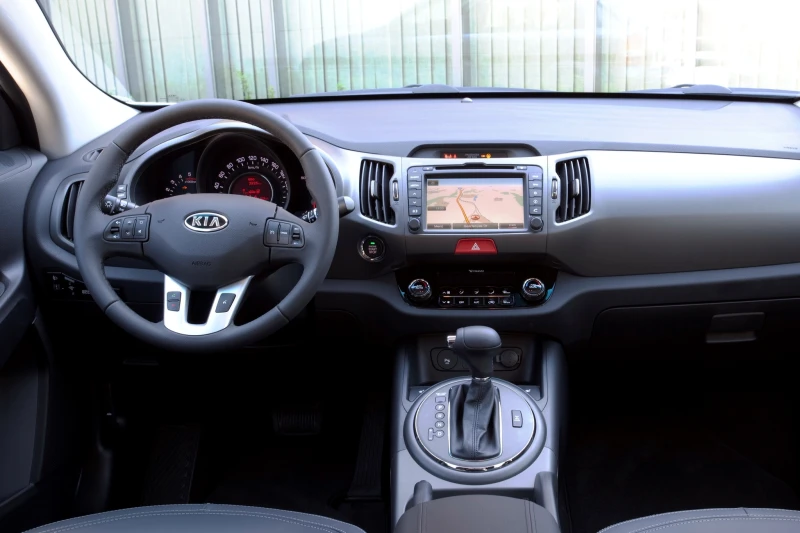
The cabin of the 2011–2016 Kia Sportage is designed for daily driving, emphasizing functionality for family use. The Kia Sportage III interior features a more modern design compared to previous generations, though it still uses budget-conscious materials. This article covers key cabin aspects, trim levels, year-over-year changes, common issues, and its relevance on the US used car market.
Overall Cabin Overview
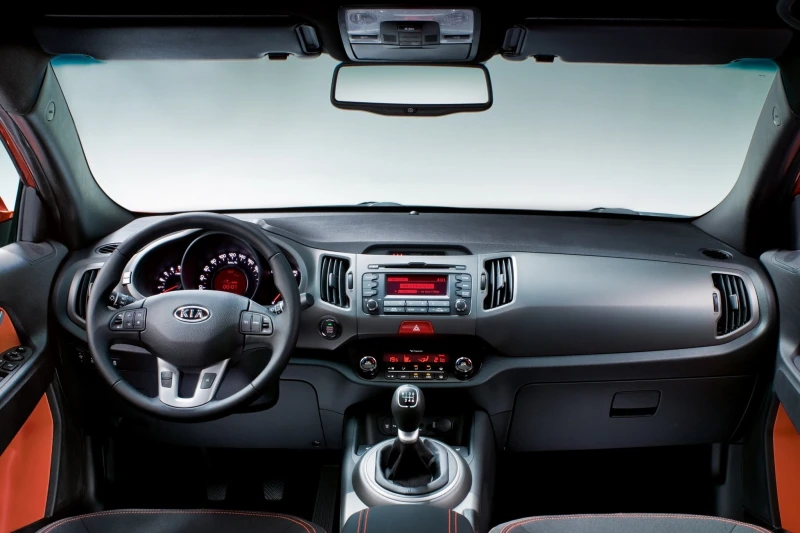
Interior materials in the Kia Sportage III consist mainly of hard plastics on the dashboard and door panels, with soft-touch surfaces in the upper areas. Build quality feels appropriate for the class: the plastic resists scratches well but can develop rattles over time. Cloth or leatherette inserts (depending on trim) provide basic comfort, though leather can show wear sooner under heavy use. The instrument panel design is straightforward and driver-focused: analog gauges with backlighting, a center stack housing climate controls and the audio system. Driver ergonomics are solid — the steering wheel adjusts for height and reach, seats feature manual adjustments (power in top trims), and pedals plus shifter are well-positioned for average-height drivers.
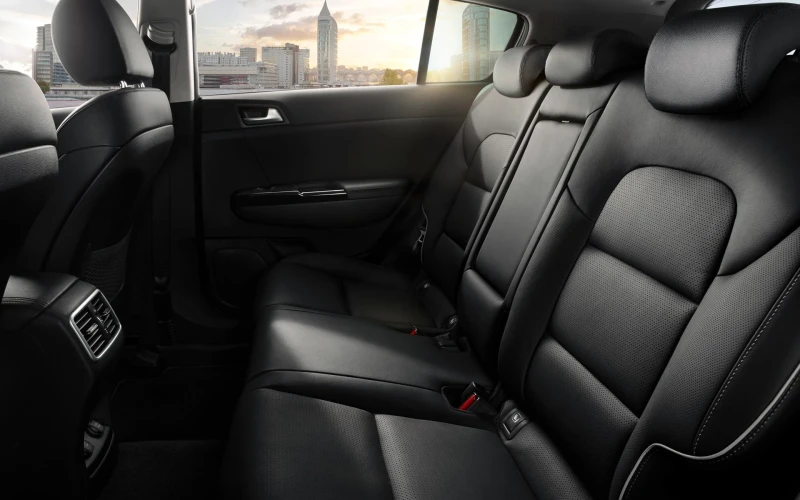
Front-seat passengers enjoy adequate legroom and headroom, with decent side support. The rear bench seats three but is most comfortable for two adults: it folds 60/40, and knee room becomes tight for anyone over about 5'11". Visibility is compromised by thick A-pillars and small side windows, requiring some adjustment. Cargo space measures 564 liters (about 26 cubic feet) with seats up (expanding to roughly 54.6 cubic feet folded), offering a flat load floor. Practical touches include multiple storage bins, cupholders, and a center armrest with storage. Everyday usability shines in urban driving: the cabin handles groceries, child seats, and longer trips well, though sound insulation is average, letting in noticeable road and engine noise.
Trim Levels on the US Market
On the US used market, common Kia Sportage III trims include base (LX or Base), mid-level (EX), and higher-end (SX or Premium). These often arrive via domestic sales or import channels. The base trim features cloth seats, air conditioning, a basic audio system with CD/MP3, front power windows, and ABS. Interior finish relies on plastic with cloth accents and minimal brightwork.
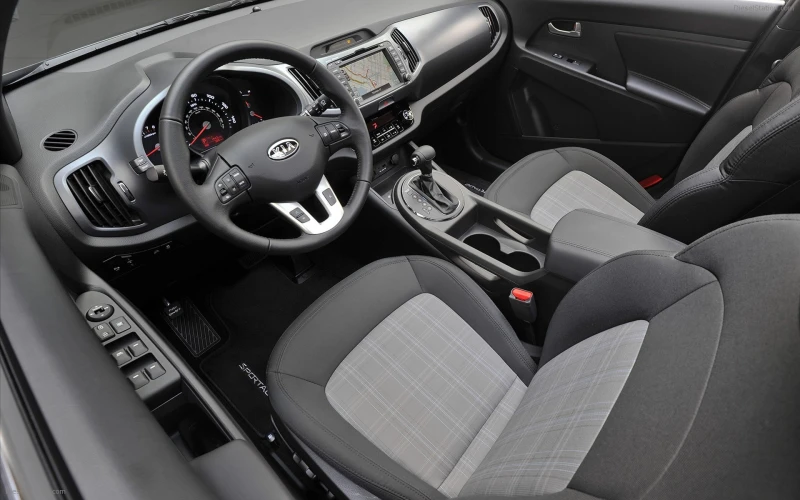
The mid-level trim adds dual-zone automatic climate control, heated front seats, cruise control, Bluetooth connectivity, and alloy wheels. It includes leather-wrapped steering wheel and shifter, plus safety aids like stability control and rear parking sensors. Higher trims offer leatherette or genuine leather upholstery, a rearview camera, touchscreen infotainment (7-inch in later models), heated rear seats and mirrors, hill descent control, and rain-sensing wipers. Top versions may feature a panoramic sunroof, navigation, keyless entry/start, ventilated seats (rare), ambient lighting, and upgraded audio.
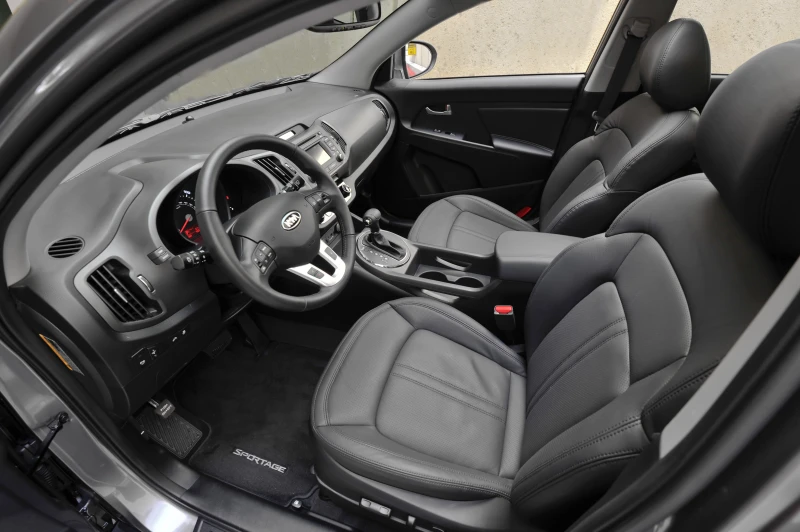
US-market specifics: many examples came with enhanced features suited to American preferences, including stronger air conditioning and larger infotainment screens in later years. Most trims include dual-zone climate and USB/AUX support. Popular options included sunroofs, HID headlights, and electronic stability systems. On the used market, EX and SX trims with gasoline engines dominate listings, often from original US deliveries or regional sales.
| Trim Level | Key Interior Features |
| Base/LX | Cloth seats, A/C, basic audio |
| EX | Dual-zone climate, heated seats, Bluetooth |
| SX/Premium | Leather, rear camera, parking sensors |
| Top/Premium | Panoramic roof, navigation, ambient lighting |
Interior Changes by Year and Facelift
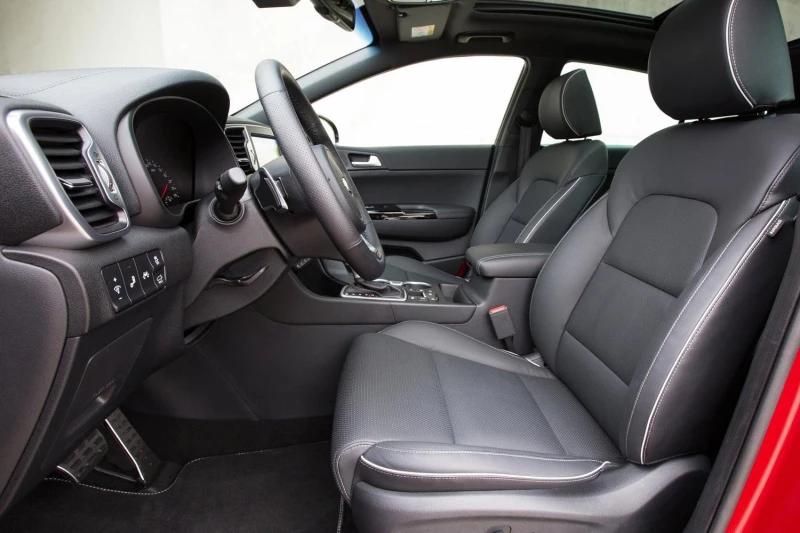
The Kia Sportage III cabin saw gradual improvements during its run. Early 2011–2013 models used basic materials: hard plastics throughout, analog gauges without extra screens, and mostly gray or black color schemes with limited options. Sound insulation was moderate, with noticeable engine vibrations.
The 2014 facelift brought refreshed styling: updated instrument cluster with clearer dials and an optional small TFT display, plus a revised center console for better usability. Materials improved slightly — more soft-touch plastic on top surfaces and new upholstery choices (including two-tone options). Beige and brown interiors appeared in higher trims. Noise reduction gained extra layers in doors and floor, dropping cabin noise by roughly 2–3 dB. Infotainment received a touchscreen upgrade with better smartphone integration. Post-facelift 2014–2016 models command higher prices on the US used market due to better condition, fewer rattles, and more features.
Yearly updates: heated steering wheel added around 2012–2013 in some markets, while 2015–2016 models often included upgraded audio. Post-facelift examples make up a significant portion of current US listings.
Common Questions and Cabin Drawbacks
Typical interior wear on the Kia Sportage III includes dashboard plastic developing creaks after 60,000–70,000 miles, especially on rough roads. Steering wheel and shifter leather can peel by 50,000–60,000 miles, and cloth seats may fade. Weak points: armrest play, dashboard and door panel rattles. Noises often stem from vibrations amplified by uneven pavement.
Rear-seat comfort is limited for three adults due to a narrow bench and no recline adjustment. Thick pillars reduce visibility, increasing caution needed in city traffic. Maintenance notes: plastic attracts dust easily, and leather benefits from conditioner to prevent cracking in varying US climates (cold winters in the North, hot summers in the South). On the used market, examples with 90,000–150,000 miles often show wear from inconsistent maintenance or non-OEM parts. Infotainment glitches include frozen screens or Bluetooth dropouts. Check for under-mat corrosion and insulation condition during inspections.
Conclusions and Interior Relevance
In 2026, the Kia Sportage III interior feels dated next to current models with large digital screens and advanced interfaces. Still, it delivers strong practicality for the budget-conscious buyer, offering enough comfort for daily driving and family duties. The best value comes from facelifted EX or SX trims: they balance features (climate control, heated seats) with solid reliability. Approximate market prices for well-maintained examples range from $6,000–$10,000 depending on mileage, condition, and location on the US used car market.
When shopping used, inspect the cabin closely: listen for rattles, check upholstery integrity, and test all electronics. Look for signs of heavy use — worn steering wheel, seats, or odors. Electronics and sound-deadening checks are worthwhile, especially on higher-mileage examples. Overall, the interior remains a practical choice for anyone seeking an affordable compact crossover without luxury expectations.