


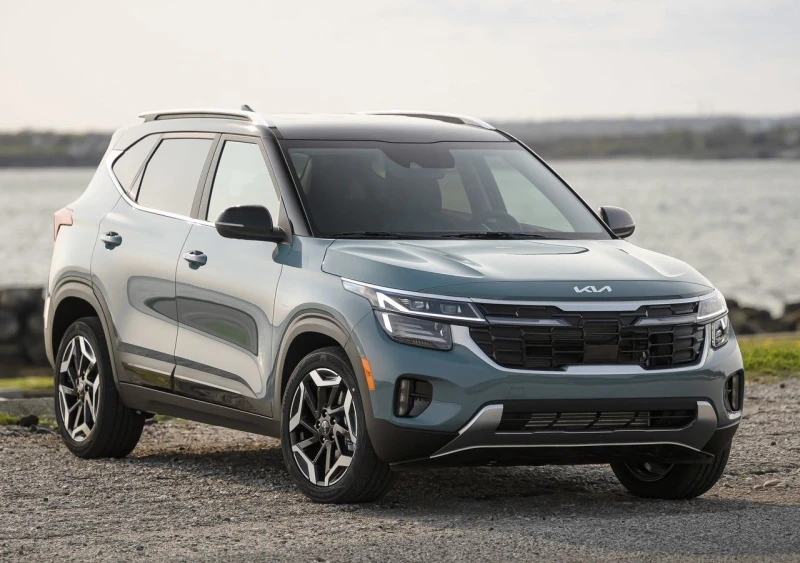
In the United States, the first-generation Kia Seltos is now primarily a used-vehicle choice, with 2021–2026 examples listed on platforms such as Autotrader, CarGurus and Cars.com. Design, interior features and trim equipment are covered in other articles in this series; this guide focuses on the technical details that matter when comparing model years, including engines, transmissions, dimensions, fuel economy and drivetrain differences.
U.S. Engines and Transmissions by Model Year
The U.S.-market SP2 was offered exclusively with gasoline four-cylinder engines. The core powertrain throughout the generation was a naturally aspirated 2.0-liter MPI engine paired with Kia's Intelligent Variable Transmission (IVT). It produced 146 hp in 2021–2024 specifications and 147 hp for 2025–2026, while torque remained 132 lb-ft. Depending on model year and trim, this combination was available with front-wheel drive or all-wheel drive.
The optional 1.6-liter turbo changed substantially during the generation. From 2021 through 2023, it produced 175 hp and 195 lb-ft and used a 7-speed dual-clutch transmission. The refreshed 2024 Seltos raised output to 195 hp and replaced the DCT with a conventional 8-speed automatic. Kia listed the turbo at 190 hp for 2025–2026, with the same 195 lb-ft of torque. U.S. turbo models were paired with all-wheel drive.
Unlike Seltos versions sold in several other regions, the U.S. model did not offer the 1.6-liter MPI gasoline engine, a manual transmission or the 1.6-liter CRDi diesel. Those configurations should not be used when comparing American-market vehicles.
| U.S. model years | Engine | Output | Transmission | Drivetrain |
| 2021–2024 | 2.0L MPI four-cylinder | 146 hp, 132 lb-ft | IVT | FWD or AWD, depending on trim and year |
| 2025–2026 | 2.0L MPI four-cylinder | 147 hp, 132 lb-ft | IVT | FWD or AWD, depending on trim and year |
| 2021–2023 | 1.6L turbo GDI four-cylinder | 175 hp, 195 lb-ft | 7-speed DCT | AWD |
| 2024 | 1.6L turbo GDI four-cylinder | 195 hp, 195 lb-ft | 8-speed automatic | AWD |
| 2025–2026 | 1.6L turbo GDI four-cylinder | 190 hp, 195 lb-ft | 8-speed automatic | AWD |
The 2.0-liter IVT configuration accounts for much of the U.S. used inventory because it was offered across several high-volume trims, including LX, S and EX in various model years. Turbo availability moved among S, Nightfall Edition, X-Line and SX depending on the year, so the VIN and original window sticker are more reliable than trim-name assumptions alone.
Exterior Dimensions, Weight and Chassis Layout
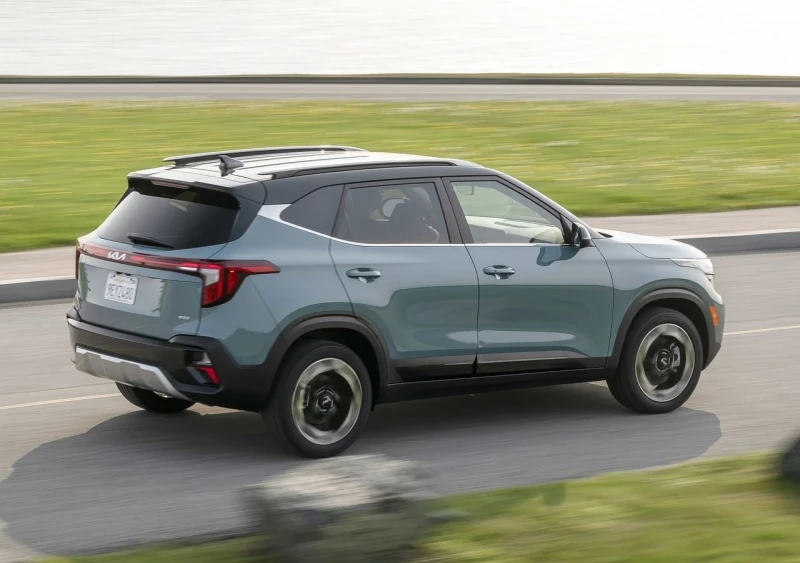
The U.S.-specification Seltos SP2 has a 103.5-inch wheelbase, 70.9-inch width and 7.3 inches of ground clearance. Those dimensions make it manageable in dense city traffic and parking garages while leaving useful cabin and cargo space for commuting or highway travel. Front suspension is by MacPherson struts. Front-wheel-drive models use a coupled torsion-beam rear axle, while all-wheel-drive versions have a multilink rear suspension.
The 2024 refresh increased overall length from 172.0 to 172.6 inches, largely because of revised front and rear styling. Wheelbase and width did not change. Height varies slightly with trim, roof rails and drivetrain, so specifications for a particular vehicle should be checked against its model year and configuration.
| Measurement | U.S.-specification value |
| Overall length | 172.0 in. (2021–2023); 172.6 in. (2024–2026) |
| Width, excluding mirrors | 70.9 in. |
| Height | Approximately 63.4–64.2 in., depending on configuration |
| Wheelbase | 103.5 in. |
| Ground clearance | 7.3 in. |
| Curb weight | Approximately 2,936–3,317 lb, depending on year, engine, trim and drivetrain |
All-wheel-drive hardware and the multilink rear suspension add weight compared with an equivalent front-wheel-drive model. The difference affects acceleration and EPA fuel-economy ratings, but it also provides additional traction and a more sophisticated rear suspension layout. Buyers should compare like-for-like trims rather than treating every 2.0-liter or turbo Seltos as mechanically identical.
Changes Within the Generation and Current Status
The most important technical dividing line is the 2024 model-year refresh. In addition to exterior and cabin updates, the turbo engine gained 20 hp for 2024 and the earlier 7-speed DCT was replaced by an 8-speed torque-converter automatic. The naturally aspirated 2.0-liter and IVT remained the volume powertrain. The refresh also introduced the X-Line name in the U.S. range, while trim availability continued to change in later years.
For 2025, Kia listed the 2.0-liter at 147 hp and the turbo at 190 hp; those outputs carried into 2026. The 2026 U.S. lineup used the 2.0-liter IVT in LX, S and EX, with front- or all-wheel drive offered on most trims, while the 1.6-liter turbo and 8-speed automatic were reserved for the SX AWD. Earlier years used different combinations, including the Nightfall Edition and turbocharged S variants.
The 2026 model year marked the end of the SP2 generation in the United States. Kia moved to the second-generation Seltos for 2027, so an SP2 should be treated as a 2021–2026 used vehicle or, in limited cases, remaining prior-model-year dealer inventory—not as the current-generation model.
Ownership Considerations and Fuel-Economy Ratings
Neither engine should be judged solely by broad claims about reliability. For a used Seltos, documented maintenance, correct fluids, recall completion and the condition of the specific vehicle matter more than reputation alone. The naturally aspirated 2.0-liter is mechanically less complex than the turbo engine, but the IVT still deserves a careful road test for abnormal noise, hesitation or warning messages.
The 2021–2023 turbo models use a 7-speed dual-clutch transmission, whose low-speed behavior differs from a conventional automatic. Buyers should check for excessive shudder, delayed engagement or signs of overheating in stop-and-go driving. The 2024–2026 turbo models use an 8-speed torque-converter automatic instead. On AWD examples, matching tire size and similar tread depth across all four wheels are important, and the drivetrain should be inspected for leaks, vibration or binding.
EPA estimates vary by model year, drivetrain and powertrain. Representative U.S. ratings include:
- 2.0L + IVT, FWD — generally 28–29 mpg city, 34–35 mpg highway and about 31 mpg combined, depending on model year;
- 2.0L + IVT, AWD — typically 27 mpg city, 31 mpg highway and 29 mpg combined;
- 1.6L turbo + 7-speed DCT, AWD (2021–2023) — approximately 25 mpg city, 30 mpg highway and 27 mpg combined;
- 1.6L turbo + 8-speed automatic, AWD — 25/27/26 mpg for 2024 and 24/27/25 mpg for 2026; check the exact model-year label for the vehicle being considered.
These are EPA estimates, not guarantees of real-world fuel use. Temperature, speed, traffic, tire choice, elevation and driving style can move actual results in either direction. Road-test and owner-reported figures should be kept separate from EPA data, and the original window sticker or official model-year specification is the best reference for a specific vehicle.
Parts and service support are generally available through Kia's U.S. dealer network and independent repair shops, but availability and cost vary by component and location. Before purchase, a pre-purchase inspection should include a diagnostic scan, fluid-leak check, cold start, transmission operation, AWD function where fitted, suspension wear and confirmation that outstanding safety recalls have been completed.
Which U.S. Configuration Makes the Most Sense?
For drivers prioritizing fuel economy and mechanical simplicity, a 2.0-liter IVT model is the straightforward choice. Front-wheel drive offers the best EPA ratings, while the AWD version adds traction and a multilink rear suspension at the cost of extra weight and slightly higher fuel consumption. Trim and model year determine the equipment level, so an EX or S should be evaluated by its actual option content rather than its badge alone.
The turbocharged Seltos is better suited to buyers who value stronger acceleration. The 2021–2023 version combines 175 hp with a 7-speed DCT, while the 2024–2026 refresh uses a more powerful 190–195 hp engine and a conventional 8-speed automatic. That transmission change is significant enough that the two groups should be test-driven and compared separately. In every case, service records, accident history, recall status and a condition-based inspection should guide the final decision.
Specifications and EPA estimates are based on U.S. model-year data published by Kia America for 2021, 2024 and 2026. Figures vary by trim and model year; verify the VIN-specific build sheet and original window sticker before purchase.