


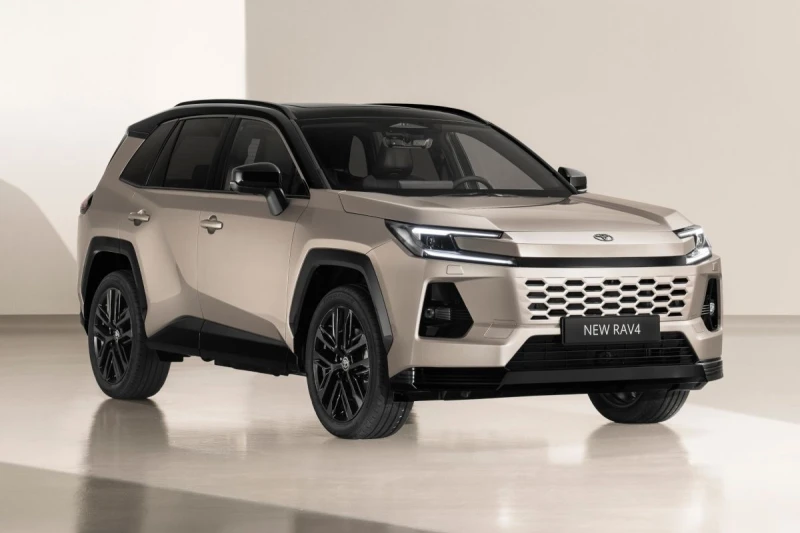
For the 2026 model year, the U.S.-market Toyota RAV4 moved to an all-electrified lineup: every version combines a 2.5-liter gasoline engine with a hybrid system. Buyers can choose between the regular hybrid (HEV) and the more powerful plug-in hybrid (PHEV); a gas-only engine is no longer offered in the United States. The sixth-generation SUV retains the TNGA-K foundation but adds structural revisions intended to improve body rigidity and refinement. Exterior design, cabin features and trim equipment are covered in separate articles in this series.
U.S.-Market Powertrains and Transmissions
The American lineup is much simpler than the global engine range. The standard RAV4 uses Toyota's fifth-generation hybrid system with a 2.5-liter Atkinson-cycle four-cylinder engine and an electronically controlled continuously variable transmission (eCVT). Front-wheel-drive models produce 226 net combined hp, while electronic all-wheel-drive versions produce 236 net combined hp. The plug-in hybrid uses a higher-output system rated at 324 net combined hp and comes only with electronic AWD.
LE, SE and XLE Premium hybrids are offered with front- or all-wheel drive. Woodland, XSE and Limited hybrids come with AWD. The plug-in hybrid range consists of SE, Woodland, XSE and GR SPORT grades, all with AWD. Output figures below refer to total system power, not the gasoline engine alone. There is no 2.0-liter gas-only model or conventional belt-type CVT in the official 2026 U.S. lineup.
| Powertrain | Displacement | Net Combined Output | Transmission | Drivetrain | U.S.-Market Notes |
|---|---|---|---|---|---|
| Hybrid (HEV) | 2.5 liters | 226 hp | eCVT | FWD | Available on LE, SE and XLE Premium; the most fuel-efficient configuration in the range |
| Hybrid (HEV) | 2.5 liters | 236 hp | eCVT | Electronic AWD | Available on LE, SE and XLE Premium; standard on XSE and Limited |
| Hybrid Woodland (HEV) | 2.5 liters | 236 hp | eCVT | Electronic AWD | Rugged-oriented grade with all-terrain tires, additional ground clearance and a maximum tow rating of up to 3,500 lb when properly equipped |
| Plug-in hybrid (PHEV) | 2.5 liters | 324 hp | eCVT | Electronic AWD | SE, Woodland, XSE and GR SPORT; the SE carries an EPA-estimated all-electric range of up to 54 miles |
The eCVT is a power-split hybrid transaxle rather than a belt-and-pulley CVT. On AWD models, a separate rear electric motor provides traction at the rear axle without a conventional mechanical driveshaft connecting it to the front transaxle. That layout allows the control system to vary rear-axle assistance as conditions change. The PHEV uses the same basic 2.5-liter hybrid concept but adds a larger traction battery and more powerful electric drive components. Once its usable EV charge is depleted, it continues operating as a hybrid rather than becoming inoperable.
For most U.S. commuting, the FWD hybrid prioritizes efficiency and lower weight. The AWD hybrid is better suited to drivers who regularly face snow, wet roads or unpaved access routes, although suitable tires remain essential. The PHEV makes the most practical sense when it can be charged routinely at home or work; its electric range can cover many daily trips, while the gasoline-hybrid system remains available for longer travel.
Dimensions, Weight and Platform
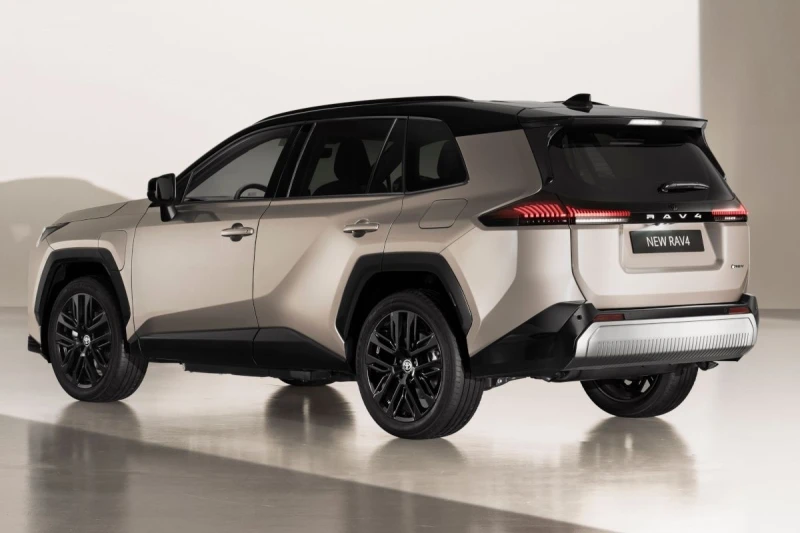
The sixth-generation RAV4 keeps the previous model's 105.9-inch wheelbase and broadly similar exterior footprint. Most grades are approximately 181 inches long and 73 inches wide, while Woodland and some PHEV or sport-oriented configurations have trim-specific bodywork that increases overall length or width. Standard grades provide about 8.1 inches of ground clearance, while Woodland reaches approximately 8.5 inches.
The table summarizes the principal U.S.-market measurements. Dimensions and weights vary with the grade, drivetrain, wheel-and-tire package and hybrid battery. The certification label and the owner's manual remain the controlling references for payload, gross vehicle weight and towing limits on an individual vehicle.
| Measurement | U.S.-Market Figure |
|---|---|
| Overall length | Approximately 181–183 in., depending on grade |
| Overall width | Approximately 73–74 in., excluding mirrors |
| Overall height | Approximately 66.7–69.1 in., depending on grade and roof rails |
| Wheelbase | 105.9 in. |
| Curb weight | Approximately 3,600–3,900 lb for HEV models and about 4,350–4,500 lb for PHEV models |
| Gross vehicle weight rating | Varies by configuration; verify the vehicle-specific certification label |
| Cargo volume | HEV: up to 37.8 cu. ft. behind the second row and 70.4 cu. ft. behind the front seats; PHEV capacity varies by grade |
The PHEV is substantially heavier than the regular hybrid because of its larger high-voltage battery and additional power electronics. Cargo capacity also depends on powertrain packaging, so shoppers should not assume that the HEV and PHEV provide identical space. Properly equipped RAV4 models can tow up to 3,500 lb, but the rating varies by grade and equipment; the vehicle-specific manual and certification information should be checked before attaching a trailer. The compact footprint remains manageable in urban parking while the upright cargo area supports family travel and everyday hauling.
Ownership, Maintenance and Service Considerations
Because the sixth-generation RAV4 is new for the 2026 model year, there is not yet enough long-term field data to make credible claims about very high-mileage durability. Routine maintenance should follow the U.S. Warranty and Maintenance Guide for the exact model and powertrain. On a used example, a pre-purchase inspection should include a hybrid-system scan, traction-battery health check, charging test for the PHEV and confirmation that all recalls or service campaigns have been completed.
EPA estimates must be kept separate from road-test or owner-reported results. The most efficient FWD HEV grades are rated at up to 47 mpg city, 40 mpg highway and 43 mpg combined. AWD HEV ratings vary by grade, from 38 to 42 mpg combined. Current PHEV ratings span approximately 36–40 mpg in charge-sustaining hybrid operation and 86–101 MPGe, depending on grade; the SE is rated for up to 54 miles of all-electric range. Weather, speed, tire choice, cabin heating or air conditioning, payload and towing can all change real-world consumption and EV range.
The hybrid eCVT does not have the belt-and-pulley hardware associated with a conventional CVT, but it still requires the specified fluid, inspections and maintenance procedures. Owners should keep the traction-battery cooling intake unobstructed and have warning messages diagnosed promptly. PHEV buyers should also inspect the charge port and cable and confirm the charging capability fitted to the selected grade. Electronic AWD uses a rear motor rather than a transfer case and driveshaft, but tires, brakes, suspension and wheel alignment remain conventional service items.
Toyota's U.S. dealer network can service the standard hybrid system, while high-voltage battery, inverter, charging and software work should be handled by trained technicians with the correct diagnostic equipment. Independent hybrid specialists may also be suitable once the vehicle is outside routine dealer care. Collision parts, control modules and software calibrations can be specific to the 2026 generation, so a non-U.S.-specification import may create parts, compliance and programming complications not present with an official U.S. vehicle.
For 2026, the regular HEV is the straightforward choice for drivers who want strong fuel economy without plugging in. FWD maximizes efficiency, while AWD and the Woodland grade add traction and capability. The PHEV delivers the highest output and meaningful electric commuting range, but its advantage depends on regular access to charging. Trim choice also affects fuel economy, cargo space, ground clearance, towing capacity and charging hardware.
The U.S.-market Toyota RAV4 VI therefore offers a focused technical range rather than the mix of gas engines and regional transmissions available elsewhere. Choosing between the 226-hp FWD hybrid, 236-hp AWD hybrid and 324-hp plug-in hybrid comes down to climate, charging access, towing needs and the amount of daily driving that can realistically be completed on electric power.