




The Kia Seltos arrived in the United States for the 2021 model year, and most examples on the used market are U.S.-spec vehicles rather than gray-market imports. The compact SUV offers useful interior space, available all-wheel drive, and straightforward controls, but buyers should understand how its engines, transmissions, chassis, and cabin materials age in real-world use. Conditions also vary widely across the country, from potholes and salted winter roads to prolonged heat and dust. Other articles in this series cover the generation overview, specifications, and interior; this guide focuses on issues that can affect ownership costs and the choice of a particular vehicle.
U.S. market context and model-year differences
Used Seltos listings on Autotrader, CarGurus, and Cars.com include everything from low-mileage late-model vehicles to early examples with substantial use. A clean vehicle-history report is helpful, but it does not replace service records or a pre-purchase inspection. Buyers should confirm mileage, look for evidence of collision repairs, and verify that scheduled maintenance and recall work were completed. Vehicles from snow-belt states deserve an especially close underbody inspection, while examples from hot climates may show more wear in paint, exterior trim, and interior surfaces.
The model-year break is important. U.S.-market 2021–2023 turbo models used a 1.6-liter turbocharged engine with a seven-speed dual-clutch transmission. The 2024 refresh replaced that transmission with an eight-speed automatic and raised output to 195 hp; Kia's 2026 specifications list the turbo engine at 190 hp. The naturally aspirated 2.0-liter engine remained paired with an Intelligent Variable Transmission, or IVT, and was rated at 146 hp in early model years and 147 hp for 2026. Equipment and drivetrain availability also changed by trim and year, so the VIN and original window sticker are more reliable than a generic online listing.
Suspension behavior and wear on rough roads
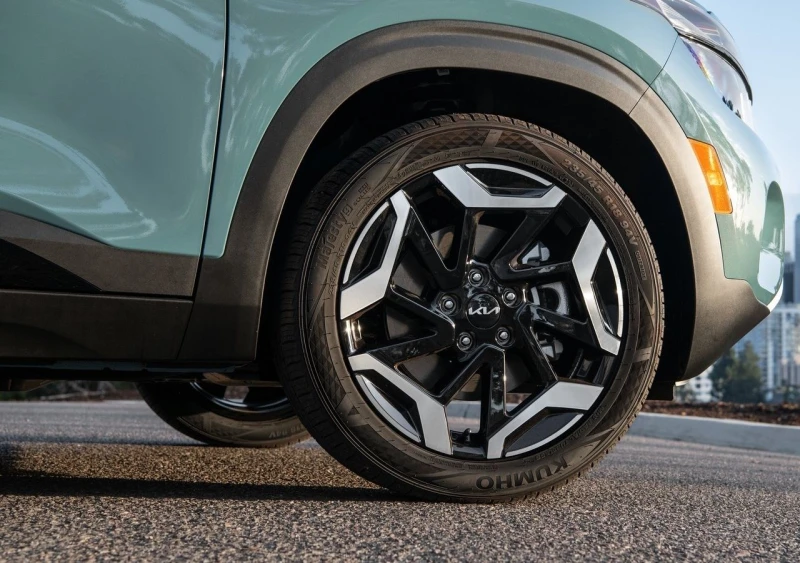
The Seltos uses front MacPherson struts, but the rear suspension depends on drivetrain: front-wheel-drive versions have a torsion-beam rear axle, while all-wheel-drive models use a multi-link layout. The ride can feel firm over sharp-edged bumps, and coarse pavement makes impacts more noticeable in the cabin. On a used vehicle, inspect the shocks, bushings, ball joints, wheel bearings, wheels, and alignment rather than assuming a noise is normal. Uneven tire wear, a steering pull, or clunks over broken pavement can point to damage or deferred maintenance.

All-wheel drive adds traction on snow and loose surfaces, but it does not turn the Seltos into a heavy-duty off-roader. Check the underside for impact damage and leaks, and make sure all four tires are the correct size with similar tread depth. Mismatched tires can place unnecessary stress on an all-wheel-drive system. A road test over both smooth and uneven pavement is one of the best ways to identify rattles, vibration, or suspension noise before purchase.
Road noise and everyday comfort
Road and wind noise are among the Seltos' more noticeable compromises. At highway speeds, tire noise from the wheel wells and airflow around the body can become prominent, particularly on coarse concrete or worn asphalt. Tire brand, tread pattern, inflation pressure, and wear can change the sound level considerably, so a noisy test drive does not always indicate a defect. The 2024 update modernized the cabin, but the Seltos still prioritizes value and utility over premium-level isolation.
Noise is less intrusive around town, although winter tires and rough pavement can increase the background hum. Aftermarket sound-deadening may improve comfort, but installation quality matters: drainage paths, wiring, trim clips, and safety equipment should not be obstructed. Before modifying the vehicle, replacing worn or aggressive-tread tires may produce a more useful improvement.
Bodywork, paint, and regional climate exposure
As with many modern vehicles, paint chips and surface scratches are common on exposed areas such as the hood, front bumper, rocker panels, and door edges. The severity depends more on mileage, road conditions, and prior care than on the model year alone. Chips that reach bare metal should be repaired before road salt and moisture can attack the area. On snow-belt vehicles, inspect the subframes, suspension mounting points, brake lines, fasteners, wheel arches, and lower seams for corrosion.
Body condition can also reveal a previous collision or poor repair. Look for inconsistent panel gaps, overspray, mismatched paint texture, moisture in the lamps, and missing underbody shields. In hot and sunny regions, examine plastic trim, weatherstripping, headlamp lenses, and the upper surfaces of the paint for ultraviolet damage. These checks are more useful than assuming every early-production Seltos shares the same body defect.
Engines and transmissions: the checks that matter most
The U.S. powertrain range is simpler than the lineups sold in Korea or Europe: buyers will mainly encounter the 2.0-liter MPI engine with an IVT or the 1.6-liter turbo engine. Certain 2021 Seltos vehicles with the 2.0-liter engine were included in Kia campaign SC209, and a later campaign, SC336, covers certain 2021–2023 Seltos vehicles with that engine. The piston oil-ring condition described in these recalls can lead to increased oil consumption, abnormal engine noise, an oil-pressure warning, engine damage, loss of power, and, in limited cases, fire. A buyer should enter the VIN on the NHTSA and Kia recall sites and obtain documentation showing whether the required inspection, software update, or engine replacement was completed.
During a test drive of a 2.0-liter model, watch for warning lights, hesitation, shuddering, unusual whining, or delayed engagement from the IVT, and review the maintenance history before making conclusions about its condition. The seven-speed dual-clutch transmission in 2021–2023 turbo models may feel less fluid than a conventional automatic at parking-lot speeds; pronounced judder, overheating warnings, or erratic engagement warrant specialist diagnosis. Turbo models from 2024 onward use an eight-speed torque-converter automatic and therefore do not share the earlier DCT's clutch behavior. EPA fuel-economy ratings vary by model year, trim, and drivetrain; the 2.0-liter front-wheel-drive versions are generally the most efficient, while all-wheel drive and the turbo engine use more fuel. EPA figures should be kept separate from owner-reported mileage.
Cabin materials and smaller ownership concerns
Much of the interior uses hard plastic, which can collect scratches on the doors, center console, and lower dashboard. Seat bolsters and synthetic-leather surfaces should be checked for cracking, discoloration, and wear, especially on higher-mileage vehicles. Occasional trim noises may become more apparent in cold weather, but persistent rattles can also point to broken clips or previous interior work. Test the infotainment display, backup camera, USB ports, steering-wheel controls, speakers, and phone integration; feature availability, including wired or wireless smartphone connectivity, differs by trim and model year.
Forward visibility is generally good, although the front roof pillars can obscure some angles at intersections. Driver-assistance equipment also varies by year and trim, so confirm that warning lights extinguish normally and that cameras and sensors have not been misaligned after body repairs. Heated seats, remote start, and other cold-weather conveniences are not fitted to every version. In winter, longer warm-up times, short trips, winter-blend fuel, and low temperatures can reduce real-world fuel economy.
How to plan the purchase and improvement budget
Most Seltos shortcomings can be evaluated through a careful inspection rather than accepted as unavoidable. Priorities include a VIN-based recall check, a cold start, a full transmission road test, an underbody inspection, and a scan for stored diagnostic codes. Optional rustproofing or sound-deadening may make sense for some climates, but the first budget should cover any maintenance or repairs identified by the inspection. The appropriate reserve depends on mileage, service history, tires, brakes, and the condition of the specific vehicle rather than a fixed percentage of its purchase price.
Vehicles from the 2024 model year onward are worth considering for buyers who want the turbo engine without the earlier dual-clutch transmission. Earlier 2.0-liter versions can still be reasonable choices when recall work is documented, oil level and engine operation are normal, and the IVT performs correctly. A newer model year is not a substitute for condition, maintenance records, and an independent inspection.
Overall, the first-generation Kia Seltos remains a practical compact SUV for the U.S. market, but its model-year differences are too important to ignore. The strongest used purchase is not simply the newest or highest trim; it is the vehicle with the right powertrain, verified recall completion, a clean inspection, and a consistent service history.
This article is based on U.S.-market specifications and safety-campaign information available through 2026. The condition of any individual vehicle should be evaluated by a qualified professional before purchase.