


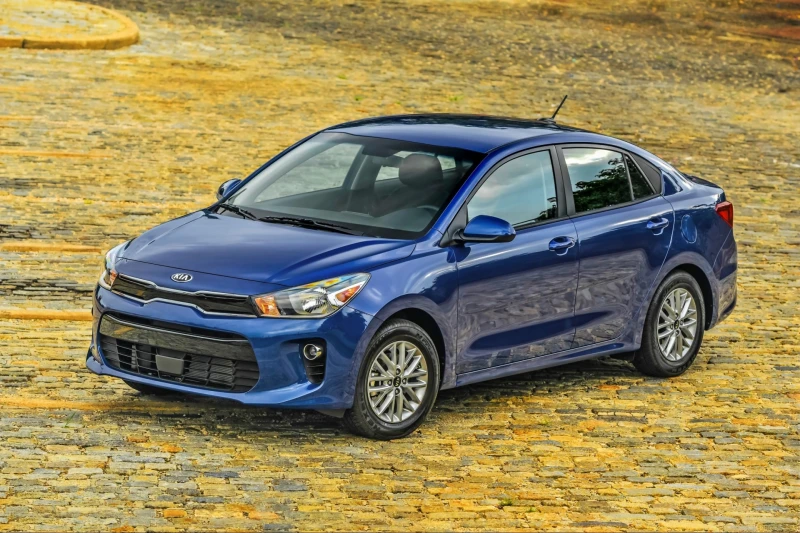
The fourth-generation Kia Rio (YB / SC) was sold in the United States for the 2018 through 2023 model years as a subcompact sedan and, in selected trims, a five-door hatchback. It is now a used-car proposition, and its condition, maintenance history, and exact powertrain matter more than broad claims about the generation as a whole.
The main points commonly raised by owners and used-car shoppers include:
- Fuel economy: the 2018 model with the 1.6-liter GDI engine was EPA-rated at 28 mpg city, 37 mpg highway, and 32 mpg combined with the automatic transmission; the manual was rated at 29/37/32 mpg. From 2020, the 120-hp 1.6-liter MPI engine and IVT improved efficiency, with the 2023 Rio rated at 32 mpg city, 41 mpg highway, and 36 mpg combined. Actual mileage can fall in heavy traffic, short-trip use, cold weather, or aggressive driving.
- Infotainment and phone connectivity: early cars used smaller and less sophisticated systems, while the 2020 Rio made a 7-inch touchscreen with Apple CarPlay and Android Auto standard. The refreshed 2021 model moved to an 8-inch display with wireless smartphone integration. On a test drive, check Bluetooth pairing, touchscreen response, the rearview camera, USB ports, and wireless connection stability.
- Road and tire noise: the Rio is an economy-focused subcompact, and tire roar and wheel-well noise can become noticeable at highway speeds, particularly on coarse pavement. Tire brand, tread wear, inflation pressure, and previous sound-deadening work can significantly affect the impression.
- Interior materials: hard plastics are common, especially in lower trims, and high-contact surfaces can show scratches or wear. Light-colored upholstery requires closer inspection for staining, while heavily used fleet or rideshare cars may have more pronounced seat, steering-wheel, and door-trim wear.
- Electronic diagnosis: most routine servicing is straightforward, but intermittent warning lights, driver-assistance faults, or infotainment issues should be scanned with suitable diagnostic equipment before purchase rather than judged only during a short drive.
- Parts and repair costs: normal maintenance items are widely available, but trim-specific infotainment components, cameras, sensors, body panels, and original lighting units can cost considerably more than basic filters, brake pads, or fluids. Verify parts availability before buying a damaged or incomplete car.
Model Years and Versions: What Deserves Extra Attention
The U.S.-market fourth-generation Rio changed substantially during its six-model-year run:
- 2018–2019: these cars use a 130-hp 1.6-liter GDI four-cylinder with 119 lb-ft of torque. The 2018 lineup included a six-speed manual on the LX sedan and a six-speed automatic, while later availability centered on the automatic. Inspect cold starts, idle quality, shifting behavior, service records, and the operation of the earlier infotainment system.
- 2020: Kia replaced the GDI engine with a 120-hp 1.6-liter MPI unit producing 112 lb-ft and replaced the six-speed automatic with an intelligent variable transmission (IVT). This powertrain is more efficient but feels different from a conventional automatic, so the test drive should include low-speed maneuvering, steady acceleration, and highway merging.
- 2021–2023: the refreshed Rio received an 8-inch touchscreen and wireless Apple CarPlay and Android Auto. Sedans were offered in LX and S trims, while the five-door was sold as an S. Check that all trim-specific equipment works, especially on S models with the available Technology Package and driver-assistance features.
European-market 1.0 T-GDi, mild-hybrid, diesel, iMT, and dual-clutch versions were not part of the U.S. Rio lineup. Imported specifications should not be used to evaluate a normal U.S.-market car.
The Used Kia Rio Market in the United States
As of July 2026, fourth-generation Rio listings remain available nationwide on Autotrader, CarGurus, and Cars.com, but supply varies considerably by region. Broad market data places many 2018 examples around the high-$8,000 to low-$10,000 range, while typical 2023 listings are often in the mid-$teens. Very low advertised prices may reflect high mileage, accident history, title issues, mechanical needs, or incomplete dealer fees, so condition and history should take priority over the headline price.
Key market considerations include:
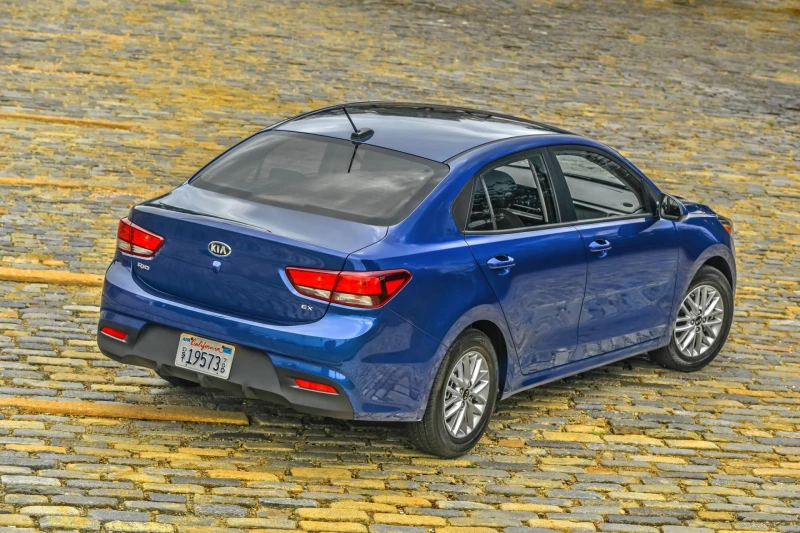
- Body condition: inspect the hood, rocker panels, wheel arches, bumpers, and lower body for chips, poorly matched paint, repaired collision damage, and missing underbody panels. The Rio has roughly 5.5 inches of ground clearance, so lower-front and underbody damage is possible.
- Corrosion exposure: cars from snow-belt states deserve a close look underneath, including brake and fuel lines, suspension mounting points, fasteners, and exhaust components. A clean-looking body does not guarantee a clean undercarriage.
- Service history: maintenance records are preferable to verbal assurances. Confirm oil changes, fluid service, brake work, tire replacement, recall completion, and any transmission-related diagnosis or repair.
- Trim and equipment: U.S. cars were sold mainly as LX and S models, with EX offered early in the generation. Equipment varies by year, body style, and package, so verify the VIN and original window-sticker data rather than relying on the seller's trim description.
- Mileage verification: compare the odometer with service invoices, state inspection records where available, vehicle-history reports, and wear on the pedals, steering wheel, driver's seat, and controls.
- Title and prior use: check for salvage or rebuilt history, rental or fleet use, rideshare mileage, flood exposure, and repeated auction transactions. A pre-purchase inspection is especially important when the history is incomplete.
- Typical listings: 2020–2023 LX and S sedans with the 1.6 MPI and IVT make up a large share of newer used examples, while the five-door S is less common and may command a premium in some regions.
What Can Be Improved and What to Budget For
Most of the Rio's everyday compromises can be addressed without turning the car into a major project:
- Additional sound insulation in the doors, floor, and wheel wells can reduce road noise, but workmanship matters and added material should not block drains or interfere with wiring.
- Infotainment software updates and phone re-pairing may resolve minor connectivity problems; hardware faults require separate diagnosis.
- Worn seat fabric, trim pieces, switches, and steering-wheel surfaces can be repaired or replaced, though color-matched original parts may take time to source.
- Suspension repairs are generally conventional for the class, but the estimate should distinguish between tires, wheel bearings, struts, bushings, links, alignment, and collision-related damage.
- Rust prevention may be worthwhile for cars used in salt-heavy regions, provided existing corrosion is assessed before coatings are applied.
- Maintenance should follow the schedule for the specific model year and operating conditions. Do not assume that a universal 60,000-mile transmission-fluid interval applies to every Rio; inspect the owner's manual and service history.
A sensible purchase reserve should cover a pre-purchase inspection, overdue maintenance, tires or brakes, minor cosmetic work, and any immediate repairs identified during diagnosis. Earlier or high-mileage cars generally justify a larger reserve than a well-documented late-model example.
Conclusions and Buying Recommendations
The fourth-generation Kia Rio can still make sense as a straightforward, fuel-efficient subcompact, but it should be evaluated as a discontinued used model rather than a new-car alternative. Its strongest attributes are simple packaging, low fuel consumption, and useful standard technology in later years; its main compromises are modest cabin materials, noticeable road noise, and limited performance.
For many buyers, a well-maintained 2020–2023 LX or S with the 1.6-liter MPI engine and IVT offers the best combination of fuel economy and newer infotainment. A 2018–2019 car can also be a reasonable choice when the 1.6 GDI engine, six-speed transmission, maintenance history, and overall condition check out.
Before buying, pay particular attention to:
- smooth operation of the six-speed automatic or IVT, without warning lights, abnormal noise, hesitation, or fluid leaks
- touchscreen, Bluetooth, Apple CarPlay, Android Auto, USB ports, and rearview camera operation
- suspension, wheel-bearing, tire, and alignment condition
- collision repairs, paintwork, underbody damage, and corrosion
- service records, title history, recall status, and a diagnostic scan
See the other articles in this series for the generation overview, technical specifications, and interior analysis.