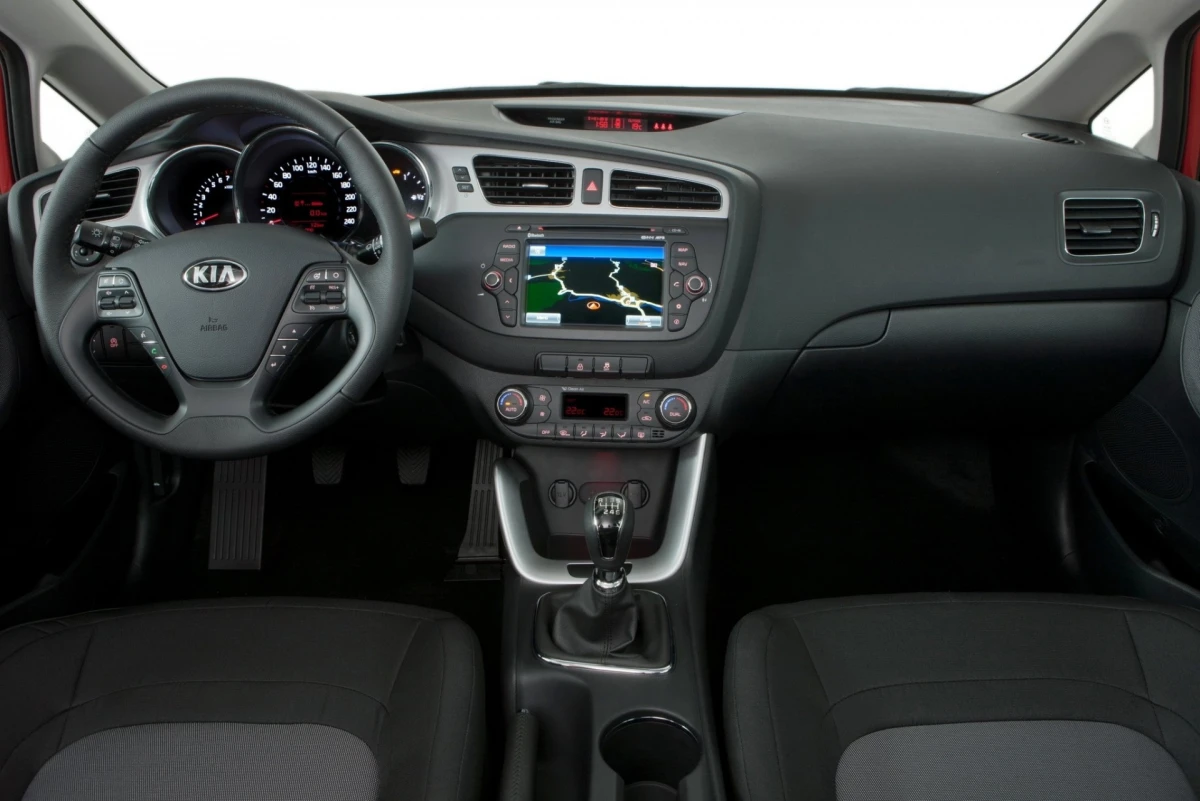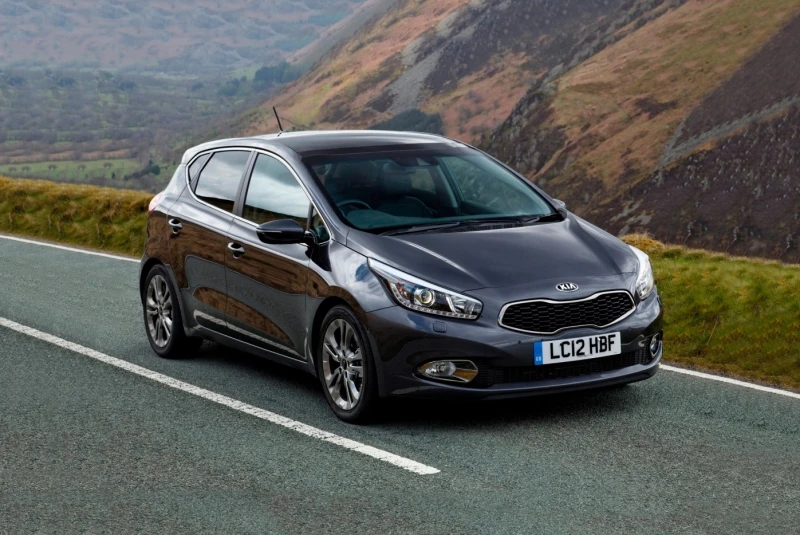
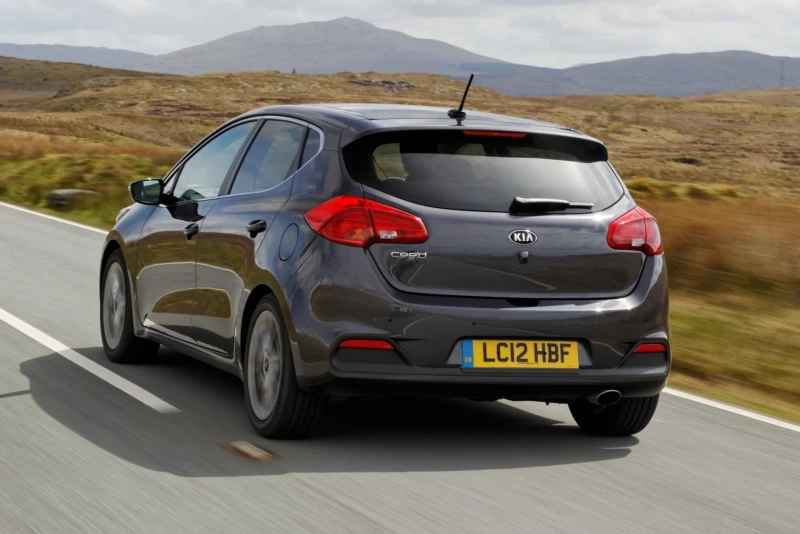
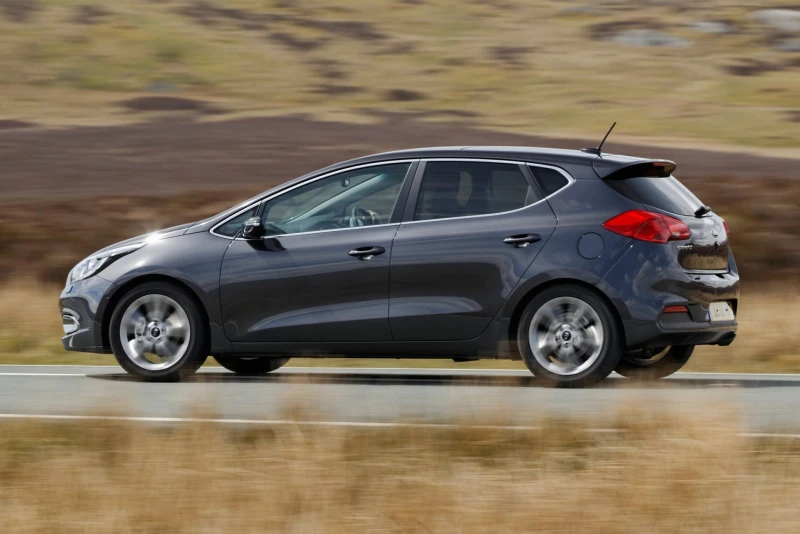
The model made its world debut at the Geneva Motor Show in March 2012, with European sales kicking off in the summer of that year. Built on the shared Hyundai-Kia J5 platform — the same architecture used for the second-generation Hyundai i30 — the Ceed II positioned itself as a stylish compact hatchback/wagon in the C-segment. It brought modern looks, solid equipment levels, and a well-tuned balance of ride comfort and handling. Standout elements included Peter Schreyer’s signature “Tiger Nose” grille, a premium-feeling cabin, and a wide range of efficient Gamma and U2 family engines.
What’s New Compared to the Previous Generation
The second-generation Kia Ceed (JD) represented a major leap forward over the first (ED, 2006–2012). Key improvements included:
- a bolder, more emotional exterior design highlighted by the iconic Tiger Nose grille;
- the new J5 platform with 25% greater body rigidity and reduced weight;
- introduction of turbocharged gasoline engines (1.6 T-GDI with 135 hp and 204 hp versions);
- significantly better sound insulation and higher-quality interior trim materials;
- expanded safety suite (standard ESP, six airbags, later i-Assist systems);
- the sporty GT variant featuring a 204-hp 1.6 T-GDI and tuned suspension.
Current Market Status
Production of the Kia Ceed II ended in 2018. The final lineup offered gasoline engines — 1.4 MPI (100 hp), 1.6 GDI (135 hp), 1.6 T-GDI (204 hp GT) — plus diesels 1.4 CRDi (90 hp) and 1.6 CRDi (128 hp). Transmissions included 6-speed manual, 6-speed automatic, and 7-speed dual-clutch (DCT) exclusive to the GT.
The 2015 facelift brought sharper front headlights and grille, redesigned taillights, upgraded cabin materials, refreshed infotainment, and more driver-assistance features. On the U.S. used market, post-facelift 2015–2018 models — especially those with the 1.6 GDI gasoline engine — tend to hold the best combination of desirability, reliability, and resale value.
U.S. Used Market
As of early 2026, roughly 2,500–3,500 listings for 2012–2018 Kia Ceed II (JD) / Forte equivalents appear across major platforms (Cars.com, Autotrader, etc.). New vehicles of this generation are long gone, and fresh imports remain uncommon.
The used market stays active, with post-2015 facelift models clearly dominating. Approximate price ranges (depending on year, mileage, condition, and trim):
| Years | Engine / Drivetrain | Approx. Market Price (USD) |
|---|---|---|
| 2012–2014 | 1.6 MPI / FWD | $5,500 – $8,000 |
| 2013–2015 | 1.6 GDI / FWD | $6,800 – $9,500 |
| 2015–2018 | 1.6 GDI / FWD | $8,000 – $11,500 |
| 2016–2018 | 1.6 T-GDI GT / FWD | $11,000 – $15,000 |
Post-facelift 1.6 GDI models in mid-to-high trims such as EX, SX, or GT-Line / GT remain the most sought-after.
Common Trims & Equipment Levels on the U.S. Market
Typical specifications commonly found:
- LX / Base — cloth upholstery, air conditioning, basic audio with 4 speakers, 15–16" steel wheels;
- EX / Mid — upgraded cloth or partial leather, dual-zone climate control, 7" touchscreen, heated front seats, 16–17" alloy wheels;
- SX / Premium — leather seating, larger 7–8" navigation-ready touchscreen, rearview camera, keyless entry & start, 17" alloys;
- GT / GT-Line — sport body kit, leather + suede-like trim, 18" wheels, firmer suspension tuning, 1.6 T-GDI 201–204 hp engine.
U.S. examples frequently feature the gasoline 1.6 GDI, full power accessories, and heated seats/steering wheel packages well-suited to varied climates.
Ownership Takeaways & Relevance in 2026
In the 2026 U.S. used-car landscape, the Kia Ceed II (JD) / Forte remains one of the strongest compact-car values under $12,000–13,000. It suits daily commuting, highway trips, and small-family duties for buyers seeking a dependable, comfortable, and affordable-to-maintain C-segment vehicle.
The generation continues to attract interest thanks to widely available parts, solid rust resistance, and diverse engine choices. The sweet spot is usually post-2015 facelift models with the 1.6 GDI gasoline engine and manual or automatic transmission — offering the best blend of efficiency, durability, and market liquidity.
When shopping for a used Kia Ceed II (JD), pay special attention to:
- transmission service history (automatic fluid changes every 40,000 miles recommended);
- turbo and emissions system condition on any rare diesel imports;
- no evidence of major accident repairs;
- proper suspension wear (struts, bushings);
- timing chain health on 1.6 GDI gasoline engines.
Overall, the second-generation Kia Ceed remains one of the most well-rounded and sensible choices in the compact used-car segment in the United States.