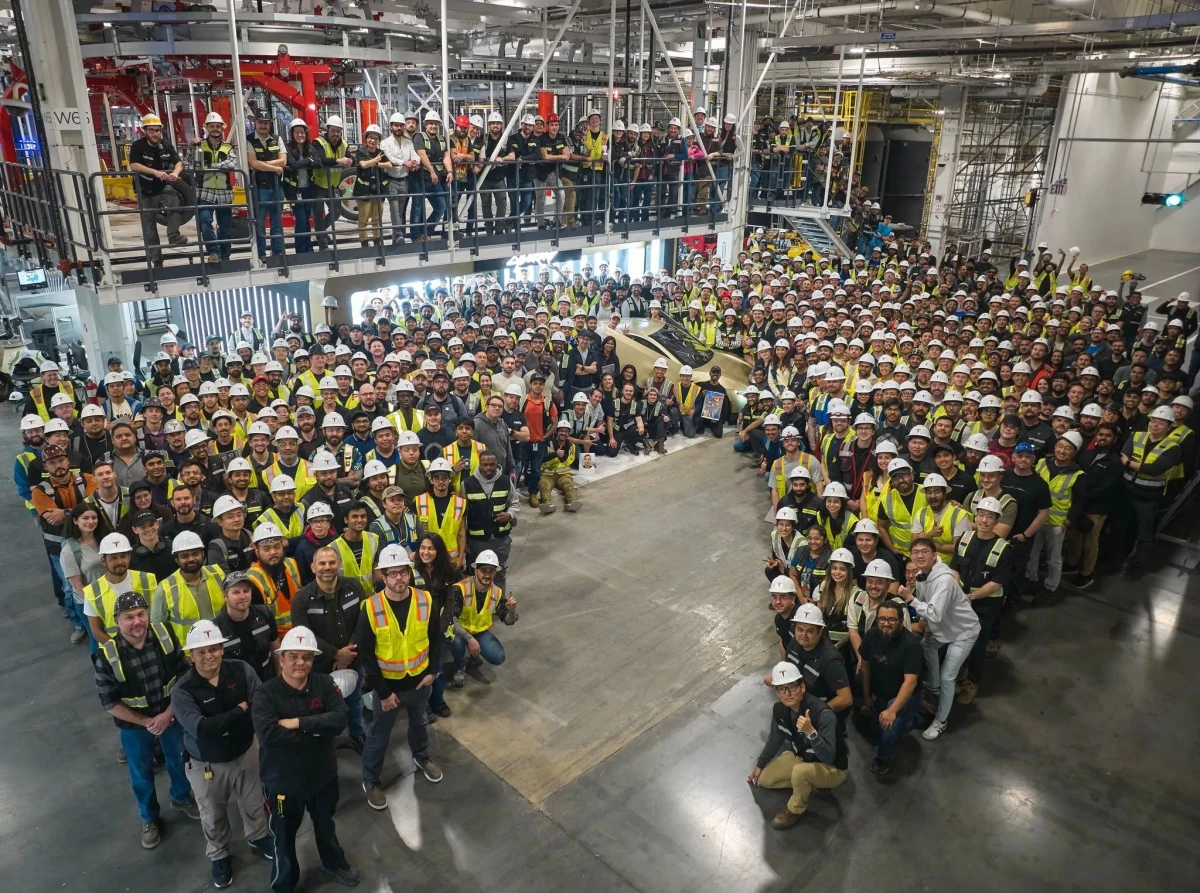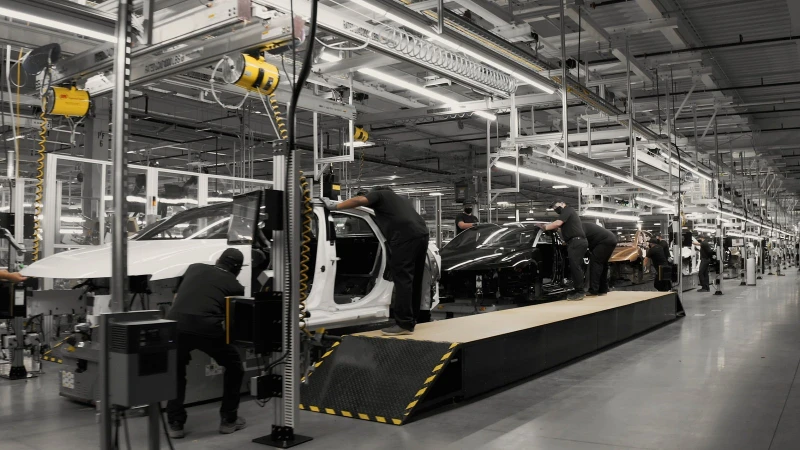
The company, once valued at hundreds of billions of dollars at its peak, continues to cut staff and seek ways to stabilize its business. The situation surrounding the brand has become emblematic for the entire premium electric vehicle segment.
Record Capitalization and Overinflated Expectations
Following its stock market debut in late 2020, Lucid shares quickly attracted intense investor interest. In early 2021, their value briefly exceeded $500 per share, and in November of the same year rose above $552. The company’s market capitalization at that time surpassed $180 billion.
If recalculated at the current exchange rate, the valuation of 3.7 trillion Czech korunas corresponds to approximately $160 billion. On this scale, such a valuation is comparable to the world’s largest automakers, even though Lucid was producing only one model — a premium-class electric sedan — in limited volumes at the time.
Limited Production and Narrow Model Lineup
The Lucid Air sedan, with a claimed range exceeding 800 km on the EPA cycle, formed the foundation of the business. Production was gradually increased, but volumes remained relatively modest by global automotive standards.
The next step was to expand the model range with the large electric SUV Gravity. The company hoped this model would boost sales and bring it closer to operational sustainability. However, the new model’s market launch progressed more slowly than expected, with total deliveries last year amounting to 15,841 vehicles — a modest figure for a volume automaker.
Stock Decline and Dependence on Investors
From their peak, Lucid shares have fallen more than 98 percent and are now trading near the $9–10 mark. The sharp drop reflects the gap between initial expectations and the company’s actual results.
A key factor sustaining operations remains support from major investors in Saudi Arabia. Capital infusions allow the company to continue operations and invest in new projects despite substantial losses.
New Wave of Layoffs
In an effort to reduce costs, management announced a further 12 percent reduction in staff. With fewer than 7,000 employees previously, this equates to approximately 1,000 positions. These measures aim to optimize expenses and move the business closer to break-even.
Meanwhile, the company’s strategy formally remains unchanged:
- development of a platform for mid-range models;
- expansion of the lineup beyond the premium segment;
- exploration of autonomous transportation and robotaxi opportunities.
However, implementing these plans requires significant investment and stable demand, which represents a serious challenge amid intense competition in the electric vehicle market.
Prospects and Industry Context
The situation with Lucid reflects a broader trend of cooling investor interest in electric vehicle startups. The market is gradually shifting from valuing future promises to scrutinizing actual financial performance and production capabilities.
For the company, the key tasks remain increasing sales volume, reducing production costs, and entering new market segments. The success of these steps will determine whether the brand can maintain its position or become another example of an overvalued startup from the early 2020s.
Lucid’s story demonstrates how quickly market sentiment toward promising technological projects can change when results fail to meet initial expectations.