The announcement appeared to confirm that the project is moving into a new phase. However, the actual state of autonomous driving technology and the operational statistics of the existing fleet raise questions about the company’s true readiness for a mass rollout of such vehicles.
The Long Road to Full Autonomy
Development of autonomous driving systems has been a priority for Tesla for over a decade. The company has repeatedly claimed that its vehicles would be able to operate independently without driver input on any routes. In practice, however, Autopilot and Full Self-Driving technologies continue to require human oversight and do not deliver full autonomy.
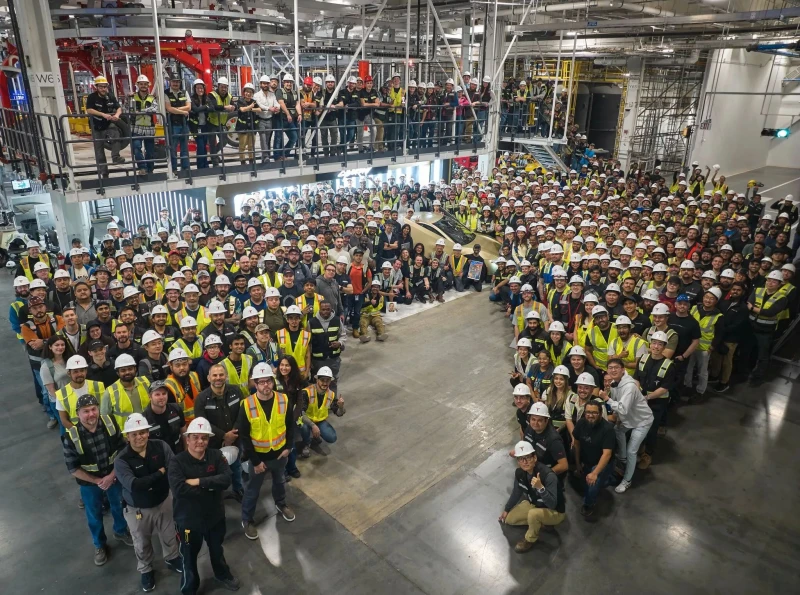
In early February, executives stated that series production of the Cybercab would begin in April. This week, however, the first unit was assembled at the Texas Gigafactory, allowing Tesla to showcase project progress. The assembly of the vehicle itself does not reveal its functional capabilities or confirm that software development is complete.
Concept Without Steering Wheel or Pedals
The Cybercab is conceived as a fully autonomous two-seater vehicle without a steering wheel or pedals. Control is to be handled exclusively by software, with a remote operator able to intervene if needed. This approach places all safety responsibility on the manufacturer and the control system.
Without traditional controls, the company will be unable to cite driver error in any incidents. Every accident will automatically become a matter of analyzing software and hardware reliability.
Statistics from the Existing Fleet
Tesla previously launched a robotaxi fleet in Texas using modified Model Y vehicles. Over eight months, these cars covered 1,287,000 kilometers and were involved in 14 incidents. This equates to one accident every 92,000 kilometers on average.
For comparison, according to the company’s own data, human drivers experience minor accidents roughly once every 370,000 kilometers and more serious ones once every 1,100,000 kilometers. Even official NHTSA statistics put the average distance between accidents at approximately 800,000 kilometers. These numbers show that the current autonomous system performance lags significantly behind average human driving.
In several cases, incidents occurred at low speeds, including a collision at 3 km/h that still resulted in the hospitalization of one person. The delayed disclosure of information about some incidents has also raised additional questions.
Regulatory and Insurance Constraints
Current U.S. legislation and insurance requirements mandate human presence behind the wheel in autonomous vehicles. As a result, Tesla’s existing robotaxis operate with a safety operator on board. The Cybercab, however, is designed without a driver’s position, which will require special regulatory approvals.
Additionally, the two-seater configuration limits the model’s commercial potential compared to conventional taxis designed to carry multiple passengers.
Summary
The start of Cybercab assembly highlights Tesla’s push to accelerate its autonomous taxi project. However, current safety metrics and regulatory hurdles suggest that widespread deployment of such vehicles remains a significant challenge. The future of the Cybercab will depend on the real-world performance of its autonomous system and regulators’ willingness to permit its use on public roads.