Even with modern fast-charging stations, replenishing energy takes dozens of minutes. Chinese company Nio has chosen an alternative path: instead of plugging in to charge, vehicles drive onto automated battery swapping stations. Statistics show this model has proven its effectiveness.
Abandoning Traditional Charging
Many manufacturers have focused on building networks of fast-charging stations. However, even at high power levels, recharging from 10 to 80 percent typically takes around 30 minutes. Additionally, infrastructure for ultra-powerful chargers remains limited.
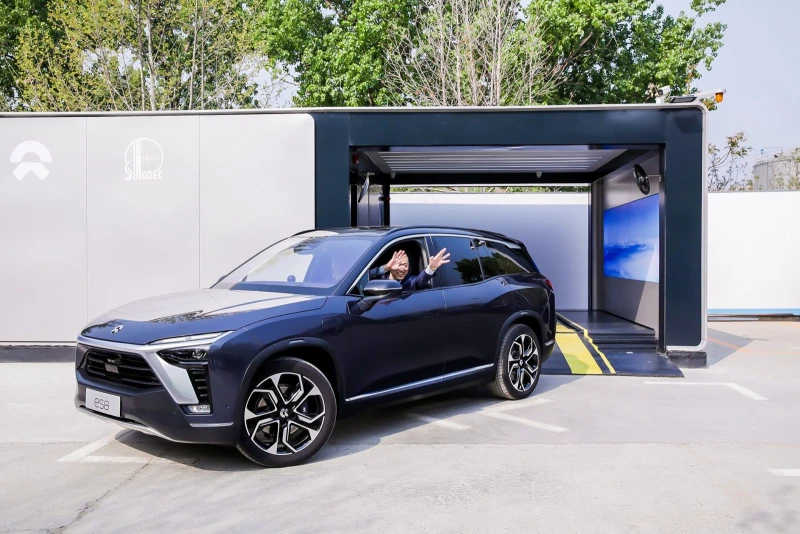
Nio bet on swappable battery technology. More than 8,600 specialized stations operate in the country, capable of completely replacing the battery in just three minutes. The company recently recorded 146,649 swap operations in a single day. The total number of such procedures has surpassed 100 million.
How the Process Works
The procedure is fully automated. The vehicle drives onto the platform, where a robotic system removes the depleted battery and installs a fully charged one. Removed batteries undergo diagnostics, are recharged to 100 percent, and returned to service.
The cost of one swap is approximately $11–14, including maintenance and electricity. The operation is comparable in time to refueling a conventional vehicle with fuel.
Flexible Ownership Model
The swapping technology has allowed Nio to offer an innovative purchase scheme. Customers can buy the vehicle without the battery, reducing the starting price to around $10,000. The battery is rented separately.
- 75 kWh battery — about $100 per month,
- 100 kWh version — about $155 per month.
Previously, some customers enjoyed free swaps under special programs, but the company is transitioning to a fully paid service model.
Advantages and Limitations
The main advantage is time savings. Drivers avoid waiting for charging, and the process is nearly independent of weather or battery condition. It also enables upgrading to a higher-capacity battery without purchasing a new car.
At the same time, the technology demands major investments in infrastructure and battery standardization. It does not resolve broader issues of EV production costs or raw material reliance, but it does reduce some operational drawbacks.
Conclusion
Expanding the battery swapping station network has enabled Nio to provide an alternative to conventional EV charging. Nearly 150,000 daily operations highlight the solution's popularity in the domestic market. This demonstrates that electric mobility can advance through various approaches, including new service models beyond faster charging stations.