


An independent group of specialists, working alongside battery technology experts, determined that the announced batteries were not ready for mass production. The performance characteristics promoted by the company to attract investors and potential customers have also been questioned.
What Promises Were Made at the Start
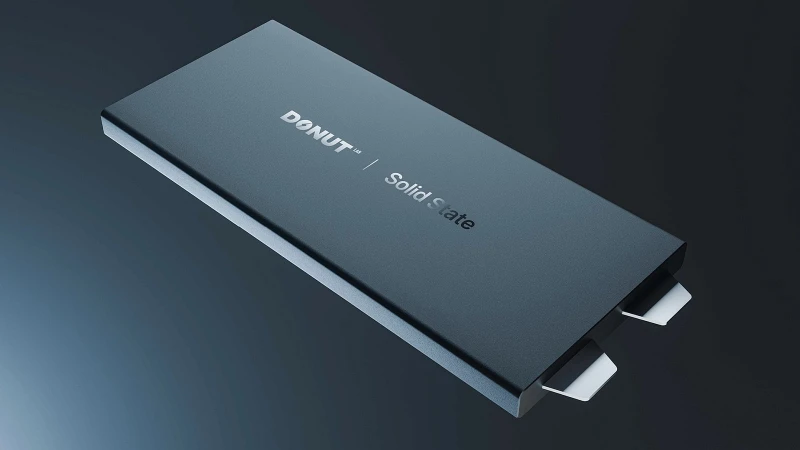
Donut Lab was founded in 2024 as a project connected to the Finnish electric motorcycle manufacturer Verge Motorcycles. At the CES exhibition in Las Vegas, the company presented solid-electrolyte batteries and stated that the first motorcycles with these batteries were to reach customers in spring 2026.
The declared specifications were highly ambitious. They spoke of an energy density reaching 400 Wh/kg, a lifespan of 100,000 charge cycles, the ability to recharge in five minutes, and stable operation in temperatures ranging from -30 to +100 degrees Celsius. The company also maintained that the cost of the motorcycles would stay comparable to models fitted with conventional lithium-ion batteries.
What the Investigation Revealed
The investigation was organized by the research company Ziroth, which brought in more than twenty independent specialists. According to their data, the battery packs presented by Donut Lab were not true solid-state batteries. The test samples used lithium-ion cells with separate elements associated with a solid electrolyte.
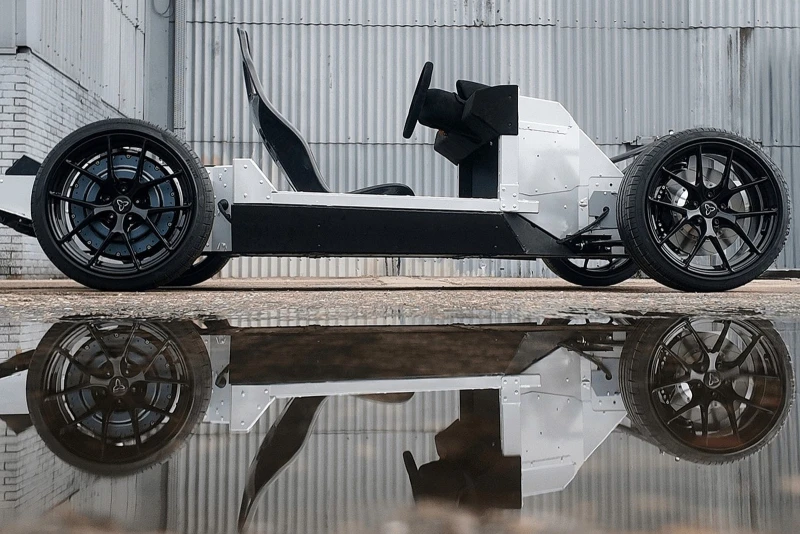
Testing confirmed an energy density of approximately 298 Wh/kg. For modern battery systems this is a high indicator, yet it differs noticeably from the previously claimed 400 Wh/kg. In addition, such batteries were employed only on experimental prototypes rather than on motorcycles intended for buyers.
Chain of Contractors and Lack of Mass-Production Technology
The investigation materials reference the German company CT Coatings and Nordic Nano, which was to be entrusted with battery cell production. CT Coatings was to develop the technology for Donut Lab; however, specialists doubted that the project participants had the necessary technical base and experience to bring such a product to mass production.
Julian Zanau, a representative of the Fraunhofer Institute who took part in reviewing the situation, reported that questions about the project arose at an early stage of communication with the developers. Following the review, experts found no confirmation of the existence of a ready mass-production battery with the stated characteristics.
Investments and Further Fate of the Project
Despite the absence of motorcycle deliveries within the announced timelines, Donut Lab continued to attract financing. According to the investigation, more than 1,200 private investors invested over $25 million in the project. At a certain point, the company's valuation reached approximately $1.25 billion.
The Donut Lab story shows how important it is to distinguish demonstration samples from mass-production technologies. Solid-state batteries indeed remain one of the promising directions in the development of electric transportation; however, their mass adoption requires lengthy testing, stable production, and independent confirmation of characteristics. In the case of the Finnish project, these conditions, according to the investigation's conclusions, were not met.