


The premiere took place on the eve of the 24 Hours of Le Mans. The manufacturer has not yet disclosed the full technical specifications or the timeline for the production car's launch, but has already shown the design, interior layout, and powertrain features.
New M3 Based on the Electric 3 Series
The basis for the concept was the upcoming electric BMW i3. The standard version of the i3 50 xDrive, whose specifications were published earlier, is equipped with two electric motors with a combined output of 470 hp and weighs about 2,280 kilograms. The sporty M3 modification will receive a more complex layout with four separate electric motors, so its mass and power will likely be noticeably higher.
BMW does not specify the exact output of the powertrain, but it is expected to approach 1,000 hp. Each motor will be controlled individually, allowing more precise torque distribution between the wheels. This system should provide a quick response to driver inputs and expand the possibilities for configuring the car for different driving modes.
Along with the increase in power, the load on the battery, braking system, tires, and suspension inevitably rises. For electric sports cars, this is one of the main engineering challenges: high output requires a large battery and powerful cooling, while additional equipment affects the vehicle's mass.
Design with Widened Body Elements
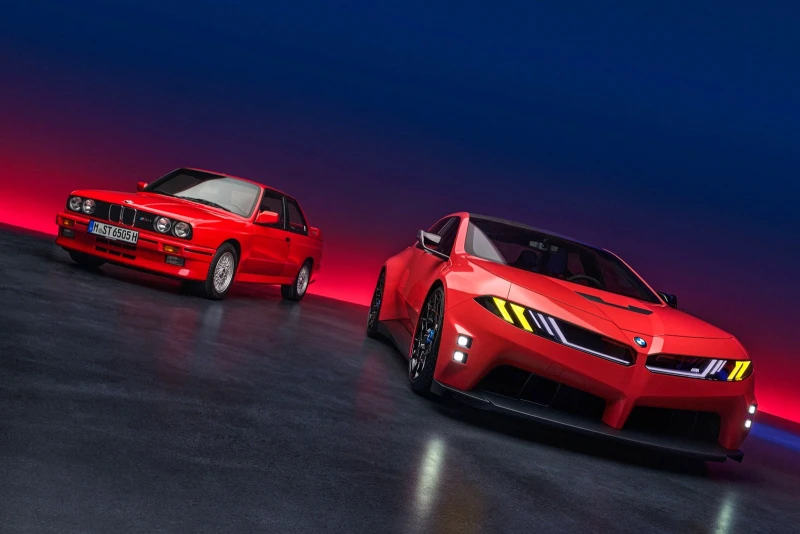
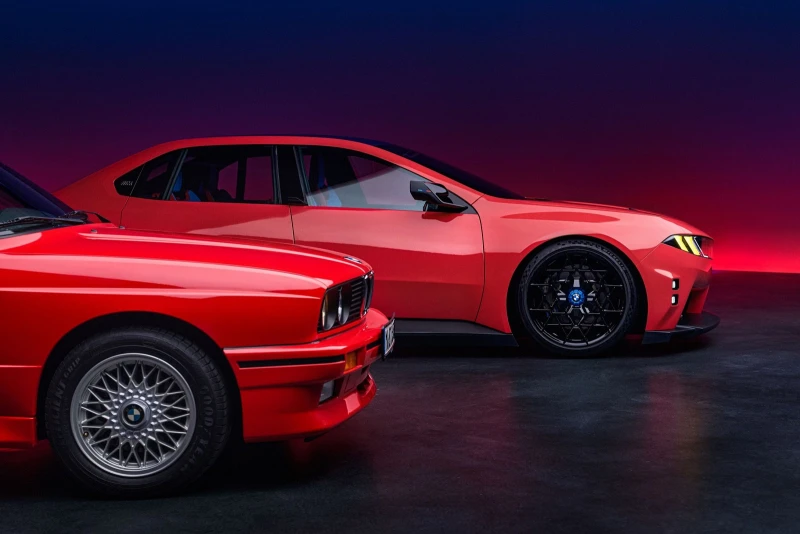
The concept received widened fenders characteristic of BMW M models, new bumpers with large air intakes, a ventilation opening in the hood, and enlarged wheels with a central locking nut. Yellow light elements referencing select sporty versions of the brand were used in the design of the front optics.
The body is painted in Monza red metallic. For the presentation, the concept was photographed next to the classic BMW M3 E30 — the first model of the family, introduced in the 1980s. The cars share a common emblem and name, but their technical philosophy differs substantially. The M3 E30 weighed approximately 1,165 kilograms, whereas the new electric version, according to preliminary estimates, could be more than twice as heavy.
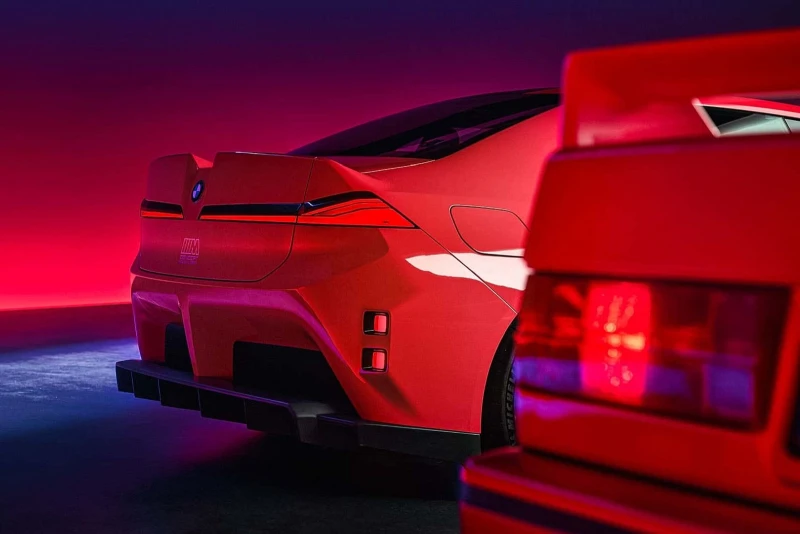
Particular attention is drawn to the rear of the body. Large volumetric elements and a wide rear bumper are used here, and the concept's designation occupies the central position. In profile, the car appears more traditional for M models thanks to short overhangs, a widened track, and pronounced wheel arches.
Interior and Sporty Equipment
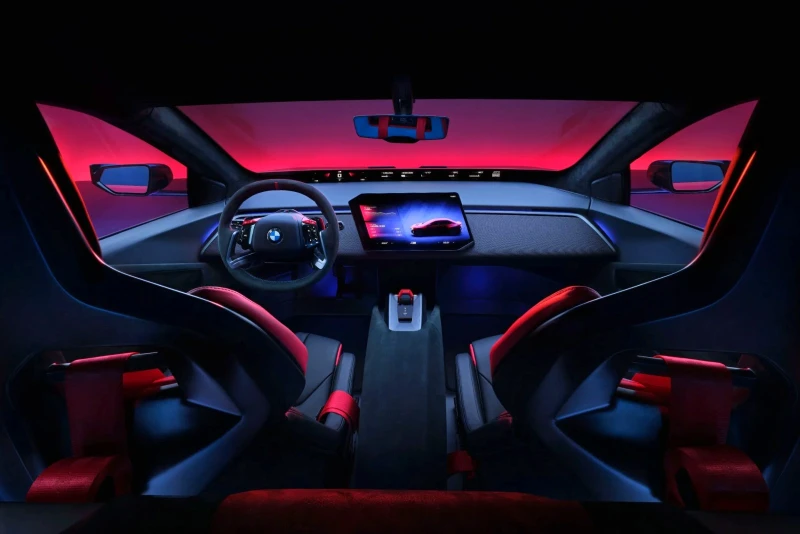
The interior follows Neue Klasse principles: there are almost no physical buttons, with primary functions integrated into a digital interface. The concept features an unconventional steering wheel, a minimalist dashboard, and trim in dark textile material with illumination.
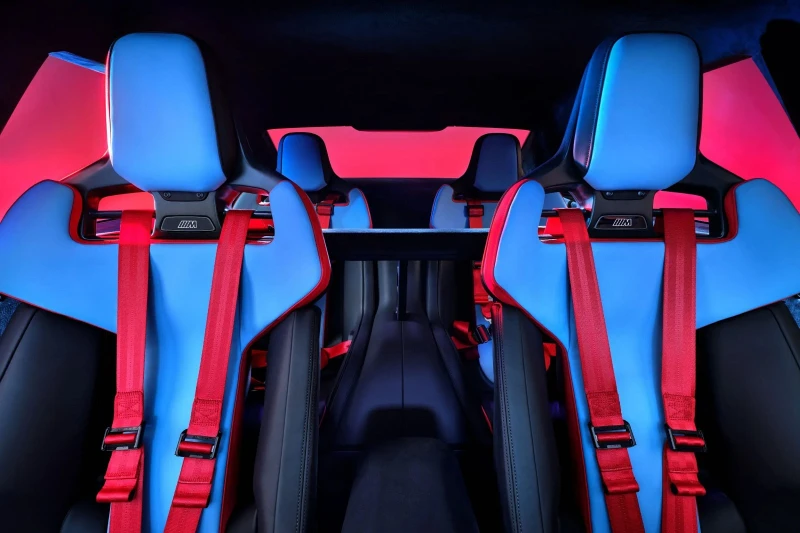
For the sporty character, separate seats for the driver and passengers, five-point harnesses, and a safety cage are provided. These solutions indicate that BMW views the future M3 not only as a powerful road-going electric vehicle, but also as a basis for more track-oriented versions.
What Is Known About the Production Model
The displayed vehicle remains a design and technical concept for now. BMW has not confirmed the production start date, battery capacity, or final specifications. At the same time, the company continues development of an M3 version with an internal combustion engine, which is expected to appear separately from the electric model.
The concept demonstrates the development direction of BMW M in the era of electric drive: high power will be combined with independent control of each wheel and a new approach to body construction. The final appearance and parameters of the production M3 will become known closer to its official premiere.