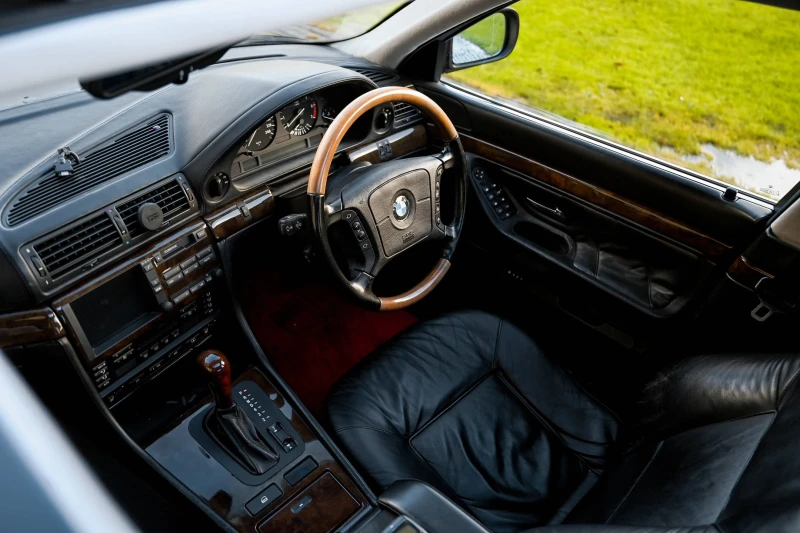
The interior of the 1994–2001 BMW 7 Series combines premium materials, driver-oriented ergonomics and outstanding comfort, making it highly desirable among executives and enthusiasts. In the United States this model continues to enjoy strong demand on the used market thanks to its commanding presence and relative affordability. Below we break down the key aspects of the cabin, available trim levels, year-to-year changes, common issues and buying advice.
Overall Cabin Overview
Materials & Design
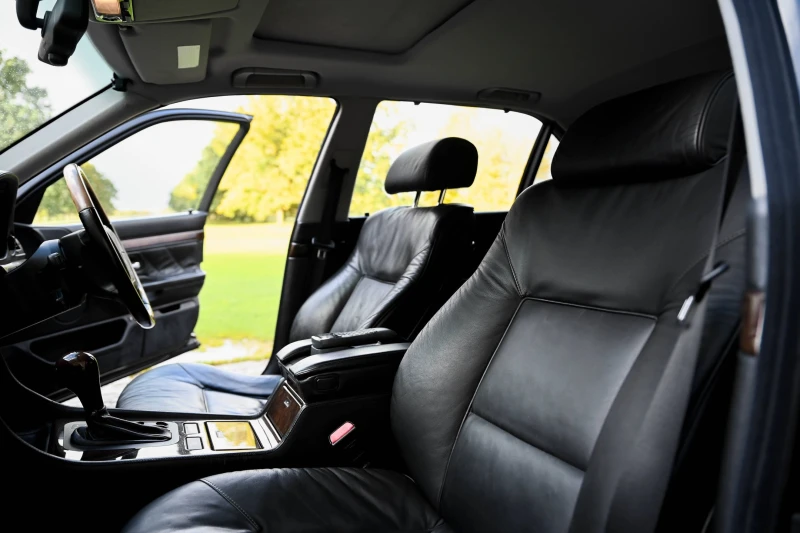
The cabin features high-quality finishes: Nappa leather or Velour upholstery, genuine walnut or cherry wood trim, and soft-touch plastics on the dashboard. The layout follows classic BMW driver-centric philosophy with clear analog gauges, a central console housing climate controls, audio system and auxiliary switches. The console is logically arranged, often trimmed in wood or aluminum, with intuitive button placement. The long-wheelbase (L) version places special emphasis on the rear seats, offering individual adjustments and enhanced space.
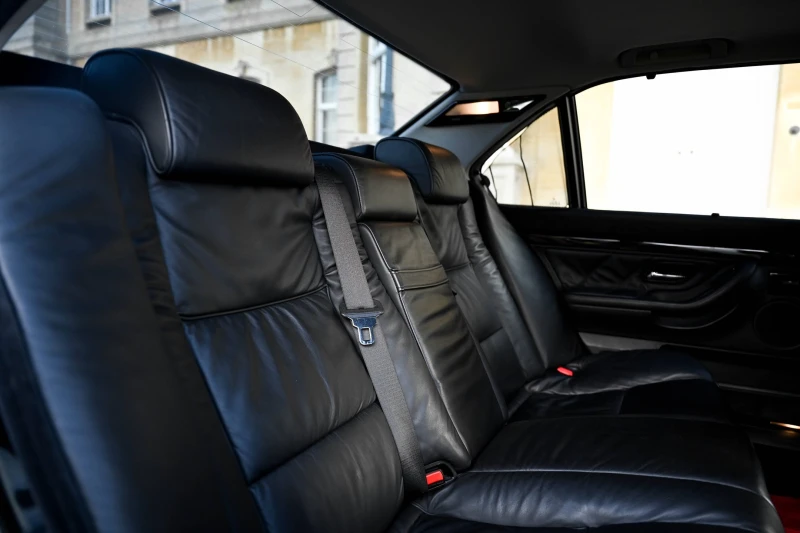
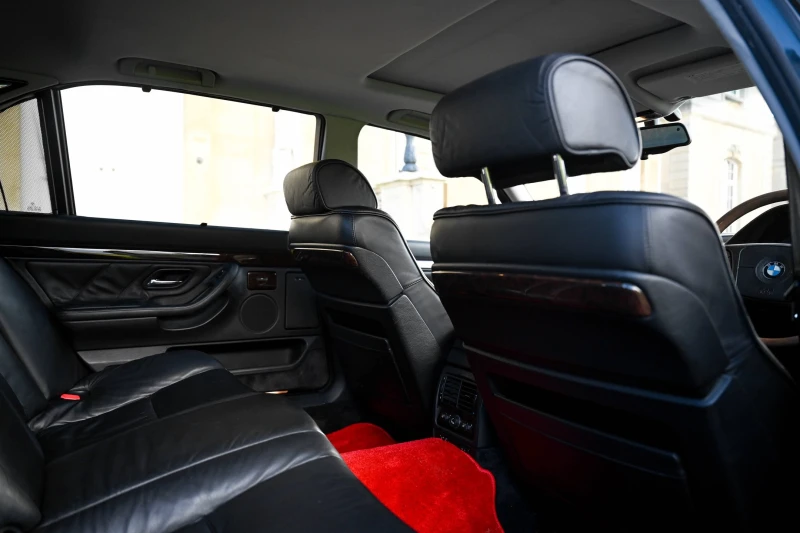
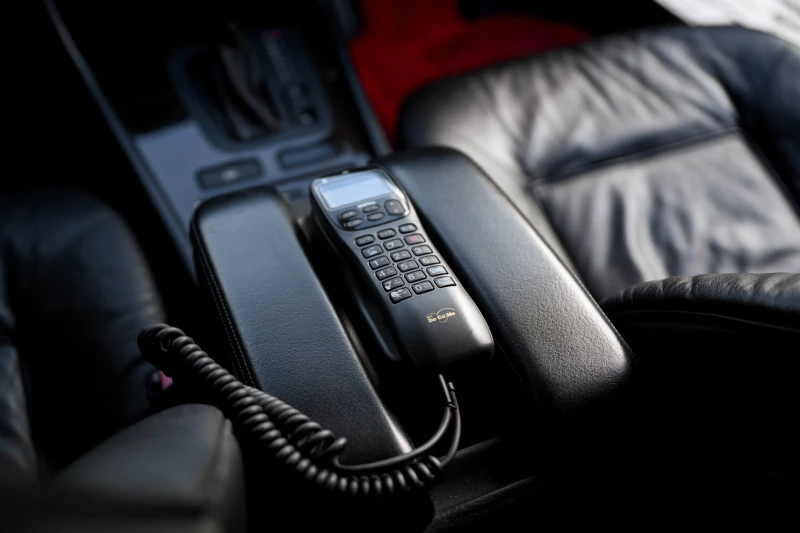
Front seats provide excellent support with power adjustments, optional heating/ventilation and, in top versions, massage functions. The rear bench is exceptionally roomy — especially in the L model, which adds roughly 5.5 inches of legroom — and includes a center armrest, window shades and fold-down tables. Storage is generous with multiple compartments, cupholders and an optional factory car phone.
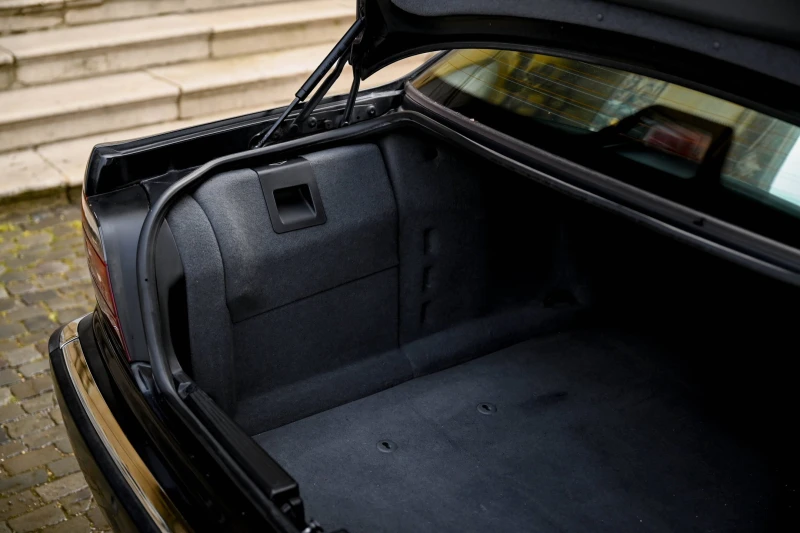
The trunk offers a practical 17.7 cu ft of space with a flat floor, tie-downs and an optional power-closing lid. The 60/40 split-folding rear seats expand capacity to about 35 cu ft, making the car surprisingly versatile for a luxury sedan. A dedicated tool compartment adds convenience.
Trim Levels & Equipment
Trim Levels on the US Market
In the American market the E38 was offered in several tiers — broadly equivalent to Standard, Executive, Highline and Individual — with equipment packages tailored to local preferences. Most examples feature premium leather, advanced audio and various comfort assists.
Base (Standard): Velour or basic leather, dual-zone climate control, AM/FM cassette or CD player, airbags, optional rear parking sensors.
Executive: Nappa leather, wood trim, Harman Kardon or Bose audio, optional car phone, navigation (later models), glass sunroof.
Highline: ventilated/massaging front seats, rear climate control, rear entertainment options, xenon headlights, stability control (ASC+T), park distance control.
Individual: exclusive two-tone leather / Alcantara combinations, custom wood finishes, night vision (very rare), full electric package, unique paint and upholstery choices.
V8 models with automatic transmission are the most common finds today. On the current US used market, well-kept Executive and Highline examples typically trade in the $8,000–$18,000 range depending on mileage and condition. See the table below for a quick comparison.
| Trim Level | Key Interior Features | Notable Options |
|---|---|---|
| Standard | Velour or leather, dual-zone A/C, basic audio | Heated seats, parking sensors |
| Executive | Nappa leather, wood trim, premium audio | Navigation, car phone, sunroof |
| Highline | Ventilated/massage seats, rear A/C, xenon | Stability control, rear entertainment |
| Individual | Exclusive leather/Alcantara, custom wood | Full luxury specification |
Interior Evolution Within the Generation
Facelift Changes (1998+)
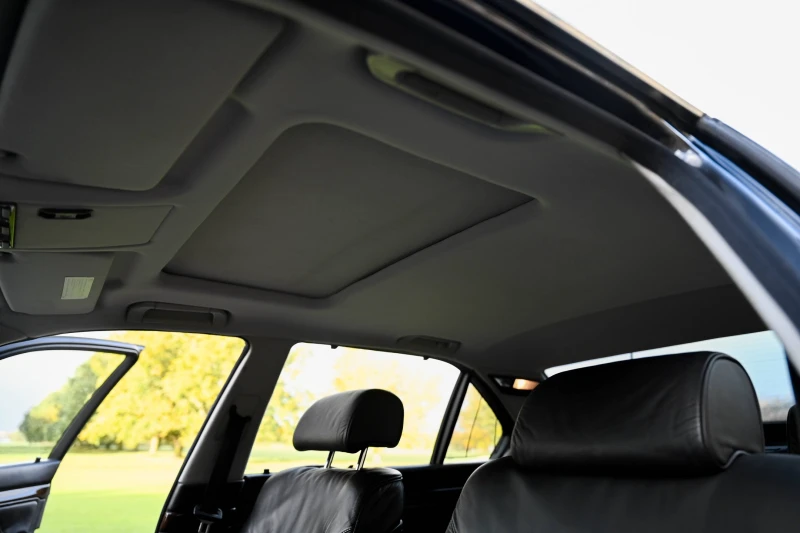
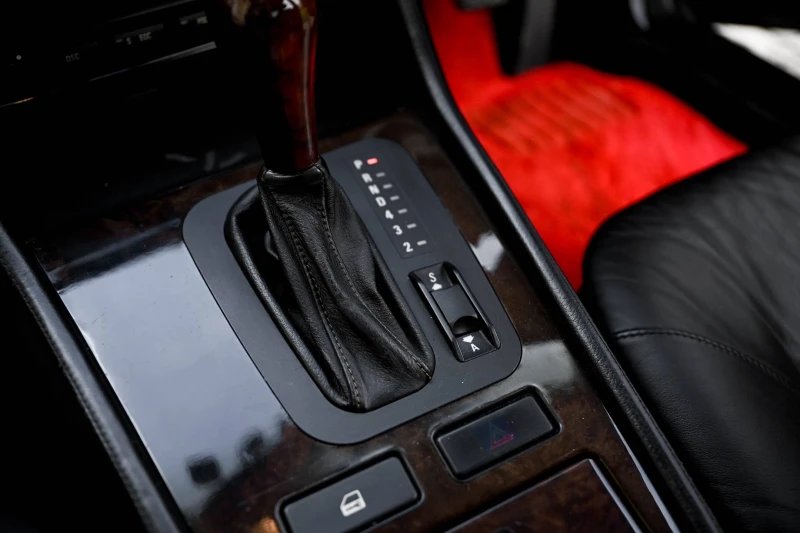
The 1998 facelift brought several meaningful cabin improvements: revised center console with updated gauge graphics, softer-touch plastics, higher-grade leather, additional sound-deadening material, and an upgraded audio system with CD-changer compatibility. New interior color combinations (including more beige and gray tones) were introduced. Post-facelift cars feel noticeably quieter and more refined — an important advantage on American highways where long-distance cruising is common. Overall, 1998+ examples tend to show less wear on buttons and trim.
Common Interior Issues & Owner Feedback
Frequent Problems
On used E38s, owners commonly report: leather cracking or fading after 120,000–150,000 miles, sagging headliners, scratched wood trim, and pixel failure in the radio/climate display. Road and tire noise become noticeable above 75 mph due to average sound insulation by modern standards. Rear visibility is limited by thick pillars. Electrical gremlins can affect climate control, seat motors and window regulators. In regions with harsh winters or intense sun, leather and wood suffer more quickly. Regular detailing and careful UV protection help preserve the cabin.
Conclusion: How the Cabin Holds Up Today & Best Trim Choice
In 2026 the E38 interior still feels timeless and upscale — the materials and design have aged gracefully and remain impressive to collectors and classic enthusiasts. While the analog instruments and simpler tech appear dated next to today’s screens, the overall quality and space keep it desirable. The sweet spot for most buyers is an Executive or Highline 740i/iL — offering a strong balance of current market value (roughly $10,000–$16,000), equipment (massage seats, premium audio, xenon lights) and long-distance comfort. Before purchase, carefully inspect leather condition, test all electronics, listen for rattles or wind noise, and check for water stains or unusual odors. The cabin remains one of the E38’s strongest assets and a major reason the car holds up so well on today’s used market.