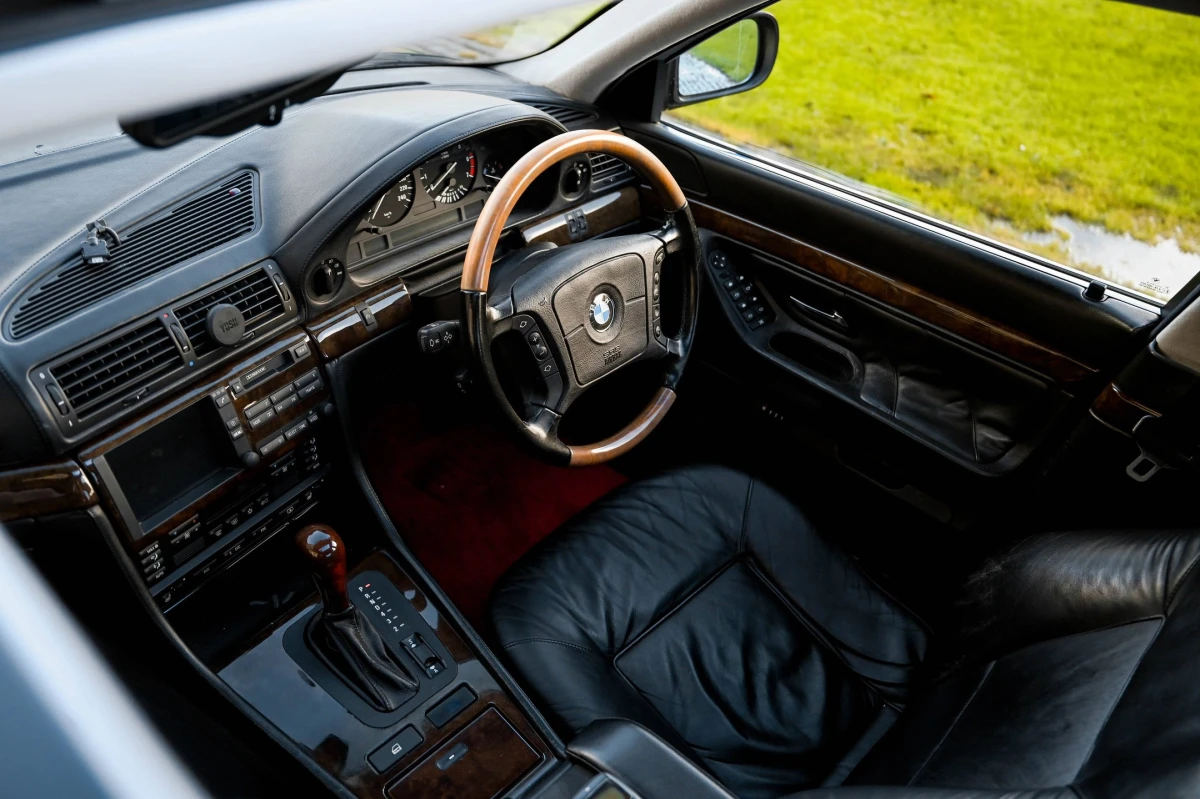



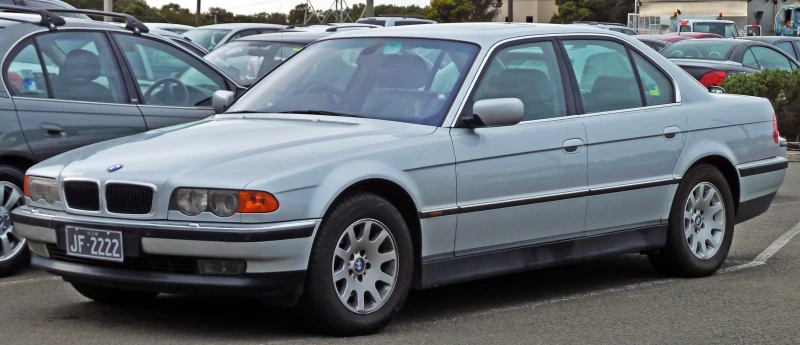
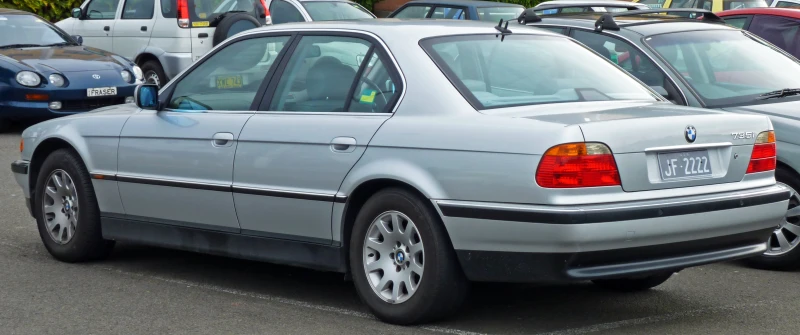
This generation, internal code E38, was built from 1994 to 2001. European sales began in 1994, and production ended in 2001 when the fourth generation (E65) arrived. In the United States, these models entered the market mainly through gray-market imports and official channels in the late 1990s–early 2000s, becoming a favorite among enthusiasts seeking classic luxury on the used scene. It rides on a rear-wheel-drive platform with aluminum in the suspension and select body panels, reducing weight while boosting chassis stiffness.
The E38 design is defined by its elegant yet imposing stance: a long hood, signature wide kidney grille, slim headlights, and smooth, flowing lines. Dimensions grew—length 4984 mm (standard), 5124 mm (long-wheelbase), width 1862 mm, height 1435 mm, wheelbase 2930/3070 mm. Curb weight ranges 1800–2200 kg (3970–4850 lbs). The 1998 facelift introduced revised headlights, bumpers, and LED taillights. Powertrains featured V8 and V12 engines (2.8–5.4 liters, 193–326 hp), mated to a smooth 5-speed ZF automatic and rear-wheel drive. Standout tech included EDC adaptive suspension, Park Distance Control, early navigation, up to 8 airbags, and ASC+T traction control. The E38 positioned itself as the pinnacle of luxury and innovation, taking on the Mercedes S-Class and Audi A8.
What’s New Compared to the Previous Generation
Compared to the E32 (1986–1994), the E38 brought major leaps in refinement and modernity. Styling shifted toward sleeker, more aerodynamic shapes (Cd 0.30 vs 0.32), with added length (+58 mm) and wheelbase (+60 mm) for better proportions and rear-seat space. The body became 70% stiffer, with an aluminum hood and front fenders to cut weight.
The chassis was updated with a new multi-link rear suspension and optional EDC electronic damping. Engines moved from the old inline-sixes to modern M60 V8s (3.0–4.0 L, 218–286 hp) and the M73 V12 (5.4 L, 326 hp) with aluminum blocks. Tech advanced significantly: standard ASC+T stability, optional xenon lights, CD-based navigation, integrated phone, and TV tuner. Interior comfort jumped with superior sound insulation, available seat massage, rear climate control, and premium Bose audio.
Safety upgrades included standard dual front airbags, optional side airbags, and ABS with electronic brake distribution. Overall, the E38 delivered a lighter, more advanced, and more luxurious package while preserving BMW’s driving-DNA heritage.
Used Market in the United States
On the American used market, the 1994–2001 BMW 7 Series E38 remains a niche but cherished choice among classic luxury buyers, enthusiasts, and modifiers. Listings on platforms like Cars.com, Autotrader, and Bring a Trailer (as of early 2026) show roughly 50–80 active examples at any time. Demand is steady for a car this age—timeless styling, solid engineering when maintained, and strong aftermarket support keep it relevant.
Prices typically range from $6,000 to $18,000 depending on condition, mileage, and specification. Entry-level examples (1994–1998, high-mileage 730i/740i, 200,000+ miles) usually sit in the $6,000–$9,000 range. Well-kept low-mileage or late-facelift 750iL models with desirable options can reach $14,000–$18,000. Average transaction price hovers around $9,000–$11,000. V8 versions (especially 740i) are the most common and practical, offering good balance of performance and running costs (12–16 mpg combined). The V12 750iL is rarer and more expensive to maintain, appealing mainly to collectors. Post-1998 facelift cars with updated lighting and refinements command a clear premium.
Approximate market price range for the United States: $6,000 – $18,000. It remains one of the most affordable ways to own a full-size luxury flagship with genuine presence and driving character.
Main Versions & Trims Available in the US Market
In the US, the E38 came in several trim levels—base, Premium, Luxury/Protection, and Individual/750iL—often equipped for American preferences (larger seats, premium audio, etc.). Common configurations are listed below.
Base/Standard: 730i or 740i V8, automatic, leather interior, dual-zone climate, ABS, front airbags, 16-inch wheels. Many imported examples added heated seats and mirrors.
Premium/Executive: added navigation, premium sound (often Harman Kardon), EDC suspension, glass sunroof, and more wood trim.
Luxury/Highline: ventilated/massaging front seats, rear climate control, rear window shades, xenon headlights, 17-inch wheels, TV tuner option.
Top/Individual/750iL: V12 engine, extended wheelbase, upgraded leather/Alcantara, full wood package, night vision (rare), complete power options.
V8 models dominate the US market (≈85%), usually meeting ULEV emissions standards of the era. Well-equipped Executive and Luxury trims with automatic transmission are the most sought-after on the used market.
| Trim Level | Key Features | Engines | Approximate Used Market Price (USD) |
|---|---|---|---|
| Standard | Leather, climate control, ABS | 2.8–4.0 V8 | $6,000 – $9,000 |
| Executive/Premium | Navigation, premium audio, EDC | 3.0–4.4 V8 | $9,000 – $12,000 |
| Luxury/Highline | Massage seats, xenon, rear A/C | 4.0–4.4 V8 | $11,000 – $15,000 |
| Individual/750iL | Alcantara, V12, extended options | 5.4 V12 | $14,000 – $18,000+ |
Final Verdict
The BMW 7 Series III (1994–2001) suits American buyers looking for classic full-size luxury—executives, families (especially long-wheelbase versions), or enthusiasts who value timeless design over the latest tech. It’s not an SUV, but its smooth ride and spacious trunk (≈18 cu ft) make it versatile for highway cruising or weekend getaways.
Why consider one today: ageless styling, proven V8 engines, flagship comfort at the price of a mainstream midsize sedan. In an era of $80,000+ new luxury cars, the E38 delivers genuine prestige and presence for well under $15,000.
Things to watch for when buying: rust (especially underbody in salt-belt states), transmission health (rebuilds are costly), cooling system issues (overheating risk), full service history, and realistic mileage. A pre-purchase inspection by a BMW specialist is strongly recommended. When well-chosen, the E38 remains one of the most rewarding classic luxury sedans you can own.