


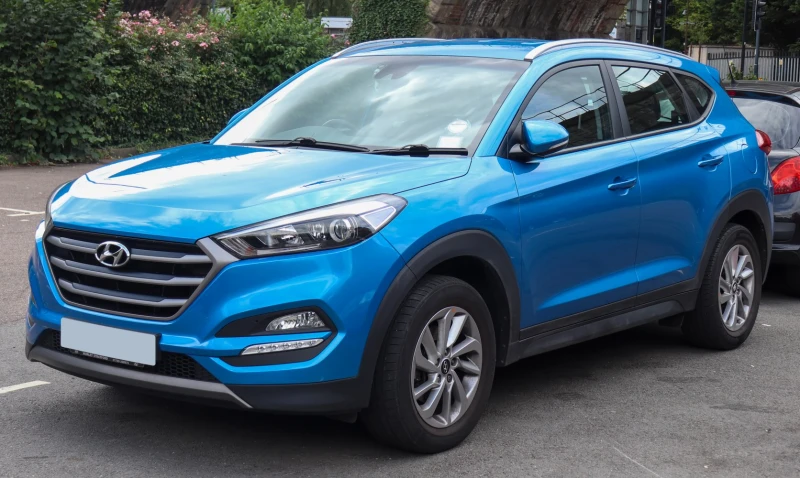
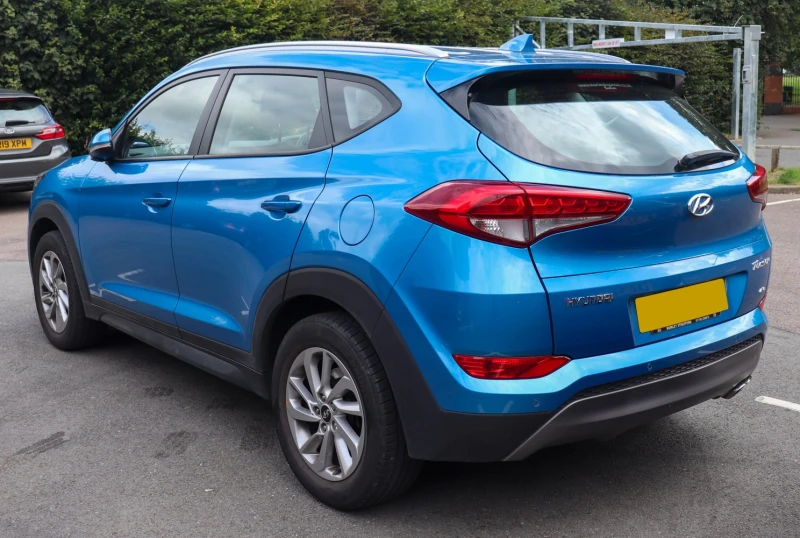
The third-generation Hyundai Tucson was produced from 2015 to 2021 and officially sold in the United States starting in 2016. In this guide, we dive deep into the powertrains, dimensions, year-to-year changes, and key ownership considerations for the U.S. market. Exterior design, interior, trim levels, and common issues are covered in separate articles in this series.
Engines and Transmissions
Hyundai Tucson 2016–2021 engines offered a solid range of gasoline options tailored to American preferences and emissions standards (ULEV, SULEV, LEV3). All engines were paired with various transmissions and drivetrain configurations to suit different driving needs.
Here are the main powertrain combinations available in the U.S. market for the Hyundai Tucson III (2016–2021):
| Engine | Type | Displacement | Power | Transmission | Drivetrain |
|---|---|---|---|---|---|
| 2.0L Nu MPI | Gasoline, naturally aspirated | 2.0 L | 164 hp | 6-speed manual, 6-speed automatic | FWD |
| 1.6L T-GDI | Gasoline, turbocharged | 1.6 L | 175–181 hp | 7-speed DCT | FWD, AWD |
| 2.0L Nu MPI (later models) | Gasoline, naturally aspirated | 2.0 L | 161 hp | 6-speed automatic | FWD, AWD |
The 2.0L naturally aspirated engine was the most common choice in base and mid-level trims, known for its reliability and low maintenance costs. The turbocharged 1.6L T-GDI delivered noticeably better performance and was frequently paired with all-wheel drive in higher trims. Note: diesel engines were not offered in the U.S. market for this generation.
Dimensions and Weight
The Tucson III was built on Hyundai-Kia’s modular platform, providing generous interior space and cargo capacity for its class. Dimensions remained largely consistent throughout the generation, with minor variations depending on trim and drivetrain.
| Specification | Value |
|---|---|
| Length | 176.2–176.4 in |
| Width | 72.8 in |
| Height | 64.8–65.2 in |
| Wheelbase | 105.1 in |
| Ground Clearance | 7.2 in (6.4 in with full load – some trims) |
| Curb Weight | 3,301–3,560 lbs (depending on engine and drivetrain) |
| Gross Vehicle Weight | 4,376–4,784 lbs |
| Cargo Volume | 31.0–61.9 cu ft (rear seats folded) |
| Drivetrain | FWD or HTRAC AWD |
| Transmissions | 6MT, 6AT, 7DCT |
Its compact footprint made the Tucson easy to park and maneuver in cities like Los Angeles or New York, while the 7.2-inch ground clearance handled light off-road trails and snowy conditions reasonably well. The HTRAC all-wheel-drive system added confidence in wet or winter weather but increased weight by roughly 200–300 lbs.
Year-to-Year Changes (Mid-Cycle Refresh)
The most significant update came with the 2018 facelift (model years 2018–2021), which affected the entire North American market:
- Engines: Slight power tweaks and efficiency improvements across the board. The 1.6L turbo received minor ECU updates for smoother response.
- Transmissions: The 7-speed dual-clutch transmission became standard on turbo models; smoother shift calibration introduced.
- Chassis & NVH: Revised suspension tuning for better ride comfort without sacrificing handling. Improved sound insulation in engine bay and wheel wells.
- Technology: Addition of lane keep assist, forward collision warning with pedestrian detection, adaptive cruise control (higher trims), and an upgraded 8-inch touchscreen with Apple CarPlay & Android Auto.
Post-facelift models (2018–2021) are generally preferred on the used market due to the modern safety features, refined ride, and better infotainment.
Ownership Considerations: What to Know
When buying or owning a 2016–2021 Hyundai Tucson in the United States, keep these technical points in mind:
- Engine Reliability: The 2.0L naturally aspirated engine is extremely durable – many examples exceed 200,000 miles with basic maintenance. The 1.6L turbo requires more diligent oil changes (every 5,000–7,500 miles recommended) and premium unleaded fuel for best longevity.
- Most Popular Configurations: On the used market, AWD 1.6T models with the 7-speed DCT and mid-to-high trims (SEL, Limited) are the most sought-after due to strong performance and resale value. FWD 2.0L automatic models remain popular for budget-conscious city drivers.
- Transmission Notes: The 6-speed automatic is very reliable. The 7-speed DCT can exhibit hesitation in stop-and-go traffic if not driven assertively; software updates often resolve this. HTRAC AWD system is low-maintenance but check rear differential and transfer case fluid during service.
- Parts Availability: Parts are widely available and reasonably priced thanks to the model’s popularity. Genuine Hyundai parts are moderately priced; quality aftermarket options (Motorcraft, Denso, Bosch) save 20–40%.
- Fuel Economy (EPA estimates): 2.0L FWD – 23 city / 30 highway / 26 combined mpg; 1.6T AWD – 22–25 city / 28–30 highway / 25–27 combined mpg (depending on year and trim).
Always check service history (especially oil change records for turbo models), and have a pre-purchase inspection performed – focus on suspension bushings, DCT behavior, and any signs of previous accident damage.
Best Choice for American Buyers
Considering U.S. fuel prices, road conditions, dealer network, and strong resale values, the sweet spot for most buyers is a 2018–2021 Hyundai Tucson 1.6L Turbo with HTRAC AWD and 7-speed DCT in SEL or higher trim. Here’s why:
- Performance & Efficiency: Excellent balance of power and fuel economy for highway cruising and city driving.
- All-Weather Capability: HTRAC AWD provides confident traction in rain, snow, and light off-road use – ideal for many regions.
- Resale Value: Turbo AWD models hold value noticeably better than base FWD versions.
- Modern Features: Post-2018 models come loaded with the latest safety and convenience tech at a very competitive used price point.
The 2.0L FWD automatic remains a solid, budget-friendly choice for urban commuters who don’t need AWD or extra power and prefer the traditional automatic transmission.
Overall, the Hyundai Tucson III (2016–2021) remains one of the most well-rounded compact crossovers of its era – reliable, spacious, feature-rich, and still very competitive on today’s used market.