The sixth-generation Volkswagen Golf 2008–2012, known as the Mk6 in the US, is widely regarded as one of the most well-rounded Golfs ever made: compact dimensions, a wide range of engines, and advanced transmissions. In this guide we dive deep into the engines, transmissions, and dimensions of the 2008–2012 Golf, including year-to-year changes. We’ll focus on what matters most for US buyers – reliability, fuel costs, and suitability for American roads and highways. For exterior styling, interior features, trim levels, and common issues, check our other articles in the series.
The Golf Mk6 launched in 2008 on the PQ35 platform (carried over but strengthened by +35% in torsional rigidity). Sales in the US began in late 2009 as a 2010 model and continued through the 2013 model year (facelift arrived for 2010 MY in the US). Globally over 2.8 million were built, and today thousands remain available on the American used market. Let’s get into the details.
Main Powertrains: Engines and Transmissions
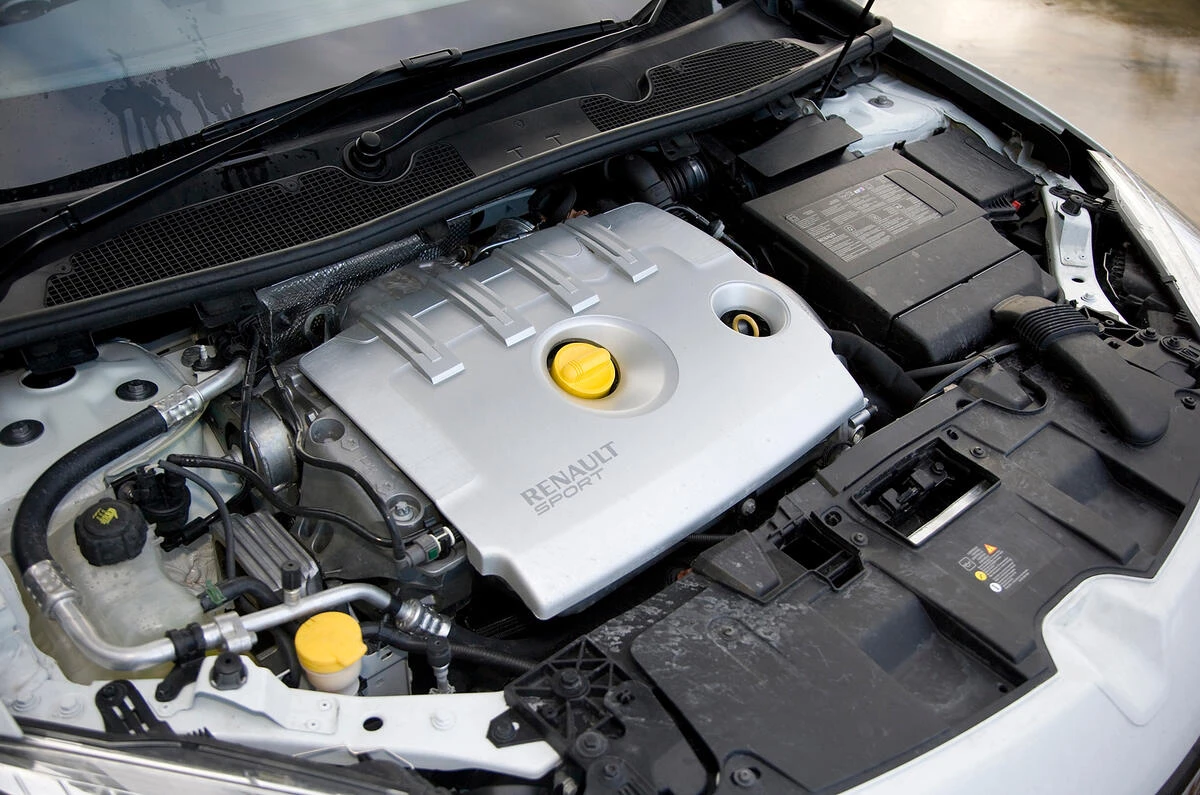
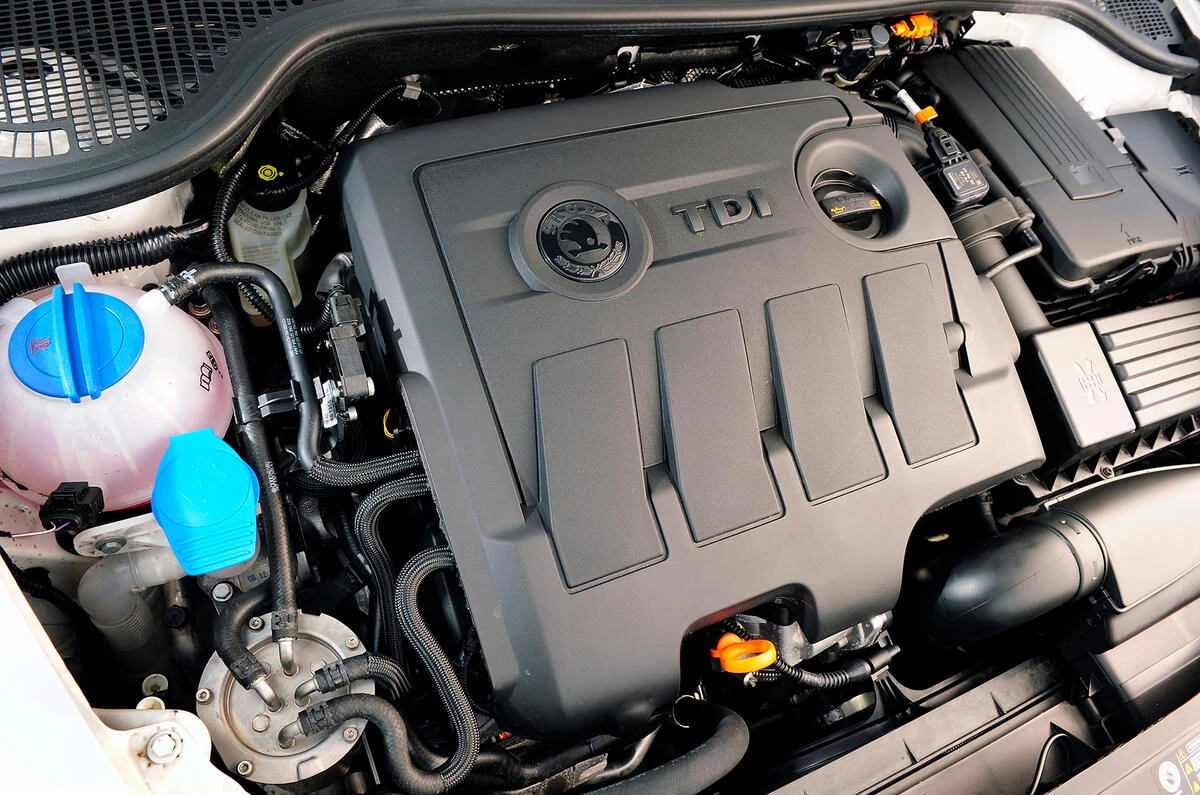
The Volkswagen Golf engine lineup offers impressive variety: from efficient naturally aspirated motors to turbocharged performance variants. US models primarily featured gasoline TSI (turbocharged direct-injection) engines, with the 2.5L inline-5 as a unique naturally aspirated option. Power ranged from 102 to 270 hp. Most were front-wheel drive (FWD), but high-performance GTI, R, and some TDI models (pre-emissions scandal) offered 4Motion all-wheel drive with Haldex IV.
Transmissions: 5- or 6-speed manual, 6-speed conventional automatic (Tiptronic, rare), 6-speed wet-clutch DSG (DQ250 for higher-torque engines), and 7-speed dry-clutch DSG (DQ200 for engines up to ~184 lb-ft). In the US the most common combinations are the 2.5L with manual or auto and the 2.0 TSI with DSG.
Approximate real-world fuel economy (mixed cycle, based on EPA and owner reports):
- Gasoline 2.5L I5 (170 hp): 24–28 mpg
- Gasoline 2.0 TSI (200 hp, GTI pre-2012): 24–29 mpg
- Gasoline 2.0 TSI (210 hp, GTI 2012): 25–30 mpg
- Gasoline 2.0 TSI (270 hp, R): 21–26 mpg
| Engine (type, displacement) | Power, hp | Transmission | Drive | Fuel Economy (combined, mpg) |
|---|---|---|---|---|
| Gasoline, 2.5L I5 | 170 | 5-speed manual / 6-speed auto / DSG-7 | FWD | 24–28 |
| Gasoline, 2.0 TSI (early) | 200 | 6-speed manual / DSG-6 | FWD | 24–29 |
| Gasoline, 2.0 TSI (GTI 2012+) | 210 | 6-speed manual / DSG-6 | FWD | 25–30 |
| Gasoline, 2.0 TSI (R) | 270 | DSG-6 | 4Motion | 21–26 |
The table covers the main US-market engines 2008–2012. Manual and DSG-equipped models remain popular among enthusiasts.
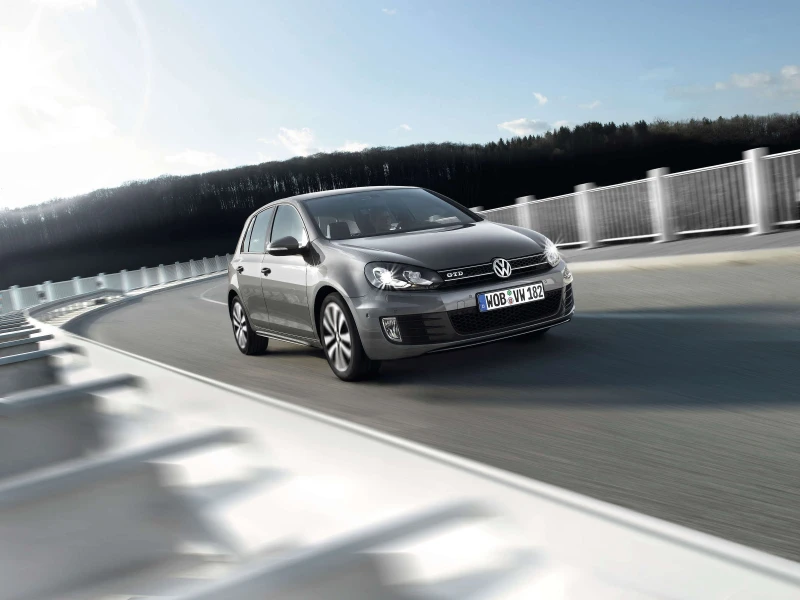
Dimensions, Weight, Transmission, and Drivetrain
The Volkswagen Golf Mk6 is a true C-segment compact hatchback – perfect for city driving and highway cruising across the US, with decent ground clearance (~5.5 inches). Dimensions stayed nearly identical to the Mk5, but the body became significantly stiffer. The Golf Variant (wagon, sold as SportWagen in the US) adds extra cargo space for families.
Cargo volume: 15.2–46.6 cu ft (hatch), 30.4–66.5 cu ft (SportWagen). Fuel tank: ~14.5 gallons. Most are FWD; 4Motion models make up a small but sought-after portion of the market.
| Parameter | 5-door Hatchback | 3-door Hatchback | SportWagen (Wagon) |
|---|---|---|---|
| Length, in | 165.4 | 165.4 | 178.3 |
| Width, in | 70.3 | 70.3 | 70.3 |
| Height, in | 58.2–58.9 | 58.0–58.8 | 58.5 |
| Wheelbase, in | 101.5 | 101.5 | 101.5 |
| Ground clearance, in | 5.5 | 5.5 | 5.5 |
| Curb weight, lbs | 2900–3200 | 2850–3150 | 3100–3400 |
| Cargo volume, cu ft (min/max) | 15.2/46.6 | 15.2/46.6 | 30.4/66.5 |
| Drivetrain | FWD / 4Motion | FWD / 4Motion | FWD / 4Motion |
| Transmission types | 5/6-speed manual, DSG-6/7, 6-speed auto | 5/6-speed manual, DSG-6/7, 6-speed auto | 5/6-speed manual, DSG-6/7, 6-speed auto |
GTI and R models are ~100–200 lbs heavier and ride ~0.6 in lower. SportWagen models are especially popular with families on the used market.
Model Year Updates and Facelift
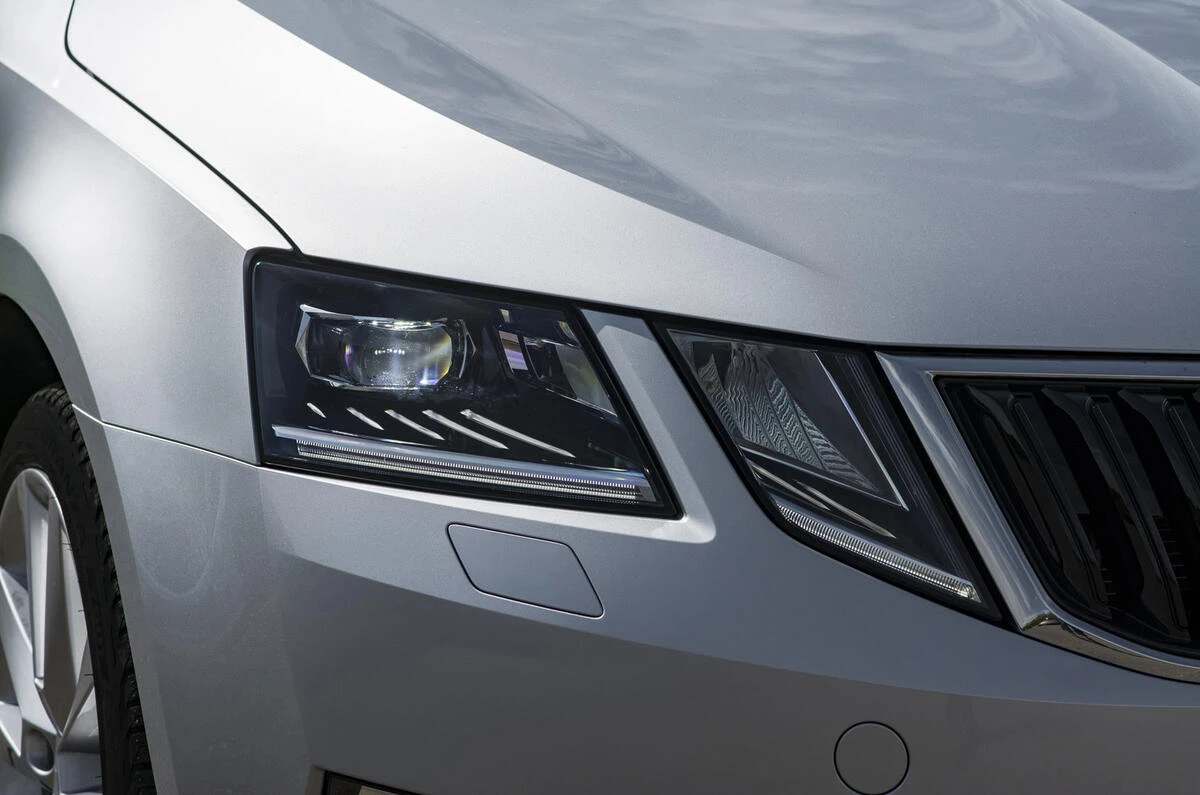
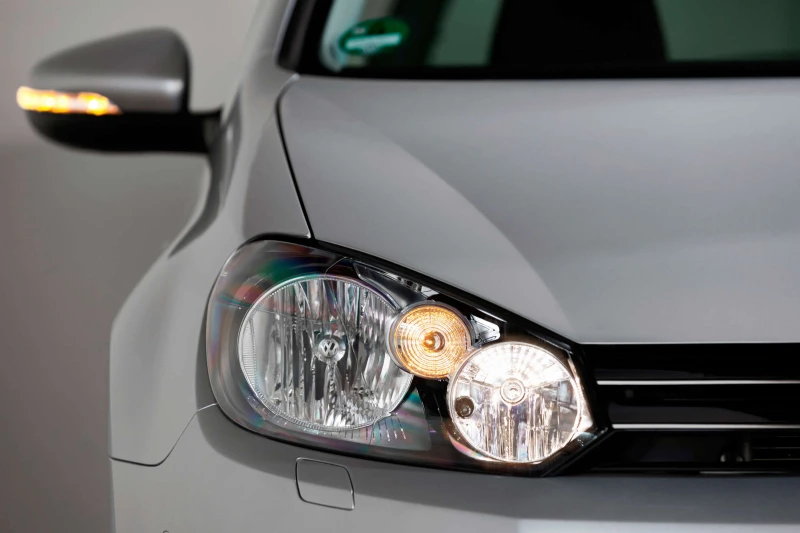
The Mk6 saw evolutionary changes rather than major overhauls. The 2010 facelift (introduced late 2009 in Europe, as 2010 MY in the US) brought updated styling (new headlights, bumpers, optional LED lights) and minor mechanical tweaks. Key US changes: the base 2.5L engine carried over, while GTI power increased slightly for 2012. DSG software improvements addressed early shifting concerns.
Post-2010 models generally command a small premium on the used market thanks to refined electronics and slightly better fuel economy.
What to Know Before Buying: US Ownership Tips
Owning a VW Golf Mk6 in the US strikes a great balance of fun, reliability, and practicality – provided you choose wisely. The 2.5L inline-5 is bulletproof (300k+ mile potential), simple, and inexpensive to maintain. The 2.0 TSI offers far more performance but early timing-chain tensioner issues (pre-2012) can be costly if not addressed. Parts availability is excellent nationwide, and independent VW specialists keep service costs reasonable.
Manual transmissions are virtually indestructible; the 6-speed DSG (DQ250) is solid with regular fluid changes, while the earlier 7-speed dry-clutch DSG can be problematic in stop-and-go traffic if not serviced. 4Motion models hold value well, especially in snow-belt states.
Real-world fuel economy is typically 1–3 mpg below EPA depending on driving style and premium unleaded use (recommended for TSI engines). Check for timing chain service history on 2.0 TSI models, DSG fluid changes, and any rust in northern states.
Bottom Line: Best Picks on the US Used Market
Approximate market price in the United States (as of late 2025) for clean examples: $6,000–$14,000 depending on mileage, condition, and spec.
Top recommendation: 2012–2013 GTI with 6-speed manual or DSG-6 – perfect mix of performance, refinement, and long-term reliability. For budget buyers, a clean 2.5L base model with manual offers unbeatable value and low running costs. Avoid early (2008–2009 imported gray-market) TSI + dry-clutch DSG combos unless service history is impeccable. The Mk6 Golf remains a benchmark compact hatch – fun on twisty roads like Route 66 sections, practical for daily commutes in cities like Los Angeles or Chicago, and capable of cross-country trips with ease.