This generation, known internally as ZJ/ZK, rides on the GS platform shared with the Renault-Nissan alliance, delivering excellent parts compatibility with the Nissan Rogue and proven durability. In this article, we dive deep into the engines, transmissions, dimensions, and weights of the 2013-2021 Outlander, plus key updates across the model run. Our focus here is purely technical—separate features cover styling, interior, trims, and common issues.
Engines and Transmissions
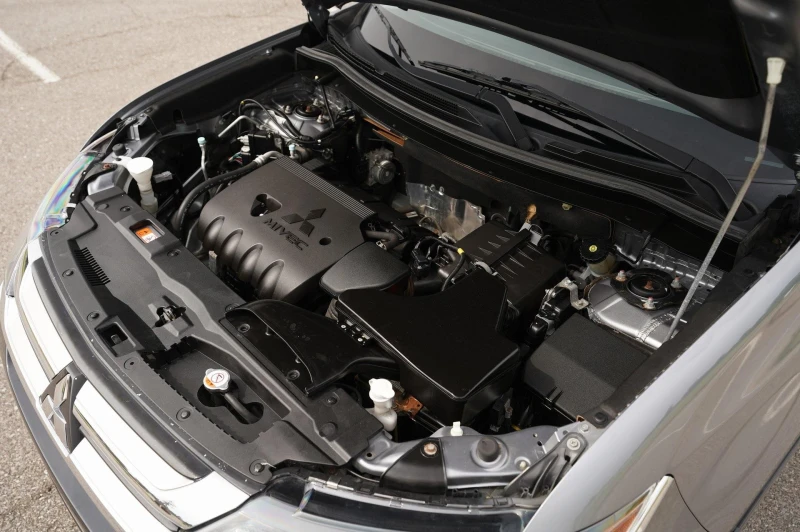
The Mitsubishi Outlander III powertrain lineup was tailored for global markets, featuring naturally aspirated gasoline 4B-series engines with MIVEC variable valve timing, a clean diesel option, and a plug-in hybrid (PHEV) from launch. All met EPA standards of the era. Power ranged from 146–224 hp, with torque from 144–280 lb-ft. Transmissions included a Jatco CVT for the 2.0L, a 6-speed automatic (INVECS-III) for the 2.4L and V6, and an e-CVT for the PHEV. The available S-AWC all-wheel-drive system offered three modes and could split torque up to 50:50—great for slippery winter roads or light off-road trails.
Key powertrain options (U.S.-spec models, 2013–2021):
| Engine (type, displacement, code) | Power (hp) | Transmission | Drivetrain | Years available |
|---|---|---|---|---|
| Gasoline, 2.0L, 4B11/4B12 MIVEC | 146–150 | CVT (Jatco JF011E) | FWD / S-AWC AWD | 2013–2021 |
| Gasoline, 2.4L, 4B12 MIVEC | 166–168 | 6-speed automatic INVECS-III | S-AWC AWD | 2013–2021 |
| Gasoline, 3.0L V6, 6B31 MIVEC | 224 | 6-speed automatic INVECS-III | S-AWC AWD | 2013–2021 (GT trim) |
| Plug-in Hybrid PHEV, 2.4L 4B12 + electric motors | 221 (combined) | e-CVT | S-AWC AWD | 2018–2021 |
The base 2.0L offers smooth everyday performance (0–60 mph in about 10.5–11 seconds) with real-world fuel economy around 24–26 mpg combined. The 2.4L steps it up (0–60 in 9.5 seconds) while returning roughly 23–25 mpg. The rare 3.0L V6 GT delivers strong 224 hp and 0–60 in the low 7-second range. The later PHEV combines a 2.4L engine with twin electric motors and a 13.8 kWh battery for up to 22–31 miles of electric range and combined EPA ratings of 74 MPGe / 25–26 mpg in hybrid mode.
Transmission notes: The CVT includes paddle-shift manual mode and typically lasts 120,000–150,000 miles with fluid changes every 40,000 miles. The 6-speed automatic is known for longevity (200,000+ miles). S-AWC provides confident grip, with 8.5 inches of ground clearance.
Dimensions and Weight
The Outlander III is a true midsize SUV: 184.8 inches long, easy to park yet spacious inside thanks to a 105.1-inch wheelbase. Width is 71.3 inches, height 67.3 inches (slightly taller on PHEV). Standard 5-seat layout offers 34.2 cu ft of cargo; optional third row reduces it to 10.3 cu ft, with max cargo of 63.3 cu ft (seats folded). Fuel tank holds 16.6 gallons (15.8 on some AWD models; PHEV adds battery capacity).
Curb weight ranges from roughly 3,340 lbs (2.0 FWD) to 4,000+ lbs (PHEV AWD), affecting acceleration and braking feel.
Key dimension table (U.S. specifications):
| Version | Length (in) | Width (in) | Height (in) | Wheelbase (in) | Curb Weight (lbs) | GVWR (lbs) | Transmission / Drivetrain |
|---|---|---|---|---|---|---|---|
| 2.0 gasoline FWD | 184.8 | 71.3 | 67.3 | 105.1 | 3,340–3,450 | 4,650 | CVT / FWD |
| 2.0 gasoline S-AWC AWD | 184.8 | 71.3 | 67.3 | 105.1 | 3,450–3,560 | 4,850 | CVT / AWD |
| 2.4 gasoline S-AWC AWD | 184.8 | 71.3 | 67.3 | 105.1 | 3,560–3,670 | 4,900 | 6-speed auto / AWD |
| PHEV S-AWC AWD | 184.8 | 71.3 | 67.7 | 105.1 | 4,165–4,230 | 5,225 | e-CVT / AWD |
Turning circle is a tight 34.8 ft, making it easy to maneuver in city traffic while still feeling substantial on the highway.
Updates Over the Years
The Outlander III saw two major refreshes: 2016 model year (first facelift) and 2019 (second facelift).
2013–2015: Original launch with 2.0L CVT and 2.4L/3.0L 6-speed auto options. Platform improvements boosted rigidity and reduced NVH.
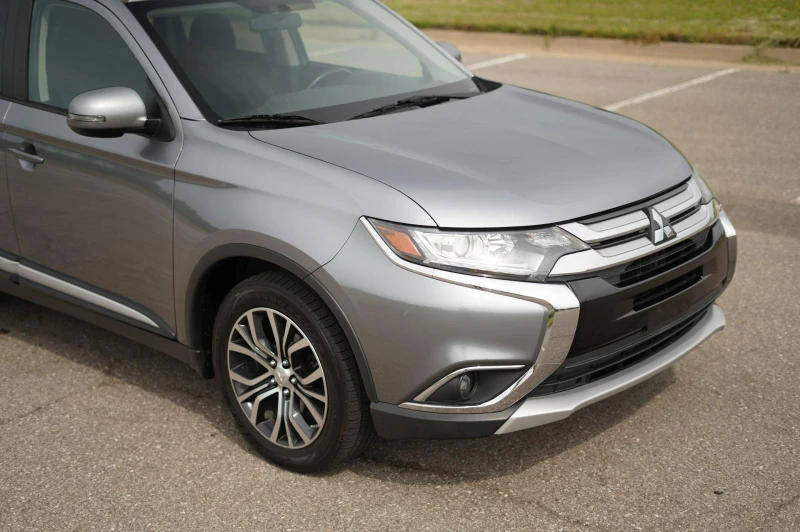
2016 facelift: Aggressive new front styling, LED headlights, improved aerodynamics, and added active safety features like Forward Collision Mitigation and Lane Departure Warning. CVT tuning improved responsiveness.
2019 facelift: Revised grille and interior console, quieter cabin, updated PHEV battery for better electric range, and refined CVT cooling. These later models remain the most sought-after on the used market.
What to Know When Buying Used
The Outlander III has earned a solid reliability reputation in the U.S. The 2.0L and 2.4L gasoline engines regularly exceed 200,000 miles with basic maintenance (timing chain is lifetime, change oil every 7,500–10,000 miles). The CVT is the main watch point—keep fluid fresh to avoid overheating issues (common repair cost $4,000–$6,000 if neglected). The 6-speed auto is virtually bulletproof. S-AWC clutch packs can wear by 120,000–150,000 miles in harsh conditions (repair ~$1,500). Parts are widely available and relatively affordable thanks to Nissan platform sharing.
Most popular configuration on the used market: 2.4L AWD (balanced power and efficiency). Real-world fuel economy (2025 data from sources like CarGurus and Autotrader): 23–26 mpg combined for gasoline models; PHEV can hit 30+ mpg with regular charging.
Orientiровочная рыночная цена для United States в 2025 году (2016–2019 модели в хорошем состоянии): $14,000–$20,000 для бензиновых версий, $18,000–$25,000 для PHEV.
Buying tips: Have the CVT checked for smooth operation under load, inspect AWD system engagement, look for underbody rust (especially in Snow Belt states), and get a pre-purchase inspection focusing on suspension and electronics.
Bottom Line
The Mitsubishi Outlander III remains one of the smartest used midsize SUV buys in 2025—spacious, capable, and built to last. The sweet spot is a 2016+ 2.4L AWD with the 6-speed auto: solid 23–25 mpg, confident handling, low ownership costs, and strong resale value. PHEV models offer impressive efficiency if you can charge regularly. Avoid early CVT-equipped cars with unknown service history. Overall, this generation delivers family-friendly space, proven mechanicals, and excellent long-term value.