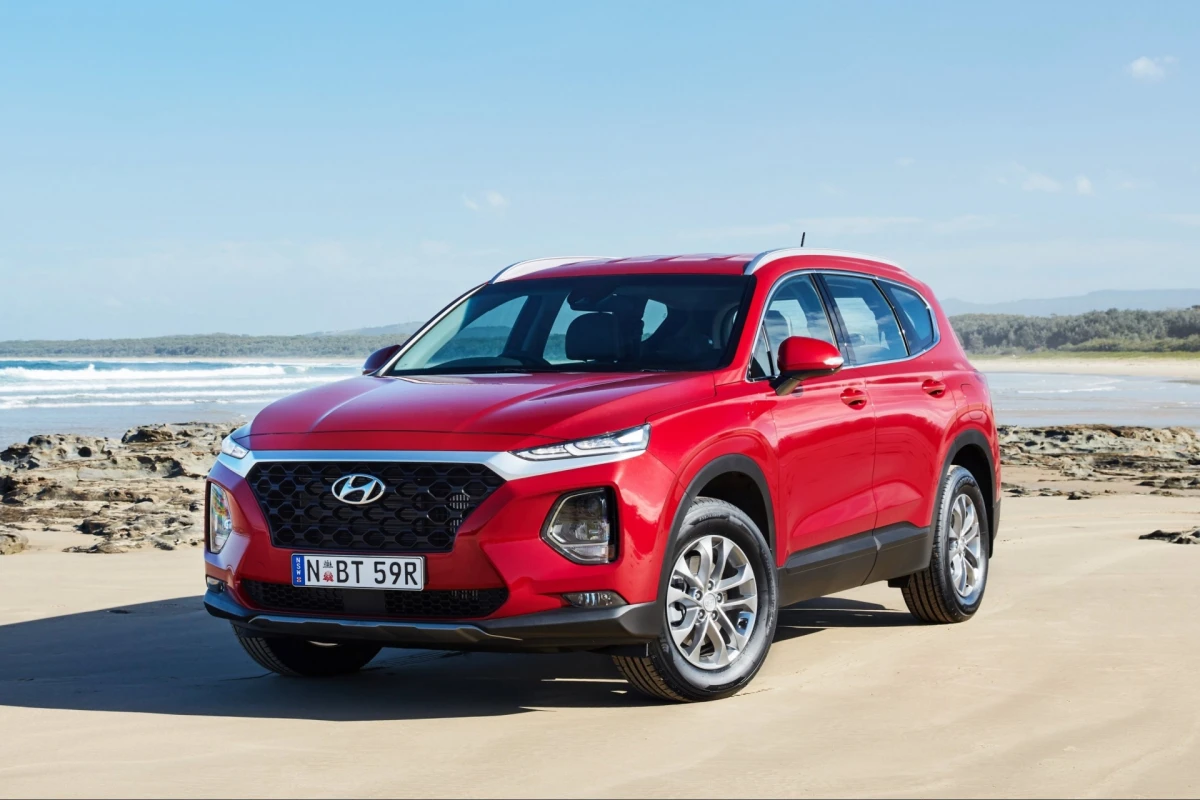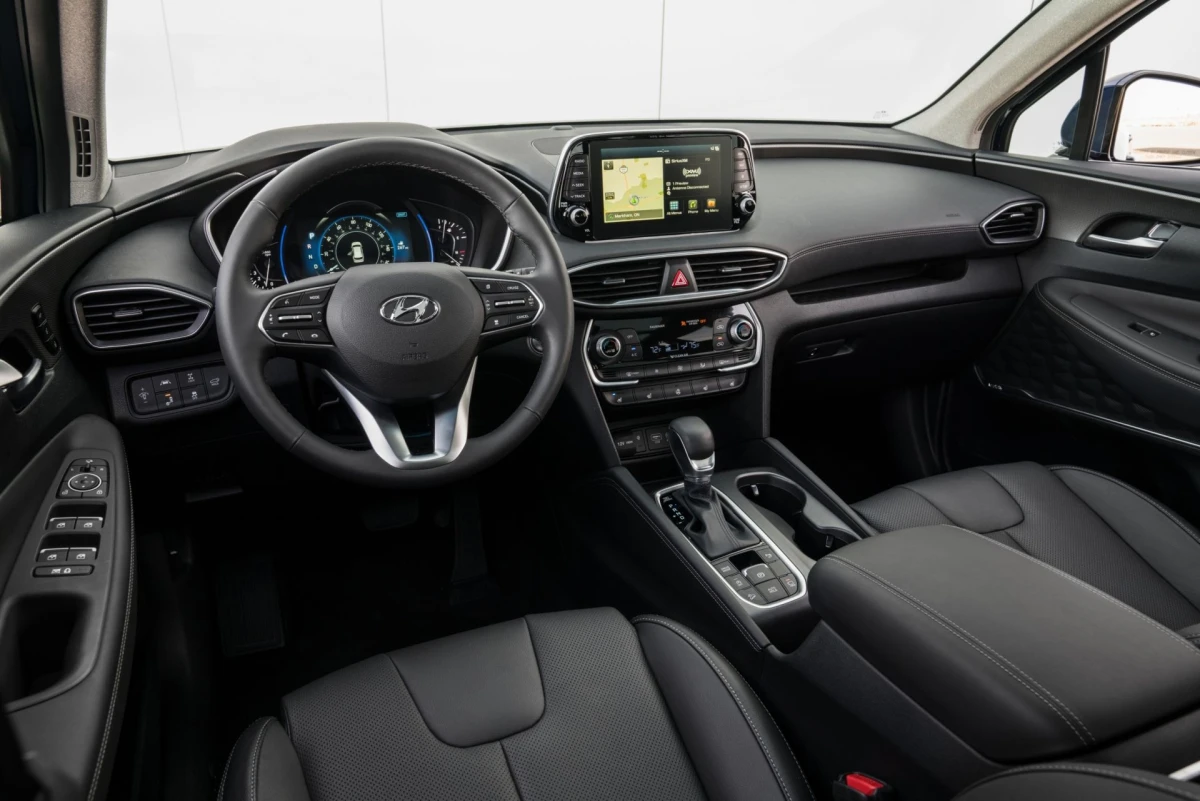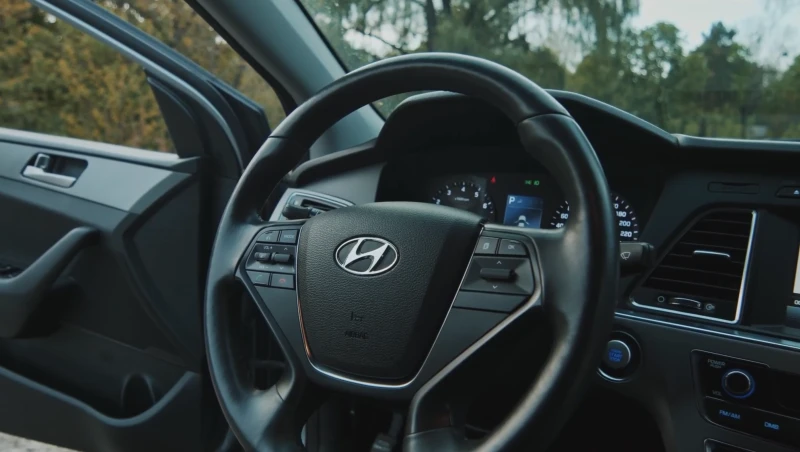
At launch, the Sonata LF interior was one of the model's strongest features, offering modern styling for its era, excellent ergonomics, and impressive equipment levels even in mid-grade trims. The cabin layout, materials and features of the 2014–2019 Hyundai Sonata remain highly relevant topics when shopping for a used midsize sedan today.
Overall Cabin Overview
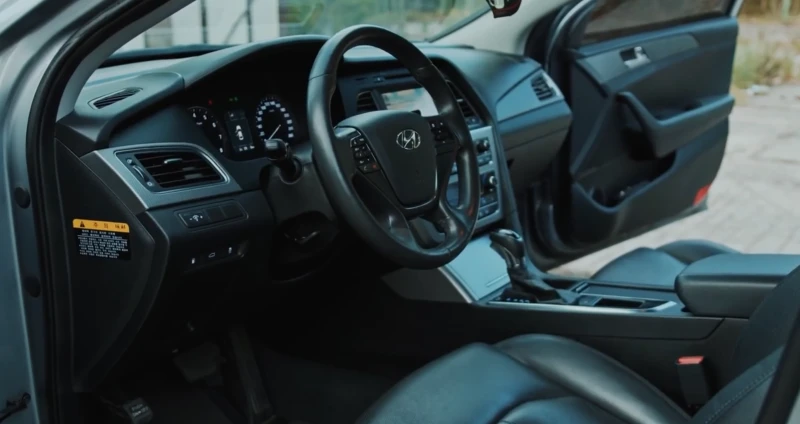
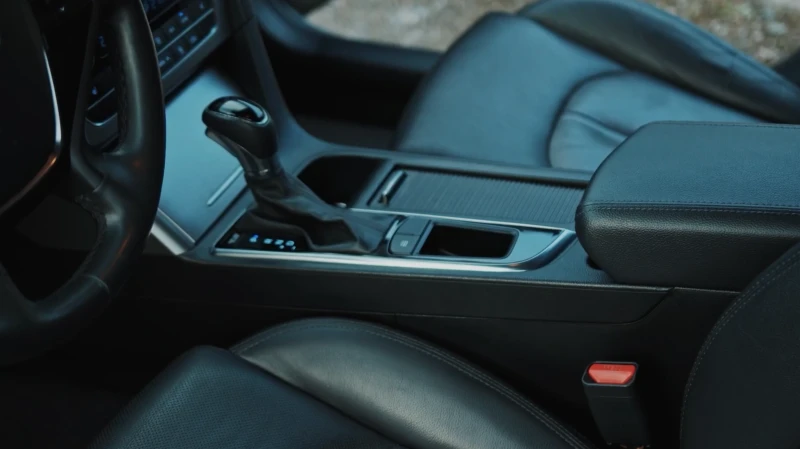
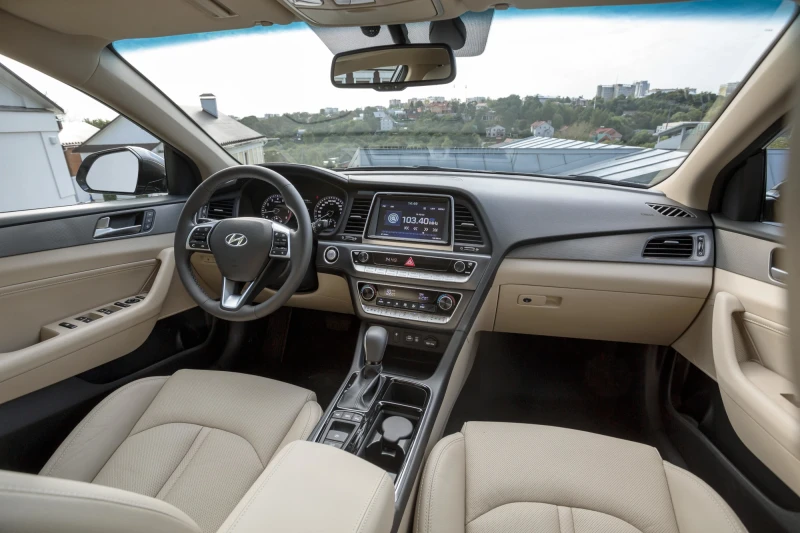
The interior follows classic mid-2010s Hyundai design language: flowing lines, a driver-focused "wraparound" center console, and soft-touch surfaces across the top of the dash in most versions. Lower sections use harder plastics. Top trims (especially Korean and North American builds) feature a mix of soft-touch materials, piano black accents, metallic trim, and available leather upholstery.
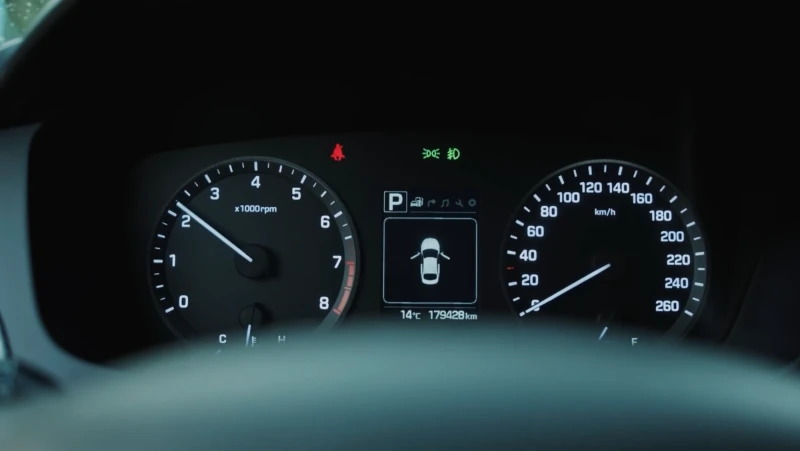
The instrument cluster is analog with a small color driver-information display (4.2" pre-facelift, often 4.2–7" after 2017). The center stack is angled toward the driver, the infotainment screen is raised, and climate controls are logically placed and easy to use. Every Sonata LF came with tilt-and-telescopic steering, while multifunction controls appear from mid-level trims upward.
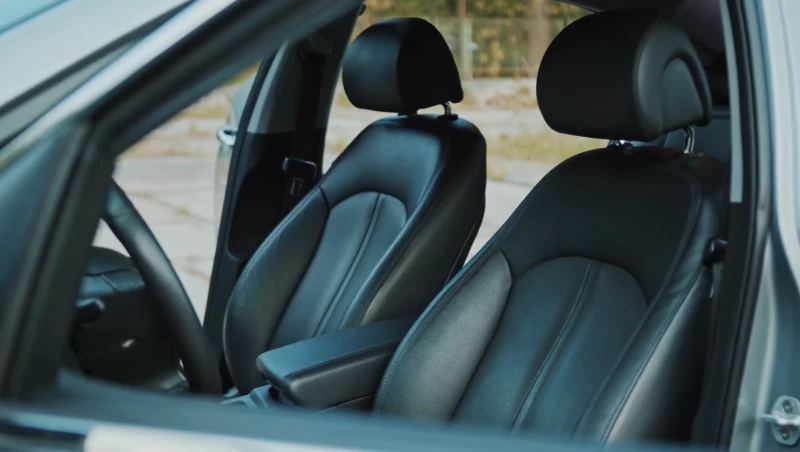
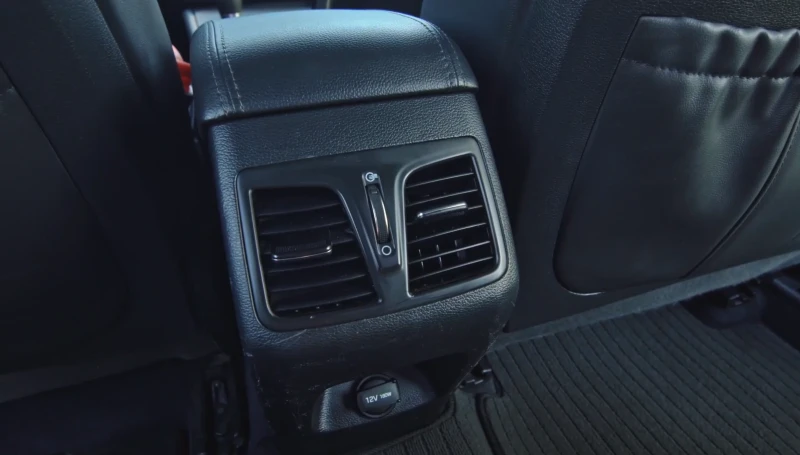
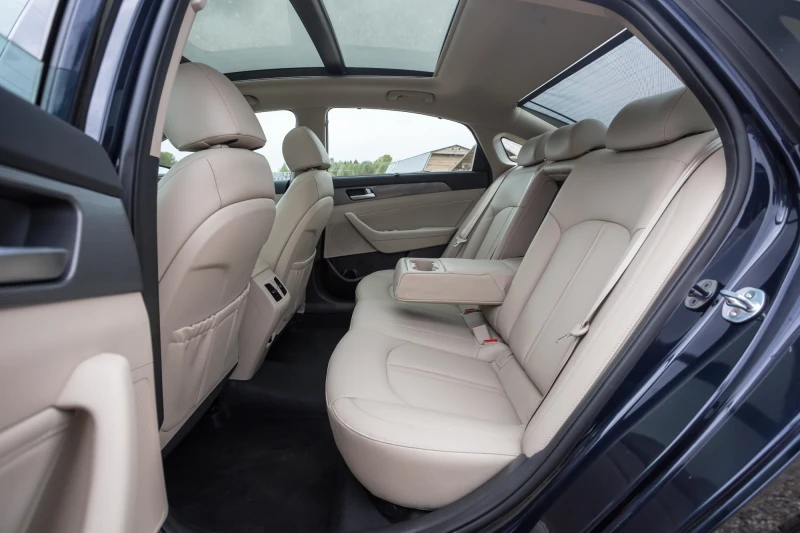
Driver seating position is comfortable with ample adjustment range. Front seats offer solid side bolstering in higher trims; base versions are more basic. Rear legroom is generous for the class thanks to the 110.4-inch (2805 mm) wheelbase—comfortable for two adults. The center tunnel is moderate, and footroom is adequate. A fifth passenger will feel cramped due to the high tunnel and protruding center armrest.
Trunk volume is 16.3 cubic feet (510 liters VDA) with a practical shape, wide opening, and low load floor. A compact spare is located under the floor in most versions (some have a tire repair kit). The 60/40-split rear seatbacks fold nearly flat. Everyday usability is excellent: abundant storage cubbies, cupholders, a large glovebox, and deep door pockets.
Trim Levels Commonly Found in the US Market
On the American used market, most LF Sonatas are North American–spec vehicles (built in Alabama or imported from Korea). Typical trim levels you’ll encounter:
- SE / Eco / Base — entry and mid-level trims: cloth upholstery, single-zone or dual-zone automatic climate control, 7-inch touchscreen audio, rearview camera, parking sensors, six airbags, heated front seats and mirrors.
- Sport / Limited (pre-2018) / SEL — very common mid-to-high trims: leather or leatherette seating, dual-zone climate, 8-inch touchscreen, heated steering wheel and rear seats (on many), keyless entry & push-button start, power driver’s seat.
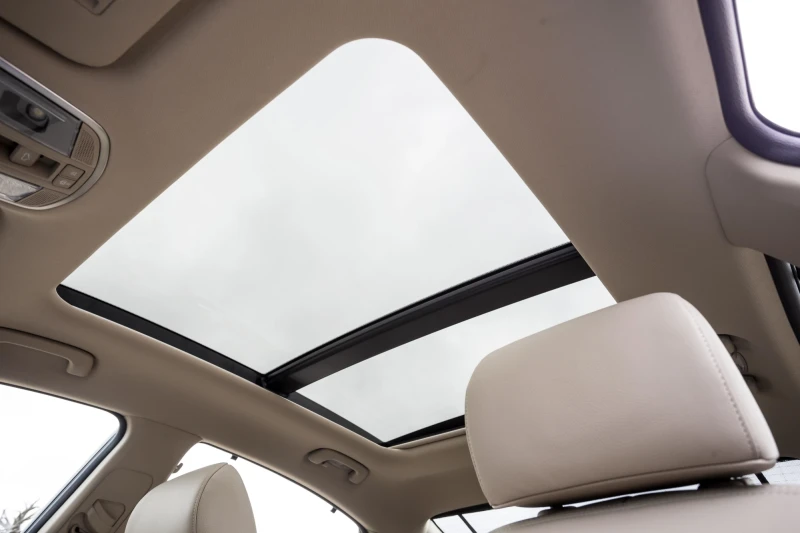
- Limited / Ultimate — top trims (mostly 2016–2019): genuine leather, ventilated front seats, power passenger seat, driver’s seat memory, panoramic sunroof, Infinity premium audio, interior LED ambient lighting, Adaptive Cruise Control (later facelift models).
A notable characteristic of US-market Sonatas is how frequently you’ll find panoramic sunroofs even on mid-level trims (SEL/Limited and above), along with leather seating and rear-seat heating—features less common in base European equivalents of the era.
Interior Changes by Year & 2017 Facelift
2014–2016 (pre-facelift): flowing wave-shaped center console, 7–8" infotainment screen, 4.2" driver display. Materials feel solid overall, though hard plastics are noticeable on door cards and lower console. Noise insulation is average.
The 2017 facelift brought several meaningful updates:
- revised center console shape and air vents;
- new steering wheel and shift knob design;
- 8" touchscreen more common, with Apple CarPlay & Android Auto added on later builds;
- improved sound deadening and vibration control (extra insulation in floor, doors, and firewall areas);
- higher-quality stitching on leather surfaces and reduced use of scratch-prone piano black trim.
Facelifted 2017–2019 models dominate the US used market and typically command higher prices due to noticeably better cabin refinement and more modern tech integration.
Common Owner Complaints & Interior Weak Points
Typical issues reported by US owners on forums and during inspections:
- Driver’s seat side bolsters wear (especially at 110,000–155,000 miles / 180–250k km);
- Rattles from door panels and center console after 5–7 years;
- Scratches and wear on piano black trim and steering wheel buttons;
- Panoramic sunroof issues: sticking shade, seal leaks (more common in regions with heavy road salt use);
- Limited rear-seat side support when carrying three adults;
- Restricted rear visibility due to thick pillars and low window line;
- Fast wear of leatherette on armrests and door grab handles under heavy use.
American road conditions, winter salt, and long highway commutes accelerate wear on seals, faux leather, and trim pieces. Still, with regular care the cabin holds up well even at high mileage.
Conclusions & Relevance in 2026
In 2026, the 2014–2019 Hyundai Sonata (LF) interior still feels reasonably modern for a 7–12-year-old midsize sedan—especially in post-2017 facelifted examples. The layout, ergonomics, and feature content let it hold its own against many newer entry-level models.
The best value on the US used market tends to be 2017–2019 SEL or Limited models equipped with leather, dual-zone climate, panoramic sunroof, and smartphone-integrated infotainment. Top-tier Limited/Ultimate versions are worth the premium only if condition is excellent and the price gap is no more than 15–20% over a well-equipped SEL.
When shopping for a used Sonata LF, pay special attention to:
- Condition of the driver’s seat bolsters and cushion support;
- Smooth operation and no leaks from the panoramic sunroof;
- Absence of interior rattles over bumps;
- Preservation of glossy trim pieces and button wear;
- Functioning infotainment with CarPlay/Android Auto (post-2017 models);
- Any musty odors or water stains (especially under carpets or around the sunroof).
With proper maintenance and careful selection, the cabin of the Hyundai Sonata LF remains one of the strongest selling points for this model on the American used car market in 2026.