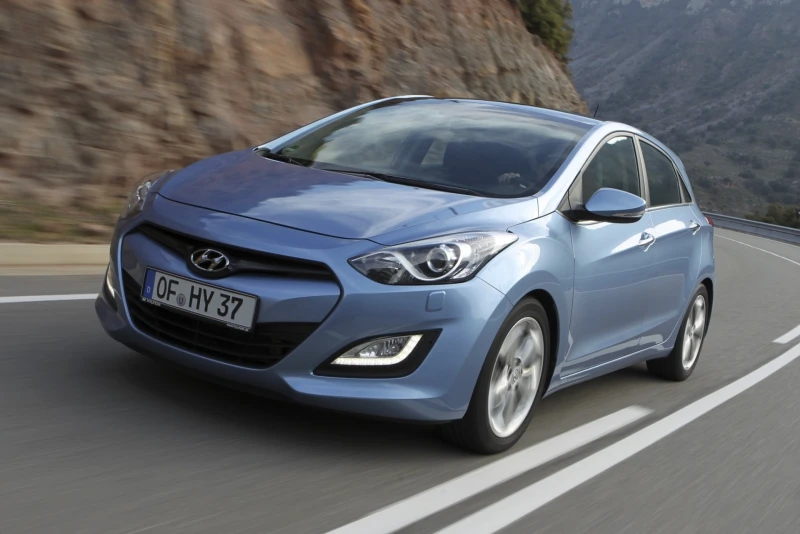
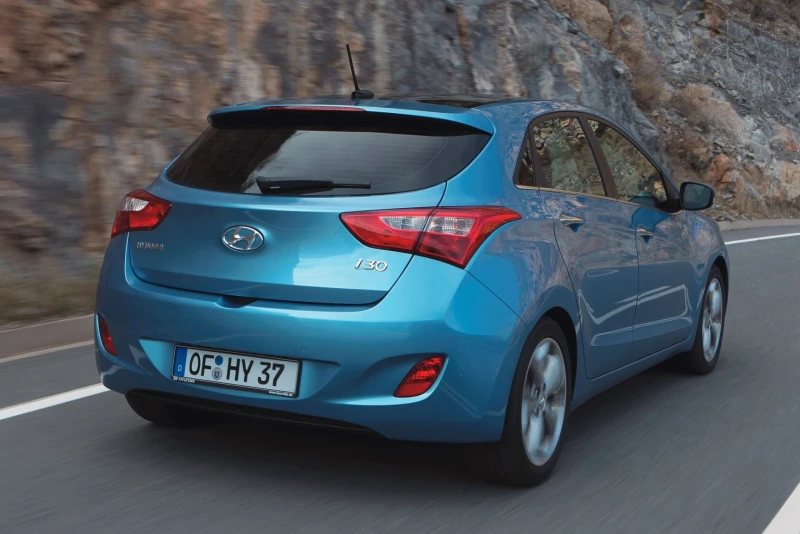
The Hyundai i30 second generation (GD) was produced from 2011 to 2017. It is a fully discontinued generation, with production ending in 2017 following the launch of the third generation (PD). European sales of the five-door hatchback began in late 2011, with availability expanding to other markets in the following years. The majority of used examples found in the United States were built at the Nošovice plant in the Czech Republic, while a smaller number are Korean-built.
The vehicle is based on the Hyundai-Kia J-platform (internal designation PB), which also underpins the Kia cee'd JD. Compared to the first generation (FD), torsional rigidity increased by approximately 50%, noise and vibration levels were significantly reduced, and the rear suspension was completely redesigned into a multi-link setup.
In Hyundai’s lineup, the i30 II served as the brand’s primary C-segment compact hatchback aimed at international markets. Its main rivals at the time included the Volkswagen Golf VI/VII, Ford Focus III, Opel/Vauxhall Astra J, Toyota Auris, Peugeot 308 II, and Kia cee'd JD. The GD-generation i30 became one of Hyundai’s strongest performers in Europe before the arrival of the PD.
What’s New Compared to the Previous Generation
The Hyundai i30 II (GD) introduced several major improvements over the first generation (FD, 2007–2012):
- New body structure with ~50% higher torsional rigidity;
- Multi-link rear suspension instead of the twist-beam used on most FD models;
- Fluidic Sculpture design language, styled by Hyundai’s European design center in Rüsselsheim under Thomas Bürkle;
- Substantially better cabin and engine bay sound insulation;
- New Gamma family gasoline engines (1.4 & 1.6 MPI, 1.6 GDI) and updated U-II / R diesel engines;
- Shift to 6-speed manual and automatic transmissions (previously 5- and 4-speed);
- After the 2015 facelift — introduction of the 1.4 T-GDI turbo, 7-speed DCT, Lane Departure Warning, and Autonomous Emergency Braking (on select markets).
As a result, the car became noticeably quieter, more refined, and more enjoyable to drive.
Current Status of the Generation
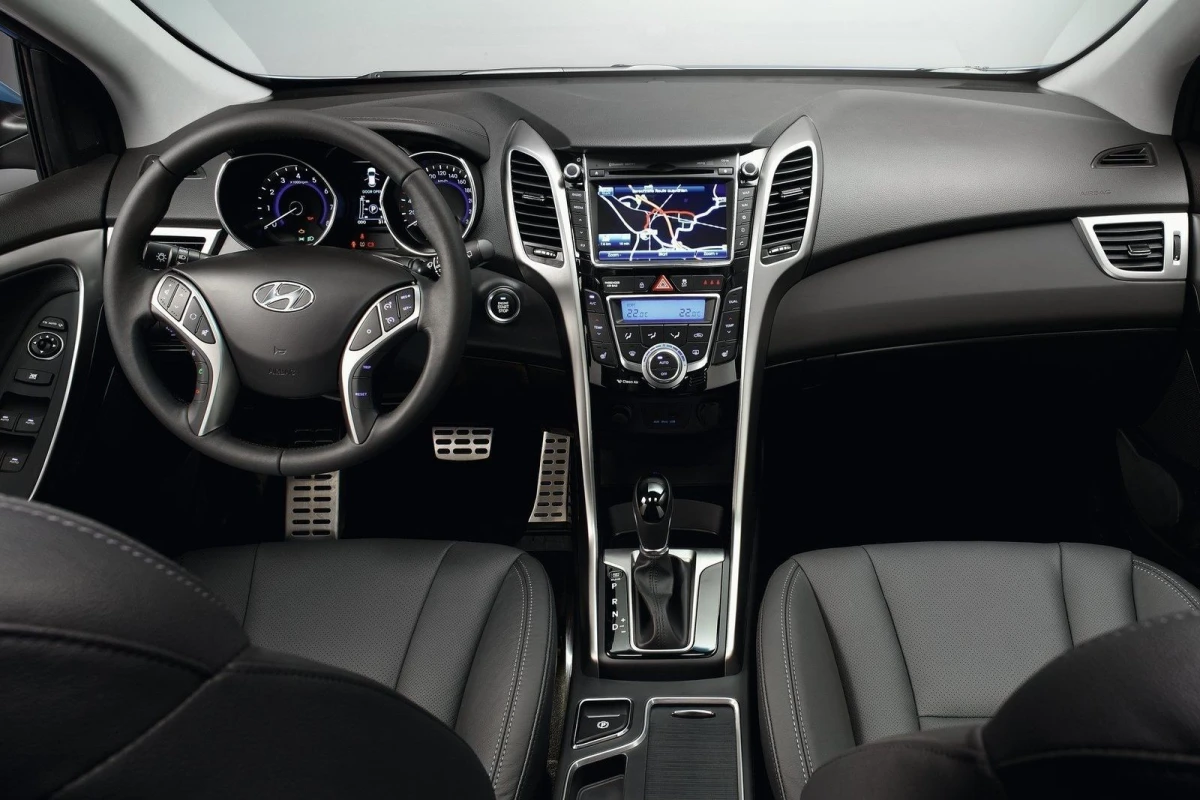
Production of the i30 GD ended in spring 2017, with the last units built in April–May. The 2015 facelift brought updated front headlights with LED daytime running lights, revised grille and bumpers, new taillights, updated steering wheel, and an improved infotainment system. New powertrains included the 1.4 T-GDI (140 hp) and 7-speed dual-clutch transmission (mainly in Europe).
On the used market, the most desirable and liquid variants are:
- 1.6 CRDi (110 hp & 136 hp) — especially post-2015 models;
- 1.6 MPI (130 hp) with manual or automatic;
- 1.4 MPI (100 hp) — the most affordable and trouble-free;
- 1.6 GDI (135 hp) direct-injection naturally aspirated engine — less common.
Used Market in the United States
As of early 2026, the Hyundai i30 II (GD) remains a relatively rare sight on the US used market compared to more mainstream compact cars, as it was never officially sold in North America. Most examples are gray-market imports, primarily 2015–2017 facelift models with 60,000–95,000 miles. The bulk of available cars are from the 2012–2016 period with 100,000–190,000 miles.
Approximate market price range in the United States (depending on year, condition, mileage, and trim):
| Year / Condition | Approximate Market Price (USD) |
|---|---|
| 2012–2014, 110,000–190,000 miles | $5,500 – $8,900 |
| 2015–2017, 60,000–110,000 miles | $8,200 – $12,500 |
| 2015–2017 facelift in very good condition | $10,000 – $13,800 |
Approximate market price for the United States
Main Versions and Trims Available in the US Market
The most common trim levels found on imported examples:
- Classic / Base — cloth interior, manual A/C, basic audio, 4 airbags, ABS, power steering, 15" steel wheels. The most budget-friendly option.
- Comfort / Style — A/C or climate control, heated front seats, multifunction steering wheel, Bluetooth, rear power windows, 16" alloy wheels. The most widespread trim.
- Top / Premium / Elegance — dual-zone climate, leather-wrapped steering wheel & shifter, heated steering wheel & rear seats, rearview camera, light & rain sensors, cruise control, 17" alloys, xenon/LED headlights (facelift), navigation (select units).
Interior materials are usually cloth or cloth + faux leather. Infotainment ranges from basic radios to 7–8" touchscreen systems after the facelift. Base models have minimal driver aids; higher trims add ESP, 6 airbags, tire pressure monitoring, and occasionally lane departure warning (post-2015).
Conclusions & Relevance Today
The Hyundai i30 II (GD) remains one of the most sensible choices among used compact hatchbacks and wagons. It suits buyers looking for a reliable, inexpensive-to-maintain, and reasonably comfortable daily driver with excellent value for money.
The best-regarded versions are the 1.6 CRDi diesels (especially the 136 hp post-facelift) and the 1.6 MPI gasoline engines paired with a manual transmission. These offer good longevity, reasonable fuel economy, and adequate performance.
When buying a used Hyundai i30 II, pay special attention to:
- Timing chain and variable valve timing condition on 1.6 GDI engines;
- Dual-mass flywheel and clutch wear on diesel models;
- Rear wheel arch and sill rust (especially pre-2015 cars);
- Rear multi-link suspension bushings and silent blocks — usually wear out by 75,000–95,000 miles;
- Service history and actual mileage (odometer rollback is common).
With proper selection and timely maintenance, a well-kept Hyundai i30 II (GD) can easily add another 100,000–150,000 miles without major issues.