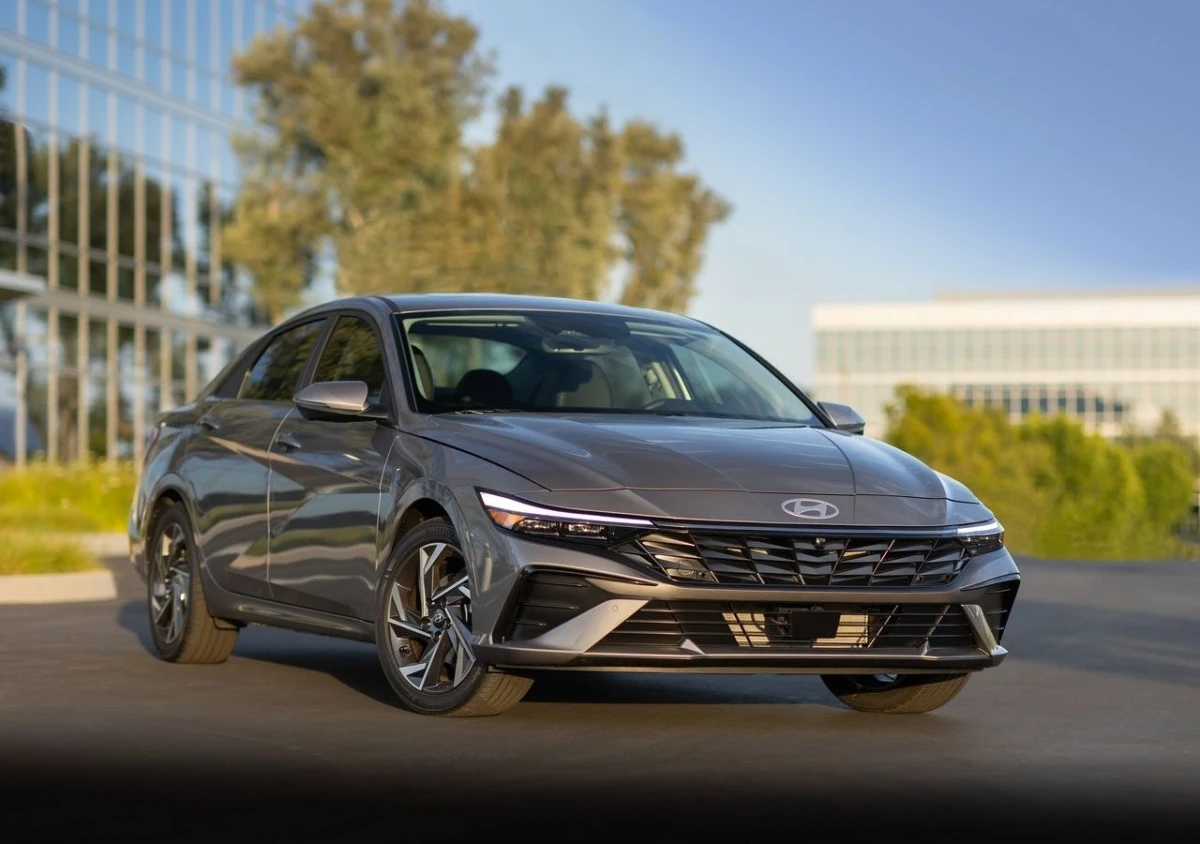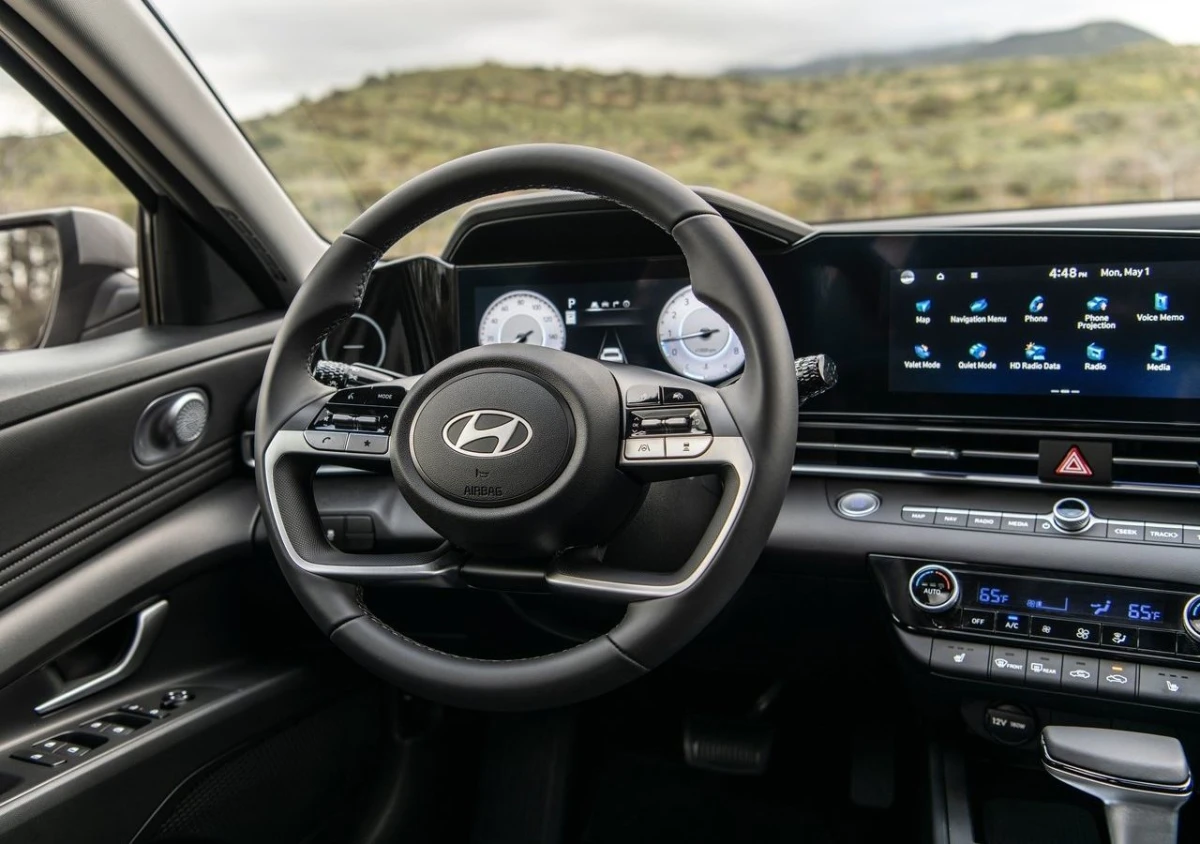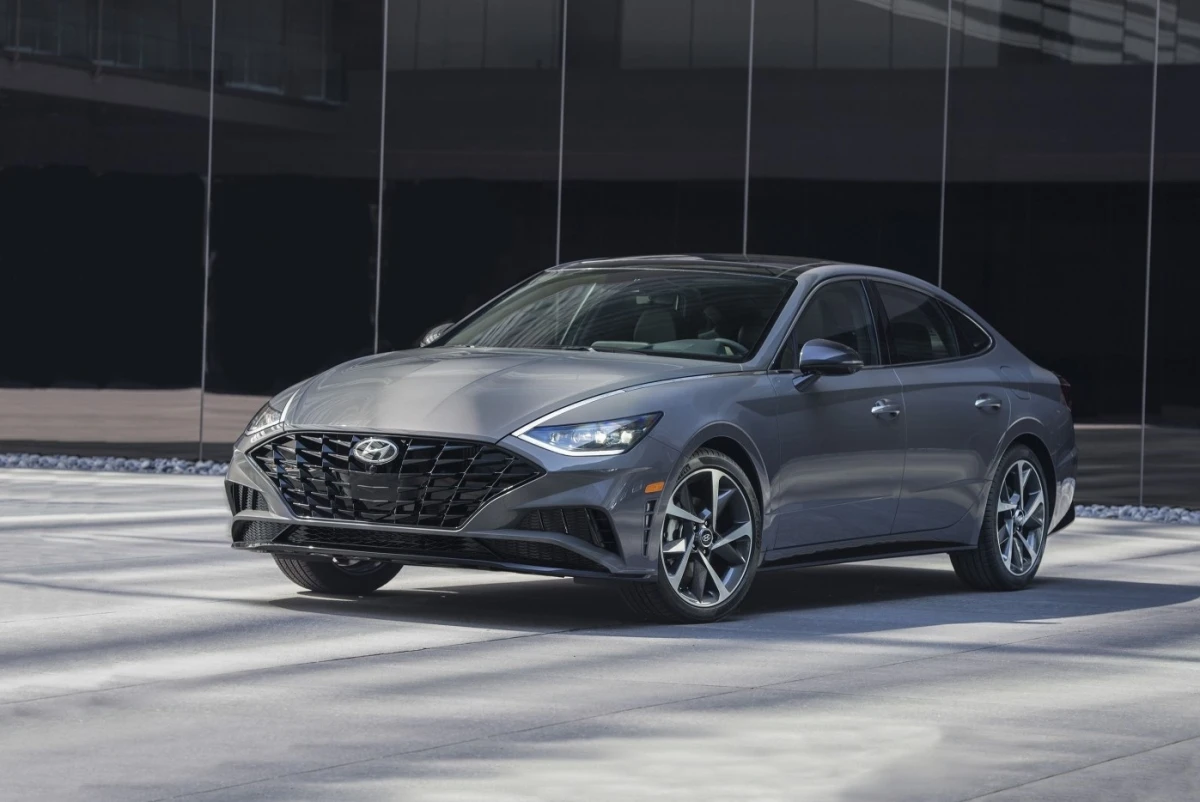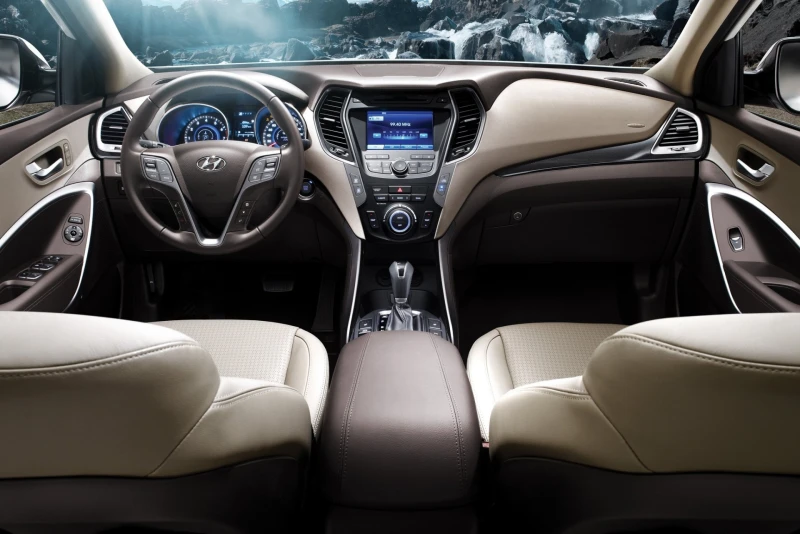
The cabin of the 2012–2018 Hyundai Santa Fe blends contemporary design cues from the early 2010s with functional elements tailored for North American buyers. This article dives into the key aspects of the Santa Fe III interior, covering materials, ergonomics, available trim levels, and year-to-year evolution.
Overall Cabin Overview
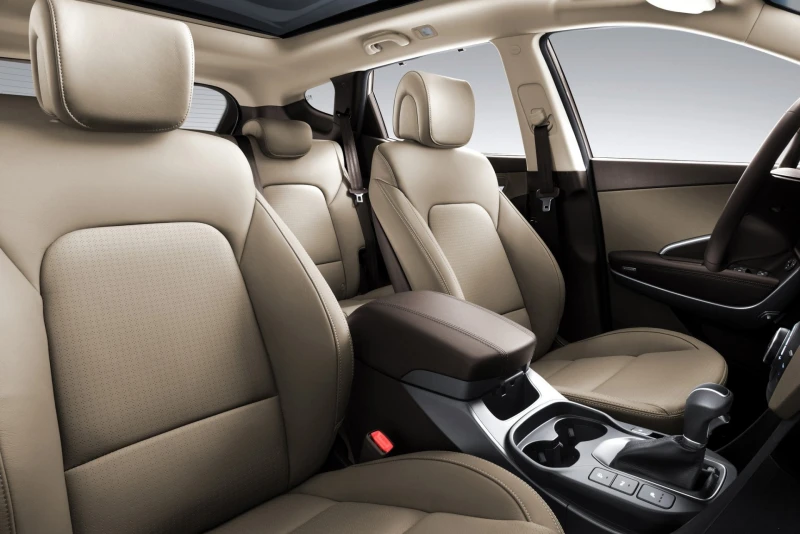
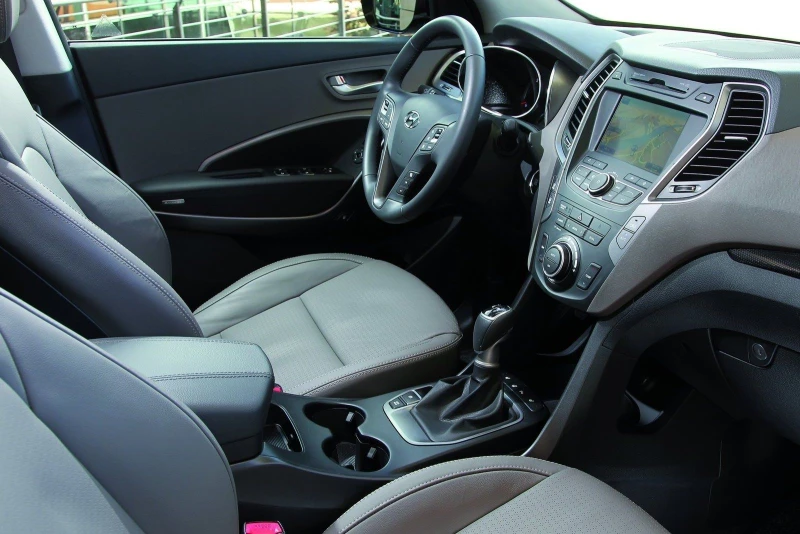
The Santa Fe DM interior follows the typical Korean-car styling of the early 2010s: smooth lines, symmetrical layout, and a strong focus on the center stack. Trim materials feature soft-touch plastic on the upper dashboard, harder plastics lower down, and cloth or leather upholstery depending on the trim. Build quality feels average for the segment — durable for daily use, though wear signs often appear after 90,000–120,000 miles, especially on rough roads or in harsh climates.
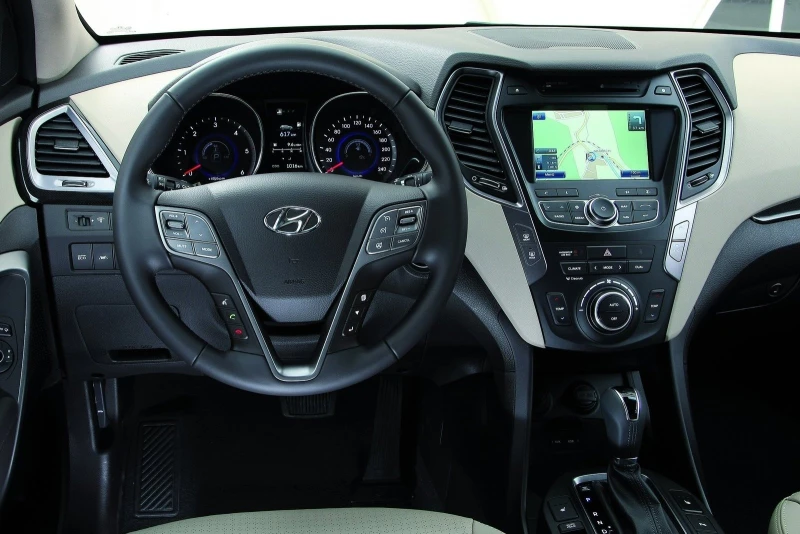
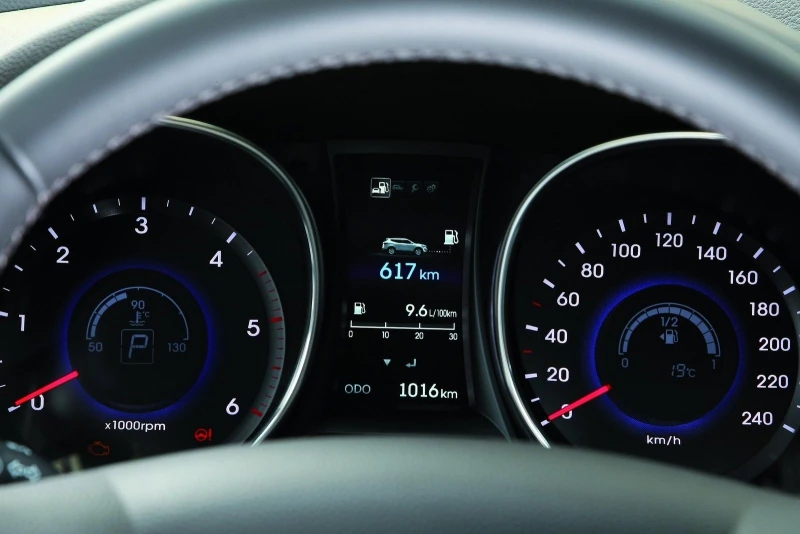
The instrument cluster is analog with Supervision backlighting (upgraded to a digital driver info display in higher trims), while the center console is driver-oriented with climate controls and an infotainment screen ranging from 5 to 8 inches. Driver ergonomics are solid: tilt-and-telescopic steering wheel, good seat adjustment range (power in mid- and top-level trims), and logically placed pedals and shifter. Front-seat comfort is excellent thanks to wide door openings and ample head- and legroom (comfortable for drivers up to about 6'3").
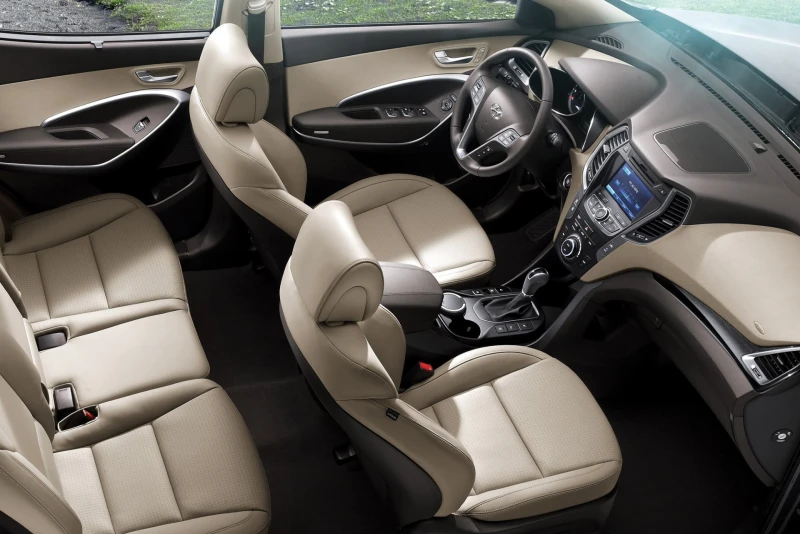
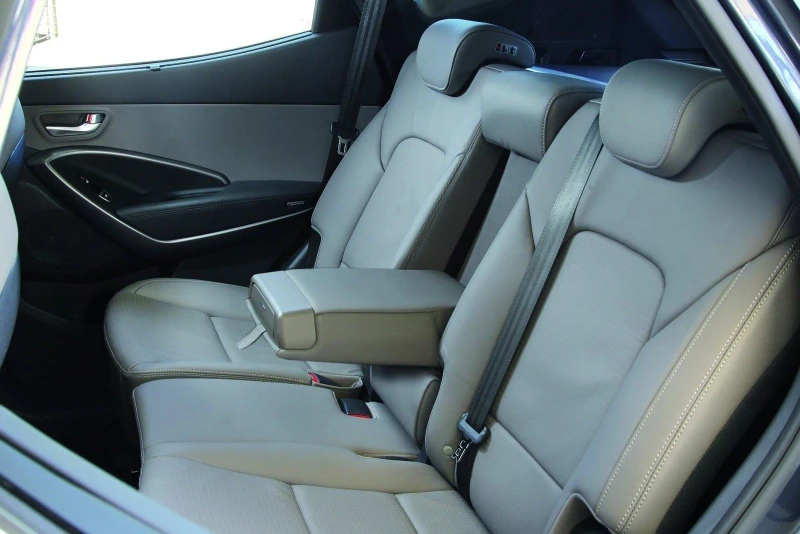
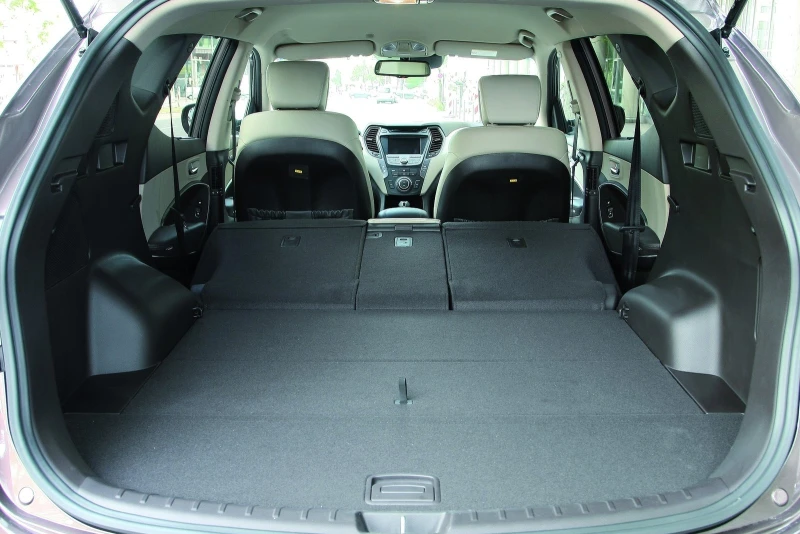
The rear bench accommodates three adults comfortably, with reclining seatbacks and slide function in many versions. In the seven-passenger Santa Fe (long-wheelbase), the third row is best suited for kids or short trips. Cargo space measures about 35.9 cubic feet behind the second row (up to around 71.3 cu.ft. with seats folded) in the five-seater; the longer version offers roughly 13.5/80 cu.ft. The cabin is highly versatile — 60/40-split folding rear seats create a flat floor, plus handy storage cubbies. Everyday usability is strong: great for families, hauling gear, or long highway drives, with noise levels competitive against rivals like the Toyota RAV4 or Honda CR-V.
Trim Levels and Features on the US Market
In the United States, the Hyundai Santa Fe DM was offered in several trims, varying by model year and whether short- or long-wheelbase. Base models (often GLS or SE) typically included cloth upholstery, manual seat adjustments, air conditioning, a basic audio system with CD/MP3 and USB, heated front seats, and six airbags. Mid-level trims (Sport, SE) added dual-zone automatic climate control, leather-wrapped steering wheel, cruise control, rear-seat heating, and a 7-inch infotainment display.
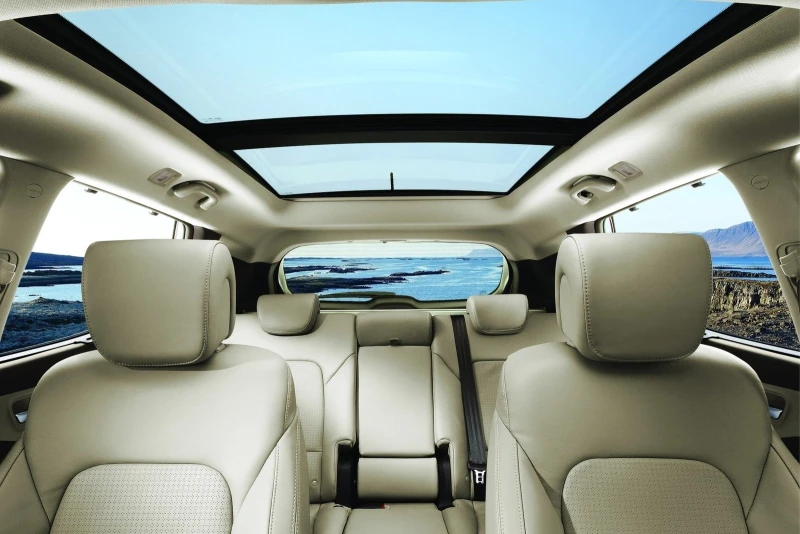
Higher trims (Limited) brought leather seating, power driver's seat, keyless entry/push-button start, rearview camera, parking sensors. Top configurations (Limited Ultimate or Premium packages) featured a panoramic sunroof, ventilated front seats, premium Infinity audio, 360-degree camera system (post-facelift), adaptive headlights. Driver aids included ESC, hill-start/descent assist, and blind-spot monitoring (higher trims). US-market versions often emphasized comfort features suited to American highways and varied weather, with strong standard equipment but no major unique regional adaptations compared to other North American specs.
| Trim Level | Key Interior Features | Additional Options |
| Base (GLS/SE) | Cloth, A/C, basic audio, front heated seats | — |
| Mid (Sport/SE) | Leather-wrapped wheel, dual-zone climate, rear heat, 7" screen | Cruise, rear camera |
| Advanced (Limited) | Leather, power seats, keyless access | Parking sensors, blind-spot monitoring |
| Top (Limited Ultimate) | Ventilated seats, panoramic roof, Infinity audio, surround-view camera | Adaptive headlights, wood accents |
US versions often included packages for comfort on long drives, though ground clearance remained standard without major off-road-focused changes to the interior.
Interior Evolution by Year and Facelift
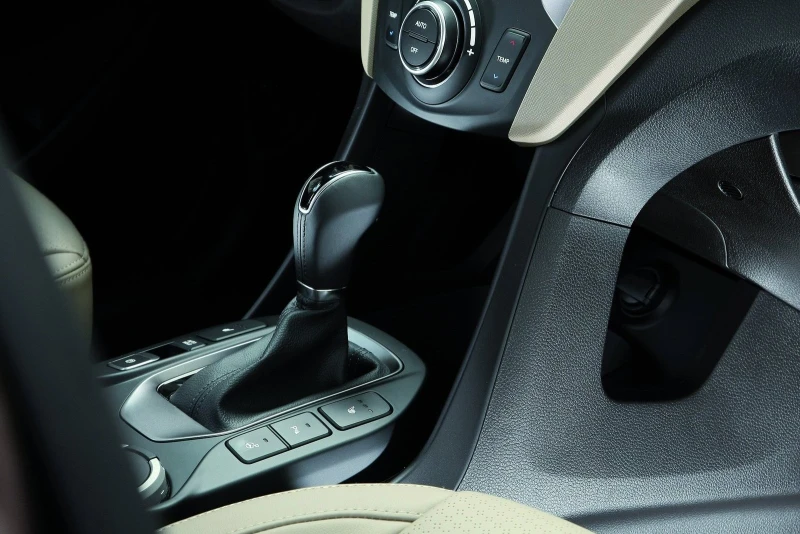
Early models (2013–2014) featured basic sound insulation, analog gauges, and infotainment screens of 5–7 inches. Cabin colors were mostly black or beige, with minimal premium accents. The 2015 facelift brought meaningful upgrades: redesigned center stack with an 8-inch display, refreshed gauge graphics, better noise insulation (added door and floor mats), and a joystick-style shifter in some versions. Materials improved — softer plastics and more chrome trim.
From 2016–2018, features like Apple CarPlay and Android Auto appeared in higher trims, along with expanded upholstery color choices (gray, brown). On the used market, pre-facelift models are more affordable but feel simpler; post-facelift versions offer better tech and comfort, making them more desirable and holding value better in the American secondhand market.
Common Questions and Interior Drawbacks
One characteristic of the Santa Fe III cabin is creaks and rattles in the dash on bumpy roads — more noticeable in pre-facelift cars. Material wear shows up as cloth seats pilling after ~60,000 miles, or leather cracking in extreme heat/cold. Weak spots include steering wheel trim peeling, armrests, and door panels getting scratched. Road and suspension noise can intrude more in earlier models, though improved after the 2015 update.
Rear-seat space is generous for adults, but the third row in longer models remains tight for grown-ups. Visibility is average due to thick pillars, though cameras help. Light interiors soil easily, and plastic needs regular care. In typical US conditions (dust, winter salt in some regions), minor corrosion can affect sills and indirectly impact the cabin. Used examples may carry prior-owner odors or wear from kids/pets.
Final Thoughts and Current Relevance
In 2026, the Santa Fe DM interior feels dated next to newer models (analog gauges, smaller screens), but it remains highly practical for family use. The best value on the American used market today lies in post-facelift High-Tech or Premium equivalents (roughly 2016–2018), offering leather, ventilation, and updated infotainment at an approximate market price of $12,000–$18,000 depending on condition and mileage.
When shopping for a used example, inspect the cabin closely: check for cracked leather, functioning infotainment (screens can burn-in), steering wheel/seat wear, odors, and overall cleanliness. Test noise levels on the road, seat folding, and all features (panoramic roofs can leak over time). Overall, the interior holds up well in the sub-$20,000 budget for buyers seeking reliable, no-nonsense family transportation.