


On the US market, specific engine and transmission combinations dominated sales, and these are the versions most commonly found on the used-car market today. This article details the technical specifications of the third-generation Hyundai Santa Fe, covering engines from 2012–2018, dimensions, updates, and key operating characteristics relevant to American conditions.
A full review of exterior and interior design, trim levels, and typical issues of this generation is available in other articles in the series.
Engines and Transmissions
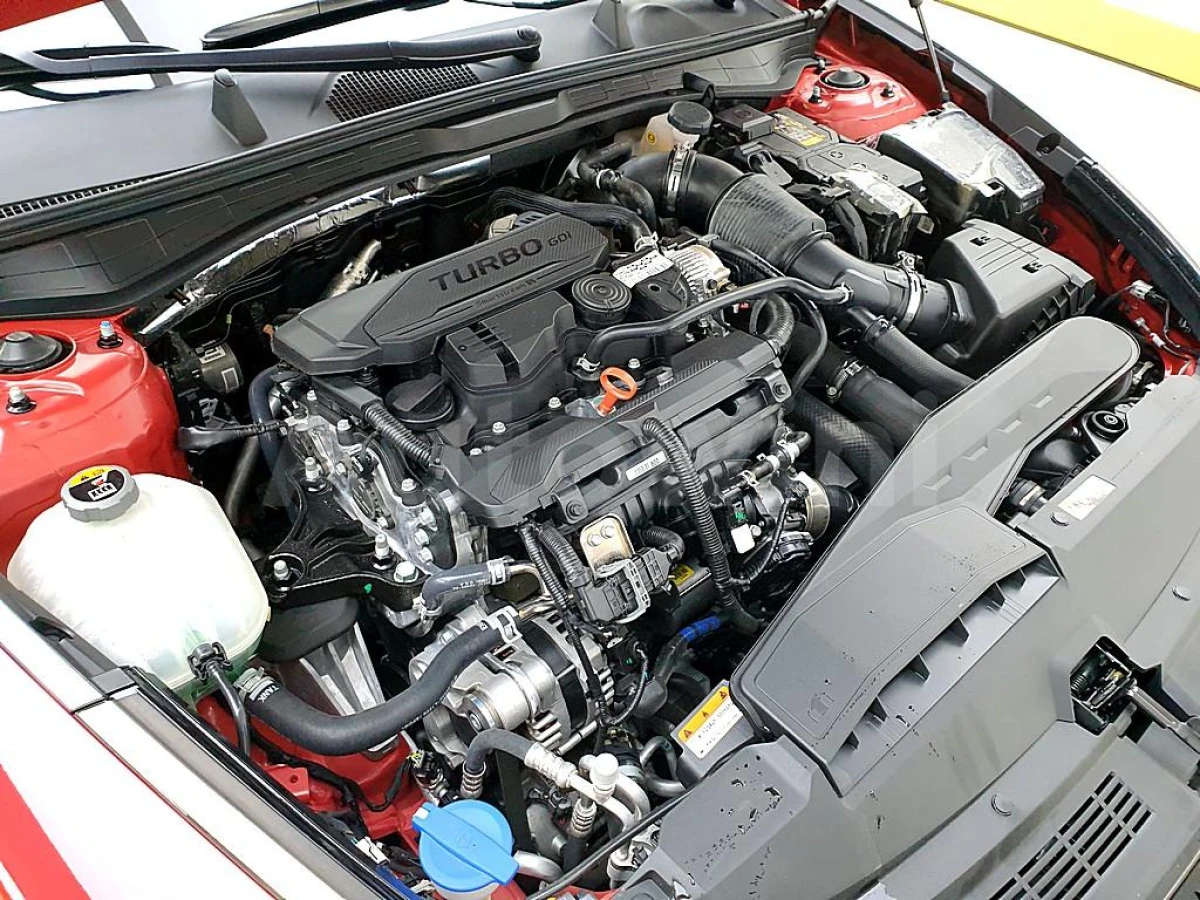
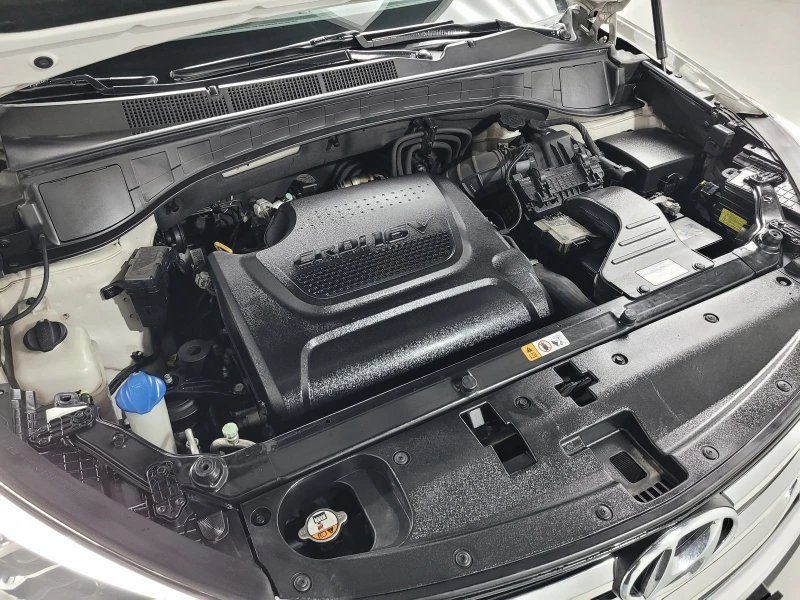
Several powertrain options were offered for the Hyundai Santa Fe DM. For the North American market (including the United States), the main choices were the naturally aspirated 2.4L gasoline engine and – in limited numbers – the 2.0L turbo gasoline later on. The 2.2L turbodiesel was far less common in the US, mostly appearing on vehicles imported from other markets. The powerful 3.3L V6 was primarily found in models originally intended for Korea or other regions and remains relatively rare in the US.
After the 2015 facelift, the available engines saw minor changes: some gasoline variants received direct injection, while diesel versions (where present) were officially rated slightly higher at around 200 hp.
| Fuel Type | Displacement & Code | Power, hp | Torque, lb-ft | Transmission | Drivetrain | Period / Notes |
| Gasoline | 2.4L Theta II G4KE | 175–190 | 169–181 | 6-speed Manual / 6-speed Auto | FWD / AWD | 2012–2018, most common in US |
| Gasoline | 2.4L Theta II G4KJ GDI | 190 | 181 | 6-speed Auto | AWD | After 2015, direct injection |
| Diesel | 2.2L CRDi D4HB | 197–200 | 322–325 | 6-speed Auto | AWD | Rare in US, mostly imports |
| Gasoline | 3.3L Lambda II V6 | 290 | 252 | 6-speed Auto | AWD | Rare, mainly imported |
In the US, most examples feature HTRAC all-wheel drive and the 6-speed automatic transmission (A6LFx family). Manual transmissions were offered only with the 2.4L gasoline engine in very limited numbers.
Dimensions and Weight
Dimensions of the Hyundai Santa Fe DM varied slightly depending on whether it was the standard 5-seat version or the longer Grand Santa Fe (7-seat, NC code), but differences were small. Below are the most typical figures for the standard 5-seat model and the Grand Santa Fe.
| Parameter | Santa Fe DM (5 seats) | Grand Santa Fe (7 seats) | Notes |
| Length, in | 184.6 | 193.1–193.5 | Slight variation after facelift |
| Width, in | 74.0 | 74.2 | Without mirrors |
| Height, in | 66.1 | 66.5–66.7 | With roof rails +0.8–1.2 in |
| Wheelbase, in | 106.3 | 110.2 | — |
| Curb Weight, lb | 3810–4180 | 4250–4500 | Depends on trim and engine |
| Gross Weight, lb | 5290–5510 | 5730–5950 | — |
| Ground Clearance, in | 7.3 | 7.3 | Manufacturer spec; real-world ~6.7–7.1 |
Figures are averaged across the most common US-market versions.
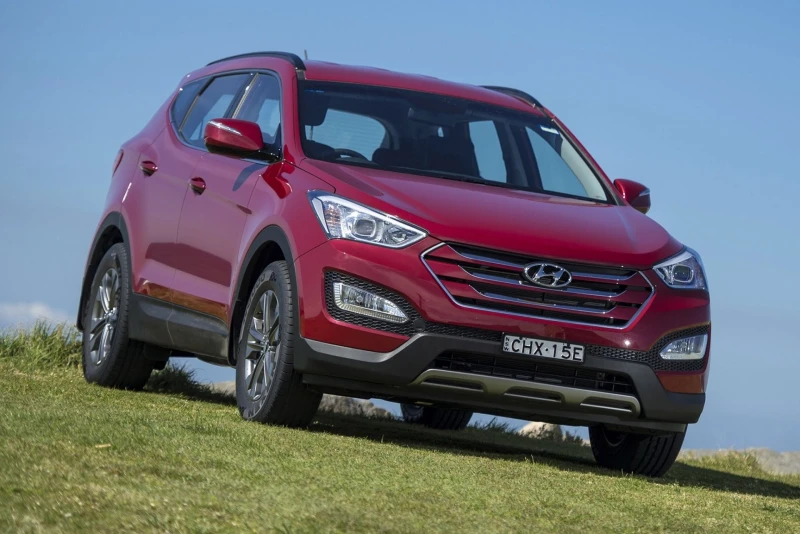
Yearly Changes and 2015 Facelift
The Hyundai Santa Fe DM received one major facelift in 2015. Pre-facelift models (2013–2015 in the US) offered:
- 2.4L gasoline 175–190 hp (G4KE/G4KJ) with 6-speed manual or automatic, FWD or AWD;
- limited availability of other engines in imported examples.
After the 2015 facelift (2016–2018 model years):
- updated front and rear styling;
- improved interior materials and noise insulation;
- refined suspension tuning for better ride comfort;
- more widespread use of direct-injection gasoline engines (GDI) in some trims;
- small improvements to fuel economy and transmission shift logic.
Post-facelift models (2016–2018) are generally considered the most desirable on the US used market due to the updated styling, better features, and fewer early-production issues.
Ownership Experience and Technical Notes
The most common and popular version on the US used market is the 2.4L gasoline engine with 6-speed automatic and all-wheel drive. This powertrain is regarded as relatively reliable with proper maintenance (oil changes every 5,000–7,500 miles, monitoring of timing chain stretch after 110,000–140,000 miles, attention to cooling system condition). The 2.2L diesel (when present) is durable if serviced on schedule, but far less common in the US.
According to US owner forums, real-world fuel economy is approximately:
- 2.4L gasoline — city 18–21 mpg, highway 24–28 mpg, combined 20–24 mpg;
- 2.2L diesel (imports) — city ~22–26 mpg, highway 30–34 mpg, combined 25–29 mpg.
The 6-speed automatic (A6LF1/2/3) benefits from fluid changes every 40,000–60,000 miles after high mileage. HTRAC AWD is generally robust, though the coupling and driveshafts may need attention after 110,000–150,000 miles.
Parts availability is excellent (both OEM and aftermarket), and maintenance costs are moderate for the class. Repair shops are very familiar with the platform.
Summary and Best Choice for the US Market
The most balanced and popular choice on the American used market is the 2.4L gasoline engine (post-2015 facelift preferred) with 6-speed automatic and all-wheel drive. This combination offers decent performance, acceptable fuel economy for the class, strong resale value, and reasonable ownership costs when service history is clear. Versions with the 3.3L V6 are faster but much thirstier and harder to find.
When shopping, pay special attention to the condition of the timing chain (gasoline), transmission fluid history, AWD system, and any signs of previous accident repairs. Post-2015 models typically have fewer issues and hold value better.