


On the US used car market as of 2025–2026, this model remains popular and widely available. It made its official debut in Europe in summer 2017, with first customer deliveries starting that fall. In many markets, including North America, new examples reached dealerships starting in 2018.
The Kona is built on the front-wheel-drive Hyundai-Kia K3 platform (sometimes called PB), shared with the third-generation Hyundai i30 and Kia Ceed. Within the Hyundai lineup, the Kona slots in as the most compact crossover — positioned below the Tucson and above the Venue in regions where the Venue serves as the entry-level model.
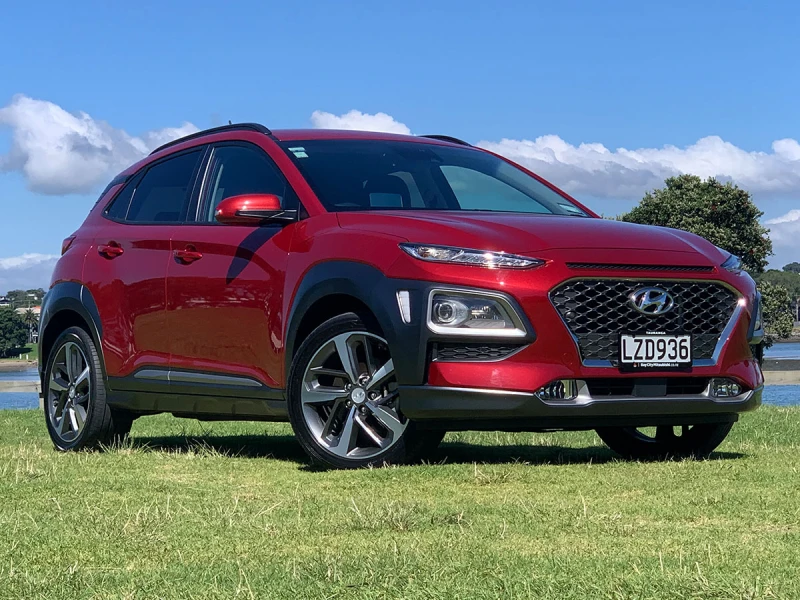
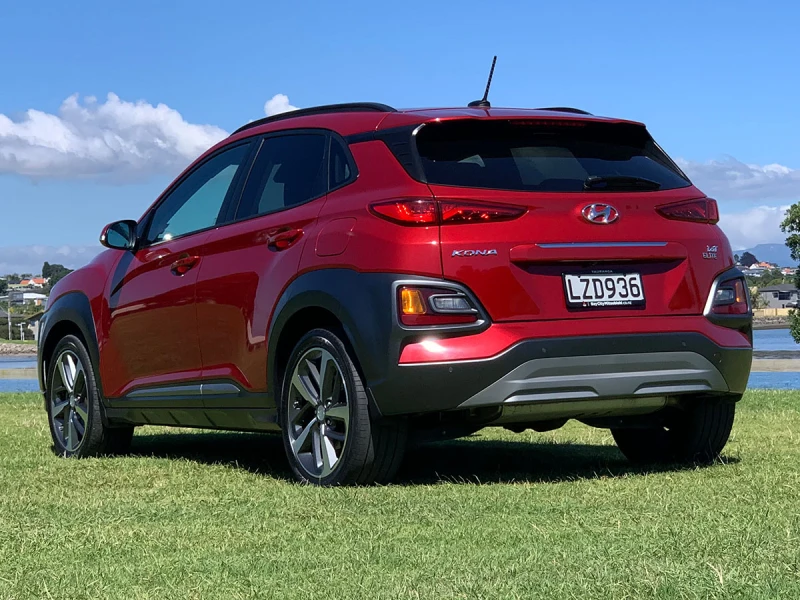
The standout visual signature of this generation is the bold “cascading” front-end design with dual-level headlights: daytime running lights and turn signals sit in the upper tier, while low/high beams are housed below. The rear lights feature a split layout with distinctive C-shaped elements. Short overhangs, a high beltline, and prominent plastic wheel arch cladding give it a rugged, crossover-like stance despite its primarily urban focus.
What’s New Compared to Earlier Models
The first-generation Hyundai Kona (OS) had no direct predecessor in Hyundai’s subcompact B-SUV segment. Comparisons are therefore made to the brand’s overall evolution and key rivals of the era (Renault Captur, Peugeot 2008 I, Nissan Juke I/II, Opel/Vauxhall Crossland, and others).
Compared to earlier Hyundai compact crossovers (ix35, previous Tucson generations), the Kona brought:
- a much bolder, more youthful exterior design;
- the new modular K3 platform with multi-link rear suspension on higher trims;
- a wide range of turbocharged gasoline engines (1.0 T-GDI, 1.6 T-GDI);
- the introduction of a full N Line performance package with stiffer suspension and sporty body kit (from 2018);
- early adoption of advanced driver-assistance systems (Forward Collision-Avoidance Assist, Lane Keeping Assist, etc.) even in mid-level trims;
- the Kona Electric variant (2018) — one of the first mainstream battery-electric B-SUVs available in key markets.
Current Status of the Generation
Production of the first-generation Kona (OS) officially ended in 2023 with the arrival of the second generation (SX2 index). However, a large number of 2018–2023 examples, including post-2020 facelift models, remain widely available on the used market.
The 2020 facelift introduced:
- revised front grille and bumper design;
- updated rear light graphics;
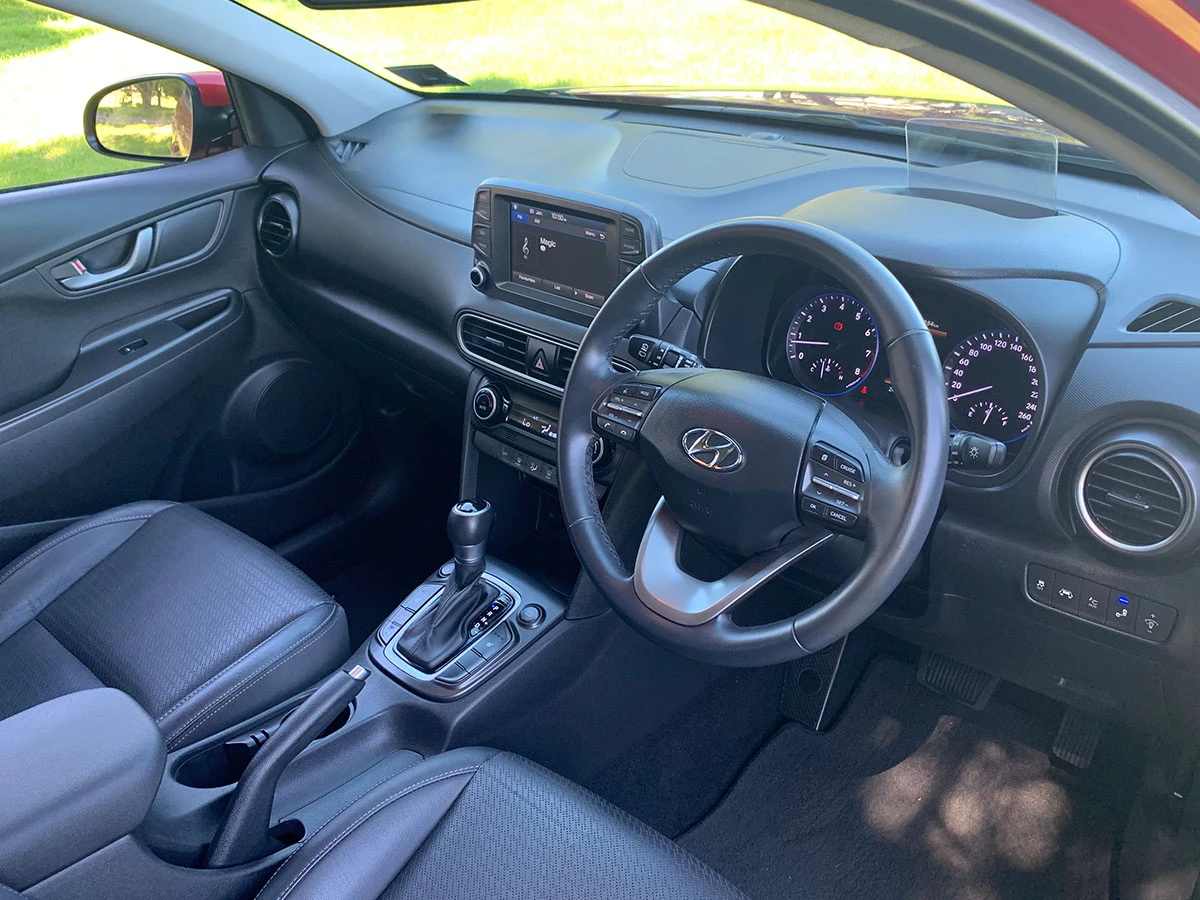
- refreshed climate control and infotainment interfaces;
- expanded standard safety features (including blind-spot monitoring on higher trims);
- minor engine lineup tweaks (in some markets, the 1.6 T-GDI with 7-speed DCT was gradually replaced by an improved Smartstream version for better efficiency).
Most common engines on the US used market:
- 2.0 MPI (147 hp) naturally aspirated + 6-speed automatic — front-wheel drive (most widespread in North America);
- 1.6 T-GDI (175–195 hp) turbo + 7-speed DCT — front or all-wheel drive (HTRAC);
- smaller-displacement turbo options (1.6L variants in some regions) were less common in the US compared to other markets.
US Market
As of early 2026, major US listing platforms show thousands of Hyundai Kona I (OS) examples from 2018–2023 model years available for sale.
New vehicles of this generation are no longer officially available. Recent gray-market imports from other regions are rare and typically carry a premium over locally traded examples.
Approximate price range (depending on year, mileage, condition, and trim):
| Years | Engine / Drivetrain | Approx. Market Price (USD) |
|---|---|---|
| 2018–2019 | 2.0 MPI / 2WD | $12,000 – $16,000 |
| 2019–2021 | 2.0 MPI / 2WD | $14,500 – $19,000 |
| 2020–2023 | 1.6 T-GDI N Line / AWD | $19,000 – $25,000 |
| 2021–2023 | 1.6 T-GDI / AWD | $20,000 – $27,000 |
The most sought-after versions are 1.6 T-GDI models with under 100,000 miles in SEL, Limited, or N Line trims.
Main Trims and Packages on the US Market
Commonly available trims include:
- SE / Base — cloth interior, air conditioning, basic audio, 16–17” steel or alloy wheels, minimal driver aids;
- SEL — dual-zone climate control, 8” touchscreen, rearview camera, heated front seats and steering wheel (on some), 17” alloys, cruise control;
- Limited / Ultimate — leather or premium upholstery, 10.25” touchscreen, digital gauge cluster, wireless charging, blind-spot monitoring, adaptive cruise (later models), LED headlights;
- N Line — sport body kit, red stitching, sport-tuned suspension, 18” wheels, usually paired with the 1.6 T-GDI engine and available with AWD.
Conclusions and Relevance Today
The first-generation Hyundai Kona remains a smart pick in 2025–2026 for buyers seeking a compact, well-equipped urban crossover with sharp styling and solid reliability.
New examples are no longer available through official channels, so the main focus is on well-maintained used vehicles from 2020–2023.
Standout choices include:
- 2.0 MPI automatic — excellent balance of price, refinement, and everyday usability;
- 1.6 T-GDI + AWD + DCT — for those wanting stronger performance and all-weather capability;
- post-2020 facelift models with the fullest suite of driver assists.
When shopping, pay special attention to:
- DCT service history (7-speed dual-clutch) — regular fluid changes every 40,000 miles are essential;
- turbo and direct-injection system condition on 1.6 T-GDI engines;
- no signs of major accident damage or poor-quality body repairs;
- proper operation of the HTRAC all-wheel-drive system (when equipped).
For daily city driving, the Kona I continues to offer one of the most stylish and tech-forward options in the used market under $25,000–$27,000.