


On the U.S. used market in 2026, post-2020 facelift examples remain very popular and widely available. Below is a detailed breakdown of the Hyundai Kona I (OS) cabin features, common trim configurations for the American market, year-by-year changes, and the most frequent owner feedback.
Overall Cabin Overview
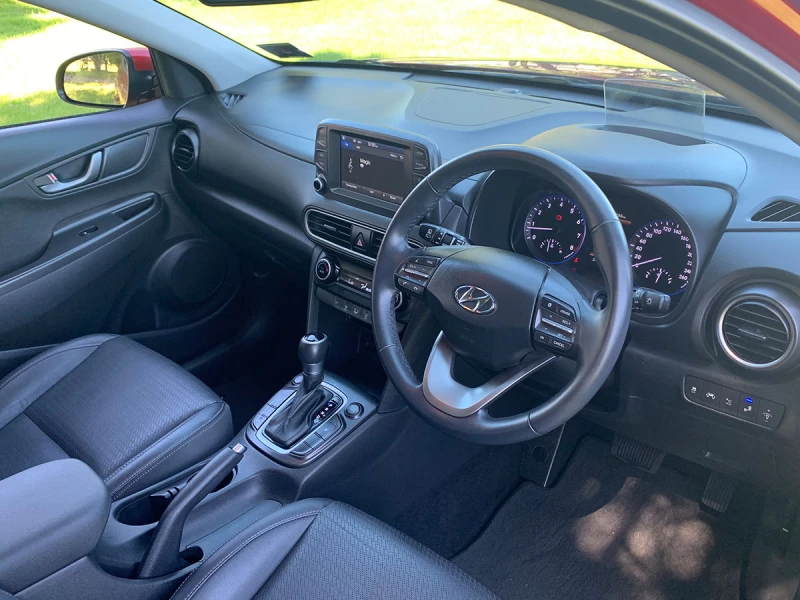
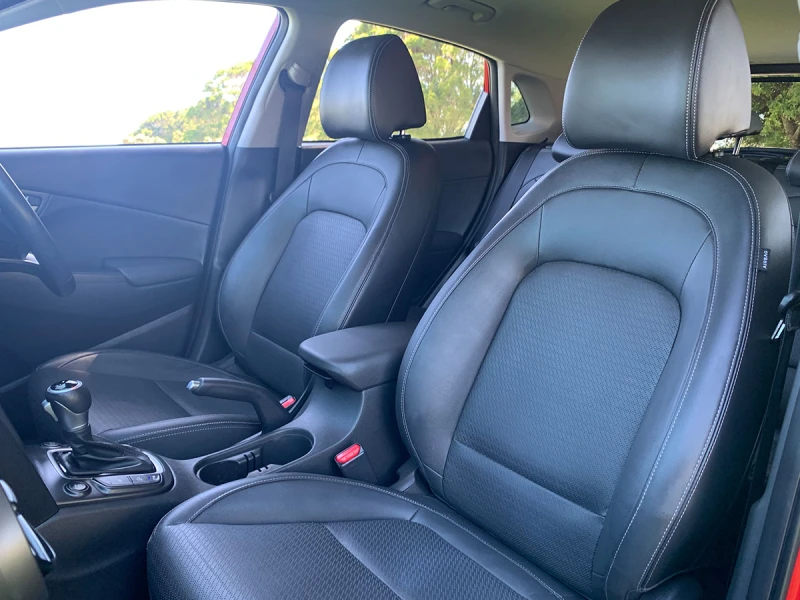
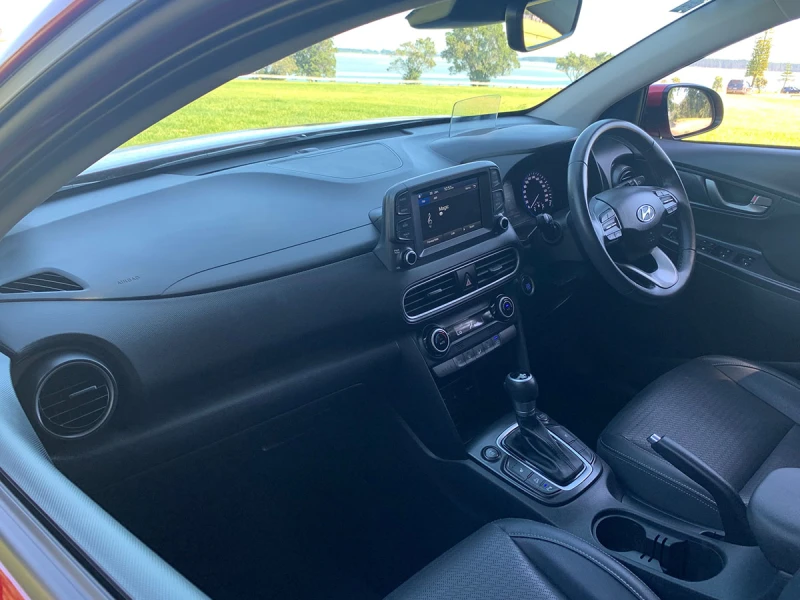
The Kona’s interior uses a horizontal dashboard layout with clear upper and lower sections: the top half features decorative trim and air vents, while the lower portion houses the infotainment screen and climate controls. The center stack is angled slightly toward the driver for better reach. Base models use mostly hard plastics with soft-touch only on the upper dash. Mid- and top-spec versions add piano black or metallic accents, soft-touch door panels, and seat upholstery combining cloth + leatherette or full leather.
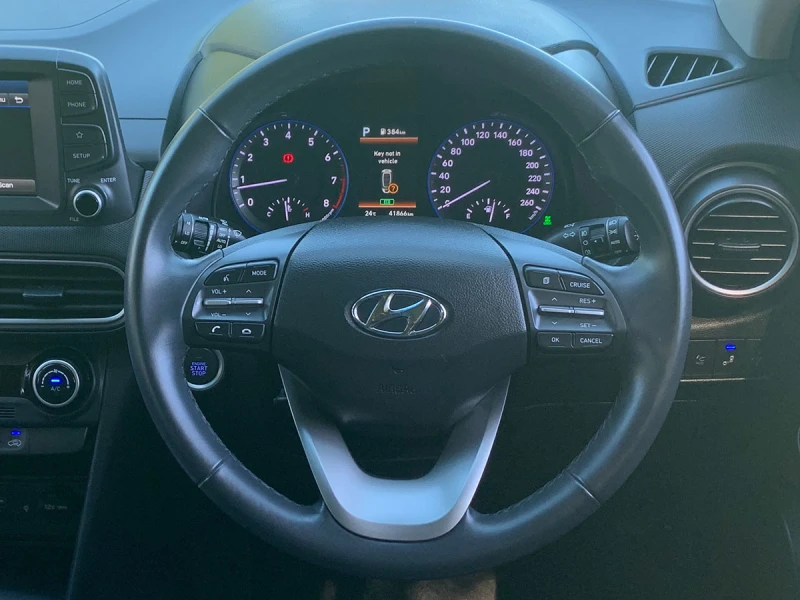
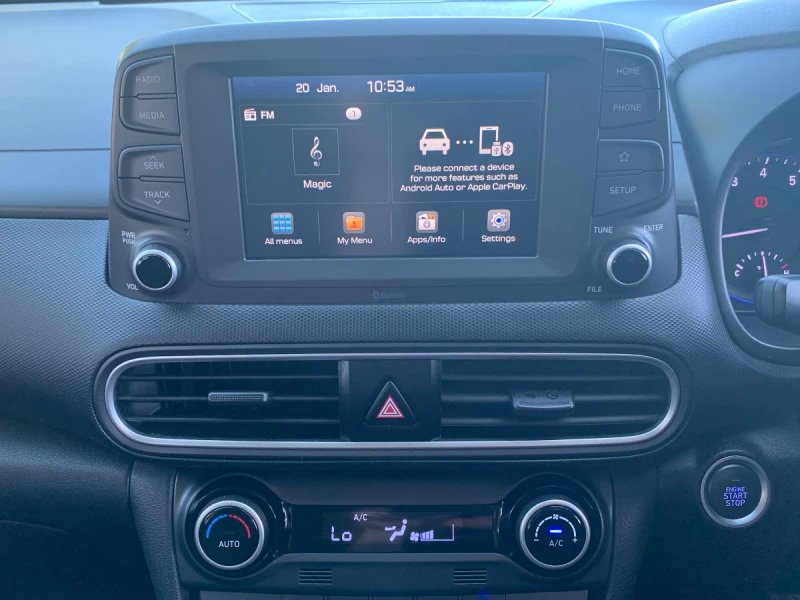
Pre-facelift models feature an analog instrument cluster with a small 4.2" monochromatic driver information display. After the 2020 facelift, higher trims gained a full 10.25" digital gauge cluster. The center touchscreen starts at 7" on entry models, moves to 8" on mid-trims, and reaches 10.25" on top versions post-facelift.
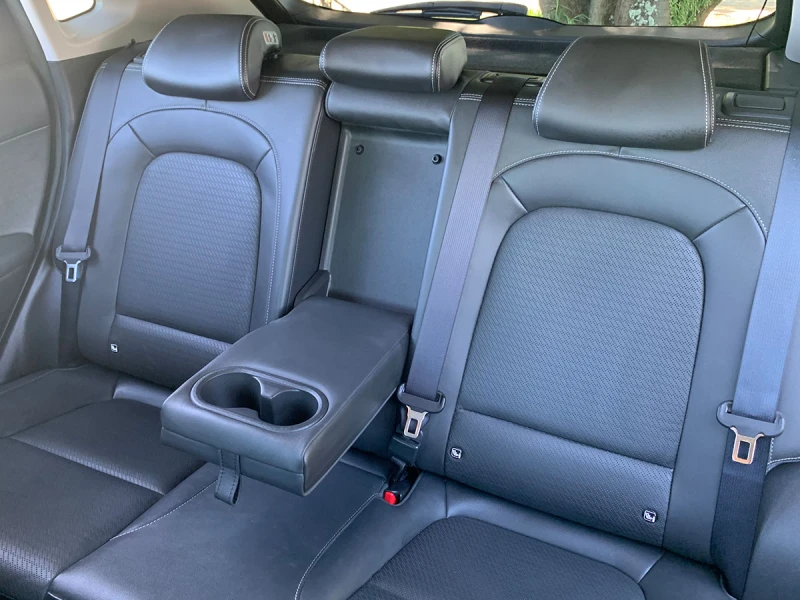
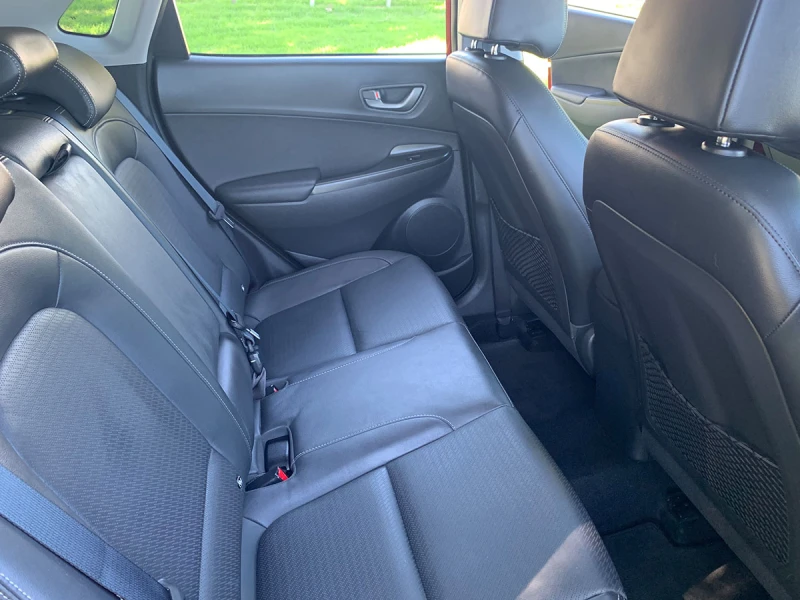
Driver seating is comfortable with generous adjustment range for the steering column and seat (power adjustments and memory function on top trims). Front seats offer good side bolstering, though the cushions aren’t overly firm. Rear seating comfortably fits two average-height adults; a third passenger feels cramped due to the high center tunnel and seat shape. Legroom and headroom are adequate for the subcompact crossover class but fall short of longer-wheelbase rivals.
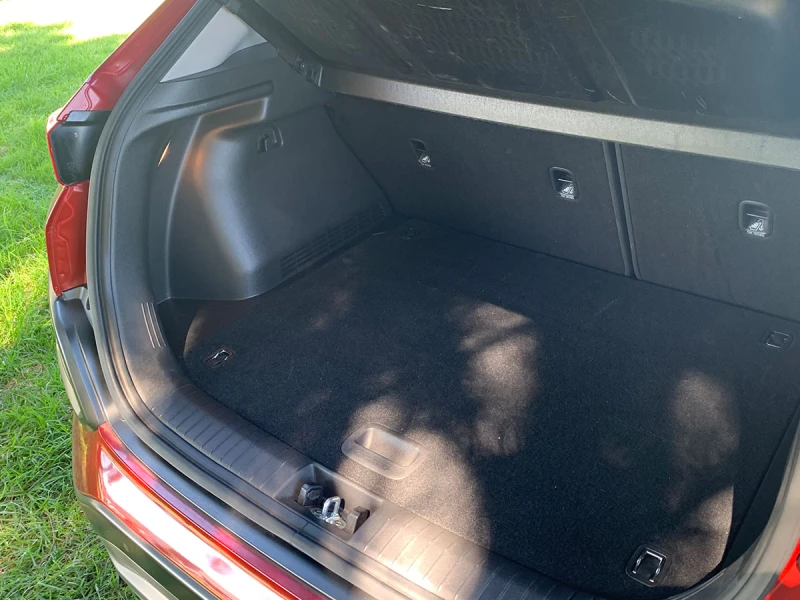
Cargo space measures 361 liters (to the cargo cover) with seats up and expands to 1,297 liters (VDA) with rear seats folded. The load floor is flat when seats are down, with space-saver spare or tire repair kit underneath. Practicality is decent: wide opening, but high load lip, and limited hooks or nets in base models.
Trim Levels on the U.S. Market
On the American used market, the most common trim levels for the first-generation Hyundai Kona (OS) are:
| Trim Level | Typical Years | Interior Materials | Infotainment | Climate Control | Key Features |
| SE / Base | 2018–2020 | Cloth, hard plastics | 7" or 8" with Apple CarPlay/Android Auto | Manual A/C | Basic safety suite, heated front seats & steering wheel |
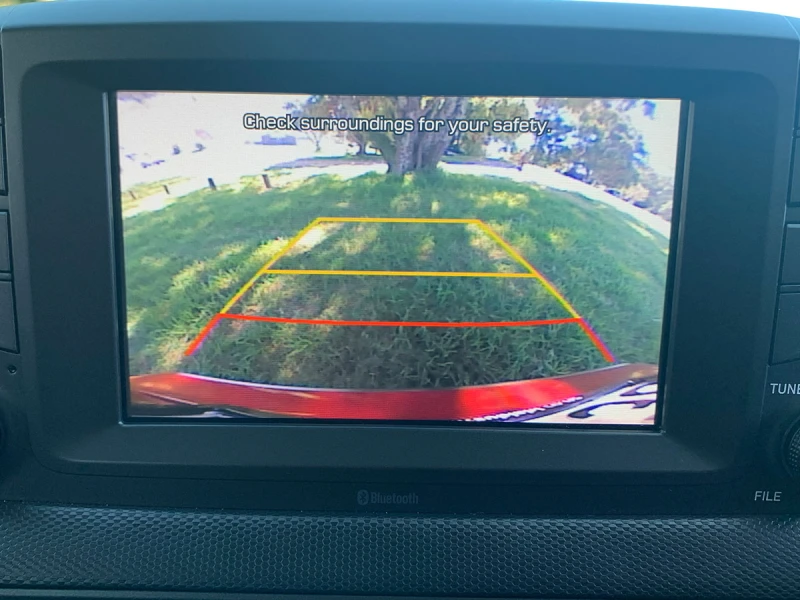
| SEL / Value | 2018–2023 | Cloth + leatherette, soft-touch inserts | 8" or 10.25" (post-2020) | Dual-zone automatic climate control | Rearview camera, parking sensors, keyless entry, heated rear seats (optional/rare) |
| Limited / Premium | 2019–2023 | Leather or leather + cloth, aluminum or piano black trim | 10.25" with navigation | Dual-zone automatic | 10.25" digital cluster, wireless charging, ambient lighting, power liftgate, adaptive cruise control |
| N Line (Top) | 2019–2023 | Sport seats with red stitching, suede + leather | 10.25" | Dual-zone | Improved sound insulation, firmer suspension, 18" wheels, sport steering wheel |
The U.S. market saw a large share of SEL and Limited trims delivered new between 2019–2022. Panoramic sunroof was available only on top trims and remains relatively uncommon on the used market.
Year-by-Year Changes & 2020 Facelift
The most significant interior updates arrived with the 2020 facelift:
- Revised center console and climate control panel design (touch-sensitive buttons on higher trims instead of physical ones);
- Introduction of 10.25" fully digital instrument cluster replacing analog + 4.2" screen;
- Larger 10.25" center touchscreen on top trims;
- Improved noise and vibration insulation (extra mats in firewall, wheel arches, and doors);
- Fresh upholstery options: more soft-touch surfaces, refined stitching, new color schemes (including gray-blue tones after 2021).
Pre-facelift models (2017–2019/early 2020) feel simpler, with more hard plastics and slightly looser build quality in lower areas. Post-facelift examples (2020–2023) are noticeably quieter and more refined in materials and perceived quality.
Common Owner Feedback & Drawbacks
Frequently mentioned pros and cons of the Hyundai Kona I cabin on the U.S. used market:
- Piano black trim scratches and fingerprints easily;
- Plastic rattles around door cards and dash (especially pre-2020 models and on rough roads);
- Driver’s seat side bolsters wear noticeably after 75,000–95,000 miles;
- Rear visibility limited by thick pillars and smallish back window;
- Rear legroom tight when front seats are fully back;
- Pre-facelift wheel arch noise on highways — tire and suspension roar is prominent;
- Light-colored seats and trim show dirt quickly, especially in urban driving conditions.
These issues tend to be more pronounced on vehicles from regions with poor road conditions or without regular interior maintenance.
Final Thoughts & Relevance in 2026
In 2026 the Hyundai Kona I interior — particularly post-2020 facelift examples — still feels modern and competitive in the subcompact crossover segment. The digital cluster, large center screen, dual-zone climate, and driver-assist suite in upper trims align well with expectations for a 5–7-year-old vehicle.
The best value on today’s U.S. used market usually comes from 2020–2022 SEL and Limited models. They deliver the digital gauges, big touchscreen, leatherette/leather upholstery, and most modern safety features without the higher cost of N Line variants, which focus mainly on sportier styling and firmer ride.
When shopping for a used Kona I, pay special attention to:
- Condition of the driver’s seat (no major sagging or wear);
- Functionality of post-facelift touch climate and infotainment controls;
- Absence of dash/door rattles or aftermarket sound-deadening additions;
- Condition of piano black surfaces and light trim pieces;
- Operation of all heated/ventilated seats, steering wheel heat, and panoramic roof (if equipped).
Approximate market price range for well-maintained 2018–2023 Hyundai Kona models in the United States in 2026: $15,000–$24,000 depending on year, mileage, trim, and condition — with post-facelift SEL/Limited examples in the mid-to-upper part of that range offering the strongest price-to-feature balance.