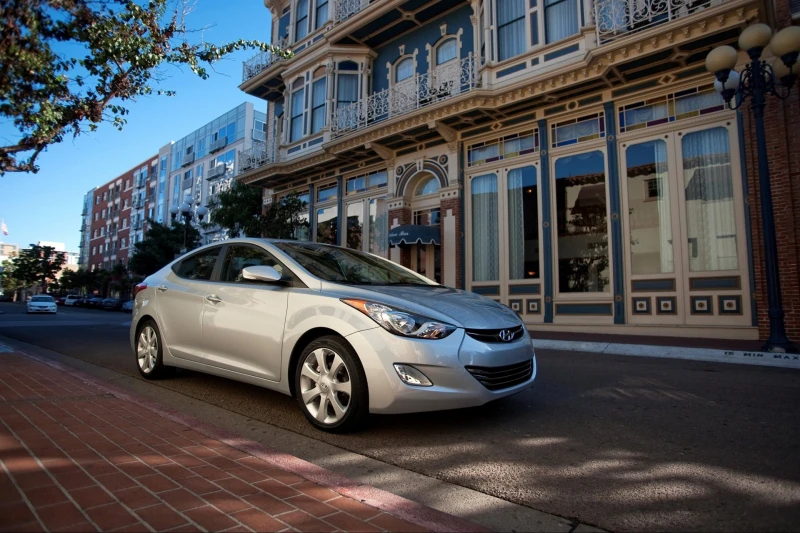
The model was positioned as a compact sedan focused on practicality and affordability. This article examines the interior of the fifth-generation Hyundai Elantra, including cabin design, trim levels, year-over-year changes, and typical traits found on the U.S. used-car market. The cabin of this Elantra generation is defined by simplicity and strong functionality, remaining a sensible daily-driver choice even years later.
Overall Cabin Overview
The interior of the 2010–2015 Hyundai Elantra follows the typical Korean-car design language of the era: priority given to ergonomics and everyday usability rather than luxury flourishes. Materials consist mainly of soft-touch plastic on the dashboard, cloth upholstery on base models, and cloth + faux-leather combinations on higher trims. Build quality feels average — the plastics resist wear reasonably well but can develop rattles over rough roads, while cloth seats need regular cleaning to stay presentable.
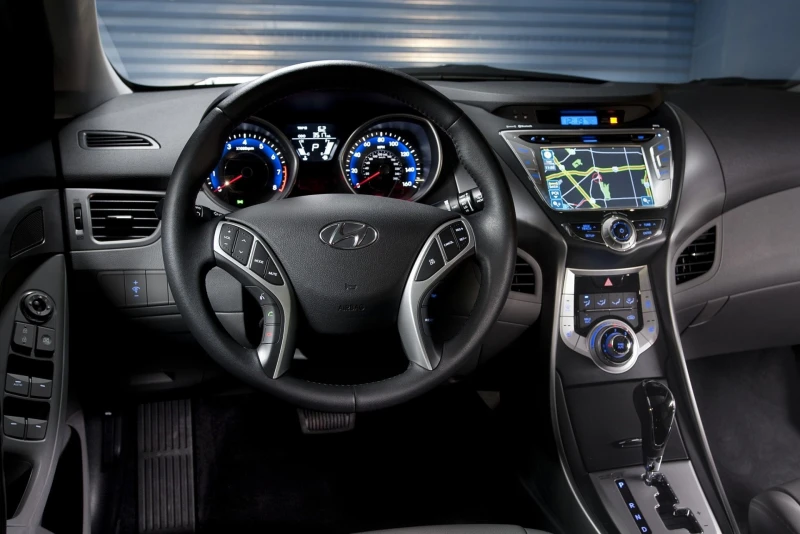
The instrument panel and center stack are driver-oriented: analog gauges with a small monochrome display in the middle, plus a straightforward climate-control and audio layout. Driver ergonomics are solid — the steering wheel adjusts for height (and reach on higher trims), and the manually adjustable seat provides a comfortable driving position for most people up to about 6 ft 1 in. Base models lack a center armrest or heated steering wheel, which can be noticeable in colder parts of the country.
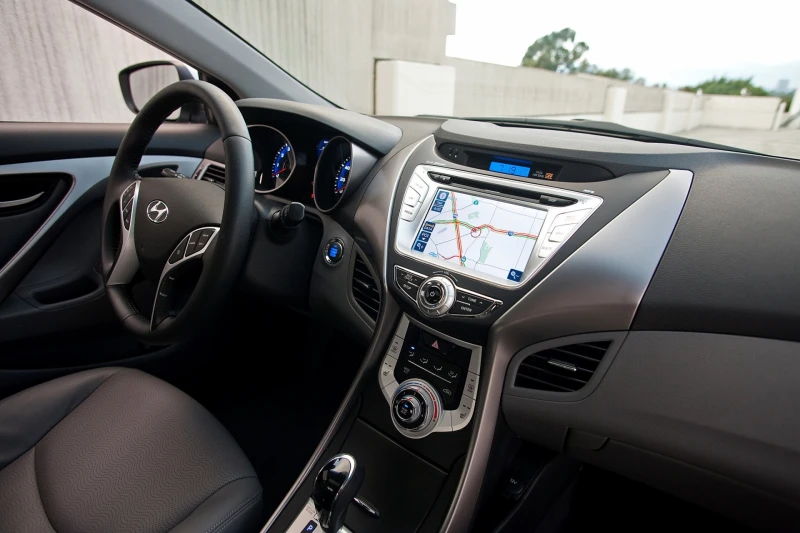
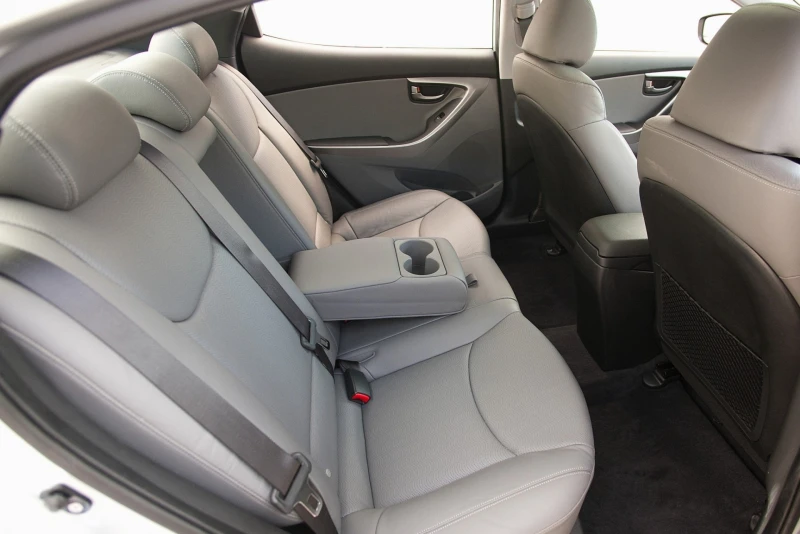
Front-passenger comfort is acceptable: seats offer moderate side bolstering and good width/height clearance. The rear bench is officially rated for three, but works best for two adults — the 106.3-inch wheelbase delivers decent legroom, though headroom can feel tight for taller passengers. Rear visibility is somewhat restricted by the roofline and thick pillars, but large mirrors and windows help compensate.
Trunk space measures 14.8 cubic feet (VDA equivalent), which is generous for the class and practical for family errands or grocery runs. The 60:40 split-folding rear seats expand cargo capacity to about 52.4 cubic feet, although a step remains when folded. Everyday usability is strong thanks to numerous storage cubbies, cupholders, and door pockets. Overall, the Elantra V cabin prioritizes function over flash — well suited to American suburban and city driving.
Trim Levels on the U.S. Market
On the American used market, the fifth-generation Hyundai Elantra appears in several common trim configurations: base GLS, mid-level SE/Comfort-oriented packages, upscale Limited, and occasional Sport editions. Availability varies by model year and whether the car was originally sold in the U.S. or imported.
The base GLS trim usually features cloth seats, manual seat adjustments, air conditioning, a basic CD/MP3 audio system with auxiliary/USB input, power front windows, ABS, and dual front airbags. Interior finishes are simple hard plastics with minimal brightwork; climate control is manual.
Mid-level trims (often SE or GLS with Popular Equipment Package) add automatic climate control, heated front seats, cruise control, Bluetooth connectivity, and a small color display audio system (later models received a 4.3-inch or larger touchscreen). ESP stability control and rear parking sensors often appear here as well. Cloth upholstery continues, but stitching and fit improve, and some chrome accents are added to the console.
Higher Limited trims bring leatherette or available leather seating, a rearview camera, navigation option, upgraded six-speaker audio, available panoramic sunroof, heated rear seats (rare), and sometimes blind-spot monitoring. U.S.-spec cars frequently include stronger sound insulation and suspension tuning suited to American roads compared with some export versions.
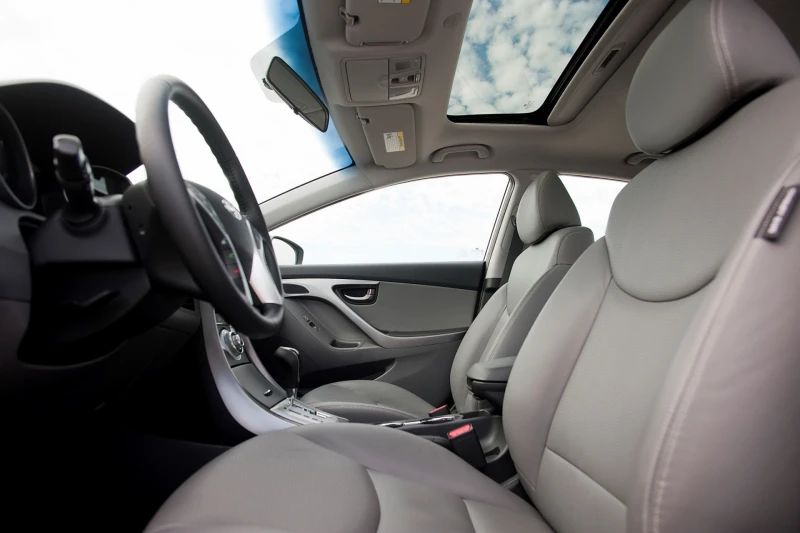
The Sport/Limited models offer full leather upholstery, premium audio, HID headlights (later years), 17-inch wheels, and optional technology packages with enhanced infotainment. Ventilated seats were not offered on this generation in the U.S. Overall, the U.S. market favors GLS and Limited trims, with many buyers appreciating the balance of features and value.
| Trim Level | Key Interior Features | Common in U.S. Market |
| GLS (Base) | Cloth, A/C, basic audio | Most affordable imports & domestic units |
| SE / Mid | Auto climate, heated seats, Bluetooth | Most popular choice |
| Limited | Leatherette/leather, camera, nav option | Well-equipped examples |
| Sport / Loaded | Leather, premium audio, sunroof option | Less common higher-end units |
Year-to-Year Changes & 2013 Facelift
Early models (2010–2012) feature a simpler dashboard: standard analog gauges without Supervision backlighting, basic materials, and minimal chrome trim. Interior colors were mostly gray or beige; sound insulation was adequate but not class-leading; audio remained entry-level.
The 2013–2015 facelift brought meaningful upgrades: revised instrument cluster with Supervision gauges and blue backlighting, softer dashboard plastics, better seat fabrics, and more chrome accents on the console and doors. Noise insulation improved with added mats in doors and floor; top trims gained a 7-inch touchscreen with available navigation. Interior color choices expanded to include black and two-tone combinations.
On the U.S. used market, post-facelift (2013–2015) models usually command higher prices: materials hold up better, fewer rattles develop, and the updated infotainment feels more modern. Pre-facelift cars more often show wear consistent with American road and weather conditions.
Common Interior Issues & Owner Notes
Typical wear items include driver-seat cloth developing shiny spots and stains by 90,000–125,000 miles. Dashboard plastics can scratch easily, and door panels may develop creaks over bumps. Wind and road noise are noticeable at highway speeds due to average insulation, especially in colder weather when materials contract.
Rear-seat space is decent for two adults but tight for three; thick rear pillars and window shape limit visibility. Cloth seats trap dirt and spills; plastic trim needs gentle cleaners; leather (when present) can crack from sun exposure. In regions with harsh winters (road salt) or intense sun, under-carpet corrosion and window fogging can appear if drainage or seals degrade.
Conclusions & Modern Relevance
In 2026 the fifth-generation Elantra interior feels dated next to current models — no digital cluster, no Android Auto/Apple CarPlay from the factory. Yet it remains highly practical in the budget used-car segment: spacious enough, logically laid out, and inexpensive to maintain.
The best value sweet spot is usually a post-facelift Comfort/SE or Limited model with heated seats, automatic climate, and Bluetooth — typically found in the $6,000–$10,000 range on the current U.S. used market (depending on mileage, condition, and region). When shopping, carefully inspect seat wear, dashboard/door rattles, infotainment functionality, and signs of water leaks or heavy use (odors, stains under mats). A pre-purchase inspection is strongly recommended to check suspension, climate system, and added sound-deadening if present.
Overall, the 2010–2015 Hyundai Elantra cabin continues to appeal to buyers seeking a reliable, low-cost compact sedan on today’s used market.