Some manufacturers are betting on artificial engine sound, others are creating virtual gear shifting, and a few are going even further. Hyundai is preparing a system capable of simulating a full manual transmission, complete with a shifter and a clutch pedal.
The new development has already sparked active discussion among automotive enthusiasts. Some supporters view such solutions as a way to keep driving engaging, while others see it as an artificial substitute for a classic manual.
Why Manufacturers Are Returning to the Manual
Most modern electric vehicles use a single-speed transmission. This simplifies the design and ensures maximally smooth acceleration. At the same time, the sensations familiar to many drivers disappear: the operation of the clutch, gear shifting, and the characteristic shift in power delivery.
Against this backdrop, some companies have begun experimenting with systems that artificially recreate the behavior of traditional sports cars. Hyundai already uses electronic gear-shift simulation and synthetic engine sound in its electric performance models.
Now the company plans to go even further and add the physical controls characteristic of cars equipped with a manual transmission.
How the New System Will Work
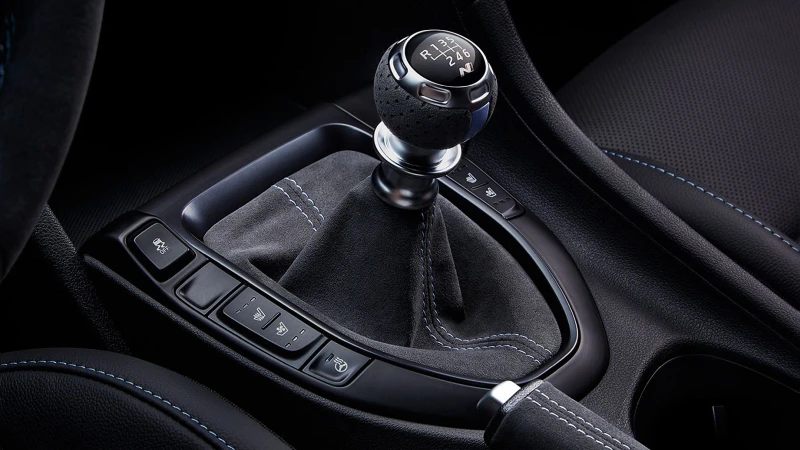
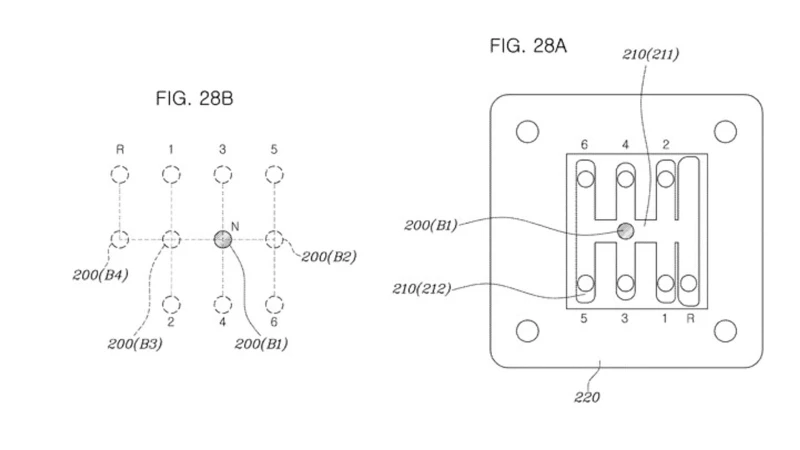
According to patent materials, Hyundai is developing an electronic gear-shifting mechanism with a full shifter mounted on the center tunnel. The system will be able to operate in several modes.
In manual mode, the driver will get:
- a simulation of a six-speed manual transmission;
- a virtual clutch pedal;
- a separate position for reverse;
- a neutral mode;
- the ability to shift sequentially.
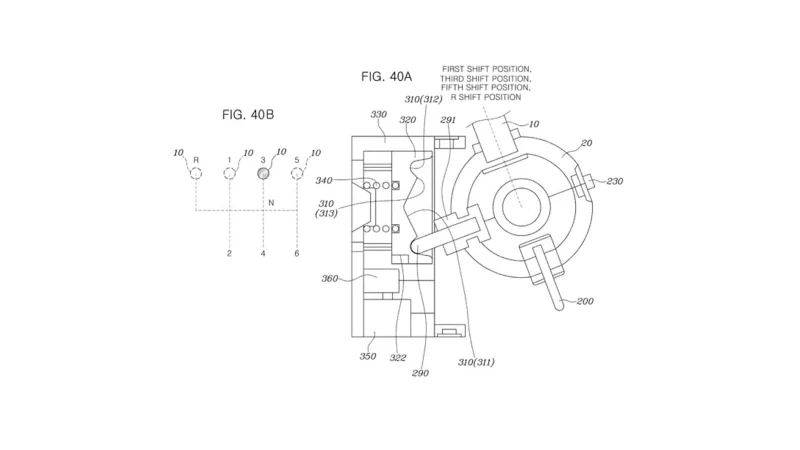
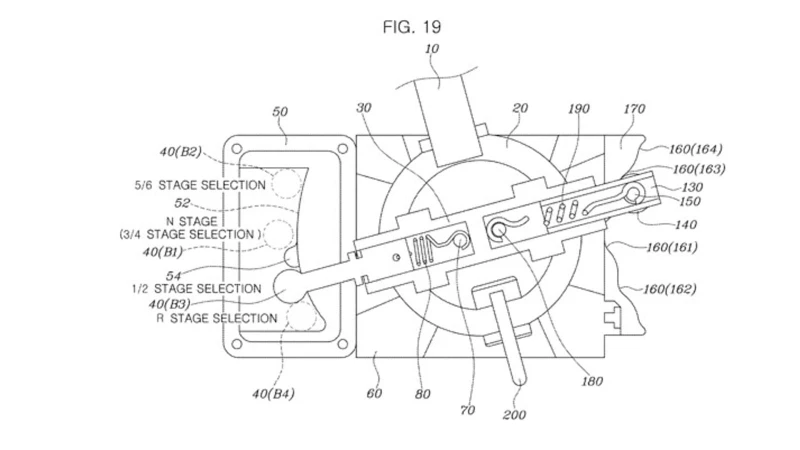
However, there will be no physical connection between the shifter, the clutch, and the powertrain. All inputs will be processed by electronics that replicate the behavior of a conventional manual transmission.
The system will be able to artificially create shift delays, changes in engine revs, and the way the car responds to the driver's inputs. The technology is expected to be used in both electric and hybrid models.
Connection to Hyundai's New Performance Models
The development could become part of the strategy of the Hyundai N division, which continues to advance performance cars even as environmental requirements tighten. The company has already confirmed work on new gasoline engines and hybrid powertrains.
It is possible that an automatic transmission will be paired with an electric motor, while the virtual manual will serve as an additional mode for fans of a more engaging driving style.
Similar solutions already exist in the automotive industry. For example, the Koenigsegg CC850 hypercar features a system that allows switching between automatic and manual modes with a simulation of a classic manual gearbox. However, that car is produced in limited numbers and belongs to an exclusive segment.
Hyundai, on the other hand, aims to make such technology available for mainstream models.
The Key Question — Reliability and Practicality
Despite the intriguing concept, the new system raises questions in terms of durability and operational reliability. Unlike a traditional manual transmission, here the entire operation will depend on electronics and software.
In addition, some drivers may approach such a simulation with skepticism, since a genuine mechanical link between the engine and the transmission is effectively absent. At the same time, the very emergence of such projects indicates that manufacturers are trying to preserve the emotional dimension of driving even in the era of digital technologies and electrification.