



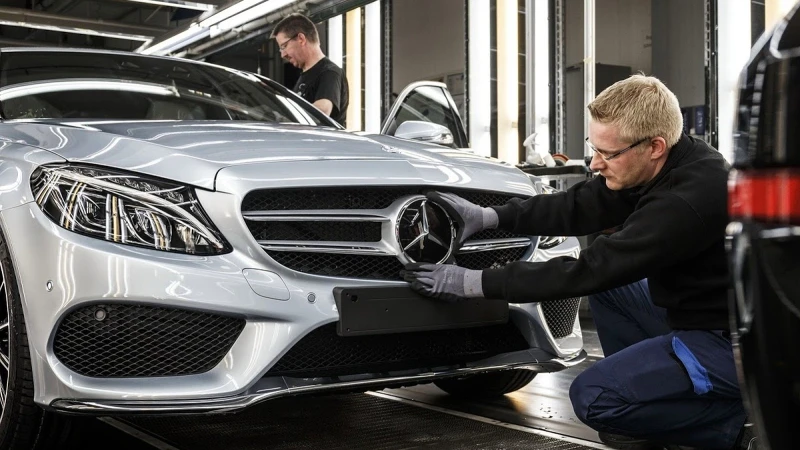
Contrary to widespread expectations, factory workers are not the first employees being affected by emerging technologies. Instead, the initial impact is falling on professionals engaged in knowledge-based work, and this shift is already influencing workforce policies at major companies.
Technology Adoption Across the Industry
Automakers are actively introducing digital systems and automation, including the development of robots and the use of algorithms for data processing. These tools can accelerate workflows, reduce costs, and improve operational efficiency.
However, the adoption of artificial intelligence remains uneven. On factory floors, AI still plays a largely supporting role, while its influence is already more visible in office-based and analytical departments.
Changes in Workforce Structure
Current trends indicate that workforce reductions are primarily affecting administrative and analytical positions. Tasks that previously required entire teams can increasingly be completed by a single specialist using modern AI-powered tools.
- preparing analytical reports
- processing large volumes of data
- developing strategic materials
- managing information flows
This is reducing staffing levels in the departments responsible for these functions, while skilled production roles continue to remain in demand.
The Current Scale of the Impact
Despite extensive discussion of the issue, artificial intelligence still accounts for only a limited share of employment reductions. Available data suggests that only a relatively small proportion of layoffs can currently be linked directly to the adoption of new technologies.
Even so, the potential for further change is significant. In several industries, including information technology and finance, the technical potential for automation may exceed 90%, although actual adoption remains substantially lower.
Where the Risk Is Higher and Lower
Roles centered on information processing and repetitive tasks appear to be the most vulnerable. At the same time, several categories of work remain less exposed to automation.
- customer-facing roles involving direct personal interaction
- skilled trades and service work
- specialized manufacturing processes
These activities require flexibility, an individualized approach, and a physical presence, making full automation more difficult in the near term.
Technology's Current Limitations
Despite rapid progress, artificial intelligence continues to have significant limitations. One of the main concerns is the risk of errors when systems encounter complex situations. This restricts their use in tasks that require a high degree of accuracy, judgment, and accountability.
Examples from different industries show that, without human oversight, AI systems can produce a substantial number of inaccuracies, reducing their overall effectiveness.
Conclusion
Artificial intelligence is already having a measurable effect on the automotive industry by changing workforce structures and established working methods. At this stage, knowledge-based, analytical, and administrative functions are experiencing the most significant changes.
Further technological development could accelerate this trend, although its ultimate scale will depend on the reliability of AI systems and the willingness of companies to integrate them into critical business processes.