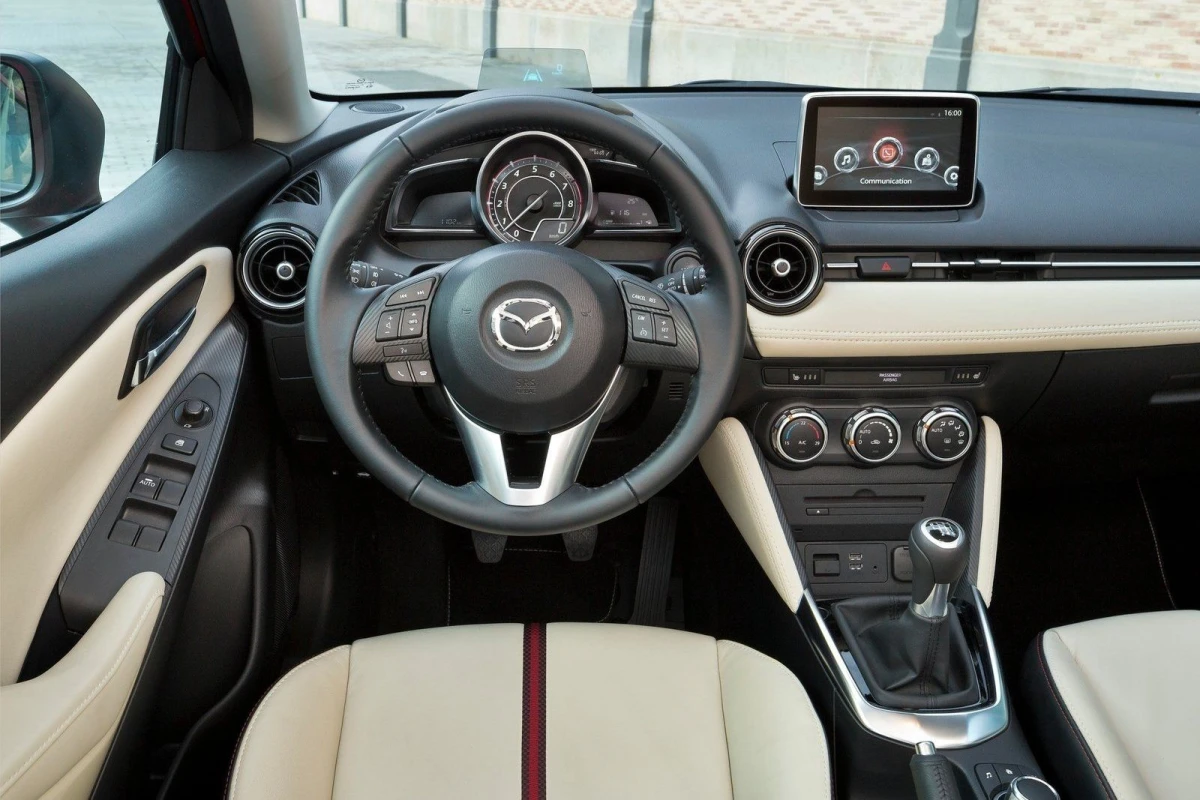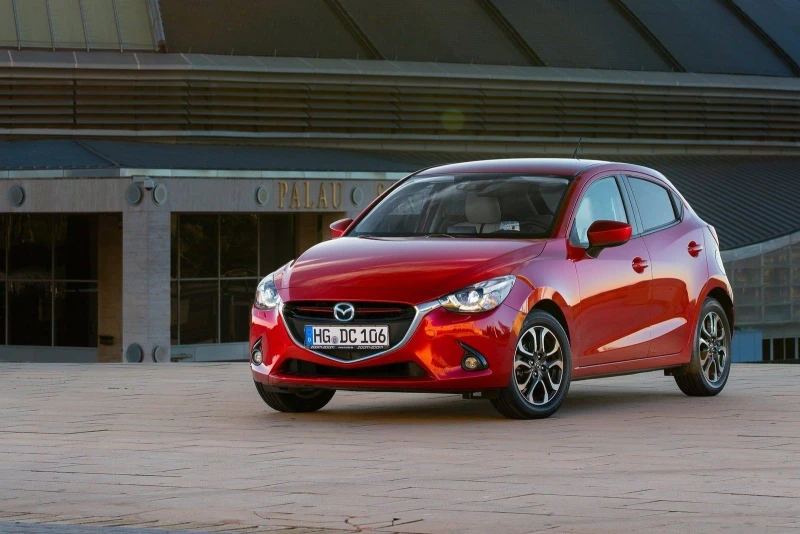
Since production wrapped up in 2019, used car listings are dominated by 2016–2018 models showing 43,000–87,000 miles. Technical condition frequently becomes the key differentiator when comparing examples. Design, interior, and equipment levels are explored in depth in other articles in this series — here the focus is on engines, transmissions, dimensions, and the factors that matter most for real-world ownership in US conditions.
Powertrains: Skyactiv as the Foundation of Efficiency and Reliability
The engine range for the Mazda 2 DJ, developed primarily for European and international markets, revolved around the high-compression Skyactiv-G gasoline family. This approach delivered strong performance with moderate fuel consumption without turbocharging. Gasoline versions were by far the most common; the 1.5 Skyactiv-D diesel was uncommon, typically arriving via parallel imports, and never gained wide acceptance due to higher servicing costs and greater sensitivity to fuel quality. All variants are front-wheel drive — all-wheel drive was never offered in this generation.
The most widespread powerplant is the 1.5-liter gasoline engine offered in two main outputs. The base 90-hp version was available with either a manual or automatic transmission, while the 115-hp unit came primarily with a 6-speed manual. Skyactiv transmissions are engineered for high efficiency: the torque-converter automatic delivers smooth shifts, and the manual is crisp and frugal.
| Engine Type | Displacement, L | Power, hp | Transmission | Drivetrain |
| Gasoline Skyactiv-G 1.5 | 1.5 | 75 / 90 | 5-speed manual / 6-speed automatic | Front-wheel drive |
| Gasoline Skyactiv-G 1.5 | 1.5 | 115 | 6-speed manual | Front-wheel drive |
| Diesel Skyactiv-D 1.5 (rare) | 1.5 | 105 | 6-speed manual | Front-wheel drive |
Skyactiv-G engines use a timing chain and high compression ratios (13–14:1 depending on variant), which provide excellent low-rpm torque. In everyday use, the 90-hp automatic stands out as the top choice for urban driving thanks to its smooth character and strong efficiency. Enthusiasts who prioritize highway passing power often opt for the 115-hp paired with the manual.
Transmission Characteristics and Ownership Experience
The six-speed Skyactiv-Drive automatic is calibrated for peak efficiency and seamless gear changes. With regular fluid maintenance it proves highly reliable. The manual gearboxes (5- and 6-speed Skyactiv-MT) are praised for their precise shift feel and durability — the main caveat is avoiding prolonged overheating in stop-and-go traffic.
Dimensions and Weight: Compact Footprint with Usable Interior Space
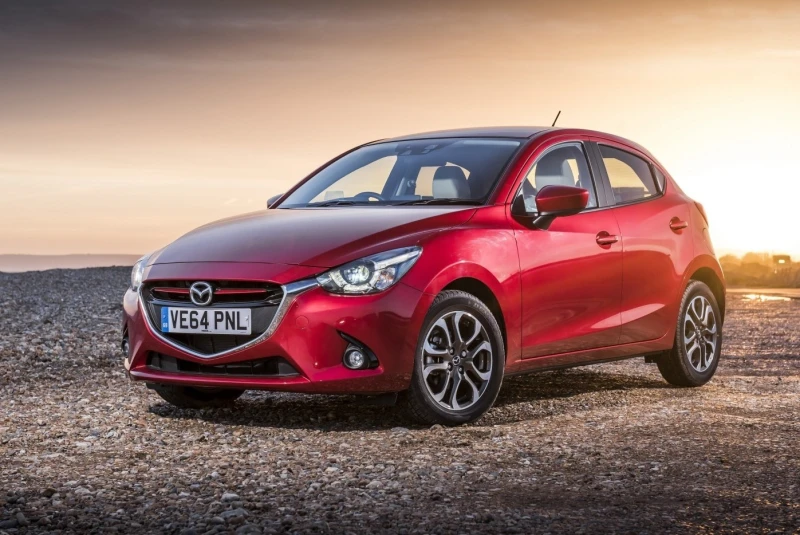
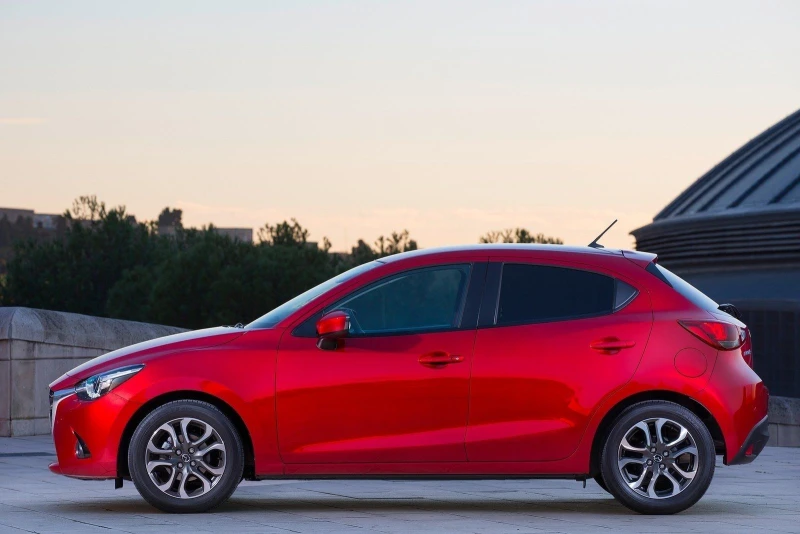
The Mazda 2 DJ rides on the lightweight Skyactiv platform featuring a 2570 mm (101.2 in) wheelbase. This design yields compact exterior dimensions while still offering a roomy-enough cabin for four adults. Ground clearance of roughly 143 mm (5.6 in) handles typical city streets and highway driving well, though drivers should exercise care on severely rutted or potholed roads. Exterior dimensions stayed consistent across the entire production span, including the minor refreshes of 2017–2018.
| Parameter | Value | Note |
| Length | 160 in (4060 mm) | Hatchback (sedan is longer) |
| Width | 66.7 in (1695 mm) | Excluding mirrors |
| Height | 58.9 in (1495 mm) | Standard |
| Wheelbase | 101.2 in (2570 mm) | Delivers good rear-seat comfort |
| Curb weight | 2,138–2,458 lbs (970–1,115 kg) | Varies by engine and equipment |
| Gross vehicle weight rating | 3,307–3,527 lbs (1,500–1,600 kg) | Maximum permissible |
| Ground clearance | 5.6 in (143 mm) | Adequate for most US roads |
The low curb weight, helped by strategic use of aluminum in the body structure, pays dividends in fuel economy and agile handling. The car stays nimble in tight urban parking situations and composed on long highway runs.
Updates Within the Generation and Their Effect
Across its five-year run the DJ received several focused updates, including engine calibration tweaks, transmission refinements, and small electronics improvements. The powertrain family itself remained essentially unchanged — no new engines or wholesale transmission revisions occurred. For today’s buyers this translates to later 2017–2019 cars offering only incremental gains in refinement and reliability over earlier examples, while keeping the same straightforward mechanical layout.
Current favorites are the 1.5 Skyactiv-G 90 hp with automatic for daily city commuting and the 115 hp with manual for drivers who spend significant time on the highway.
Real-World Ownership Insights
Data from major used-vehicle marketplaces and owner communities shows that Skyactiv-G engines routinely deliver strong reliability past 124,000 miles when properly maintained. The essentials are quality synthetic oil changes every 6,000–7,500 miles and consistent use of premium unleaded fuel rated 91 AKI or higher. Real-world combined fuel economy for the 90-hp 1.5 typically lands in the 29–39 mpg range, while the 115-hp version achieves 26–34 mpg depending on driving style and conditions.
Transmissions earn few complaints when serviced on schedule. Parts availability is solid, with both genuine and high-quality aftermarket components easy to source in most metropolitan areas. Repairability remains excellent: these engines and gearboxes are designed to be serviced rather than replaced, a significant advantage in the used-car segment.
Overall, the Mazda 2 IV (DJ)’s engineering delivers an outstanding balance of efficiency, low running costs, and engaging dynamics for American drivers. On the used market in 2026 the model stays relevant precisely because its proven architecture provides strong fuel economy and adequate performance for everyday needs without driving up ownership expenses.