The compact hatchback, often viewed as a more engaging alternative to practical but less exciting models, features a driver-centric interior. In everyday driving on American roads and in our varied climate, it proves just how far smart ergonomics and quality materials can go in offsetting its modest size.
Driver-Centric Design and Controls
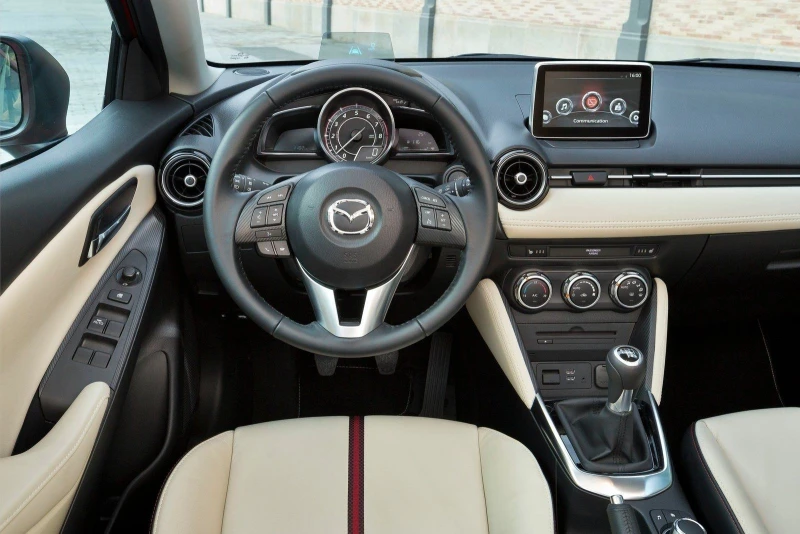
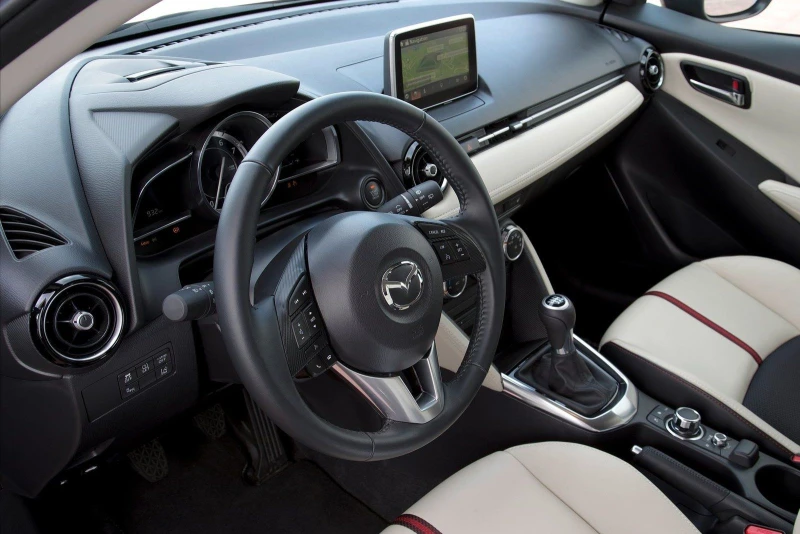
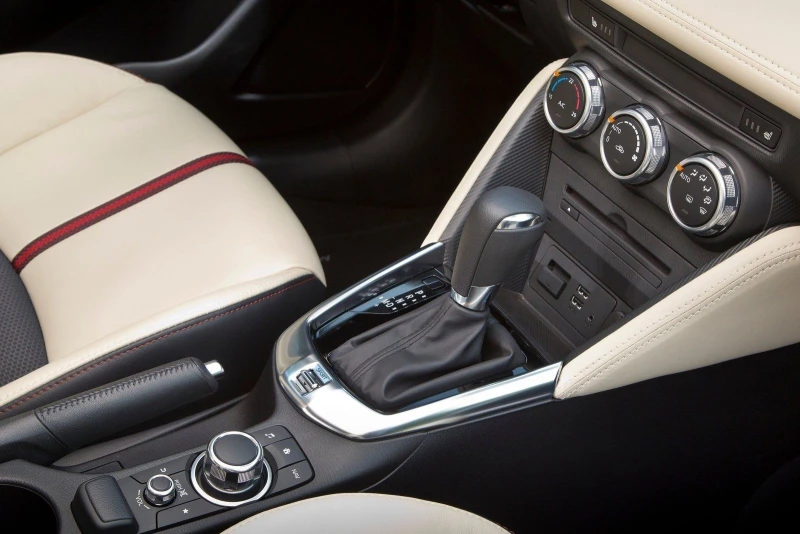
The Mazda 2 (DJ) cabin is centered around the principle of putting the driver first. The dashboard angles slightly toward the person behind the wheel, and the steering column adjusts in two planes. The seating position is low and supportive — classic for Mazda from that era. This makes it easy to settle into a comfortable spot even after a long highway run or dealing with big-city congestion. The center console stays uncluttered: climate controls with big rotary knobs sit high where you can reach them without looking away from the road, and on automatic models the shifter doesn’t get in the way of the armrest.
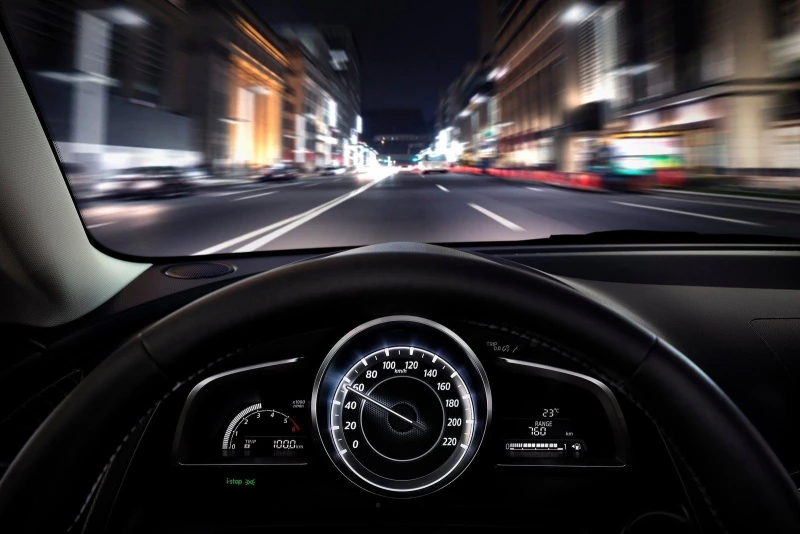
The instrument panel is straightforward but clear, with a prominent tachometer front and center. Higher trims add a color screen between the gauges and a head-up display projected on the windshield — an uncommon feature in this segment that proves handy in rain or glare. Day-to-day, the controls feel natural: large steering wheel buttons and the MZD Connect system with its rotary dial work well even when wearing winter gloves.
Cabin Materials and How They Hold Up
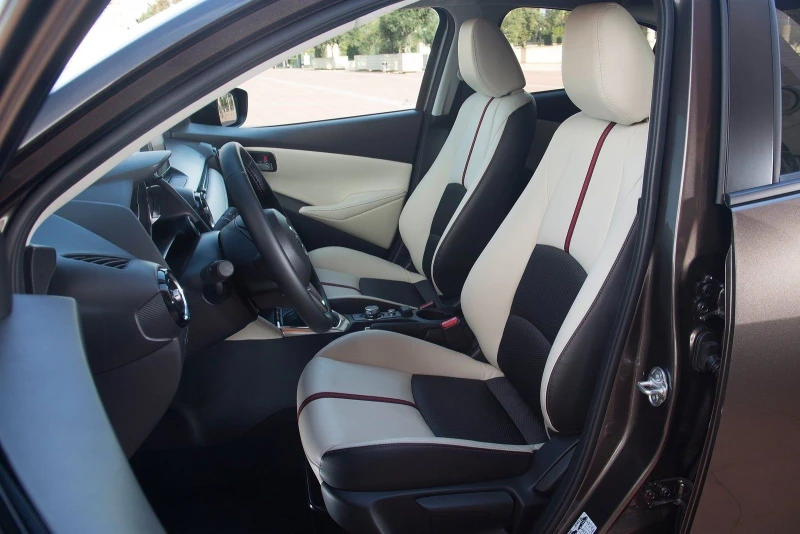
Material quality in the Mazda 2 IV stands out as above average for the B-segment back then. The upper dash and door panels use soft-touch plastics with a nice texture, while lower areas get a tougher but tidy finish. Base seats wear durable cloth, while mid and top trims mix cloth with synthetic leather or full leather. The 2017 refresh brought nicer trim pieces and better stitching.
In real-world service on US roads the materials perform reliably. The fabric shrugs off dirt from shoes and kids’ gear, and the synthetic leather resists cracking despite temperature swings. At 50,000–75,000 miles you rarely see major wear unless the car spent time in rideshare duty. Fit and finish is solid: squeaks are uncommon and mostly confined to the earliest 2014–2015 cars. Post-2017 examples tightened up noticeably.
Space and Everyday Practicality
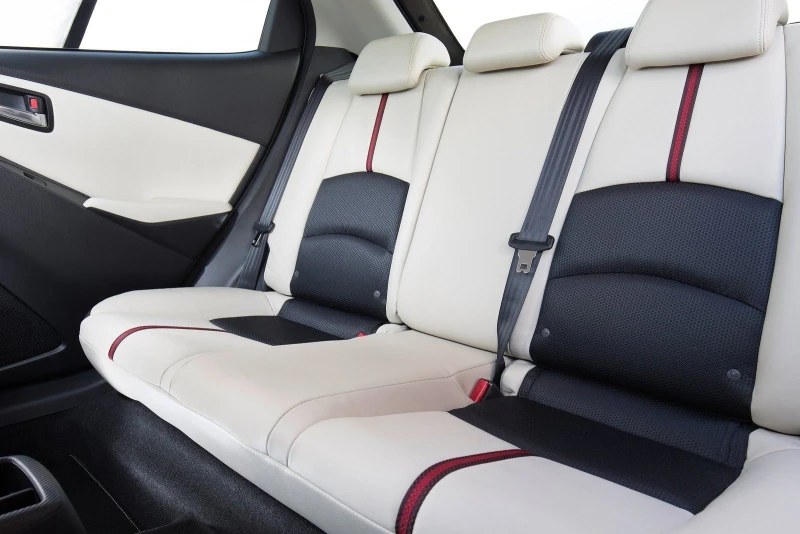
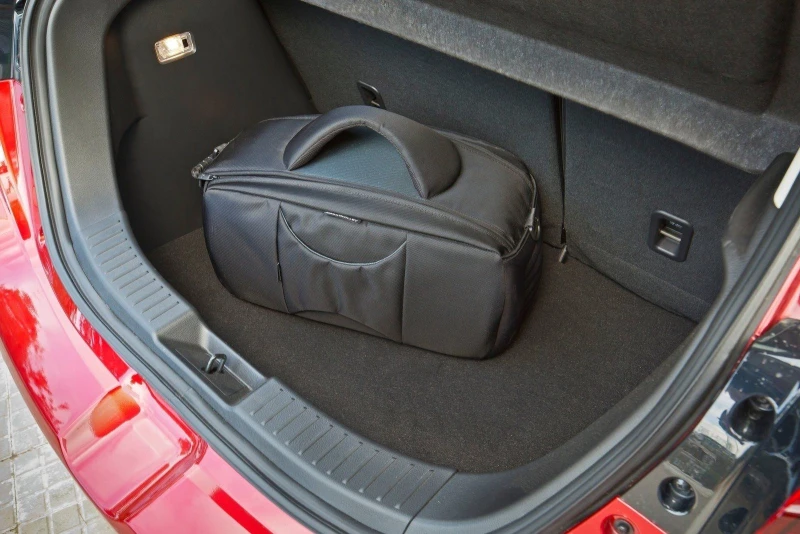
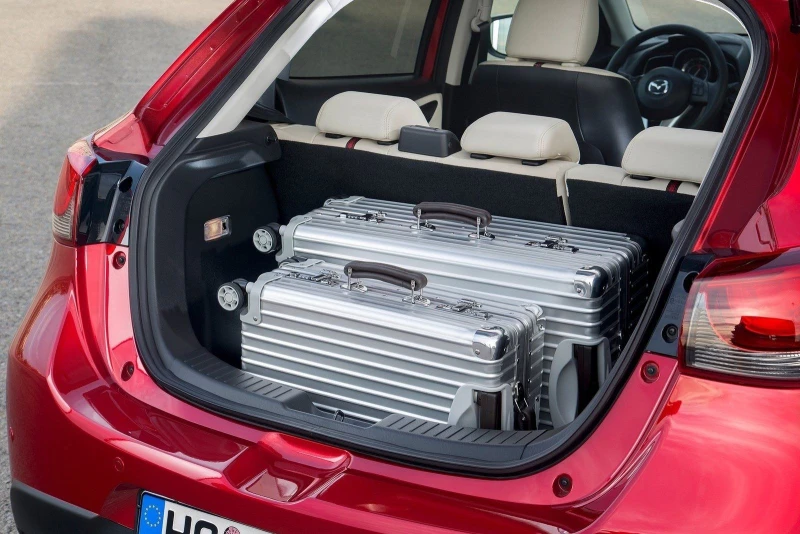
Even with its small footprint, the cabin gives four adults reasonable room. Front occupants have good space, and two adults up to about 5 ft 11 in tall will find enough leg and headroom for 125–185 mile trips in the back. Three across is snug. The trunk holds 9.9 cubic feet (expanding to 33.5 cubic feet with the rear seats down), enough for groceries or a weekend bag. The floor is flat and the load lip is low, so heavy items go in easily.
For families with one or two kids this makes a sensible daily driver: child seats fit fine, and heated front seats plus a heated steering wheel (on mid trims) make cold mornings much more bearable across much of the country.
Trim Levels and Equipment on the Used Market
Used examples most often appear in mid to upper specifications similar to Comfort, Executive, and GT. Even these mid-level cars typically include automatic climate control, heated front seats and steering wheel, a 7-inch touchscreen with Apple CarPlay/Android Auto (from 2017 onward), rear camera, and cruise control. Top versions add leather, keyless access, a Bose sound system, and the head-up display. Heated comfort features are especially popular in colder regions and show up from the middle of the range.
No all-wheel-drive option was offered, so every version is front-wheel drive. Facelifted 2017–2019 cars tend to be richer in equipment and turn up more often in solid shape.
Changes Through the Years and Used-Buyer Advice
Over the production run the interior saw small but meaningful improvements. The 2017 update delivered a newer infotainment setup, upgraded door-card materials, and better noise insulation. On the used market that translates to 2017–2019 models being the smarter pick — they bring more contemporary tech and less early wear. 2014–2016 cars remain usable but may need minor work on the electronics or heating systems.
Real-World Cabin Experience in US Conditions
Day-to-day the Mazda 2 IV cabin holds up well to wear. Seat and steering wheel heaters function effectively even when temperatures drop to around 5°F or lower. Materials handle dust and moisture without complaint, though it’s smart to keep the floor mats clean during the wetter months of spring and fall. Sound deadening is average: above 70 mph tire roar starts to make its way inside, particularly on rougher stretches of highway, yet normal conversation stays easy.
Rear sightlines are restricted by the high beltline, which is why a rearview camera on anything above base trim becomes genuinely helpful. Keeping the cabin clean is simple — fabric and synthetic leather respond to ordinary cleaners, and the plastics need no special treatment. Past 60,000 miles the most typical issue is mild fabric wear on the driver’s seat, which professional detailing usually fixes without drama.
Overall, the interior of the Mazda 2 (DJ) (2014–2019) still feels relevant for its age and class on the US used car market in 2026. It delivers a thoughtfully designed, comfortable cabin with a strong equipment level that hasn’t dated rapidly. For most shoppers the sweet spot lies with well-equipped 2017–2019 examples: they already provide everything needed for comfortable daily driving, including heated features and up-to-date infotainment, without the extra cost of flagship trims.