


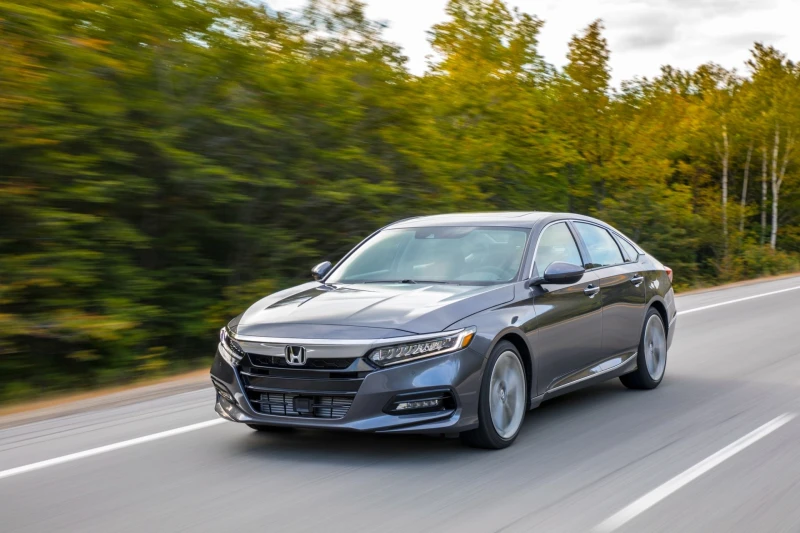
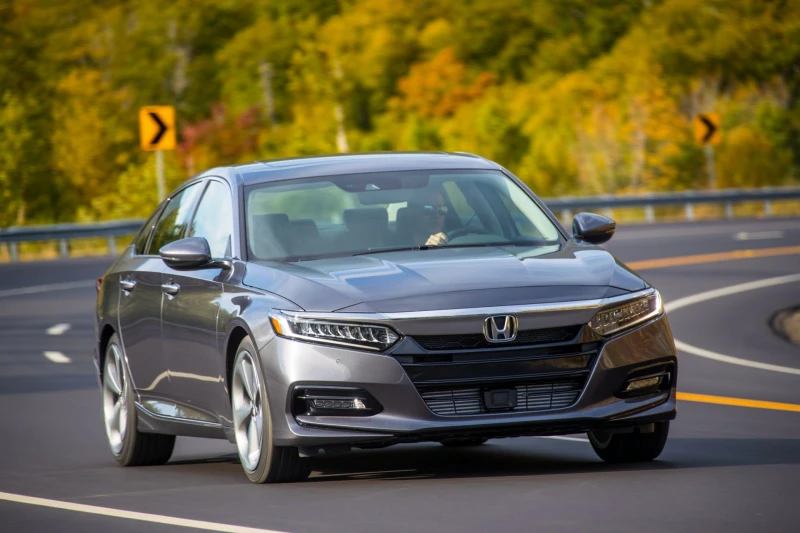
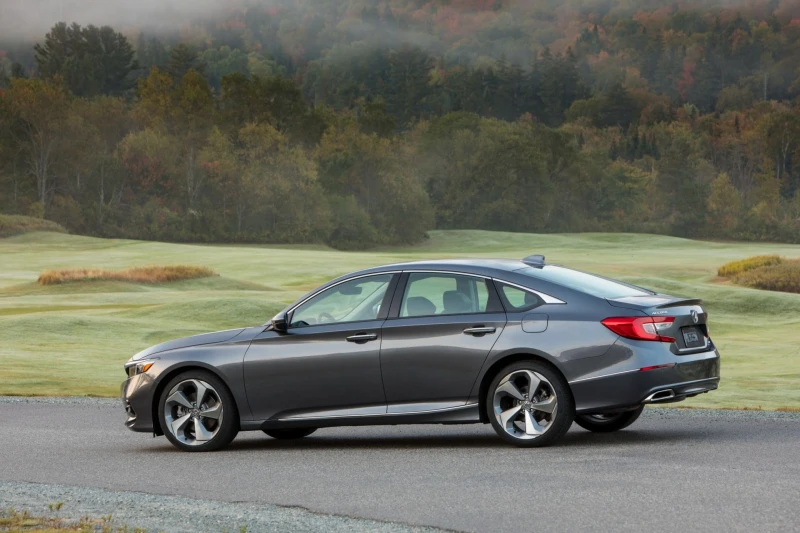
The tenth-generation Honda Accord (CV) was sold in the United States for the 2018–2022 model years. It remains a popular used midsize sedan, but its condition, powertrain, maintenance history, and recall status matter more than the badge alone.
Common points raised by owners and used-car inspectors include:
- Fuel economy: EPA ratings vary by engine, trim, wheel size, and model year. Gasoline models generally fall between the mid-20s and low-30s in combined mpg, while the Accord Hybrid can reach the upper-40s. Real-world mileage may be lower in heavy traffic, cold weather, or with frequent short trips. EPA estimates and owner-reported results should be treated as separate data sets.
- Infotainment and connectivity: Higher 2018–2020 trims used an 8-inch Display Audio touchscreen, while the LX had a simpler system. For 2021, the 8-inch screen and wired Apple CarPlay and Android Auto became standard across the lineup; selected higher trims added wireless integration. On an older car, test the screen, Bluetooth, USB ports, backup camera, and smartphone connection for lag, freezes, or intermittent operation.
- Road noise: Tire and wheel-well noise can be noticeable above about 60 mph, especially on coarse pavement. Cars with larger wheels and low-profile tires may sound harsher and ride more firmly than versions with smaller wheels.
- Interior wear: Gloss-black trim, door panels, and some lower-cabin plastics scratch relatively easily. Light-colored upholstery shows stains quickly, while heavily bolstered seats may display wear on the outer edge.
- Powertrain diagnosis: The 1.5-liter turbo uses a CVT, the 2.0-liter turbo uses a 10-speed automatic, and the Hybrid has its own two-motor system. A pre-purchase inspection should be performed by a shop familiar with the specific powertrain rather than relying only on a brief test-drive.
- Potential repair costs: Turbochargers, fuel-system components, transmissions, driver-assistance sensors, and hybrid components can be expensive if a problem is missed before purchase. Routine filters and brake parts are widely available, but repair cost depends heavily on whether OEM, aftermarket, or used parts are selected.
Model years and versions: what deserves extra attention
In the U.S., the tenth-generation Accord was a sedan with three main powertrain families: a 192-hp 1.5-liter turbo with a CVT, a 252-hp 2.0-liter turbo with a 10-speed automatic, and a 212-hp hybrid system. Sport models with either turbo engine were also available with a 6-speed manual for the 2018–2020 model years; the manual was dropped for 2021.
- 2018–2020: These pre-refresh cars require careful inspection of software operation, recall completion, and maintenance records. On 1.5T cars, check for a fuel smell in the oil, an unexplained rise in oil level, cold-start misfires, coolant loss, and incomplete warm-up caused by repeated short trips. These signs do not affect every car, but they justify a deeper engine check. On CVT and 10-speed models, verify smooth engagement and documented fluid service. Some owners also reported unwanted Collision Mitigation Braking System activation, an issue that has been investigated by NHTSA.
- 2021: Honda introduced the mid-cycle refresh with revised styling, the 8-inch infotainment system as standard equipment, updates to driver-assistance operation, and several trim changes. The engines and basic transmission choices remained the same, but the manual transmission was discontinued. A refreshed car is not automatically problem-free, so recall status and service history still need verification by VIN.
- 2022: The final model year retained the 1.5T, 2.0T, and Hybrid choices, with trim availability differing from earlier years. It is generally the newest and often the most expensive tenth-generation option, but mileage, accident history, previous repairs, and maintenance are more important than model year alone.
There is no single “safe” model year. Early cars may offer better value, while later cars benefit from the refresh and fewer years of use. The best example is the one with a clean history, completed recalls, correct fluids, consistent maintenance, and no signs of overheating, coolant loss, transmission hesitation, or electronic faults.
The U.S. used-car market
The 2018–2022 Accord is widely available through Autotrader, CarGurus, Cars.com, franchised dealers, independent lots, and private-party listings. Asking prices in 2026 vary widely: higher-mileage 1.5T cars can appear in the mid-teens, while clean, lower-mileage Hybrid, 2.0T, and Touring examples commonly reach the low-to-mid $20,000s or more. These are market-oriented ranges rather than official values, and local supply, title status, mileage, and condition can move the price substantially.
Key market checks include:
- Body and accident history: Look for mismatched paint, overspray, uneven panel gaps, non-original glass, and repairs around the radiator support, trunk floor, and suspension mounting points. A clean history report does not replace a physical inspection.
- Weather and corrosion exposure: Cars from snow-belt states deserve an underbody inspection for corrosion on fasteners, subframes, brake components, and exhaust parts. Cars from coastal or flood-prone areas require additional checks for water intrusion and electrical damage.
- Service history: Review maintenance records and compare them with the mileage shown on Carfax or AutoCheck. Gaps in the history are not proof of neglect, but they increase the importance of fluid-condition checks, diagnostic scanning, and a cold start.
- Parts and trim originality: Confirm that airbags, headlights, radar and camera hardware, wheels, and driver-assistance components match the car’s trim and repair history. Poor collision repairs can create warning lights or calibration problems.
- Mileage verification: Compare the odometer with inspection, registration, service, and history-report entries. Scan all control modules for stored faults and mileage inconsistencies where supported.
- Title and recall status: Check for salvage, rebuilt, flood, or lemon-law branding. Use the VIN to verify open safety recalls through NHTSA and Honda, including fuel-pump campaigns that affect certain vehicles.
- Typical listings: Sport 1.5T models are common, while clean Sport 2.0T, Touring 2.0T, manual-transmission cars, and low-mileage Hybrids may carry a premium because supply is more limited.
What can be corrected, and how much reserve to keep
Many age-related shortcomings can be addressed, but cosmetic improvements should not distract from mechanical and safety checks:
- Additional sound-deadening in the doors, floor, and wheel wells can reduce road noise, although results depend on materials, workmanship, tires, and wheel size.
- Infotainment glitches may improve after software updates, cable replacement, or a system reset; persistent faults can require hardware diagnosis.
- Worn seat panels, steering-wheel trim, and scratched interior pieces can be repaired or replaced without affecting the powertrain.
- Suspension wear such as bushings, links, mounts, dampers, and wheel bearings is conventional repair work, but the total rises quickly if several items are worn at once.
- Rust prevention may be worthwhile for cars used in salted-road regions, but existing corrosion should be assessed before any coating is applied.
- For the CVT, 10-speed automatic, engine, and Hybrid system, follow Honda’s Maintenance Minder and use the correct Honda-specified fluids. Do not assume a universal fluid-change interval without considering service history and operating conditions.
A sensible purchase reserve should cover a professional pre-purchase inspection, fluid service if records are incomplete, tires or brakes if worn, recall-related follow-up, and minor electronic or suspension repairs. A neglected or collision-repaired car can require a much larger reserve than a well-documented example, regardless of model year.
Conclusions and buying advice
The tenth-generation Honda Accord can still be a strong used-car choice in 2026, but it should not be purchased solely on the assumption that every Accord is trouble-free. The 1.5T, 2.0T, and Hybrid versions have different inspection priorities, running costs, and driving characteristics.
The 2.0T offers the strongest performance and avoids the CVT, but clean examples often cost more and the 10-speed automatic still requires proper maintenance. The 1.5T is more common and efficient, but deserves careful checks for oil condition, coolant loss, misfires, and maintenance history. The Hybrid is the fuel-economy choice; a pre-purchase scan and evaluation of the high-voltage system are advisable on an older example.
During the inspection and test-drive, focus on:
- cold-start behavior, oil and coolant levels, signs of misfire or overheating, and Hybrid-system diagnostics where applicable
- CVT or 10-speed automatic engagement, shift quality, and fluid-service records
- Honda Sensing cameras and radar, warning lights, infotainment, climate control, USB ports, and post-repair calibration
- suspension noise, tire wear, steering alignment, and wheel damage
- paint consistency, panel gaps, underbody condition, accident history, and title status
For a broader overview of the generation, specifications, and interior, see the other articles in this series.