


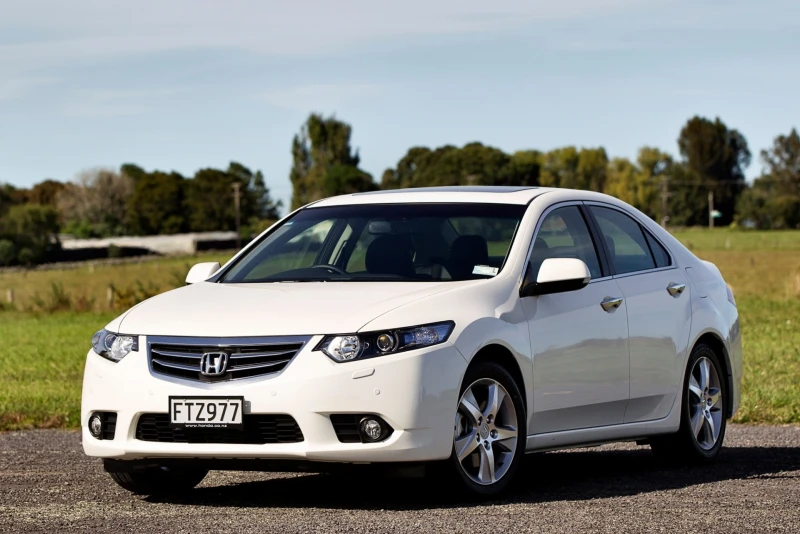
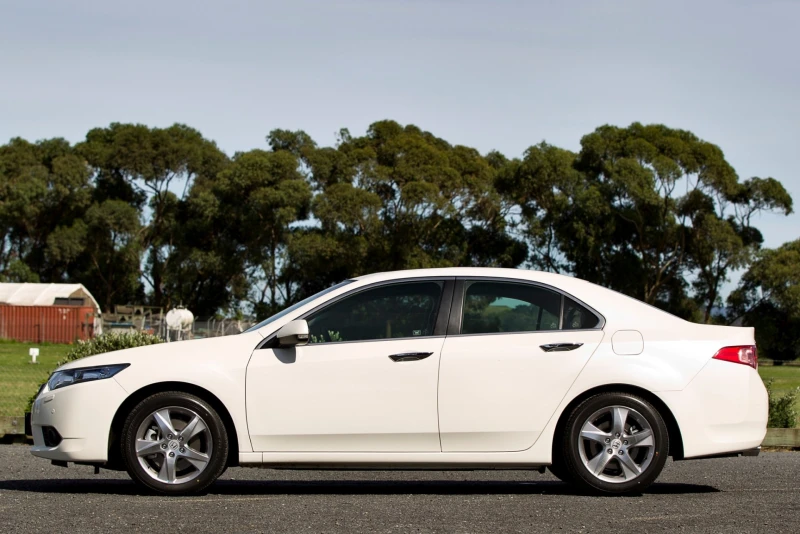
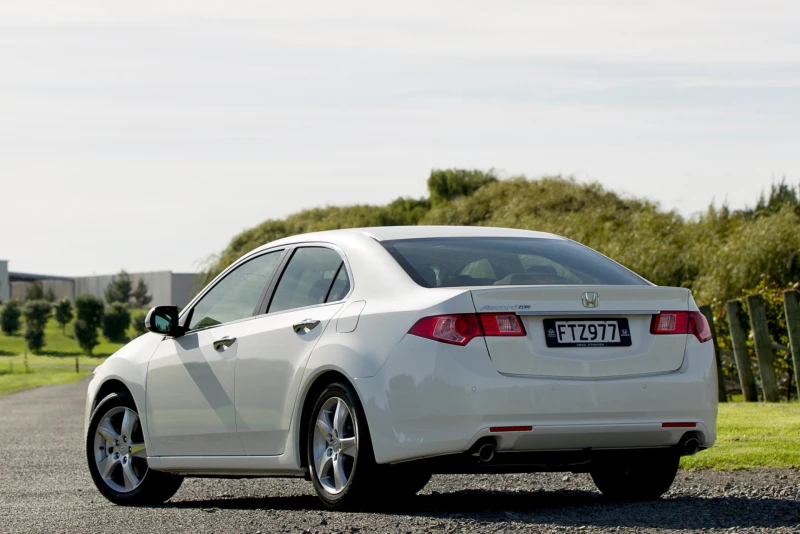
The eighth-generation Honda Accord remains common on the U.S. used-car market, but by 2026 every example is old enough that condition and service history matter more than reputation alone. The American-market Accord differed substantially from the European version: U.S. buyers received sedan and coupe body styles with 2.4-liter four-cylinder and 3.5-liter V6 gasoline engines. The 2.2 i-DTEC diesel and Accord Tourer wagon were not part of the regular U.S. lineup. This guide focuses on issues and inspection points relevant to U.S.-spec 2008–2012 cars.
Key problems and characteristics of the generation
Oil consumption deserves attention on four-cylinder cars. American Honda issued a warranty extension for certain 2008–2011 Accord models with the 2.4-liter engine because sticking piston rings could lead to unusually high oil consumption. Honda also released a product update for some 2008–2012 Accords to revise fuel-injection and VTC timing because deposits on the oil-control rings could contribute to increased consumption. On a used car, check the oil level before and after the test drive, look for a documented repair history, and ask whether the engine requires oil between changes.
V6 models with the five-speed automatic deserve a different check. Honda service documentation for 2008–2012 Accord V6 automatic models describes a condition in which piston-ring alignment could contribute to spark-plug fouling and misfire codes P0301 through P0304. When inspecting a V6, verify that the engine runs smoothly from cold start through full operating temperature and scan for stored or pending misfire codes. A previous warranty extension existed for this condition, but those time-based warranty periods have long since expired on these cars.
Premature rear brake-pad wear was another widely documented issue, particularly on early cars. Litigation covering certain 2008–2010 Accords alleged unusually rapid rear-pad wear, and an improved rear-brake repair was developed as part of the settlement. A pre-purchase inspection should therefore include pad thickness, rotor condition, caliper movement and evidence of uneven inner-versus-outer pad wear rather than assuming that recently installed pads have solved the underlying issue.
The factory infotainment is now dated by modern standards. Equipment varied significantly by trim and model year: higher trims could include Bluetooth HandsFreeLink, satellite radio and factory navigation, while USB audio became more widely available later in the generation. Apple CarPlay and Android Auto were not factory features. Aftermarket head units are common, so buyers should confirm that steering-wheel controls, amplifiers, navigation-related wiring and any backup-camera functions still work correctly after modifications.
Age-related chassis and body condition can vary dramatically by region. Cars that spent years in states using heavy winter road salt should be inspected underneath for corrosion around suspension mounting points, brake and fuel lines, subframes and body seams. Suspension noises, worn control-arm bushings, tired dampers and uneven tire wear should be evaluated as condition-related maintenance items rather than assumed to affect every Accord.
Transmission choice also changes what should be checked. U.S. four-cylinder cars used five-speed manual or five-speed automatic transmissions depending on trim, while V6 sedans came with a five-speed automatic and the V6 coupe was also available with a six-speed manual. During a test drive, look for delayed engagement, harsh or flaring shifts and neglected fluid service on automatics. On manual cars, check clutch engagement and listen for abnormal gearbox or release-bearing noise.
Versions and model years — what deserves extra attention
The 2008 Accord launched in the United States with two versions of the 2.4-liter inline-four: 177 hp in LX and LX-P sedans and 190 hp in EX and EX-L sedans as well as four-cylinder coupes. The available 3.5-liter V6 was initially rated at 268 hp; later model years were rated at 271 hp. Sedan and coupe specifications were not identical, and the V6 coupe with the six-speed manual used a different calibration from V6 automatic models with Variable Cylinder Management.
Honda refreshed the Accord for the 2011 model year with revised exterior and interior details, improved fuel economy on several configurations and a new SE sedan trim. For example, the 2011 four-cylinder automatic sedan carried EPA ratings of 23 mpg city, 34 mpg highway and 27 mpg combined, while the V6 sedan was rated at 20/30 mpg city/highway. These are EPA test values for specific configurations, not guarantees of real-world fuel economy.
For 2008–2010 cars, pay particular attention to rear-brake history. For 2008–2011 four-cylinder cars, oil-consumption history is especially relevant. For 2008–2012 V6 automatics, a scan for misfire history and a review of prior piston-ring or spark-plug repairs can be useful. On V6 cars, also verify documented timing-belt maintenance; the 2.4-liter four-cylinder uses a timing chain instead.
Used Honda Accord market in the United States
In 2026, 2008–2012 Accords are used vehicles only and are widely listed through platforms such as Autotrader, CarGurus and Cars.com. Sedans are more common, while coupes — especially V6 manual cars — form a smaller part of the market. Asking prices vary substantially with mileage, accident history, rust exposure, trim, transmission and maintenance documentation, so a generic nationwide price range can be misleading.
Vehicle history matters. A CARFAX or AutoCheck report can help identify reported accidents, title events and recorded service, but it should not replace a physical inspection. Compare the VIN on the car with the paperwork, look for inconsistent paintwork or panel gaps, and review maintenance receipts when available. High mileage by itself is less informative than evidence of regular fluid changes, cooling-system care, brake work and engine-specific repairs.
Recall status must also be checked by VIN. Honda Accord model years from this period were included in Takata air-bag inflator recalls, and recall coverage can differ by VIN and inflator position. Before purchase, verify through the official NHTSA or Honda recall lookup that all applicable safety recalls have been completed. An unresolved recall should be addressed through an authorized dealer.
Regional history can be as important as mileage. Cars from hot, humid climates and vehicles from road-salt states may age differently, while cars from collision-prone urban use can show more cosmetic or suspension wear. A pre-purchase inspection by a shop familiar with Honda vehicles is particularly valuable when service records are incomplete.
What can be fixed and how to budget for a good example
Many age-related issues are repairable, but budgeting should be based on the individual car rather than a fixed percentage of purchase price. Before buying, obtain estimates for any needed brakes, tires, suspension work, fluid leaks, air-conditioning repairs, engine oil-consumption diagnosis or misfire repair. A cheaper car with deferred maintenance can quickly cost more than a better-documented example.
Interior and infotainment wear is usually straightforward to address. Worn seat surfaces, damaged trim and aging audio hardware can be repaired or replaced, and a properly integrated aftermarket head unit can add modern phone connectivity. Poorly installed electronics, however, can introduce battery-drain, audio or wiring problems, so modifications should be inspected rather than treated as an automatic upgrade.
Mechanical catch-up work should be prioritized over cosmetic upgrades. On four-cylinder cars, monitor oil level and investigate abnormal consumption. On V6 cars, confirm timing-belt history and check for misfire symptoms. On all versions, inspect brakes, tires, suspension, cooling-system condition, fluid leaks and automatic-transmission behavior. If the service history is uncertain, use the inspection findings to build a realistic first-service budget before agreeing on a purchase price.
Conclusions and recommendations
The 2008–2012 Honda Accord can still be a practical used midsize car in the United States, but the best choice is the example with the strongest maintenance history and the fewest unresolved mechanical or safety issues. A low odometer reading alone should not outweigh evidence of neglect, accident damage or incomplete recall work.
Early cars deserve extra scrutiny for rear-brake wear, while four-cylinder models should be checked for oil-consumption history. V6 automatic models require attention to misfire history and evidence of the piston-ring-related repairs described in Honda service documentation. Every car should be checked for outstanding air-bag recalls by VIN.
The 2.4-liter four-cylinder is the simpler powertrain choice, while the 3.5-liter V6 offers stronger performance but adds VCM-related diagnostics on automatic models and timing-belt maintenance. Coupe buyers should also remember that the six-speed-manual V6 is mechanically distinct from the automatic V6 versions in several important areas.
During the inspection and test drive, focus on engine oil level, cold-start behavior, stored diagnostic codes, brake wear, transmission operation, suspension noise, underbody corrosion, air-conditioning function and electrical equipment. A professional pre-purchase inspection remains one of the most useful ways to separate a well-kept Accord from one that has accumulated years of deferred maintenance.
Overall, the eighth-generation Accord is best approached as an aging used car with several well-documented model-specific concerns rather than as a vehicle that can be bought safely on reputation alone.